
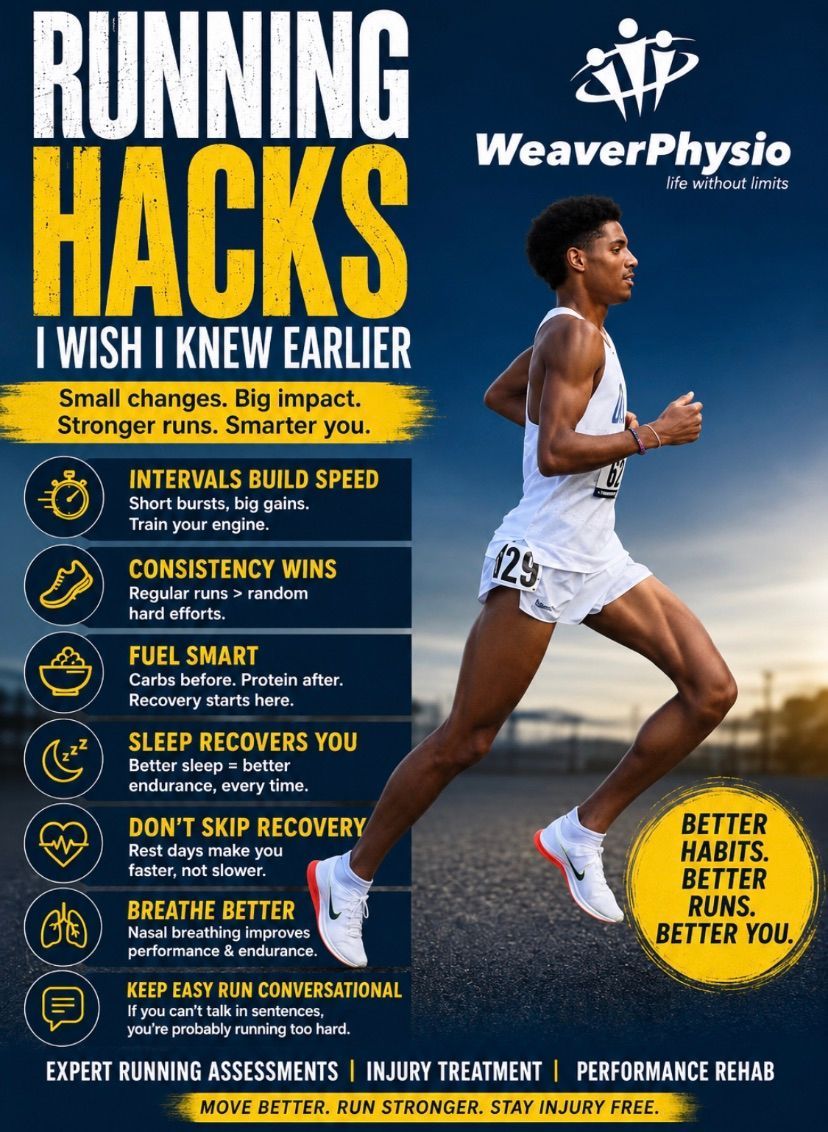
Running Hacks I Wish I Knew Earlier
Expert Running Advice from Cheshire’s Running & Tendon Specialists
Running is one of the most effective ways to improve your fitness, physical health and mental wellbeing. Whether you’re training for your first Couch to 5K, chasing a marathon personal best or simply enjoy getting outdoors, running should help you feel stronger—not leave you constantly battling injury.
At Weaver Physio & Sports Injury Clinic, we’re proud to be Cheshire’s Running & Tendon Specialists. With 70+ years of combined clinical experience, we’ve helped thousands of runners recover from injury, improve performance and enjoy running pain-free.
One thing we hear repeatedly from runners is:
“I wish I’d known this years ago.”
Many runners believe they simply need to run more miles and push harder. In reality, long-term progress comes from training smarter.
Here are some of the biggest running hacks every runner should know.
⸻
1. Easy Runs Should Actually Feel Easy
One of the biggest mistakes recreational runners make is running every session too hard.
Your easy runs should feel exactly that…
Easy.
A simple rule we teach is the Conversation Test.
If you can’t comfortably hold a conversation while running, you’re probably running too fast.
Easy running helps:
Build aerobic fitness
Improve fat metabolism
Increase endurance
Enhance recovery
Reduce injury risk
Running every session at moderate or high intensity places excessive stress on muscles, tendons and joints.
Slowing down often helps runners become faster over time.
⸻
2. Intervals Build Speed Better Than Constant Hard Running
Many runners think running fast all the time is the quickest way to improve.
It isn’t.
Structured interval sessions are far more effective.
Examples include:
8 × 400m
5 × 1km
6 × 3 minutes
Hill repeats
Intervals improve:
VO₂ Max
Running economy
Lactate threshold
Speed endurance
By separating hard efforts with recovery periods, you can produce higher-quality training without excessive fatigue.
⸻
3. Consistency Beats Motivation
Motivation comes and goes.
Consistency creates improvement.
The runners who stay healthy year after year aren’t necessarily the most talented.
They’re the ones who:
Follow a structured plan
Recover properly
Build mileage gradually
Strength train regularly
Avoid doing too much too soon
Running four sensible sessions every week beats one heroic week followed by two weeks off injured.
⸻
4. Fuel Your Body Properly
One of the biggest misconceptions is that runners should avoid carbohydrates.
In reality…
Carbohydrates are your primary running fuel.
Carbohydrates replenish muscle glycogen, allowing you to:
Run further
Recover quicker
Train harder
Reduce fatigue
Before longer runs consider:
Toast
Oats
Bagels
Bananas
After training combine:
Protein
Carbohydrates
Fluids
Good recovery nutrition prepares your body for your next session.
⸻
5. Sleep Is Your Secret Performance Enhancer
Training doesn’t make you fitter.
Recovery does.
During sleep your body repairs:
Muscles
Tendons
Bones
Hormones
Nervous system
Poor sleep increases:
Injury risk
Fatigue
Recovery time
Reduced performance
Aim for:
7–9 hours every night.
Many elite runners prioritise sleep just as highly as training.
⸻
6. Never Skip Recovery
Rest days aren’t lazy days.
They’re where adaptation occurs.
Without recovery:
Tendons remain overloaded
Muscles stay fatigued
Running form deteriorates
Injury risk increases
Recovery includes:
Easy running
Walking
Mobility work
Stretching
Foam rolling
Sports massage
Good nutrition
Quality sleep
At Weaver Physio we often say:
Recovery is training.
⸻
7. Breathe More Efficiently
Many runners unknowingly over-breathe.
Developing relaxed breathing patterns can improve:
Endurance
Running efficiency
Relaxation
Oxygen delivery
For easier runs, nasal breathing or relaxed diaphragmatic breathing may help some runners maintain an appropriate intensity and avoid pushing too hard.
The goal isn’t to force a particular breathing technique, but to stay relaxed and avoid unnecessary tension.
⸻
8. Strength Training Prevents Injuries
Running alone isn’t enough.
Your body also needs strength.
A strong runner absorbs force more effectively.
Strength training improves:
Running economy
Tendon capacity
Power
Balance
Stability
Coordination
Injury resilience
We encourage every runner to develop:
Single-leg strength
Glute strength
Core stability
Calf strength
Hip control
Balance
Plyometric ability
This combination creates a strong foundation for efficient running.
⸻
9. Tendons Love Gradual Loading
At Weaver Physio we specialise in tendon rehabilitation.
Common tendon injuries include:
Achilles Tendinopathy
Patellar Tendinopathy
Gluteal Tendinopathy
Hamstring Tendinopathy
Tibialis Posterior Tendinopathy
Tendons don’t respond well to sudden increases in:
Mileage
Speed
Hills
Racing
Instead they adapt best to:
Progressive loading
Strength training
Appropriate recovery
Individual rehabilitation
Ignoring tendon pain rarely works.
Early treatment usually leads to faster recovery.
⸻
10. Don’t Ignore Small Niggles
Most running injuries don’t suddenly appear overnight.
They gradually build over days or weeks.
Early symptoms might include:
Morning stiffness
Tight calves
Heel discomfort
Knee ache
Hip tightness
Addressing these early often prevents months of frustration.
⸻
Common Running Injuries We Treat
At Weaver Physio we regularly help runners recover from:
Achilles Tendinopathy
Plantar Fasciitis
Shin Splints
Patellar Tendinopathy
IT Band Syndrome
Runner’s Knee
Hamstring Strains
Calf Tears
Hip Pain
Gluteal Tendinopathy
Stress Injuries
Foot Pain
Tendon Injuries
Every rehabilitation programme is tailored to the individual runner.
⸻
Our Specialist Running Services
Our comprehensive running assessments may include:
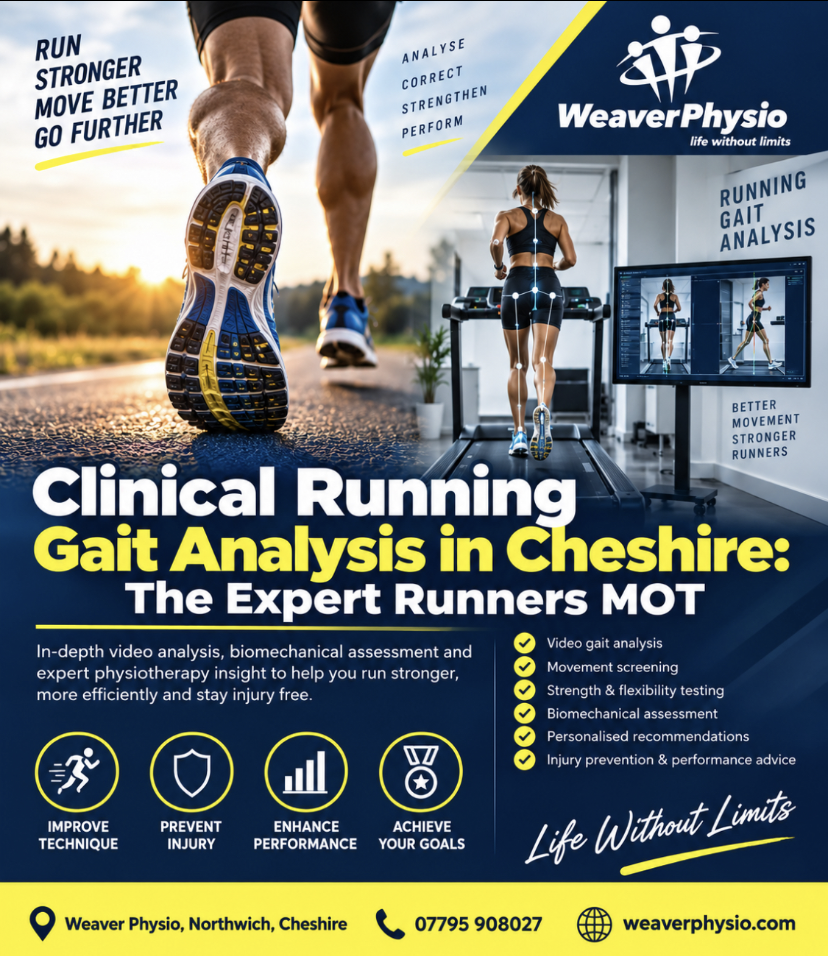
Runner’s MOT
Our 90-minute assessment includes:
Video gait analysis
Running technique assessment
Strength testing
Flexibility screening
Balance assessment
Stability testing
Movement analysis
Personalised rehabilitation programme
⸻
Physiotherapy
Expert assessment and treatment of running injuries using evidence-based rehabilitation.
⸻
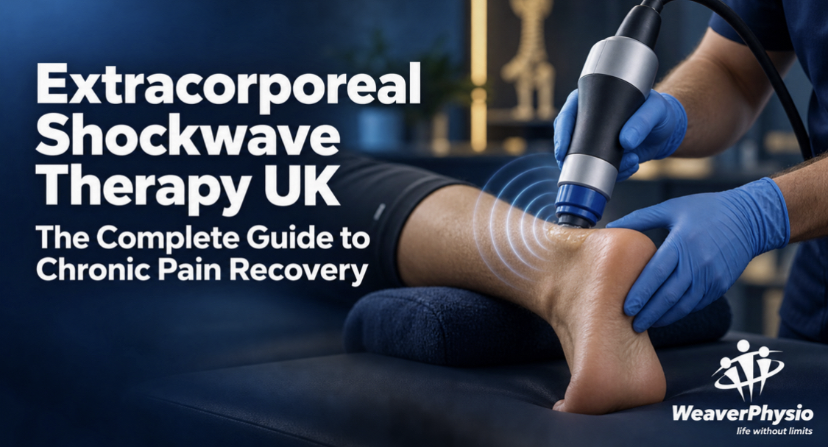
Shockwave Therapy
Ideal for persistent tendon conditions including:
Achilles Tendinopathy
Plantar Fasciitis
Patellar Tendinopathy
Shockwave Therapy stimulates healing while reducing pain.
⸻
Sports Massage
Helping runners:
Recover quicker
Reduce muscle tightness
Improve flexibility
Prepare for races
⸻
Strength & Performance Rehabilitation
We build stronger runners through:
Progressive loading
Plyometrics
Running drills
Balance training
Stability work
Coordination exercises
Functional strength
⸻
Why Choose Weaver Physio?
With over 70 years of combined clinical experience, we’ve helped runners across Northwich, Cheshire and the surrounding areas return to pain-free running.
Our approach focuses on identifying why you became injured, not simply treating the symptoms.
We combine:
Expert Physiotherapy
Running Gait Analysis
Shockwave Therapy
Sports Massage
Strength & Conditioning
Personalised Rehabilitation
Our aim isn’t simply to get you back running.
It’s to help you become a stronger, more efficient and more resilient runner.
⸻
Start Running Smarter Today
If you’re struggling with recurring injuries, tendon pain or simply want to improve your running performance, we’re here to help.
Whether you’re a beginner or an experienced marathon runner, our expert team can help you train smarter, recover faster and stay injury-free.
Weaver Physio & Sports Injury Clinic
Cheshire’s Running & Tendon Specialists
📍 110 Middlewich Road, Northwich, Cheshire CW9 7DP
📞 01606 227484
🌐 http://www.weaverphysio.com
Move Better. Run Stronger. Stay Injury-Free.