
Recovering from Sports Injuries: An Evidence-Based Guide from Weaver Physio
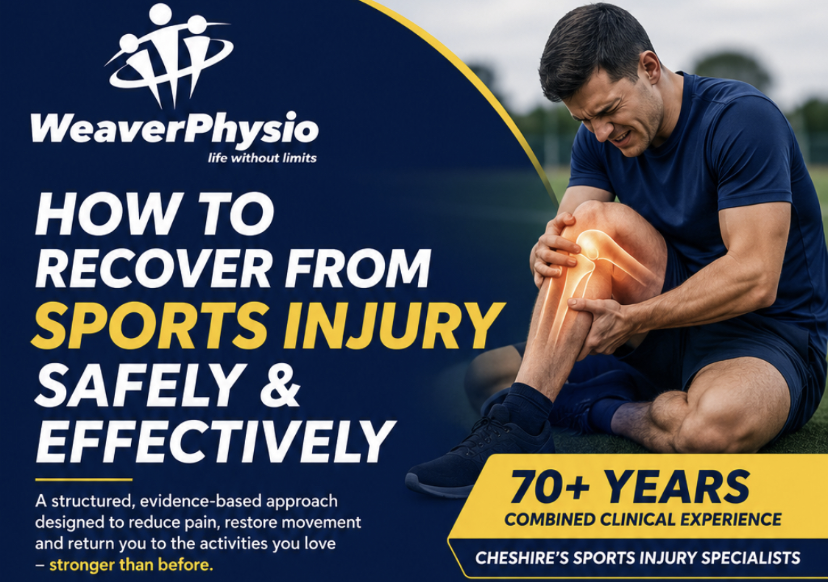
Sports Injury Recovery in Northwich: Helping You Return Stronger, Safer and More Confidently
A sports injury can disrupt far more than your training schedule. Whether you’re a runner preparing for your next race, a footballer eager to return to the pitch, a gym enthusiast, cyclist or someone who simply enjoys staying active, an injury can quickly affect your confidence, fitness and everyday life.
Many people are still told to simply “rest until it feels better.” Whilst rest has an important role immediately after an injury, modern rehabilitation is far more sophisticated. Research consistently shows that the right treatment at the right time helps injured tissues heal more effectively, reduces the likelihood of recurring problems and allows you to return to sport with greater confidence.
At Weaver Physiotherapy & Sports Injury Clinic, our Chartered Physiotherapists combine over 70 years of clinical experience helping patients throughout Northwich, Winsford, Middlewich, Knutsford, Hartford, Weaverham, Tarporley, Frodsham, Sandbach and across Cheshire recover from sports injuries using evidence-based rehabilitation programmes tailored to every individual.
Whether you’ve recently injured yourself or you’re struggling with a long-standing problem that simply won’t settle, this guide explains exactly how professional sports injury rehabilitation can help you recover safely and perform at your best again.
Understanding Sports Injuries
Sports injuries occur when muscles, tendons, ligaments, joints or bones are subjected to loads greater than they can tolerate. Sometimes this happens suddenly through trauma, whilst other injuries develop gradually because tissues have been overloaded over weeks or months.
Common injuries we regularly treat include:
● Muscle strains
● Ligament sprains
● Ankle injuries
● Knee injuries
● Shoulder pain
● Rotator cuff injuries
● Achilles tendinopathy
● Plantar fasciitis
● Tennis elbow
● Hamstring injuries
● Calf strains
● Patellar tendinopathy
● Shin splints
● Hip pain
● Running injuries
● Back pain
● Neck pain
Every injury has its own healing timeline, meaning there is no “one-size-fits-all” recovery programme. This is why a detailed assessment is essential before beginning treatment.
The Modern Approach to Sports Injury Recovery
The old RICE protocol (Rest, Ice, Compression and Elevation) has gradually been replaced by a more comprehensive evidence-based approach known as PEACE & LOVE.
Rather than focusing purely on reducing inflammation, this model supports the body’s natural healing process whilst encouraging a safe progression back to activity.
The PEACE Phase (First 72 Hours)
During the early stages following an injury the priorities are to protect damaged tissues without creating unnecessary stiffness or weakness.
Protect
Reduce activities that significantly increase pain whilst avoiding complete immobilisation unless medically necessary.
Elevate
Keeping the injured limb elevated can assist with swelling management during the first few days.
Avoid Routine Anti-Inflammatory Medication
Inflammation is a normal part of tissue repair. Whilst anti-inflammatory medication may occasionally be appropriate, routinely suppressing inflammation immediately after injury may interfere with optimal healing. Always seek appropriate medical advice before taking medication.
Compression
Compression garments or supportive bandages can help reduce excessive swelling and improve comfort.
Education
Understanding what has been injured, how tissues heal and what to expect during rehabilitation helps reduce anxiety and improves recovery outcomes.
LOVE: The Active Rehabilitation Phase
After the initial inflammatory phase, rehabilitation becomes increasingly active.
Load
One of the biggest myths surrounding sports injuries is that pain-free rest equals recovery.
In reality, injured tissues become stronger through carefully prescribed loading.
Our Chartered Physiotherapists gradually increase loading according to your symptoms, tissue healing stage and sporting goals.
Optimism
Research has shown that psychological wellbeing significantly influences rehabilitation outcomes.
Understanding your injury and having a clear recovery plan reduces fear and builds confidence throughout rehabilitation.
Vascularisation
Maintaining cardiovascular fitness through appropriate pain-free exercise improves circulation and supports tissue healing.
Depending on your injury this may include:
● Walking
● Cycling
● Swimming
● Cross trainer
● Upper body conditioning
Exercise
Targeted rehabilitation exercises remain the single most important part of successful sports injury recovery.
Every exercise programme at Weaver Physio is individually prescribed and progressed according to your recovery.
Why Professional Assessment Makes All the Difference
Many people attempt to diagnose themselves online before beginning random exercises they find on social media.
Unfortunately, different injuries often produce similar symptoms.
For example:
● A calf strain can mimic an Achilles injury.
● Hip weakness can cause knee pain.
● Lumbar spine problems can resemble hamstring injuries.
● Plantar fasciitis can actually be heel fat pad irritation or nerve pain.
Treating the wrong diagnosis wastes valuable recovery time.
Our comprehensive physiotherapy assessment identifies:
● The exact injured structure
● Contributing biomechanical factors
● Muscle weaknesses
● Joint restrictions
● Movement compensations
● Training errors
● Running technique issues
● Lifestyle factors affecting recovery
Only once we’ve established the true cause of your symptoms do we design your personalised rehabilitation programme.
Evidence-Based Sports Injury Rehabilitation
Successful rehabilitation progresses through carefully controlled stages.
Pain Reduction
Initially our aim is to reduce pain and improve comfort whilst protecting healing tissues.
Treatment may include:
● Manual therapy
● Joint mobilisation
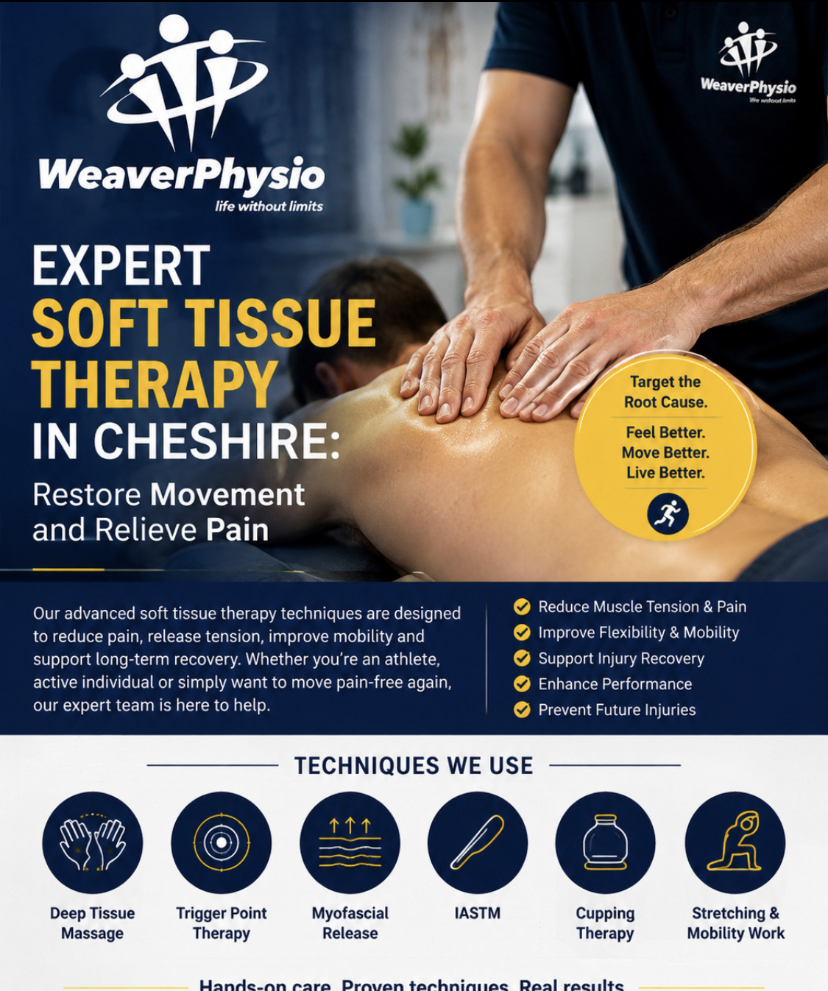
● Soft tissue therapy
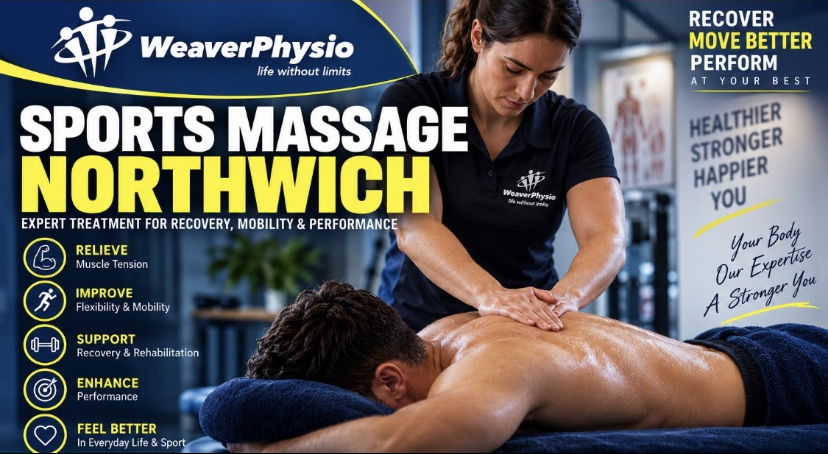
● Sports massage
● Acupuncture
● Dry needling
● Taping
● Education
● Individual exercise prescription
Restoring Movement
Once pain settles, we focus on restoring normal movement.
Restricted joints, muscle tightness and poor mobility often remain after an injury and increase the risk of recurrence.
Treatment focuses on restoring:
● Range of movement
● Flexibility
● Coordination
● Muscle activation
● Joint mechanics
Rebuilding Strength
Strong muscles protect joints.
Every rehabilitation programme progresses through evidence-based strengthening including:
Isometric Exercises
Static contractions reduce pain whilst improving tendon and muscle capacity.
Isotonic Strengthening
Controlled resistance exercises rebuild muscle size, strength and endurance.
Functional Strength
Exercises become increasingly sport-specific to replicate real-life movement.
Plyometric Training
Jumping, landing and explosive exercises prepare tissues for running, cutting, sprinting and sport-specific demands.
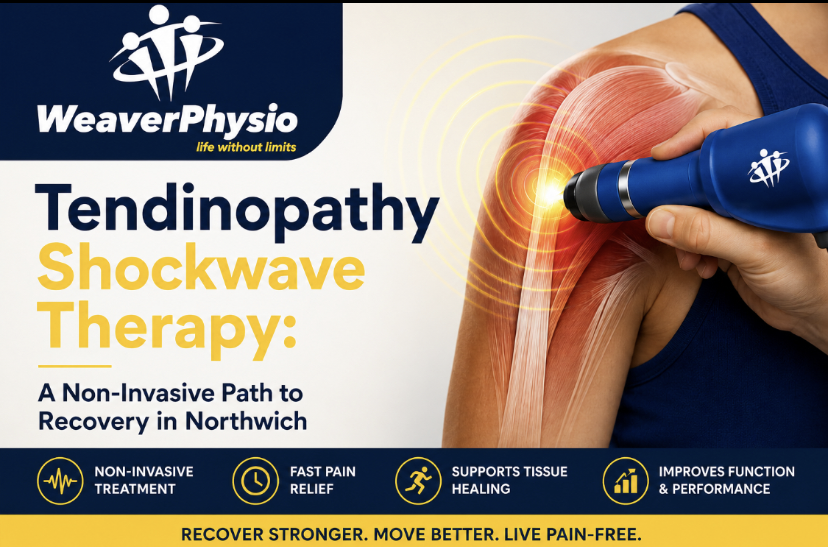
Shockwave Therapy for Chronic Sports Injuries
Some tendon injuries become persistent despite good rehabilitation.
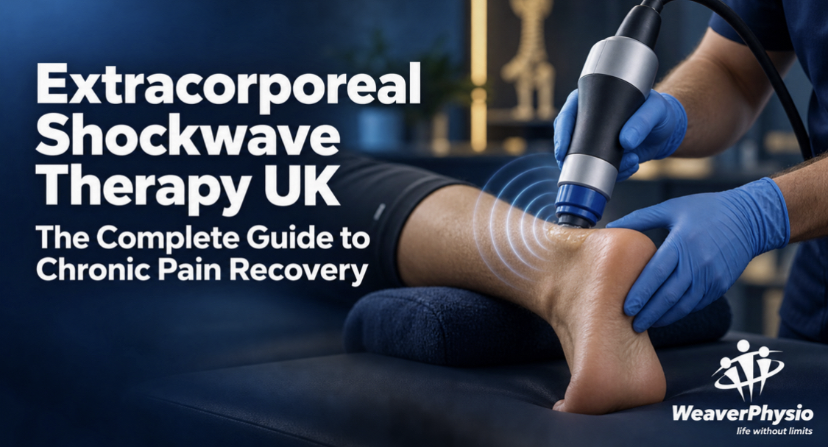
At Weaver Physio we provide Radial Shockwave Therapy for conditions including:
● Achilles tendinopathy
● Plantar fasciitis
● Patellar tendinopathy
● Tennis elbow
● Golfer’s elbow
● Gluteal tendinopathy
● Calcific shoulder tendinopathy
Shockwave Therapy stimulates tissue healing, encourages blood vessel formation and helps restart healing in long-standing tendon injuries when appropriate.
Combined with progressive rehabilitation exercises, it can significantly improve recovery in suitable patients.
Returning to Sport Safely
Being pain-free does not automatically mean you are ready to compete.
Returning too quickly is one of the most common reasons injuries return.
At Weaver Physio we use objective return-to-sport testing to assess:
● Strength
● Balance
● Single-leg control/Coordination
● Stability
● Power
● Endurance
● Functional movement
● Sport-specific performance
Only when these measures are appropriate do we begin your return to unrestricted activity.
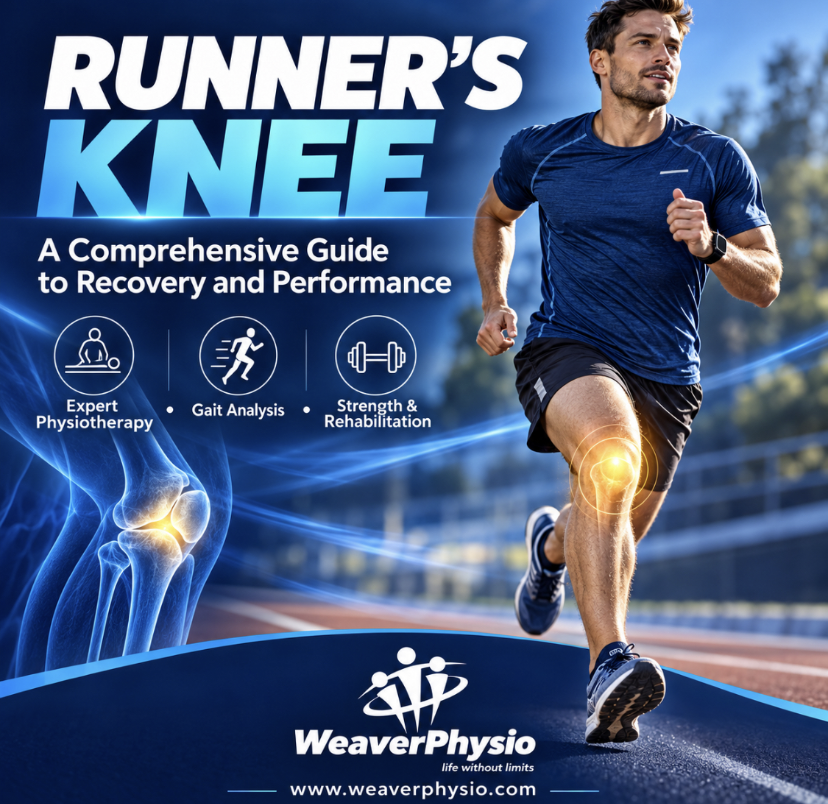
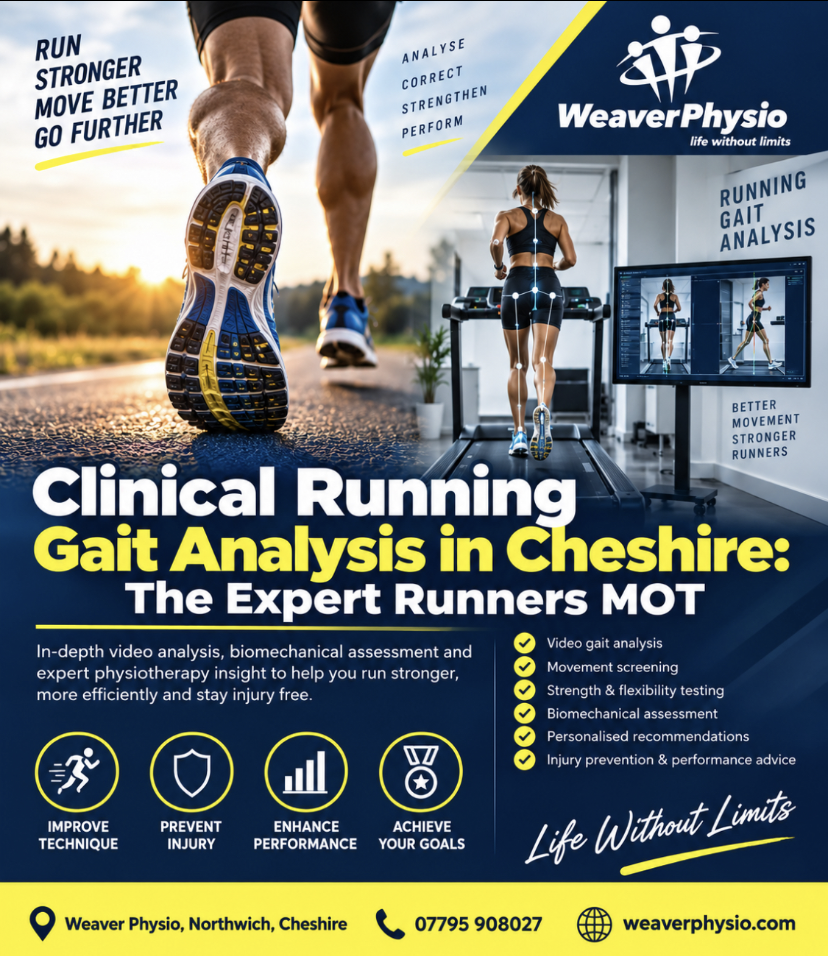
Running Gait Analysis
Many injured runners unknowingly develop movement compensations.
These altered mechanics can increase stress elsewhere in the body and contribute to recurring injuries.
Our Runner’s MOT and Video Running Gait Analysis identifies issues such as:
● Excessive overstride
● Poor cadence
● Hip instability
● Pelvic drop
● Foot strike abnormalities
● Reduced ankle mobility
● Running asymmetries
Correcting these factors improves efficiency whilst reducing future injury risk.
The Psychological Side of Recovery
Physical rehabilitation is only part of successful recovery.
Many athletes lose confidence following injury.
Fear of re-injury can alter movement patterns, reduce performance and increase injury risk.
Throughout rehabilitation we progressively expose you to sport-specific activities that rebuild trust in your body.
By the time you return to full training, you should feel physically prepared and mentally confident.
Common Sports Injury Recovery Mistakes
The most common reasons rehabilitation fails include:
● Returning to sport too early.
● Ignoring pain that persists during exercise.
● Stopping rehabilitation once symptoms improve.
● Following generic online exercise programmes.
● Neglecting strength training.
● Failing to address the underlying cause of the injury.
● Increasing training volume too rapidly.
● Continuing to train through significant pain.
Avoiding these mistakes can dramatically improve both recovery time and long-term performance.
Why Choose Weaver Physiotherapy & Sports Injury Clinic?
At Weaver Physio, we believe successful rehabilitation goes beyond simply relieving pain. Our goal is to help you move better, perform better and reduce the risk of future injuries.
Our experienced Chartered Physiotherapists provide personalised, evidence-based care using the latest rehabilitation principles and advanced treatment techniques. Every rehabilitation programme is tailored to your sport, your goals and your lifestyle.
Patients choose Weaver Physio because we offer:
● Comprehensive physiotherapy assessments
● Evidence-based rehabilitation programmes
● Sports injury expertise
● Running gait analysis
● Shockwave Therapy
● Sports massage
● Acupuncture and dry needling
● Strength and conditioning rehabilitation
● Return-to-sport testing
● Over 70 years of combined clinical experience
Whether you’re recovering from your first injury or aiming to return to elite competition, we’re here to help you recover stronger than before.
Book Your Sports Injury Assessment in Northwich
If pain is preventing you from training, competing or enjoying the activities you love, don’t simply wait and hope it improves.
Early assessment often leads to quicker recovery, fewer complications and a safer return to activity.
At Weaver Physiotherapy & Sports Injury Clinic, we’re proud to help active people across Northwich, Winsford, Middlewich, Knutsford, Hartford, Weaverham, Tarporley, Frodsham, Sandbach and throughout Cheshire recover with confidence.
Recover Stronger. Move Better. Stay Active.
Frequently Asked Questions
How long does a sports injury take to recover?
Recovery depends on the injured tissue, severity of damage, your overall health and how well you follow rehabilitation. Mild muscle injuries may recover within a few weeks, whilst tendon, ligament and cartilage injuries often require several months of structured rehabilitation.
Should I stop exercising completely after an injury?
Usually not. Relative rest is generally more beneficial than complete inactivity. Maintaining fitness through appropriate exercise can support healing whilst reducing strength and conditioning losses. Your physiotherapist will advise what activities remain safe.
When should I see a physiotherapist?
Seek professional assessment if your pain is severe, swelling is significant, you cannot bear weight, symptoms persist beyond a few days, or the injury is limiting your ability to work, exercise or play sport. Early diagnosis often leads to faster and more effective recovery.
Can physiotherapy help prevent future sports injuries?
Yes. Physiotherapy doesn’t just treat existing injuries—it also identifies movement faults, muscle imbalances, mobility restrictions and training errors that increase injury risk. Correcting these issues can improve performance whilst helping you stay injury-free over the long term.
Is Shockwave Therapy suitable for every sports injury?
No. Shockwave Therapy is most effective for specific chronic tendon conditions and certain soft tissue injuries. During your assessment, we’ll determine whether it’s appropriate for your condition or whether another evidence-based treatment approach is more suitable.