
Sports Massage for Cyclists
Recovery and Injury Prevention
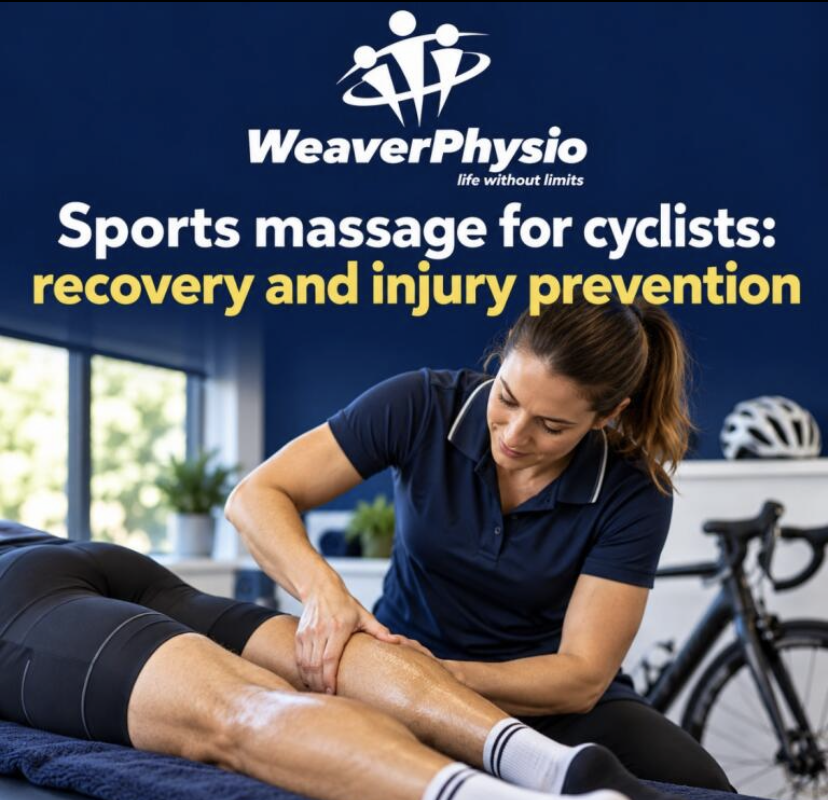
Cycling places repeated demands on the quadriceps, hamstrings, calves and gluteal muscles. Long rides, steep climbs and time spent in a fixed riding position can leave some cyclists feeling stiff, sore or fatigued. Sports massage may help ease the sensation of muscle soreness and temporarily improve flexibility, making it one option to consider as part of a wider recovery routine.
Massage is not a substitute for rest, appropriate training or injury assessment. It cannot guarantee that an injury will be prevented, and persistent pain should not simply be massaged away. The right approach depends on your symptoms, riding schedule and goals.
At Weaver Physiotherapy & Sports Injury Clinic in Northwich, sports massage is tailored to the individual. Here’s how it may fit into a cyclist’s recovery plan—and where its role has limits.
How may sports massage help cyclists?
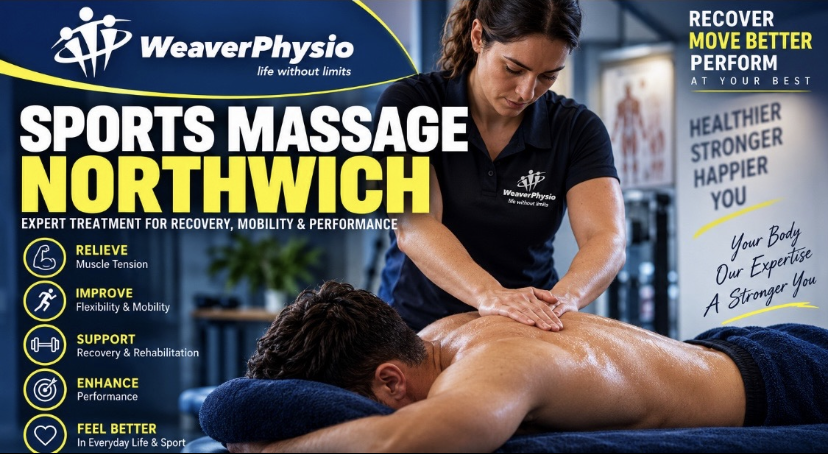
Sports massage uses hands-on techniques applied to muscles and other soft tissues. Depending on your needs, a session may include lighter strokes, compression or more focused work on areas that feel tense.
Research reviews suggest massage can reduce perceived delayed-onset muscle soreness and may temporarily improve flexibility. However, findings vary, and massage should not be presented as a guaranteed way to restore performance or speed up tissue healing.
Ease the feeling of post-ride soreness
After a demanding or unfamiliar ride, muscles may feel tender or heavy for a day or more. Massage may help reduce the sensation of soreness for some people. That can make everyday movement feel more comfortable, but it does not necessarily mean the muscles have recovered their full strength or are ready for another hard session.
A small laboratory study of intensive cycle pedalling reported improvements in perceived leg fatigue and muscle stiffness after a short massage. The results relate to that specific study protocol; they do not establish that massage will improve every cyclist’s performance.
Temporarily improve movement comfort
Some cyclists find their movement feels easier after treatment, especially when particular muscles feel tight. Massage may temporarily influence flexibility and how movement feels. Any change can be short-lived, so it is useful to combine treatment with suitable movement, strength work or changes to training where needed.
Address areas affected by riding
Treatment may focus on the quadriceps, hamstrings, calves or gluteal muscles. Depending on your riding position and symptoms, your therapist may also consider the lower back, hips, shoulders, forearms, wrists or feet.
There is no fixed checklist that suits every cyclist. Tell your therapist where you feel discomfort, when it occurs and whether it changes during or after a ride. That information helps guide the session and identify when further assessment may be more appropriate.
Sports massage and deep tissue massage: what’s the difference?
Sports massage is adapted to a person’s activity, symptoms and training demands. It may use a range of techniques and does not have to involve firm pressure. Deep tissue massage describes a firmer, more focused approach; it is one possible technique, rather than a separate recovery plan.
More pressure is not automatically more effective. A session should be adjusted to your comfort, health history and proximity to important training or an event. If an area is acutely painful, swollen or injured, discuss this before treatment.
Learn more about sports and deep tissue massage at Weaver Physio
Massage as part of a cyclist’s recovery routine
Massage is best considered alongside the basics of recovery: appropriate rest, a manageable training load, adequate food and fluids, and a gradual return to demanding efforts. It should not be used to mask pain so you can push through a problem.
After a hard ride, choose your next session according to how you feel and how you are moving. If you have a race or demanding training session coming up, let your therapist know so the timing and intensity of treatment can be considered. A firm session may leave you temporarily tender, so avoid experimenting with unfamiliar or intense treatment just before an important ride.
Gentle movement may suit some cyclists after training, but there is no single recovery routine that works for everyone. Your response, training demands and symptoms should guide the plan.
Can sports massage prevent cycling injuries?
Massage may help some cyclists manage muscle tightness or soreness, but there is not enough evidence to claim that it reliably prevents cycling injuries. Injury risk is influenced by many factors, including training load, bike set-up, strength, recovery and previous injury.
If pain keeps returning, consider what may be contributing to it. A sudden increase in distance or intensity, a change in riding position, or a symptom that appears at the same point on each ride may be useful information to discuss with a physiotherapist.
Massage may ease tightness, but that does not confirm that a muscle or tendon is ready for full training. Tendon pain, persistent weakness, swelling or altered movement may need assessment and a progressive rehabilitation plan.
When should you avoid massage and seek advice?
A new sprain or muscle strain may need a different approach from general post-exercise soreness. NHS guidance advises protecting a sprain or strain during the first two to three days; massage may be unsuitable during this early period, particularly if there is swelling or bruising. Seek advice if you are unsure what to do.
Arrange a professional assessment if you have persistent or worsening pain, significant swelling, difficulty bearing weight, marked weakness, or symptoms that repeatedly return when you ride. A physiotherapy assessment can help clarify what may be causing the problem and whether massage has a useful role within your care.
Sports injury assessment for cyclists in Northwich
At Weaver Physiotherapy & Sports Injury Clinic , cyclists can access assessment and treatment tailored to their symptoms, riding demands and recovery goals. Depending on the findings, care may include sports massage, practical advice, exercise rehabilitation or other appropriate treatment.
Our team brings over 70 years of combined clinical experience. If cycling-related discomfort is persisting, affecting your training or making you less confident on the bike, contact the clinic to discuss an assessment.
Frequently asked questions
What are the benefits of sports massage for cyclists?
Sports massage may reduce the perception of muscle soreness and temporarily improve flexibility for some people. Research reviews report potential benefits, but results vary and massage is not a guaranteed way to improve performance or prevent injury.
Can sports massage improve cycling performance?
Massage may help some cyclists feel less stiff or fatigued, but it should not be treated as a performance enhancer. A small study of repeated cycle ergometer efforts reported changes in perceived fatigue and stiffness after a specific massage protocol; that finding may not apply to other riders, sessions or real-world training.
Which muscles should a cyclist’s massage focus on?
The focus should reflect your symptoms and riding demands. Common areas include the quadriceps, hamstrings, calves and gluteal muscles. Your lower back, hips, shoulders, arms, wrists or feet may also need consideration. Tell your therapist what you feel and when it occurs.
When should I have a massage around a ride?
There is no universal timing rule. Let your therapist know about upcoming races or hard training sessions, particularly if you are considering firm or unfamiliar treatment. A session that leaves you tender may not be suitable immediately before a key effort.
How often should cyclists have a sports massage?
Frequency depends on your symptoms, training load, preferences and response to treatment. Some cyclists choose occasional sessions; others may discuss more regular treatment during demanding training periods. There is no set schedule that suits everyone, and recurring pain should be assessed rather than managed with massage alone.
Sports massage can be a useful part of recovery for some cyclists when it is matched to their needs. If discomfort persists, changes or repeatedly returns on the bike, seek an assessment to understand what support is appropriate.