
Sciatica Treatment in Northwich
Expert Physiotherapy for Nerve Pain, Back Pain and Lasting Recovery
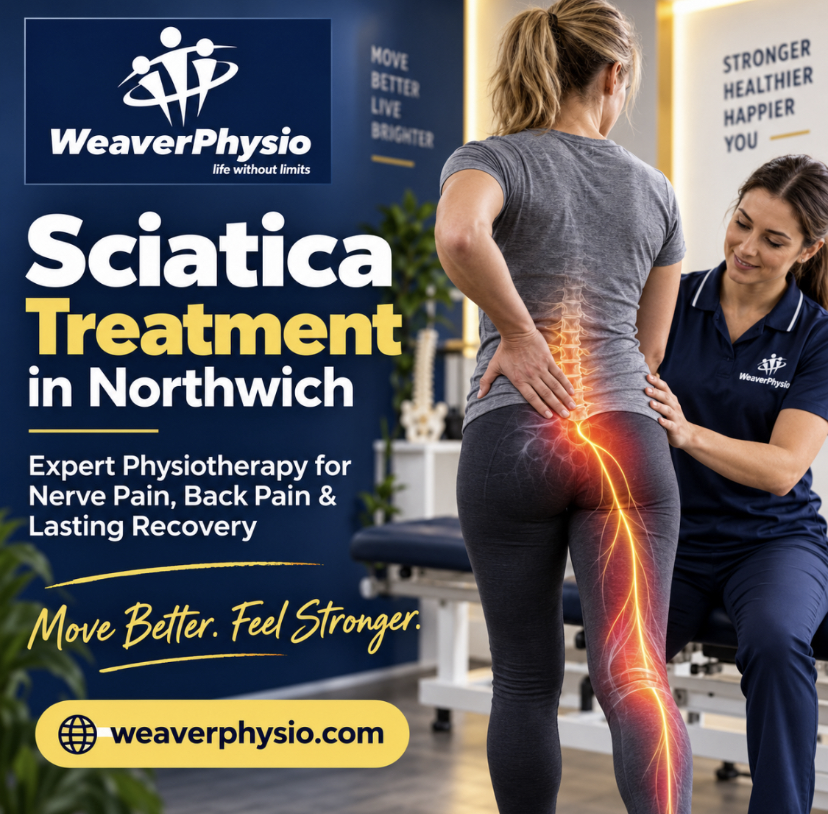
A sharp pain travelling from your lower back into your buttock, leg or foot can be frightening—especially when it disrupts sleep, work, walking or exercise. At Weaver Physio, we provide specialist sciatica treatment in Northwich designed to identify why your symptoms have developed, calm irritable nerve pain and help you return to confident, comfortable movement.
Sciatica is not a diagnosis on its own. It describes symptoms caused by irritation or compression of the sciatic nerve or one of the nerve roots in the lower back. The right treatment depends on the underlying cause, which is why a detailed assessment is the essential first step.
Our Chartered Physiotherapists combine over 70 years of clinical experience with evidence-based rehabilitation, hands-on treatment and progressive exercise. Whether your symptoms are recent, recurrent or have persisted for months, we create a clear, personalised plan to help you recover.
What Does Sciatica Feel Like?
Sciatica commonly causes pain that begins in the lower back or buttock and travels down one leg. Symptoms can vary greatly between people and may include:
Sharp, burning, electric or shooting pain
Tingling, pins and needles or numbness
Pain in the buttock, thigh, calf, ankle or foot
Weakness or a feeling that the leg may give way
Symptoms aggravated by sitting, bending, coughing or prolonged standing
Difficulty sleeping, walking, driving or exercising
Not all leg pain is sciatica. Hip problems, muscle injuries, referred spinal pain and circulation issues can sometimes produce similar symptoms. A professional assessment helps establish the most likely cause and the safest, most effective route forward.
For general NHS advice on symptoms and when to seek urgent medical help, see the NHS guide to sciatica
Why a Specialist Sciatica Assessment Matters
Searching for sciatica treatment in Northwich can bring up conflicting advice: rest completely, stretch more, avoid movement, strengthen your core, use heat, use ice. The truth is that the best approach depends on your individual presentation.
At Weaver Physio, your assessment goes beyond simply identifying where it hurts. We take time to understand:
When and how your pain began
Your work, sport, exercise and lifestyle demands
Movement patterns that aggravate or relieve symptoms
Previous back, hip or leg injuries
Your spinal movement and joint mobility
Leg strength, reflexes and sensation
Neural sensitivity and functional capacity
Where appropriate, we carry out a neurological screen, including muscle testing, reflexes and sensory assessment. This helps us monitor your recovery and identify whether there are signs that require GP, imaging or specialist referral.
Common Causes of Sciatic-Type Pain
Sciatica can arise for several reasons. Some people experience symptoms after lifting, twisting, long periods of sitting or a flare-up of lower-back pain. Others notice a more gradual onset.
Common causes include:
Lumbar Disc Irritation or Disc Prolapse
A spinal disc can become irritated or protrude enough to sensitise a nearby nerve root. This may cause back pain alongside leg pain, tingling, altered sensation or weakness. Most disc-related episodes improve with a well-managed conservative programme, including guided movement, progressive exercise and education.
Spinal Joint or Nerve Root Sensitivity
Restricted movement, inflammation or sensitivity around the lower-back joints can irritate spinal structures and produce referred pain into the leg.
Piriformis and Deep Gluteal Pain
In some cases, tightness or irritation around the deep buttock muscles may contribute to sciatic-type symptoms. This is sometimes described as piriformis syndrome. The treatment approach differs from disc-related pain, so an accurate assessment is important.
Reduced Strength, Mobility or Load Tolerance
Poor hip control, reduced spinal mobility, prolonged static posture or a sudden increase in physical activity can all contribute to recurring lower-back and leg symptoms. These factors are often addressed during rehabilitation to reduce the likelihood of a flare-up.
Our Approach to Sciatica Treatment in Northwich
Weaver Physio uses a structured, person-centred approach. Your treatment plan is tailored to your symptoms, diagnosis, goals and tolerance to activity.
1. Settle Pain and Nerve Irritability
In the early stage, the priority is to help you become more comfortable and confident moving again. Depending on your assessment, this may include:
Advice on positions, pacing and activity modification
Gentle spinal and hip mobility exercises
Manual therapy, where clinically appropriate
Soft-tissue treatment for protective muscle tension
Acupuncture or dry needling for selected patients
Specific nerve-mobility exercises, often called neural glides
A simple home programme to manage symptoms between appointments
We do not rely on passive treatment alone. Hands-on treatment can be helpful for short-term symptom relief, but it works best alongside a clear plan to restore strength, movement and confidence.
2. Restore Comfortable Movement
As pain settles, we progress carefully from avoiding aggravating movements to rebuilding normal movement. This may include improving lumbar mobility, hip movement, walking tolerance and confidence with everyday tasks such as sitting, driving, dressing and lifting.
3. Rebuild Strength and Stability
Long-term recovery requires more than temporary pain relief. Your rehabilitation may focus on:
Core and trunk control
Hip and gluteal strength
Leg strength and balance
Functional lifting and bending technique
Gradual exposure to activities that previously caused symptoms
A progressive return to gym training, running, work or sport
Our on-site rehabilitation facilities allow us to progress your programme safely and practically, rather than leaving you with generic exercises.
4. Prevent Future Flare-Ups
Once you are moving more freely, we help you understand the factors that may have contributed to your symptoms. This could include workload, training errors, prolonged desk posture, reduced strength, poor recovery or movement habits.
For active people, we can also link rehabilitation with our Sports Injury Rehabilitation (/sports-injury-rehabilitation) and Runner’s MOT and gait analysis (/runners-mot) services to support a safe return to higher-level training.
Evidence-Based Physiotherapy for Sciatica
Clinical guidance supports an active, tailored approach to low-back-related leg pain. Education, gradual return to normal activity and appropriately prescribed exercise are central to recovery. Manual therapy may be used as part of a broader treatment programme, rather than as a stand-alone solution.
We follow current evidence and adapt care to the person in front of us. You can read the latest clinical recommendations in the NICE guideline on low back pain and sciatica
Treatment is never one-size-fits-all. Some people need help calming a highly sensitive nerve before progressing exercise; others benefit from improving mobility, load tolerance and strength more quickly. Your plan is adjusted as your symptoms and confidence improve.
Can Sports Massage Help Sciatica?
Sports massage can be useful when muscle guarding, buttock tension or secondary tightness is contributing to discomfort. It may help reduce tension around the lower back, hips and legs, improve short-term comfort and make it easier to begin active rehabilitation.
However, massage alone is unlikely to resolve ongoing nerve irritation. At Weaver Physio, we may combine soft-tissue therapy with physiotherapy assessment, mobility work and progressive strengthening to address both your symptoms and the factors driving them.
Learn more about our Sports Massage in Northwich
When Should You Seek Urgent Medical Advice?
Most cases of sciatica improve with appropriate conservative care, but urgent medical assessment is needed if you experience:
New difficulty controlling your bladder or bowel
Numbness around the genitals, buttocks or inner thighs
Rapidly worsening leg weakness
Severe symptoms following significant trauma
Unexplained weight loss, fever or feeling generally unwell alongside back pain
If you develop these symptoms, seek urgent medical help immediately rather than waiting for a routine physiotherapy appointment.
Book Sciatica Physiotherapy in Northwich
You do not need to live around leg pain, disturbed sleep or the worry of “doing the wrong thing.” At Weaver Physio, we assess the cause of your symptoms, explain the findings clearly and build a practical recovery plan around your life.
Our team helps patients from Northwich, Hartford, Weaverham, Winsford, Middlewich, Knutsford and across Cheshire with back pain, sciatica, disc-related symptoms and sports injuries.
Book your sciatica assessment at Weaver Physio today and take the first step towards moving with more freedom, strength and confidence.
Visit https://www.weaverphysio.com to book.
Frequently Asked Questions
Do I need a GP referral for sciatica treatment?
No. You can self-refer directly to Weaver Physio for an assessment. If you are using private medical insurance, check your individual policy requirements, as some insurers may ask for GP or consultant authorisation.
How many physiotherapy sessions will I need?
This depends on the cause, severity and duration of your symptoms, as well as your goals. Some people improve quickly, while persistent or recurrent symptoms may need a longer period of rehabilitation. Following your initial assessment, we will explain what is realistic for your situation and review progress throughout your care.
Can physiotherapy help a slipped or herniated disc?
Yes. Physiotherapy is commonly used to manage disc-related sciatica. A programme may include advice, gradual movement, symptom-guided exercise, strength work and return-to-activity planning. If your assessment suggests a need for imaging, medication review or a specialist opinion, we can advise on the appropriate next step.
Should I rest completely with sciatica?
Complete bed rest is rarely helpful for most people. Short-term modification of painful activities can be sensible, but gradual, guided movement is usually important for recovery. We will help you find the right balance between doing too much and avoiding activity completely.
Can I continue working or exercising with sciatica?
Often, yes—with modifications. We can advise on sitting, lifting, driving, gym exercise, running and workplace activity so you can remain as active as safely possible while symptoms settle.