
How to Improve Running Economy:

October 22, 2026

A Practical Guide for Runners

Running economy describes how much energy your body uses to run at a steady pace. At the same speed, a runner with better economy uses less energy, which may help them maintain pace for longer or feel more comfortable during training. It is one part of running performance, alongside aerobic fitness and the speed you can sustain.


There is no single technique or exercise that improves running economy for every runner. It is influenced by several factors, including training history, strength, coordination, running mechanics, fatigue and the pace being assessed. A steady, gradual approach is usually more useful than trying to make sudden changes to your running form.


At Weaver Physio, we help runners understand how they move and build a practical plan around their goals. Improving balance, strength, stability, coordination and simple plyometrics can all have a place in that plan, alongside consistent running and recovery.


What is running economy?


Running economy is commonly described as the oxygen or energy cost of running at a given submaximal speed. In simple terms, it reflects how demanding a particular pace is for you. It is usually measured in a laboratory, but runners can also use practical signs of progress, such as feeling more relaxed at a familiar pace or maintaining pace with less perceived effort.


Running economy is not the same as running speed. Two runners with similar aerobic capacity may use different amounts of energy at the same pace. Equally, improvements in economy do not guarantee a particular race result: performance also depends on training, endurance, pacing, health, conditions and many other factors. A review of the research describes running economy as a complex combination of metabolic, cardiorespiratory, biomechanical and neuromuscular factors.


That complexity matters. It means there is no universal “perfect” stride to copy, and no single posture cue that will transform every runner. The aim is to develop the capacity to run comfortably and efficiently at the speeds and distances that matter to you.


1. Build consistency before chasing quick fixes


The foundation of better running is a training routine you can recover from. Regular running gives your body time to adapt to the repeated demands of the sport. If your training is irregular, or if every run is hard, you may struggle to build the endurance and confidence needed to run efficiently.


A balanced week often includes mostly comfortable running, with harder sessions introduced to suit your experience and goals. Easy runs should generally feel controlled enough that you can speak in short sentences. Faster intervals, hills or tempo running can be useful for some runners, but they should complement your training rather than replace its foundations.


Increase training gradually. A sudden jump in weekly distance, speed work or hill sessions can leave you feeling excessively fatigued and may aggravate a developing problem. There is no single percentage increase that is right for every runner. Consider your recent training, experience, health and recovery when deciding what to add.


If you are returning after a lay-off or injury, a progressive return plan can help you rebuild running tolerance. A physiotherapist can help you decide how to adjust distance, pace and frequency when symptoms are affecting your training.


2. Develop strength that supports your running


Strength training can help runners produce and control force. This may support their ability to maintain form when tired and handle the repeated loading involved in running. Research reviews suggest that strength training, including heavier resistance and plyometric methods, may improve running economy for some middle- and long-distance runners. The effects depend on the programme and the runner, so strength work should be planned around your current ability and running load.


A useful strength programme does not need to be complicated. It may include exercises for the hips, thighs, calves and trunk, such as:


Sit-to-stand or squat variations

Step-ups and split squats

Hip-hinge exercises

Calf raises with a straight and bent knee

Single-leg balance with controlled movement

Trunk exercises that challenge control, such as a dead bug or side plank


Choose exercises that you can perform with good control. Start with a manageable number of repetitions and sets, then build the challenge over time by adjusting the resistance, range or number of repetitions. Consistency matters more than performing a long list of exercises once in a while.


Calf strength deserves attention because the lower leg and ankle contribute to the repeated push-off and landing demands of running. However, no one muscle group works in isolation. A well-rounded programme should reflect your assessment, running experience and any symptoms you have.


3. Combine balance and stability with strength


Balance and stability help you control your body as you move from one leg to the other. Running involves repeated single-leg support, so exercises that challenge balance can be a useful part of a broader conditioning plan.


Try simple options such as a single-leg stand, a controlled step-down or a single-leg calf raise. To progress, add a small reach with the free leg or perform the movement on a less stable surface only if you can maintain control. The aim is not to wobble as much as possible; it is to practise steady, deliberate movement.


“Stability” does not mean keeping every joint rigid. Running requires movement. It is more helpful to think of stability as the ability to control movement while producing force. Strength, balance and coordination all contribute to that control.


Balance work alone should not be presented as a guaranteed way to improve running economy. It is one useful element of a complete programme, especially when a runner’s assessment identifies balance or single-leg control as an area to develop.


4. Improve coordination through simple, purposeful practice


Coordination is how your body organises movement. During running, the legs, arms and trunk work together in a repeated pattern. As you become tired, your sense of rhythm and control may change, so coordination practice can be useful when it is relevant to your needs.


You can begin with relaxed drills, such as marching, skipping without height, or short strides at a comfortably quick pace. Keep the focus on rhythm and smoothness rather than forcing a particular foot strike or trying to make every stride look identical.


If you use drills, keep them short and purposeful. They should complement your running rather than leave you fatigued before a key session. An individual assessment can help determine whether drills are likely to address a specific movement or training goal.


5. Add simple plyometrics gradually


Plyometric exercises involve quick, controlled movements where the muscles absorb force and then produce it again. Examples include small hops, skipping and low-level bounds. These exercises can develop the ability to produce force quickly, which is relevant to running’s repeated contact with the ground.


Start with basic movements and a low number of contacts. For example, you might begin with gentle skipping for short intervals or small two-foot hops, allowing enough recovery between sets to keep the movement controlled. If you tolerate these well, you can progress gradually to single-leg variations or slightly more demanding drills.


Plyometrics are not suitable for everyone at every stage. If you have current pain, a recent injury, significant weakness, or limited experience with impact exercise, seek professional guidance before adding them. Build your running base and strength first where needed. The aim is controlled, repeatable movement, not maximal height or distance.


Evidence reviews have found that plyometric and other strength training methods may support running economy, although results vary between studies and programmes. A systematic review and meta-analysis of strength training in middle- and long-distance runners is available here .


6. Think about technique without forcing a “perfect” form


Running form can influence how you move, but the evidence does not support one ideal style for everyone. Your natural stride is shaped by your anatomy, speed, training history and the surface you run on. Trying to copy another runner or changing several aspects of your form at once may make running feel awkward.


Instead, notice how you feel at a familiar pace. Do you feel relaxed and in control? Do you become tense or start overstriding as you tire? Are you repeatedly experiencing pain in the same area? These observations may help identify whether a technique change or a strength and conditioning focus is worth exploring.


A small, individual change may be considered when there is a clear reason for it. It should be introduced gradually and reviewed in the context of comfort, performance and symptoms. Video gait analysis can help you observe movement patterns, but a video does not diagnose an injury on its own. Findings need to be interpreted alongside your history, symptoms and physical assessment.


7. Manage fatigue, recovery and training load


Running while fatigued can make a pace feel harder and may affect your coordination and control. Recovery is therefore part of training, not time wasted between sessions.


Build easier days into your schedule. Pay attention to sleep, food, hydration and how you feel before training. If you are persistently tired, losing motivation or noticing a decline in performance, consider whether your training load and recovery are balanced.


You do not need to stop all activity whenever you feel a mild ache, but pain that is worsening, changing your stride or persisting between runs deserves attention. Early advice may help you adjust your plan before the problem becomes more disruptive.


8. Use a simple weekly structure


A runner’s week should suit their current fitness, goals and available recovery time. A general structure might include:


Easy running to build routine and aerobic endurance

One quality session, such as controlled intervals, tempo running or hills, if appropriate

Strength training on one or two days, adjusted around harder runs

Balance, stability and coordination practice in short, manageable blocks

Simple plyometrics only when you have the strength and tolerance to progress safely

Recovery time to adapt between demanding sessions


This is a framework, not a prescription. Beginners, experienced runners, people returning from injury and those preparing for different distances will need different plans. If you have an event coming up, avoid adding several new training elements at once.


How can a physiotherapist help with running economy?


A physiotherapist can help you look at the whole picture: your symptoms, training history, goals, strength, mobility, balance and running movement. The purpose is not to label every variation as a problem. It is to identify relevant factors and agree on practical next steps.


At Weaver Physio in Northwich, a running assessment may include discussion of your training and injury history, movement and strength testing, and video gait analysis where appropriate. We can then help you build a personalised plan that may combine running adjustments, strength work, balance and stability exercises, coordination drills, simple plyometrics and a gradual return to activity.


Our team brings over 70 years of combined clinical experience. If pain is affecting your running, or you would like support with a structured Runner’s MOT, visit Weaver Physio to learn more about our physiotherapy and running services.


Frequently asked questions


Can strength training improve running economy?


It may. Research reviews indicate that strength training can improve running economy for some runners, but the effect varies with the programme, runner and training context. It should be added alongside appropriate running, not treated as a replacement for it.


Do plyometrics make you a more efficient runner?


Plyometrics may help some runners develop rapid force production and may contribute to improvements in running economy. They need to be introduced gradually, with the exercise and volume matched to your ability and injury history.


Should I change my running technique?


Only if there is a clear reason and the change can be introduced comfortably. There is no single running style that suits everyone. Consider an assessment if pain, recurring injury or a particular performance goal is prompting you to change your form.


How long does it take to improve running economy?


There is no fixed timeline. Adaptations depend on your training history, consistency, recovery and the changes you make. Build gradually and review how your running feels over time rather than expecting an instant change.


Improve your running with a balanced plan


Improving running economy is a long-term process. Consistent, appropriate running provides the foundation; strength supports force production; balance and stability help you control movement; coordination develops rhythm; and simple plyometrics can add a progressive impact challenge when suitable.


The best programme is one you can perform consistently and recover from. If you are unsure where to start, or an injury is disrupting your training, Weaver Physio can help you assess your needs and build a plan to support confident, efficient running.
October 22, 2026
Recovery and Injury Prevention
October 14, 2026
A Practical Guide
By M NORMAN • October 8, 2026
A Practical Guide for Endurance Runners
October 7, 2026
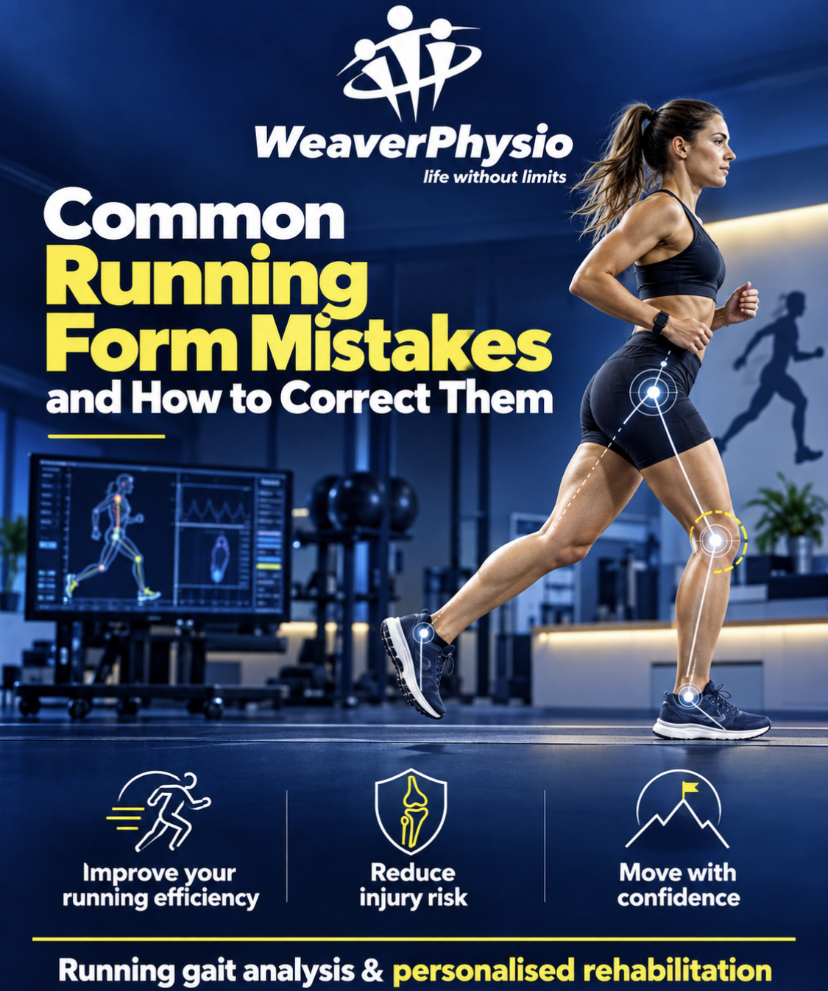
Have you ever been told that your running style is “wrong” and immediately wondered whether you need to change it? Advice online can make normal differences in movement look like faults. While certain running habits may be worth exploring—particularly when pain keeps returning—there is no single perfect stride, cadence or foot strike for every runner. At Weaver Physiotherapy & Sports Injury Clinic, we take an individual approach to running technique. Your training history, symptoms, strength, mobility, goals and the way you respond to load all matter. For runners in Northwich, Middlewich, Winsford, Knutsford, Sandbach, Frodsham and Tarporley, our Runner’s MOT and running gait analysis⁠ provides clear, personalised feedback rather than generic rules. What are common running form mistakes? A “running form mistake” is often better described as a movement habit to investigate. A pattern may look unusual without being harmful, and a video alone cannot confirm that it is the cause of pain. Common concerns include: Overstriding – the foot appearing to land well ahead of the body. Upper-body tension – raised shoulders, clenched hands, a tight jaw or stiff arm swing. Forcing foot strike – deliberately trying to run on the forefoot or heel when it feels awkward. Slumped posture – losing trunk control as fatigue develops. Abrupt changes in technique – trying to alter cadence, posture and foot strike at the same time. These patterns can change with pace, hills, footwear, fatigue, confidence and training load. Research has found limited evidence that individual biomechanics alone predict running injury, which is why form should be considered alongside the wider picture rather than treated as a diagnosis. Is there one correct way to run? No. Effective running does not look identical from person to person. Your anatomy, strength, experience, speed, terrain and fatigue level all influence your stride. A single photograph or short clip captures only one moment. It cannot explain how you feel during a run, what your training has involved that week, or whether a movement pattern is actually contributing to symptoms. If you are comfortable, progressing well and free from persistent pain, you may not need to change your technique simply because it differs from someone else’s. The aim is not to chase a “perfect” running style. It is to understand your own movement and make sensible adjustments only when they are relevant to your goals or symptoms. How to assess your running form safely Start with one question. Perhaps your foot feels as though it reaches too far forwards, your shoulders tighten on longer runs, or you notice discomfort appearing as you fatigue. During an easy run at your usual pace, consider: Does your breathing feel relaxed? Are your shoulders, hands and jaw unnecessarily tense? Does your stride feel comfortable and natural? Does your movement alter later in the run? Is there recurring pain during, after or the following day? If you use video, record a brief clip from a safe, consistent position beside the route or on a treadmill. Never hold or watch a phone while running. Footage can be useful for observation, but it should prompt questions—not provide a self-diagnosis. How to change running technique without overdoing it Avoid making dramatic changes based on a social-media tip or a one-size-fits-all rule. A sudden change in cadence, posture or foot strike may feel unnatural and can make it difficult to work out what is helping. Instead: Choose one area to explore. Use one simple cue during an easy run. Keep the adjustment gentle and brief. Notice how it feels during the run and over the next 24–48 hours. Do not introduce several technique changes at once. For example, if you feel tense through the upper body, a helpful cue may be “soft shoulders and easy arms” rather than forcing a rigid posture. If you are concerned about stride length, focus on a light, comfortable rhythm rather than trying to land in a prescribed position. Training progression matters too. Increasing distance, pace, hills and frequency too quickly can overload tissues, regardless of how your running looks. NHS advice recommends building running gradually and listening to pain rather than pushing through it. Read the NHS guide to common running injuries ⁠. When should you seek individual running advice? Consider a running assessment if pain: Keeps returning or becomes more severe Changes the way you run Persists after reducing or adapting training Is associated with swelling, weakness, limping or a loss of confidence Leaves you unsure which changes, if any, are appropriate Sudden severe pain, inability to bear weight, major swelling, numbness, deformity or a suspected serious injury should be assessed urgently. NHS guidance on sprains and strains explains when to seek urgent help. What can running gait analysis help with? A running gait analysis does not promise to predict injury or reveal one universal correction. It can, however, provide a clearer view of movement patterns in the context of your symptoms, training and goals. At Weaver Physio, our Runner’s MOT (/runners-mot)⁠ combines slow-motion video gait analysis with strength, mobility and movement assessment. We look at factors such as: Running rhythm and lower-limb control Trunk, hip, knee and foot movement Strength, balance and mobility Previous injuries and current symptoms Training volume, recovery and running goals Your findings are then used to create practical, personalised recommendations. This may include a gradual gait cue, running-specific strength work, mobility exercises, load-management advice or a structured return-to-running plan. Our Chartered Physiotherapists and Sports Rehabilitators bring more than 70 years of combined clinical experience to help runners move with greater understanding and confidence. Build a stronger, more confident running stride Running form is not a test you have to pass. A movement pattern may be worth exploring, but it does not automatically mean that something is wrong. Pay attention to comfort, recurring symptoms and changes that develop with fatigue. Make adjustments gradually, progress training sensibly and seek individual support if pain continues. For runners across Northwich and Cheshire, Weaver Physio’s running gait analysis service (/runners-mot)⁠ offers professional, tailored guidance to help you run stronger and with more confidence. Frequently Asked Questions Is there one correct running form for everyone? No. There is no single ideal foot strike, cadence or posture that applies to every runner. Comfortable, efficient running can look different depending on the individual, their pace, experience and physical characteristics. Can changing my running form cause pain? It can. Sudden or uncomfortable changes may increase stress in unfamiliar areas. Make one gradual change at a time and reduce or stop if pain worsens. How can I tell if I overstride? Overstriding may appear as the foot landing well ahead of your body, but this does not automatically mean it is causing a problem. A short video can provide useful context, while a gait assessment can help interpret the pattern alongside your symptoms and training. When should I book a running gait analysis? Book an assessment if pain is recurring, your running style has changed, you are returning from injury, or you would like clearer guidance about your stride and training. Weaver Physio supports runners from Northwich, Middlewich, Winsford, Knutsford, Sandbach, Frodsham, Tarporley and across Cheshire.
September 23, 2026
Expert Joint Care
September 21, 2026
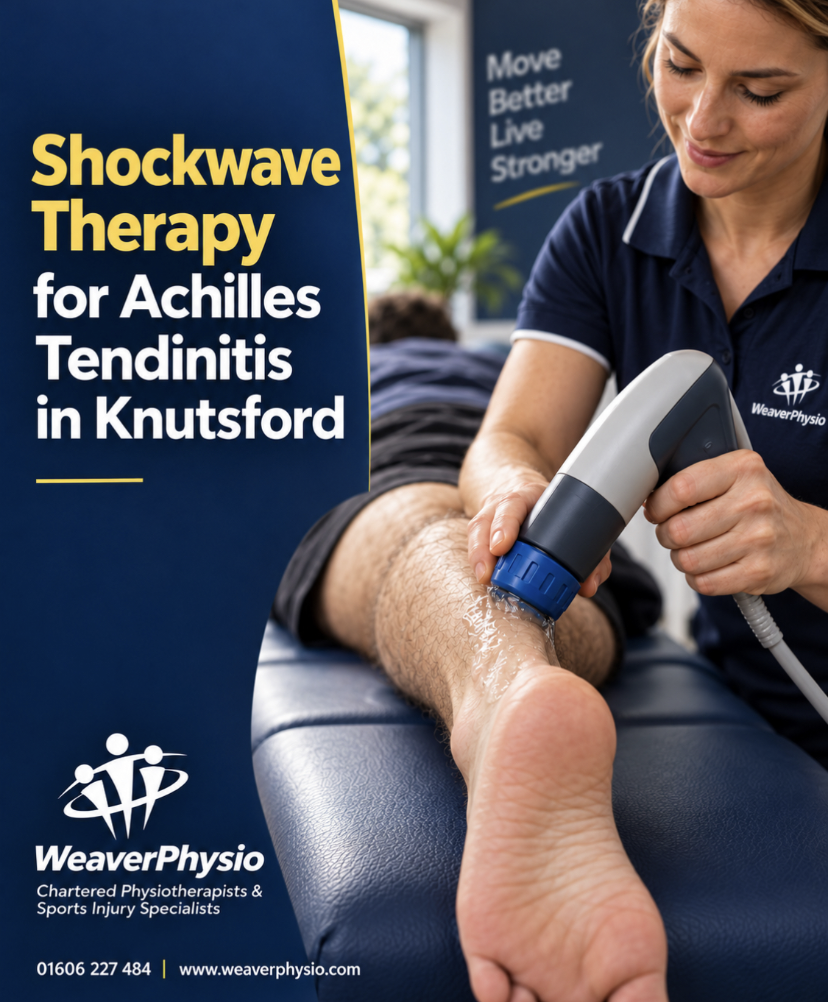
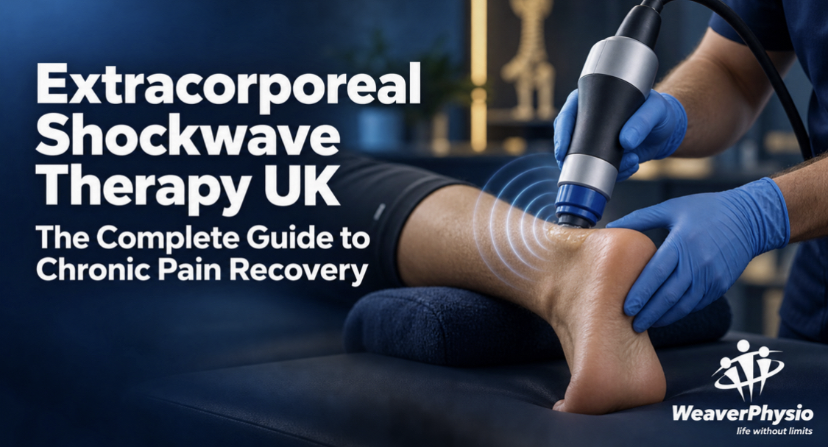
Persistent pain at the back of the heel can make simple things—walking the dog, climbing stairs, training for the Knutsford 10K or enjoying a run around Tatton Park—feel far more difficult than they should. At Weaver Physiotherapy & Sports Injury Clinic, we provide shockwave therapy ⁠ as part of a structured rehabilitation programme for people with persistent Achilles tendon pain. Our Northwich clinic is easily accessible from Knutsford and supports active adults, runners and sportspeople across Cheshire. The goal is not simply to settle symptoms for a few days. It is to understand why the tendon is painful, improve its capacity for load, and help you return to the activities that matter to you with greater confidence. Achilles Tendinitis or Achilles Tendinopathy? “Achilles tendonitis” is the term most people use when describing pain, stiffness or swelling around the tendon at the back of the ankle. However, when symptoms have persisted for several weeks or months, the more accurate clinical term is often Achilles tendinopathy. Tendinopathy is a complex condition associated with tendon pain, reduced function and lower tolerance to exercise or repeated loading. The tendon may become more sensitive and less able to cope with the demands being placed upon it. It is not always a straightforward inflammatory problem, which is why complete rest, stretching or massage alone may not create a lasting solution. A detailed review of tendinopathy research describes the changes that can occur within painful tendons and the importance of an individualised management approach. Common symptoms include: Pain or stiffness at the back of the heel, especially first thing in the morning Discomfort when walking uphill, climbing stairs or rising onto tiptoes Pain during or after running, football, tennis, gym training or long walks Thickening or tenderness in the tendon Symptoms that improve as you warm up, then return later At Weaver Physio, we assess whether your symptoms are likely to be related to mid-portion or insertional Achilles tendinopathy, and screen for other possible causes of heel and calf pain. If there is concern about a rupture, significant tear or another condition requiring medical investigation, we will advise on the appropriate next step. What Is Shockwave Therapy? Extracorporeal Shockwave Therapy—often shortened to ESWT or radial shockwave therapy—uses controlled acoustic pressure waves delivered through a handheld applicator. It is not an electric shock and does not involve injections or surgery. During treatment, gel is applied to the skin and the handpiece is positioned over the relevant area of the Achilles tendon. The sensation is commonly described as firm tapping or pulsing. Your clinician can adjust the treatment intensity to keep it manageable. Shockwave therapy may be considered for longer-standing tendon pain, particularly where a well-planned rehabilitation programme has not yet delivered the progress you need. It should always be used following a thorough assessment and alongside progressive exercise—not as a standalone “quick fix”. How Shockwave Therapy May Help Achilles Pain Shockwave therapy is thought to influence pain sensitivity and stimulate biological responses within the tendon and surrounding tissues. The practical aim is to create a window in which you can move more comfortably and build strength more effectively. For Achilles tendinopathy, a comprehensive treatment plan may help you to: Reduce pain that is limiting walking, work or sport Improve confidence with daily activity and exercise Progress calf-strength and tendon-loading exercises more successfully Address training errors, footwear issues and movement factors contributing to overload Build resilience for a return to running, sport or long-distance walking Outcomes vary between individuals. Some people notice a change in symptoms early in treatment, while tendon adaptation and improvements in load tolerance typically take longer. We will always discuss realistic expectations and measure your progress against your own goals. Your Shockwave Therapy Assessment Near Knutsford Your journey starts with a detailed physiotherapy assessment. We look beyond the painful spot to understand the full picture, including: Your symptom history and training or activity levels Previous injuries and treatment Calf strength, ankle mobility and balance Achilles tendon tenderness and loading tolerance Footwear, running surface and recent changes in training volume Hip, knee and foot control where relevant This allows us to confirm whether shockwave therapy is an appropriate option and develop a recovery plan tailored to you. Weaver Physio’s team also provides specialist physiotherapy and sports injury rehabilitation ⁠, so your treatment can be integrated with hands-on care, exercise rehabilitation and return-to-sport planning where needed. What Does a Typical Course Involve? A course of shockwave therapy commonly involves three to five sessions, often spaced about one week apart. The exact number and timing will depend on your presentation, response to treatment and rehabilitation goals. Each appointment is combined with guidance on tendon loading. This may include: Isometric calf exercises for pain management Progressive heel raises and heavy slow resistance work Soleus and gastrocnemius strengthening Balance, control and single-leg stability work A gradual return to running, hills, speed work or plyometric exercise Rather than avoiding all activity, we help you find an appropriate level of movement that keeps the tendon challenged without repeatedly exceeding its current capacity. Is Shockwave Therapy Right for You? Shockwave therapy may be suitable if you have persistent Achilles symptoms that have not settled with sensible activity modification and a targeted rehabilitation programme. It is particularly relevant for people who want a non-invasive option before considering more invasive interventions. However, it is not suitable for everyone. Your physiotherapist will discuss relevant precautions and assess factors such as pregnancy, blood-clotting issues, certain medications, recent steroid injection near the treatment area, suspected rupture or other medical considerations. It is also important to seek urgent medical advice if you experience a sudden pop in the back of the ankle, immediate weakness when pushing off, marked bruising or an inability to rise onto your toes. These can be warning signs of an Achilles rupture. Why Choose Weaver Physio? Weaver Physiotherapy & Sports Injury Clinic combines clinical assessment with a practical understanding of sport, training and everyday activity. We are based in Northwich and regularly support patients travelling from Knutsford, Alderley Edge, Holmes Chapel, Middlewich and across Cheshire. Our approach is built around three principles: Accurate assessment We identify the likely driver of your Achilles pain rather than treating every heel problem the same way. Evidence-informed rehabilitation Shockwave therapy is used as one part of a clear, progressive plan designed to restore strength and confidence. A return to the life you enjoy Whether your goal is pain-free dog walks, a hiking holiday, club running or competitive sport, your programme is shaped around it. Book an Achilles Tendon Assessment Persistent Achilles pain does not have to dictate how active you can be. If you are looking for shockwave therapy for Achilles tendinitis in Knutsford, Weaver Physio can help you understand your options and build a tailored recovery plan. Contact Weaver Physiotherapy & Sports Injury Clinic to arrange an assessment: Book or contact Weaver Physio 01606 227 484 07795 908 027 110 Middlewich Road, Northwich, CW9 7DP Frequently Asked Questions Is shockwave therapy painful? Most people describe shockwave therapy as uncomfortable rather than painful. The feeling is similar to firm tapping against the skin, and the intensity can be adjusted throughout treatment. Mild soreness, redness or tenderness can occur afterwards and usually settles within a few days. How many sessions will I need? Many patients have a course of three to five sessions, usually one week apart. Your clinician will recommend an appropriate plan based on your symptoms, tendon presentation and response to treatment. Can I exercise after shockwave therapy? Light daily activity is usually encouraged, but your clinician may advise avoiding high-impact exercise—such as running, jumping or hard hill work—for a short period after treatment. You will be given clear guidance on what to continue, reduce and progress. Will shockwave therapy cure my Achilles pain? No treatment can guarantee a cure. Shockwave therapy may help reduce pain and support recovery in suitable cases, but lasting improvement usually depends on combining treatment with a progressive loading programme, sensible activity management and a gradual return to sport.
September 16, 2026
A Complete Guide to Recovery and Better Running
September 16, 2026
A Non-Invasive Approach to Chronic Tendon Pain
September 15, 2026
Expert Physiotherapy for Nerve Pain, Back Pain and Lasting Recovery
September 10, 2026
Expert Treatment for Recovery, Mobility & Performance
Show More