
Running Economy
How Measurement and Stride Affect Efficiency

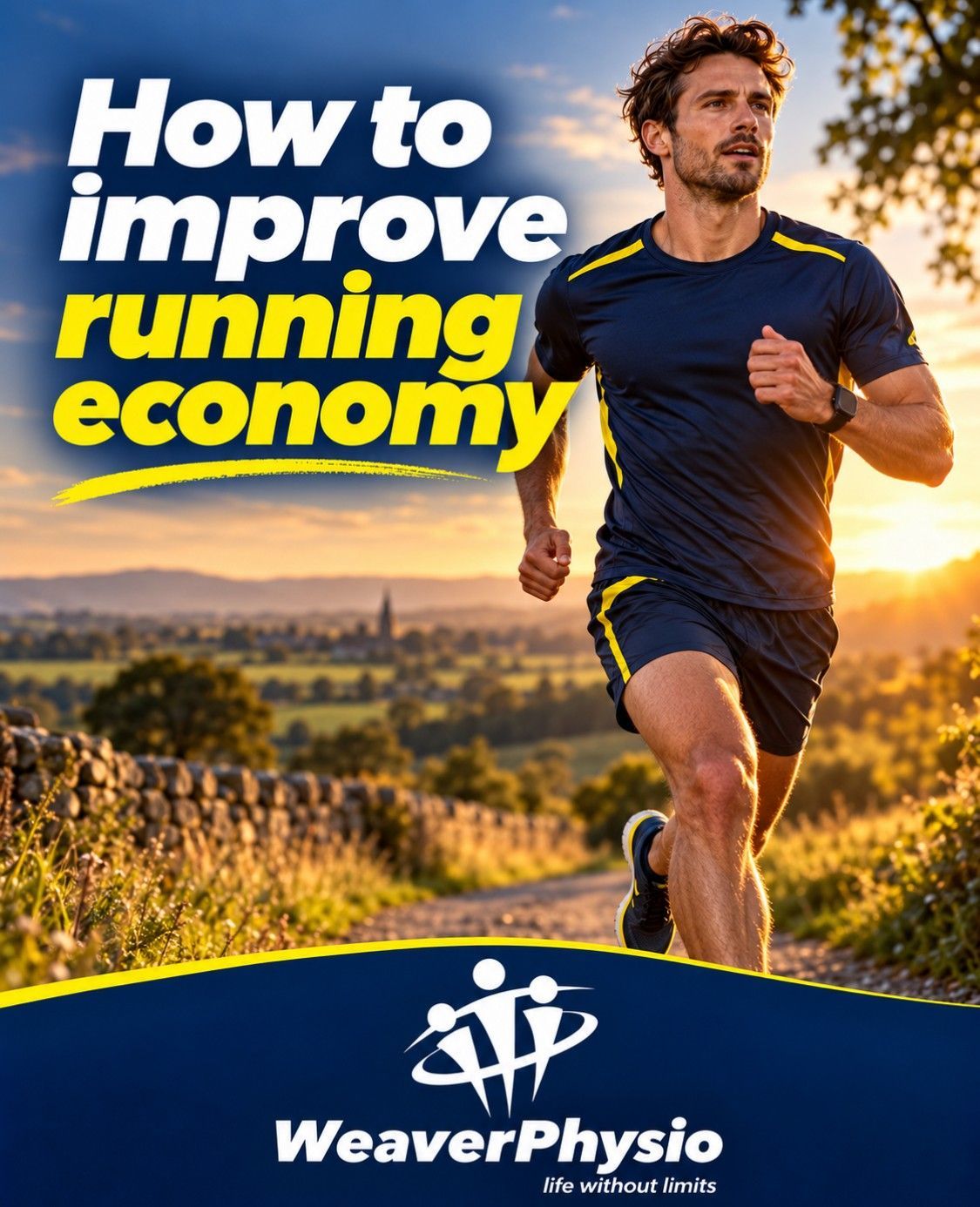
Running economy is one of the most useful ways to understand why one runner can hold a pace comfortably while another works much harder at the same speed. It is not simply about having a longer stride, a higher cadence or a particular running style. Running economy describes the amount of energy your body needs to maintain a steady, submaximal running pace.
A more economical runner uses less energy to cover the same distance at the same speed. Over time, that can help preserve effort, improve endurance and make training feel more sustainable. For runners preparing for a 5K, half marathon, marathon or trail event, improving economy can be an important part of performance alongside aerobic fitness, pacing, strength, fuelling and recovery.
At Weaver Physio, we regularly see runners who feel that their usual pace has become harder, who are unsure whether their stride is contributing to discomfort, or who want to improve efficiency without making unnecessary changes to their natural running pattern. This guide explains what running economy means, how it can be measured, how stride length may influence it, and practical ways to improve it.
What is running economy?
Running economy is the energy demand of running at a particular submaximal speed. In a laboratory, this is usually measured by the amount of oxygen you use while running at a controlled pace. If two runners move at the same speed, but one uses less oxygen and energy, that runner is considered more economical at that pace.
It is sometimes compared with fuel efficiency in a car. Two cars may travel at the same speed, but one uses less fuel to cover the same distance. In running, the “fuel” is the energy your body produces through aerobic and anaerobic systems. Better economy can leave more energy available for sustaining pace, responding to hills or finishing strongly.
Running economy matters because race performance is influenced by more than VO₂ max. Your aerobic capacity remains important, but so do your lactate threshold, pacing, strength, neuromuscular coordination, movement efficiency, training consistency and ability to tolerate an appropriate running load.
A runner can have a good VO₂ max yet still find a particular pace demanding if their movement is inefficient for them, their lower limbs are not producing force effectively, or fatigue is affecting their stride. Equally, a runner with a modest VO₂ max may perform very well if they have strong endurance, effective pacing and a low energy cost at race pace.
Running economy is specific to the speed being tested. A pace that feels easy during a recovery run may feel very different at threshold pace or towards the final miles of a marathon. It is therefore more useful to consider economy in relation to the type of running you want to improve.
How is running economy measured?
The most accurate assessment of running economy takes place in a sports science laboratory. A runner usually completes a controlled treadmill protocol while wearing a mask connected to a metabolic analyser. The equipment measures the oxygen inhaled and carbon dioxide exhaled during steady running.
The key measures can include:
- Oxygen consumption, often called VO₂
- Respiratory exchange ratio, or RER
- Heart rate
- Running speed
- Sometimes blood lactate and perceived effort
- Stride rate and other movement variables
Testing usually involves a series of steady stages, often lasting several minutes each. The speed should be below maximal effort and long enough for the body’s oxygen use to settle. Researchers can then compare oxygen cost at the same speed over time.
A lower oxygen cost at a comparable pace may indicate improved running economy. However, the conditions must be consistent. Treadmill gradient, footwear, temperature, fatigue, nutrition, recent training and test protocol can all influence the result. A single score does not define whether you are a “good” or “bad” runner.
For most recreational runners, a practical field-based approach can still be very useful. Repeat a familiar route or treadmill session at the same pace and record your heart rate, perceived effort, weather conditions and how your legs feel. Over several weeks, you may notice that a pace which once felt demanding becomes more comfortable, your heart rate is lower, or you can maintain form later in the session.
This does not measure oxygen use directly, but it can provide a meaningful picture of progress when the comparison is fair. Consistency is more useful than chasing a universal benchmark.
Why does running economy change?
Running economy is affected by many interacting factors. Some are influenced by training, while others are individual characteristics that should not be forced into a standard template.
Important influences include:
- Aerobic fitness and training history
- Strength and power through the hips, knees, ankles and feet
- Tendon stiffness and the ability to store and release energy
- Neuromuscular coordination
- Running speed and terrain
- Footwear and environmental conditions
- Fatigue, sleep, hydration and carbohydrate availability
- Previous injury and current training load
- Individual anatomy, limb length and natural movement preference
This is why there is no single ideal running technique. A stride pattern that suits one runner may feel awkward or inefficient for another. The goal is not to copy an elite athlete or force a prescribed cadence. The goal is to help your body move efficiently, tolerate training and produce force effectively for the pace and distance you want to run.
Does a longer stride make you more efficient?
Not necessarily. A longer stride does not automatically mean faster or more economical running. Stride length naturally increases as speed rises, but deliberately reaching farther forward with the foot can sometimes create a braking effect.
Overstriding occurs when the foot lands well ahead of the body’s centre of mass. It can be seen in some runners as a pronounced reaching action through the lower leg, often combined with a heavier landing. Rather than allowing the body to move smoothly over the foot, the runner may need to manage more braking force before progressing forwards again.
This does not mean every runner with a longer stride is overstriding, and it does not mean overstriding automatically causes injury. Running-related injuries are multifactorial. Training load, recovery, strength, previous injury, footwear, terrain, sleep and individual tissue capacity all matter.
However, if a runner repeatedly lands far in front of the hips, feels a noticeable braking sensation, develops discomfort around the knees, shins or hips, or finds that their stride becomes louder and heavier when tired, it may be worth assessing the pattern in more detail.
A smoother stride often involves the foot contacting the ground closer to the body, with the leg travelling backwards relative to the hips as the runner moves over it. This should not be interpreted as “run with tiny steps” or “land in one exact position.” The useful question is whether the runner looks and feels relaxed, controlled and able to maintain rhythm at their chosen pace.
Cadence and stride length: finding the right balance
Cadence is the number of steps taken per minute. It is often discussed alongside running economy, but there is no magic number that every runner should aim for.
Some runners naturally take quicker, shorter steps. Others take longer steps at the same speed. Both patterns can be appropriate. Cadence also changes with pace, fatigue, terrain and experience.
A small increase in cadence can sometimes reduce the tendency to reach too far ahead, particularly if a runner has a very pronounced braking pattern. But a dramatic change made overnight can feel unnatural and may overload the calves, Achilles tendons or feet. Any adjustment should be gradual and should be assessed in the context of the runner’s goals, strength and injury history.
Rather than chasing a number on a watch, focus on cues that help you run more naturally:
- Maintain a relaxed, tall posture.
- Let the arms swing comfortably rather than crossing excessively in front of the body.
- Avoid forcing the foot far ahead of you.
- Think about a quiet, light contact with the ground.
- Allow stride length to develop naturally as speed increases.
- Keep changes small and review how your body responds.
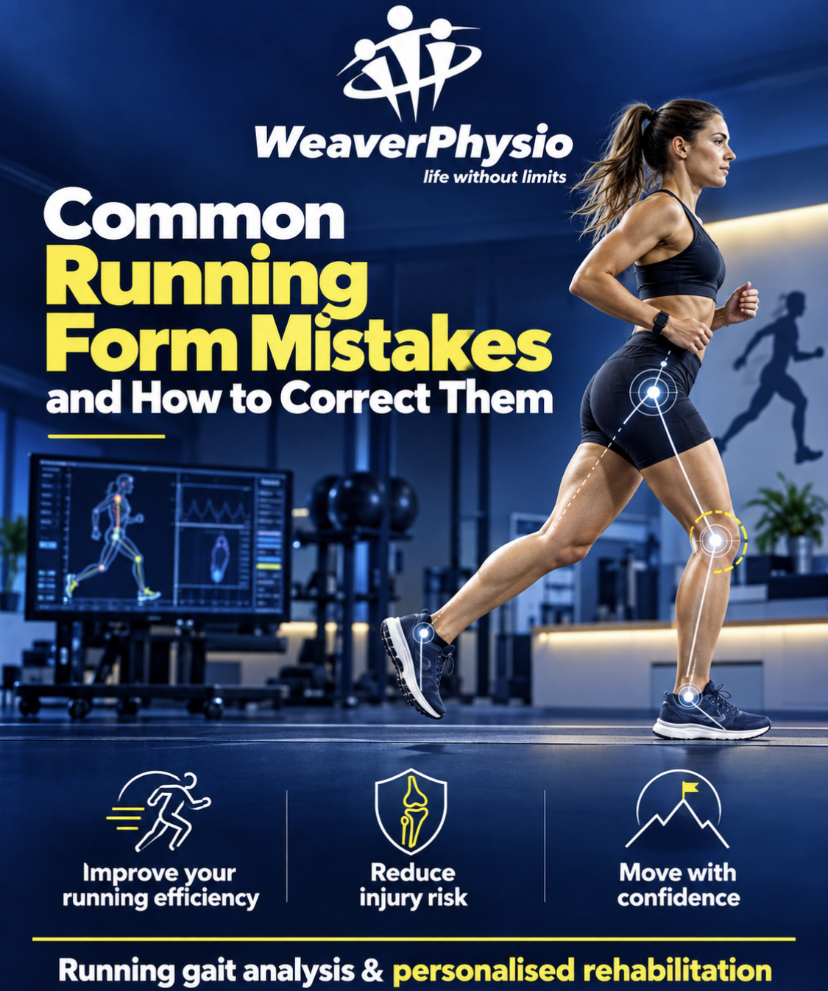
Video gait analysis can be particularly useful when a runner is unsure whether a technique change is appropriate. A side-on recording at easy pace and at a more typical training pace can show whether the same pattern is present throughout the run.
Strength training and running economy
Strength training can support running economy by improving the runner’s ability to produce and absorb force. It does not need to turn a distance runner into a bodybuilder. The purpose is to develop enough capacity through the hips, thighs, calves and trunk to help maintain effective movement, particularly when fatigue builds.
Research reviews suggest that high-load resistance training, plyometric training and combined strength approaches can improve running economy in many middle- and long-distance runners. The size of any improvement varies according to the athlete, programme, training status and testing speed. A systematic review found that improvements are possible, but the most appropriate approach depends on the runner and their current training. Read the research review on strength training and running economy.
Useful exercises may include:
- Split squats and step-ups for single-leg strength
- Squats or leg press for controlled lower-limb force production
- Romanian deadlifts or deadlifts for posterior-chain strength
- Calf raises with a straight knee and bent knee
- Hip bridge variations
- Loaded carries and trunk-control exercises
- Progressive hopping, skipping and jumping drills where appropriate
The best programme is one you can perform consistently with good technique and recover from alongside your running. If you are new to strength training, start with manageable loads and a modest amount of volume. If you already have a consistent strength base, heavier resistance work or carefully planned plyometrics may be appropriate.
Plyometrics include exercises such as hops, bounds and jumps. They may help develop rapid force production and elastic energy return, but they are not suitable for everyone at every stage. A runner with current pain, a recent bone stress injury, an irritated Achilles tendon or limited lower-limb capacity should not simply add a high volume of jumps to their programme.
Running sessions that can support efficiency
Running economy is also specific to running. Strength work is valuable, but it should complement an appropriate endurance programme.
Easy running develops aerobic capacity and helps you build the volume needed for your goals. Tempo runs, threshold sessions and intervals allow you to practise maintaining a controlled rhythm at more demanding paces. Hills can improve lower-limb strength and running-specific force production, but should be introduced progressively.
A balanced week may include easy running, a quality session, a longer endurance run and strength work. The precise structure depends on your training history, event goal, available time and how well you recover.
For example, a runner training for a 10K may benefit from:
- One interval or hill session
- One tempo or threshold-based session
- One longer easy run
- Easy mileage between harder days
- One or two strength sessions
Avoid changing several variables at once. If you increase mileage, add a new gym programme, introduce hills and alter your stride in the same fortnight, it becomes difficult to know what your body is responding to. Small, deliberate changes are easier to monitor and more likely to be sustainable.
Recovery, fuelling and running efficiency
Running economy does not exist separately from recovery. Poor sleep, insufficient carbohydrate intake, dehydration, accumulated fatigue and inadequate rest can all make a familiar pace feel much harder.
For runners training regularly, carbohydrate availability supports quality sessions and longer runs. Protein supports recovery and adaptation. Hydration needs vary with sweat rate, temperature and session duration. You do not need a perfect nutrition plan to improve economy, but under-fuelling can make it harder to train consistently and may increase the risk of low energy availability.
Body mass can affect the energy cost of running, but weight loss should never be treated as a stand-alone performance strategy. Health, strength, fuelling, recovery and long-term training consistency matter far more than chasing a quick change on the scales.
When should you review your running stride?
A stride assessment may be useful if:
- You have recurring pain during or after running.
- You notice a heavy landing or a pronounced braking sensation.
- Your running feels increasingly inefficient without a clear reason.
- You are returning after injury and want to rebuild confidence.
- You are preparing for a key race and want to understand movement patterns.
- You are considering a major footwear, cadence or technique change.
At Weaver Physio, a Runner’s MOT can include a review of your running history, goals, strength, mobility and running gait. The aim is to identify practical areas that may support your running, rather than judging you against a one-size-fits-all model.
If you are currently managing pain, a sports injury physiotherapy assessment can help relate your symptoms to your training load, movement and tissue capacity. This is often more valuable than trying to correct one aspect of technique in isolation.
Frequently asked questions
What is running economy in simple terms?
Running economy is the amount of energy you use to run at a particular speed. If you can cover the same pace using less energy, you are more economical at that pace.
Can I improve running economy without changing my stride?
Yes. Improvements can come from aerobic training, strength work, better recovery, greater training consistency, suitable pacing and improved tolerance to running load. Stride changes are only one possible consideration.
Do I need a laboratory test?
No. A laboratory test provides precise oxygen-use data, but it is not essential for most runners. Repeating comparable runs and monitoring pace, heart rate and perceived effort can offer useful practical feedback.
Is overstriding always bad?
No. A foot landing slightly ahead of the body can be normal, especially at certain speeds. Concern is more relevant when there is a clear reaching pattern, a heavy braking sensation, pain or a change in movement under fatigue.
Will increasing my cadence improve my running?
It may help some runners, particularly when it reduces excessive reaching in front of the body. However, there is no ideal cadence for everyone. Changes should be small, gradual and judged by how you feel and perform.
How long does it take to improve running economy?
Adaptation takes time. Strength and neuromuscular changes often develop over several weeks, while sustainable improvements in endurance running depend on consistent training over months. Research programmes commonly run for six weeks or more, but your response will depend on training history, recovery and the quality of your overall plan.
Improve efficiency without overthinking every step
Running economy is not about chasing a perfect stride or turning every run into a technical drill. It is about understanding how efficiently you use energy at a given pace, then making sensible changes that suit your body and goals.
Build your aerobic base. Develop strength. Practise faster running gradually. Fuel and recover well. Pay attention to discomfort, heavy landings and changes in form when tired. Most importantly, give any adjustment enough time to show whether it is helping.
If you are a runner in Northwich, Knutsford, Winsford, Middlewich, Tarporley, Frodsham or across Cheshire and would like an individual assessment, contact Weaver Physio to discuss a Runner’s MOT and gait analysis. A clear plan can help you run with greater confidence, reduce uncertainty and build towards your next goal.