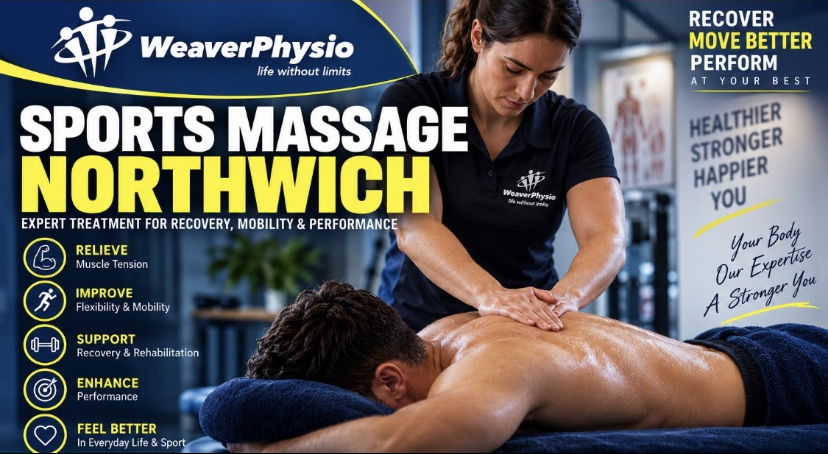
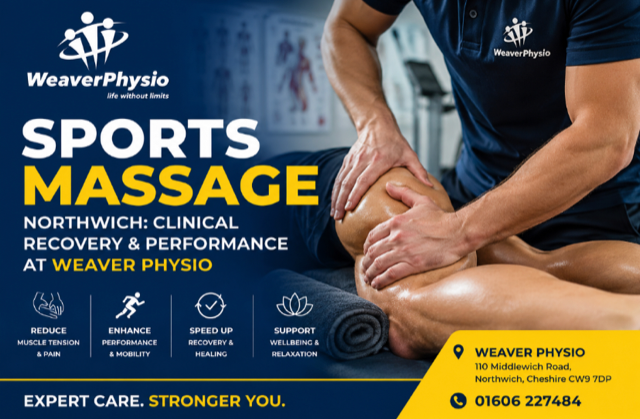
Sports Massage Northwich:
Clinical Recovery & Performance at Weaver Physio
Muscle tightness, stiffness and post-training soreness can affect far more than how your body feels. They can influence how comfortably you move, how well you recover between training sessions and how confident you feel returning to exercise, sport or everyday activity.
At Weaver Physiotherapy & Sports Injury Clinic, our Sports Massage in Northwich is designed to provide more than a routine massage. We take a clinically informed, individual approach to soft tissue treatment, combining sports and deep tissue massage techniques with an understanding of movement, rehabilitation and physical performance.
Whether you are a runner preparing for your next race, a cyclist dealing with tired legs, a gym enthusiast recovering from demanding training, a golfer struggling with muscular stiffness or simply someone experiencing persistent tension from work and everyday life, treatment is tailored around you, your symptoms and your goals.
Our aim is simple: to help you move better, recover effectively and remain active.
Sports Massage in Northwich – More Than Just Relaxation
Sports massage is often associated exclusively with athletes. In reality, it can be useful for a much wider range of people.
You do not need to compete, belong to a sports club or train every day to benefit from professional soft tissue treatment.
At Weaver Physio, we regularly use sports and deep tissue massage to support people experiencing:
General muscular tightness and stiffness
Post-exercise muscle soreness
Reduced flexibility or comfortable range of movement
Training-related muscular fatigue
Neck and shoulder tension
Back and hip muscular tightness
Tight calves, hamstrings or quadriceps
Recovery following demanding exercise
Repetitive occupational or sporting loads
Muscular tension associated with prolonged sitting
Rehabilitation following musculoskeletal injury
Rather than following the same massage routine for everyone, we adapt treatment according to the areas causing difficulty, your activity levels, your training demands and what you want to achieve.
What Is Sports Massage?
Sports massage is a form of soft tissue therapy that uses a range of hands-on techniques to work with muscles and surrounding soft tissues.
Depending on your individual needs, treatment may include techniques such as:
Sports massage, deep tissue massage, soft tissue mobilisation, trigger point techniques, myofascial techniques, assisted stretching and other appropriate manual therapy approaches.
The intensity and style of treatment can also be modified. Some people benefit from targeted, firmer soft tissue work, while others require a gentler approach.
There is no benefit in making treatment unnecessarily painful.
At Weaver Physio, the objective is to provide the appropriate treatment at the appropriate intensity for the individual in front of us.
Sports Massage vs Deep Tissue Massage – What’s the Difference?
Sports massage and deep tissue massage overlap considerably, but there can be differences in how they are applied.
Sports massage is commonly used around physical activity, training, recovery and rehabilitation. Treatment may focus on particular muscles or regions exposed to repeated sporting loads.
Deep tissue massage generally describes slower, firmer soft tissue techniques used to address areas of persistent muscular tension and stiffness.
At Weaver Physio, we do not believe patients need to choose a technique before attending.
Instead, we assess what you are experiencing and select the most appropriate approach for your individual needs.
Your treatment might therefore combine elements of sports massage, deep tissue work, trigger point therapy, soft tissue mobilisation and stretching within the same appointment.
A Clinical Approach to Sports Massage in Northwich
One of the key differences at Weaver Physio is our wider musculoskeletal and rehabilitation expertise.
If you simply feel muscular tightness following training, a sports massage may be all that is required.
However, persistent or recurring symptoms sometimes deserve a closer look.
If your calf repeatedly tightens whenever you increase your running distance, for example, continually massaging the calf may not address all of the factors contributing to the problem.
Your training load, ankle mobility, calf strength, running mechanics and overall physical capacity may also be relevant.
Similarly, recurrent shoulder tension in someone working at a desk may benefit from looking at movement, strength, working habits and activity levels rather than relying exclusively on massage.
This is where a clinically informed approach to sports massage can be particularly valuable.
At Weaver Physiotherapy & Sports Injury Clinic, we can consider massage as one component of a wider strategy where appropriate.
Sports Massage for Recovery
Hard training places significant demands on muscles and other tissues.
Whether you have completed a long run, heavy gym session, cycling event, football match or demanding week of physical activity, it is normal to experience some degree of muscular fatigue and soreness.
Sports massage can form part of your recovery strategy by helping to reduce the perception of muscular tightness and soreness, promote relaxation and maintain comfortable movement between training sessions.
Importantly, massage should complement rather than replace the fundamentals of recovery.
Adequate sleep, appropriate nutrition, hydration, sensible training progression and sufficient recovery between demanding sessions remain essential.
Our role is to help you use sports massage appropriately as part of that bigger picture.
Sports Massage for Runners in Northwich
Running places repetitive demands through the feet, ankles, calves, knees, hips and trunk.
As mileage or intensity increases, runners commonly notice tightness through areas such as the:
Calves
Soleus
Hamstrings
Quadriceps
Hip flexors
Gluteal muscles
Lower back
For runners, sports massage can be incorporated alongside an appropriate running programme, strength and conditioning and rehabilitation where required.
At Weaver Physio, we have a particular interest in running injuries, running biomechanics and performance rehabilitation.
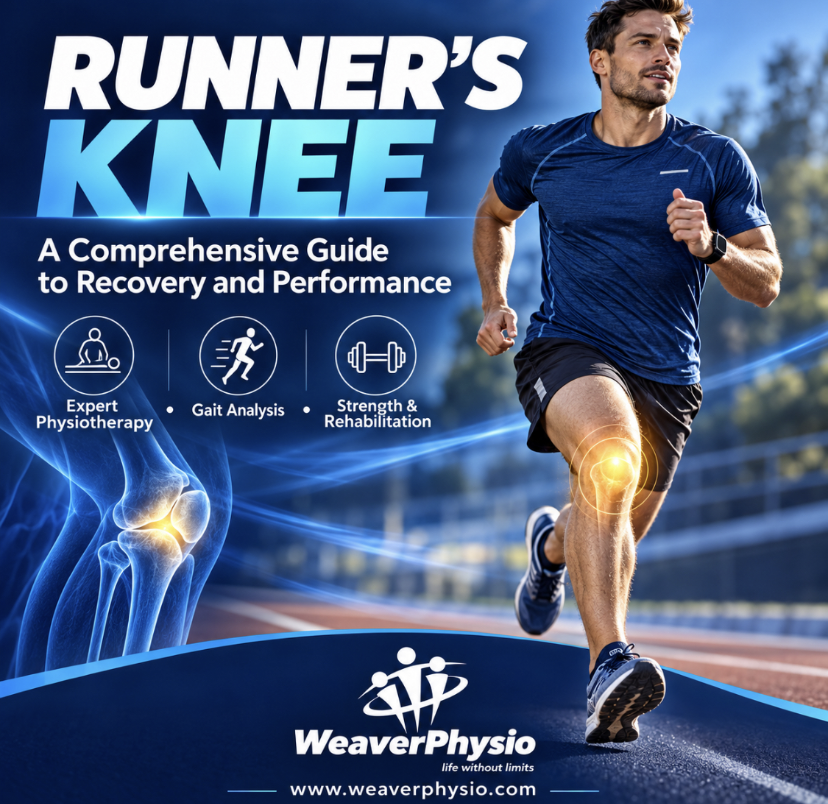
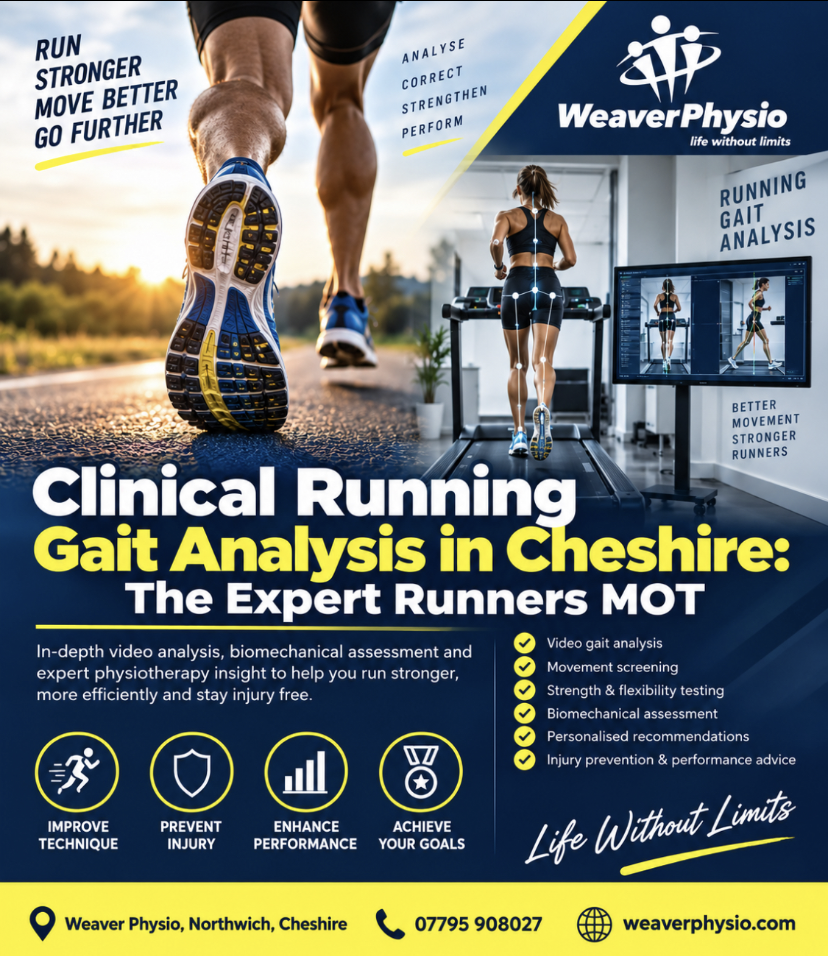
For runners experiencing recurring problems, massage can also complement our Running Gait Analysis and Runner’s MOT, allowing us to look beyond the painful area and consider how strength, mobility, stability, coordination and running mechanics may be influencing the problem.
The objective is not simply to make a tight muscle temporarily feel looser. It is to help you understand what your body needs to tolerate your running programme successfully.
Combining Sports Massage With Strength & Conditioning
This is an important part of our philosophy at Weaver Physio.
Hands-on treatment can be extremely useful, but long-term physical resilience often requires more than manual therapy alone.
Where appropriate, we focus on establishing a strong foundation by combining:
Balance + Strength + Stability + Coordination
before progressing towards more demanding sport-specific rehabilitation and performance work.
If an area repeatedly becomes tight because it is struggling to tolerate the demands placed upon it, improving physical capacity may be just as important as treating the tightness itself.
This is why sports massage can work particularly well alongside a structured rehabilitation or strength programme.
Sports Massage as Part of Injury Rehabilitation
Sports massage may also be incorporated into physiotherapy and sports injury rehabilitation where clinically appropriate.
For example, soft tissue treatment may be used alongside:
Progressive exercise rehabilitation
Strength and conditioning
Mobility exercises
Load management
Running gait analysis
Movement retraining
Acupuncture or dry needling
Shockwave Therapy where appropriate
Graduated return-to-running programmes
Return-to-sport rehabilitation
The exact combination depends on your diagnosis, symptoms, stage of recovery and goals.
Massage is therefore not presented as a cure for every injury. Instead, it is one of several tools that can be incorporated into a broader evidence-informed rehabilitation programme when appropriate.
Sports Massage for Back, Neck and Shoulder Tension
You certainly do not have to be an athlete to book a sports massage.
Modern working environments can involve long periods of sitting, driving, computer use and repetitive tasks. Many people consequently experience muscular tension around the neck, shoulders and back.
Sports or deep tissue massage may help reduce the feeling of muscular tension and stiffness and provide an opportunity to move more comfortably.
However, recurring or persistent pain sometimes requires more detailed assessment.
If your symptoms are accompanied by significant weakness, numbness, pins and needles, unexplained severe pain or other concerning symptoms, a physiotherapy or medical assessment may be more appropriate than massage alone.
Our clinical background means we can help guide you towards the most appropriate service.
Supporting Sports Performance
Performance is not simply about becoming stronger or faster.
An effective training programme requires the ability to train, recover and repeat.
If muscular soreness or excessive tightness regularly interferes with training, sports massage may be useful within your wider performance and recovery programme.
We work with people involved in a broad range of activities, including:
Running • Cycling • Football • Rugby • Golf • Gym Training • Strength Training • Racquet Sports • Walking • General Fitness
Treatment can be adapted according to the physical demands of your chosen activity.
Pre-Event and Post-Event Sports Massage
The timing and style of massage matters.
A vigorous deep tissue treatment immediately before an important race or competition is unlikely to be the best approach for everyone.
Treatment close to competition should generally be lighter and specifically tailored to the athlete and event.
Following competition or a demanding training period, massage may instead focus on comfort, relaxation and recovery.
If you have an important race, tournament or sporting event approaching, tell your therapist so that treatment can be planned appropriately.
What Happens at Your Sports Massage Appointment?
Your appointment begins with a conversation about what you want from treatment.
We may discuss:
Your current symptoms
Areas of muscular tightness or soreness
Previous injuries
Training and exercise levels
Occupation and daily activities
Upcoming competitions or events
Your recovery goals
Treatment is then tailored accordingly.
Throughout the session, we communicate with you regarding pressure and comfort. Sports massage can sometimes feel intense, particularly around sensitive or tight areas, but it should not become an exercise in tolerating unnecessary pain.
After treatment, we may provide advice regarding movement, training or recovery where appropriate.
Sports Massage for People Who Don’t Exercise
Despite its name, sports massage is not reserved for sport.
Many of our patients simply want help managing muscular tension caused by busy lives, physical occupations, prolonged sitting, driving or everyday activity.
You may therefore benefit from treatment whether you are training for a marathon or simply want to feel more comfortable moving.
Our focus remains the same: individual treatment based on your needs rather than a generic massage routine.
How Often Should You Have a Sports Massage?
There is no universal answer.
Some people book an occasional massage following a demanding period of training. Others incorporate treatment more regularly into their recovery programme.
The appropriate frequency depends on factors including:
Training volume
Competition schedule
Recovery demands
Symptoms
Previous injury
Lifestyle
Personal preference
Rehabilitation goals
We do not believe everyone needs indefinite weekly massage.
The aim is to determine what is useful and appropriate for you.
Sports Massage Prices at Weaver Physio
We believe high-quality sports massage should remain accessible.
30-Minute Sports Massage – £24
Ideal for focused treatment of a specific region such as the calves, hamstrings, shoulders or lower back.
60-Minute Sports Massage – £40
Suitable when several areas require attention or when a more comprehensive treatment session is preferred.
Why Choose Weaver Physio for Sports Massage in Northwich?
Choosing where to have sports massage is about more than finding the nearest massage appointment.
At Weaver Physiotherapy & Sports Injury Clinic, you have access to a team working within an established physiotherapy and sports injury environment.
Our clinic offers:
Sports and deep tissue massage
Chartered Physiotherapy
Sports injury rehabilitation
Running gait analysis
Runner’s MOT assessments
Strength and conditioning
Shockwave Therapy
Acupuncture and dry needling
Progressive exercise rehabilitation
Return-to-sport rehabilitation
Our team has more than 70 years of combined clinical experience, enabling us to provide a broad approach to musculoskeletal health, recovery and physical performance.
If your problem requires more than massage, you are already within a clinic equipped to assess and rehabilitate musculoskeletal conditions.
Sports Massage in Northwich and Across Cheshire
Weaver Physiotherapy & Sports Injury Clinic is conveniently located at:
110 Middlewich Road
Northwich
Cheshire
CW9 7DP
We provide sports massage and physiotherapy for people throughout Northwich and the surrounding Cheshire communities, including Hartford, Weaverham, Winsford, Middlewich, Knutsford, Tarporley, Frodsham and surrounding areas.
Whether you are looking for sports massage in Northwich, deep tissue massage, running injury rehabilitation or professional physiotherapy, our goal is to provide high-quality, individualised care from one convenient location.
Sports Massage Northwich – Recover Better. Move Better. Perform Stronger.
Recurring muscular tightness does not always mean something is injured, and massage does not need to be reserved until something hurts.
Used appropriately, sports massage can become a valuable part of your recovery, training and general musculoskeletal wellbeing.
At Weaver Physio, we combine professional soft tissue treatment with a wider understanding of physiotherapy, sports rehabilitation, movement and performance.
Whether your aim is to recover from training, manage muscular tension, prepare for an event or complement an existing rehabilitation programme, we will tailor your treatment around what matters to you.
Book Your Sports Massage in Northwich
If you are looking for professional Sports Massage in Northwich, contact Weaver Physiotherapy & Sports Injury Clinic today.
30 minutes – £24
60 minutes – £40
Weaver Physiotherapy & Sports Injury Clinic
110 Middlewich Road
Northwich, Cheshire
CW9 7DP
Tel: 01606 227484
Recover stronger. Move with confidence. Perform at your best.
Frequently Asked Questions About Sports Massage in Northwich
Is sports massage only for athletes?
No. Sports massage can be suitable for athletes and non-athletes alike. We regularly treat runners and sportspeople, but it may also be appropriate for people experiencing muscular tightness associated with work, prolonged sitting, physical occupations or everyday activity.
What is the difference between sports massage and deep tissue massage?
There is considerable overlap. Sports massage is commonly targeted towards areas affected by training, sport or repetitive physical loads, while deep tissue massage generally uses firmer techniques to address muscular tension and stiffness. At Weaver Physio, treatment is tailored rather than restricted to one technique.
How often should I have sports massage?
It depends on your training, symptoms, goals and personal preference. Some people attend occasionally, while others incorporate massage more regularly during demanding training periods. Your therapist can discuss an appropriate approach with you.
Is sports massage painful?
Sports massage can occasionally feel uncomfortable when sensitive areas are treated, but it should not be unnecessarily painful. Pressure can be adjusted throughout your treatment, and we encourage you to communicate with your therapist.
Can sports massage help back pain?
Sports massage may help some people manage muscular tension and stiffness associated with back pain. However, back pain has many potential causes. Persistent, severe or neurological symptoms should be appropriately assessed rather than relying solely on massage.
Can sports massage help sciatica?
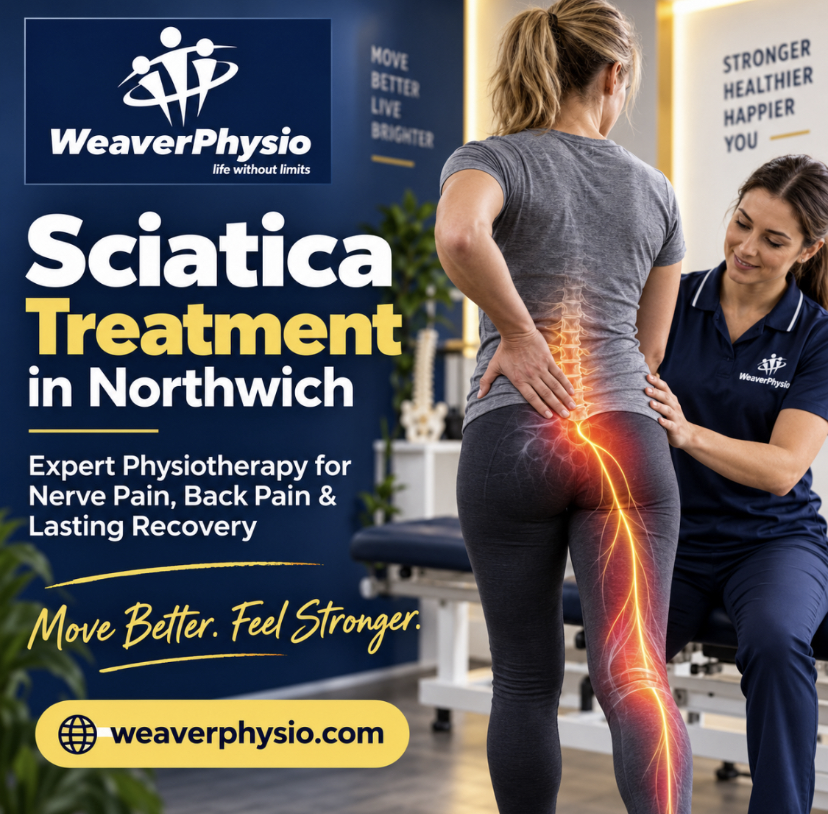
Massage may help manage associated muscular tension for some people, but true sciatica involves irritation or compression affecting the sciatic nerve or its nerve roots and requires appropriate assessment. At Weaver Physio, physiotherapy assessment may therefore be recommended where symptoms suggest nerve involvement.
Can sports massage help runners?
Yes. Sports massage can be incorporated into a runner’s recovery and training programme, particularly when managing muscular soreness or tightness. At Weaver Physio, it can also be combined with running gait analysis, strength and conditioning and our Runner’s MOT where appropriate.
Should I have sports massage before or after running?
Either can be appropriate, but the purpose and intensity should differ. Treatment immediately before competition would normally be lighter than a deep tissue session, while post-event treatment may focus more on comfort and recovery.
What should I wear to my appointment?
Wear comfortable clothing that allows the relevant area to be assessed and treated easily. Shorts are particularly useful when treating the legs. Appropriate towels and draping are used throughout treatment to maintain comfort and privacy.
Where can I get sports massage in Northwich?
Weaver Physiotherapy & Sports Injury Clinic provides sports and deep tissue massage from 110 Middlewich Road, Northwich, Cheshire, CW9 7DP, alongside physiotherapy, sports injury rehabilitation, running gait analysis, strength and conditioning and other musculoskeletal services.