
Running Gait Analysis in Northwich
A Complete Guide for Runners
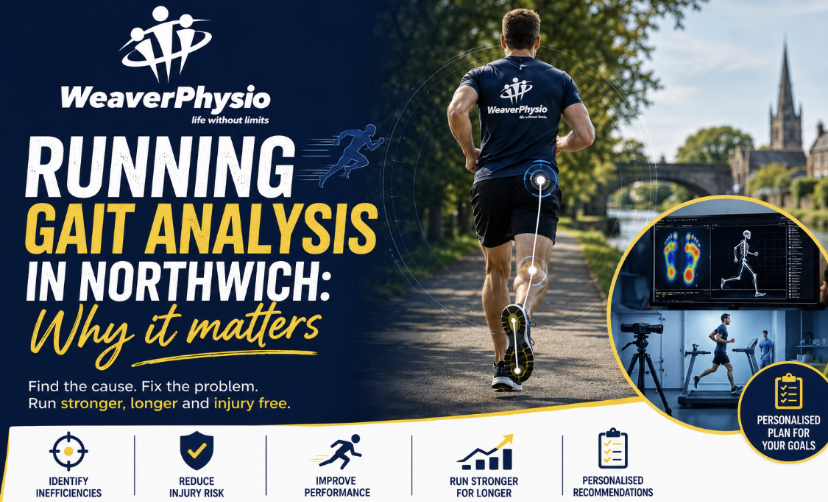
Running should help you feel fitter, stronger and more confident. But when knee pain, Achilles problems, shin pain or recurring injuries repeatedly interrupt your training, simply resting and starting again may not address why the problem keeps returning.
At Weaver Physiotherapy & Sports Injury Clinic, our Running Gait Analysis in Northwich is designed to look beyond the painful area and examine how your whole body functions when you run.
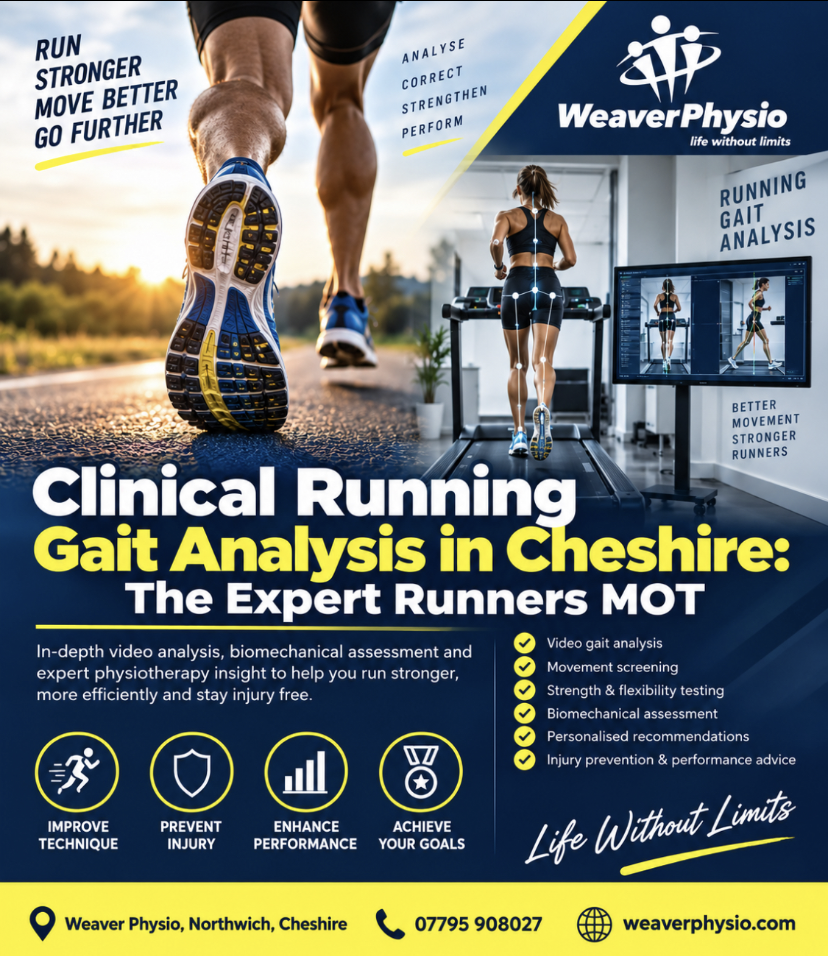
Our comprehensive Runner’s MOT combines slow-motion video gait analysis with physiotherapy assessment, strength testing, mobility screening and biomechanical analysis. The aim is to identify factors that may be contributing to injury, inefficient movement or reduced running performance and then develop a personalised plan to address them.
Whether you are starting Couch to 5K, returning from injury, preparing for a marathon or trying to improve your running performance, understanding how your body moves can provide valuable information to guide your training.
What Is Running Gait Analysis?
Running gait analysis is the detailed assessment of the way your body moves throughout the running cycle.
Although foot position and foot strike can form part of the assessment, running biomechanics involve much more than what happens at your feet.
The movement and control of your ankles, knees, hips, pelvis and trunk all influence how forces are absorbed and transferred through your body.
At Weaver Physio, we assess the runner as a whole rather than looking at one joint in isolation.
For example, knee pain does not necessarily mean that the knee itself is the only issue. Reduced hip strength, limited ankle movement, changes in running technique or training-load errors may all contribute to increased stress around the knee.
This is why a clinical running gait assessment in Northwich can be particularly useful for runners experiencing persistent or recurring problems.
What Do We Look for During Running Gait Analysis?
Every runner has an individual running style, and there is no single “perfect” way to run.
The purpose of gait analysis is therefore not to force every runner into the same technique. Instead, we look for movement characteristics that may be relevant to your symptoms, injury history or performance goals.
Depending on your individual presentation, we may assess:
Foot strike and foot placement
Ankle and foot control
Knee position during stance
Hip and pelvic stability
Trunk movement
Cadence and stride characteristics
Left-to-right differences
Joint mobility
Strength and muscular control
Running technique
Training history and workload
Previous injuries
Current running footwear
Slow-motion video allows us to review movements that can be difficult to appreciate accurately at normal running speed.
Importantly, we then combine what we see on video with your clinical examination.
Clinical Gait Analysis vs Running-Shop Gait Analysis
Many running shops provide treadmill assessments to help customers choose footwear. This can be useful when purchasing running shoes, but it serves a different purpose from a clinical running assessment.
A physiotherapy-led gait analysis is designed to investigate the runner rather than simply categorise their foot movement.
At Weaver Physio, we can combine your running video with a detailed musculoskeletal examination assessing areas such as strength, mobility, flexibility, balance and movement control.
We also consider your injury history and current symptoms.
This allows us to ask an important question:
What might be influencing the way this individual runner moves?
A video may show that something is happening. A clinical assessment can help us understand why it may be happening and whether it is relevant.
What Is the Weaver Physio Runner’s MOT?
Our Runner’s MOT in Northwich is a comprehensive assessment for runners who want to understand their body, address recurring injuries or improve their physical capacity for running.
Rather than focusing exclusively on the treadmill footage, we assess several areas that contribute to successful running.
Your assessment may include:
Clinical consultation
We discuss your current running, training volume, goals, injury history and any symptoms that are limiting you.
Movement and mobility assessment
We assess relevant joint movement and flexibility to identify restrictions that could influence your running mechanics.
Strength testing
Running requires considerable strength and control. We assess relevant muscle groups to identify potential weaknesses or asymmetries.
Slow-motion video gait analysis
Your running technique is recorded and reviewed to identify relevant movement patterns.
Biomechanical assessment
We bring the clinical and video findings together to understand how different areas of your body interact during running.
Individual rehabilitation or performance programme
Rather than simply giving you a list of findings, we translate the assessment into practical exercises and recommendations.
Running Injuries That May Benefit from Gait Analysis
Running injuries are often multifactorial. Training load, recovery, strength, previous injury, footwear, running technique and general physical capacity may all contribute.
A gait assessment can therefore form part of the management of many common running-related problems, including:
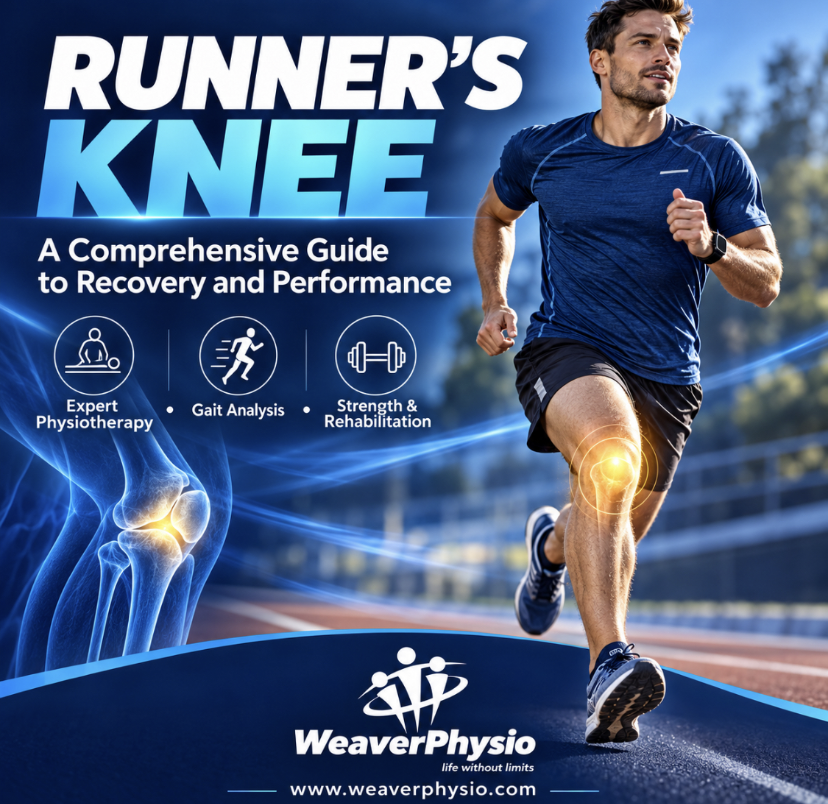
Runner’s knee and patellofemoral pain
Achilles tendinopathy
Plantar heel pain and plantar fasciitis
Shin splints / medial tibial stress syndrome
IT band-related pain
Calf injuries
Hamstring injuries
Hip pain
Gluteal tendinopathy
Ankle and foot pain
Recurring muscle strains
Persistent running-related knee pain
Gait analysis should not be viewed as a stand-alone cure for an injury. Its value comes from combining the information with a thorough clinical assessment and an appropriate rehabilitation programme.
Why Strength Matters for Runners
Running is much more than cardiovascular fitness.
Every stride requires your muscles and tendons to absorb, control and produce force repeatedly. If your physical capacity does not match the demands of your training, problems may develop.
This is why strengthening forms such an important part of our approach.
Depending on your assessment, rehabilitation may target the calves, quadriceps, hamstrings, gluteal muscles, trunk and other areas relevant to your individual running demands.
Your programme may incorporate:
Balance – Strength – Stability – Coordination – Plyometrics
The objective is to build a body that is better prepared for the forces and demands associated with running.
Can Running Gait Analysis Improve Performance?
Gait analysis isn’t exclusively for injured runners.
It can also be valuable for runners who feel healthy but want a better understanding of their movement, strength and running technique.
Small changes may sometimes improve running efficiency or help prepare your body for increased training demands.
However, we do not believe in changing running technique simply because something looks different.
Any modification should have a clear reason and should take into account your individual anatomy, training history, goals and symptoms.
Running Gait Analysis and Running Shoes
One of the most common questions runners ask is:
“Which running shoes should I wear?”
There isn’t one running shoe that is universally best.
Comfort, previous experience, training environment, individual biomechanics and injury history can all influence footwear choice.
We therefore recommend bringing your current running shoes to your assessment.
Wear patterns and your experience of different footwear can provide additional information, although shoes are only one part of the overall picture.
If you use orthotics or insoles, bring these with you too.
What Should I Bring to My Runner’s MOT?
Preparing for your appointment is straightforward.
Please bring your normal running shoes and any alternative shoes you regularly train or race in. If you use orthotics or insoles, bring those as well.
Wear comfortable running or gym clothing that allows us to observe your movement effectively.
It is also useful to have an idea of your typical weekly mileage, recent changes in training, current running goals and previous injuries.
The more we understand about your training history, the better we can place your assessment findings into context.
A Personalised Approach to Running Rehabilitation
No two runners are identical.
A beginner completing their first 5K has very different physical and training demands from an experienced marathon runner.
Your rehabilitation should reflect those differences.
Following your assessment, we can develop a programme based on your individual findings rather than providing a generic collection of running exercises.
Where clinically appropriate, your treatment and rehabilitation may also incorporate physiotherapy, progressive strength and conditioning, sports massage, running retraining or other appropriate treatments.
The emphasis remains on addressing the factors that are most relevant to you.
When Should You Consider Running Gait Analysis?
You don’t necessarily need to wait until you are injured.
Consider a professional running assessment if you:
Keep developing the same running injury
Experience persistent knee, hip, shin, ankle or foot pain
Are returning to running following an injury
Want to increase your running distance
Are preparing for a 5K, 10K, half marathon or marathon
Have recently increased your training volume
Want to understand your running technique
Feel noticeably stronger or more coordinated on one side
Want a structured strength programme for running
Want professional guidance rather than relying on guesswork
Early assessment may help identify areas that deserve attention before you significantly increase your training demands.
Running Gait Analysis in Northwich at Weaver Physio
At Weaver Physiotherapy & Sports Injury Clinic, we work with runners from Northwich and across Cheshire who want to overcome injuries, understand their biomechanics and improve their physical capacity for running.
With 70+ years of combined clinical experience, our team provides detailed assessment and individual rehabilitation rather than a one-size-fits-all approach.
Our Northwich clinic regularly welcomes runners from Northwich, Hartford, Weaverham, Winsford, Middlewich, Knutsford, Tarporley, Frodsham, Sandbach and surrounding Cheshire areas.
Whether you’re struggling with a recurring injury or simply want to understand your running better, our Runner’s MOT can give you a clearer picture of how your body is functioning and what you can work on.
Run Stronger. Move Better. Train Smarter.
Persistent running pain shouldn’t simply become something you accept as part of training.
Understanding your movement, strength, mobility and training demands can help you make more informed decisions about your rehabilitation and future running.
At Weaver Physio, we combine clinical physiotherapy assessment, running biomechanics and slow-motion video gait analysis to create a personalised strategy built around you.
Book Your Runner’s MOT in Northwich
If you’re looking for Running Gait Analysis in Northwich, contact Weaver Physiotherapy & Sports Injury Clinic to arrange your Runner’s MOT.
Weaver Physiotherapy & Sports Injury Clinic
110 Middlewich Road
Northwich, Cheshire
CW9 7DP
Telephone: 01606 227484 (tel:01606%20227484)
Take the guesswork out of your running and start building a stronger, more resilient approach to your training.
Frequently Asked Questions About Running Gait Analysis
Is gait analysis only for injured runners?
No. Running gait analysis can be useful for both injured and uninjured runners. Some people attend because of persistent pain, while others want to understand their movement and physical capabilities before increasing their training or preparing for an event.
Can beginners have a Runner’s MOT?
Absolutely. You do not need to be an experienced or competitive runner. A Runner’s MOT can be particularly useful when you are new to running and want guidance on strength, movement and progressively building your training.
Can gait analysis help with runner’s knee?
It can form a useful part of the assessment of runner’s knee. Patellofemoral pain can have several contributing factors, so we assess areas including strength, mobility, training load and running mechanics rather than assuming there is one single cause.
Can gait analysis help with Achilles pain?
Yes. When assessing Achilles problems, we may consider calf strength, ankle mobility, running technique, training load and the demands being placed on the Achilles tendon. These findings can then help guide an appropriate progressive rehabilitation programme.
Should I bring my running shoes?
Yes. Bring the running shoes you currently use, plus any orthotics or insoles. If you regularly rotate between different pairs of shoes, bringing those can also be useful.
Do I have to be fast to have gait analysis?
No. Running speed or ability is not a requirement. We assess recreational runners, beginners and more experienced athletes.
Will I need to change my running technique?
Not necessarily. There is no single perfect running technique. We only consider changes when there is a meaningful reason to do so based on your symptoms, assessment findings and individual goals.
Where can I get Running Gait Analysis in Northwich?
Weaver Physiotherapy & Sports Injury Clinic provides physiotherapy-led Running Gait Analysis and Runner’s MOT assessments in Northwich, Cheshire. Our approach combines video gait analysis with clinical assessment, strength testing and personalised rehabilitation to give runners a more complete understanding of their movement.