
A Balanced Pelvis Leads to a Balanced Spine, Stronger Movement & a Pain-Free Life
Weaver Physiotherapy & Sports Injury Clinic | Physio Northwich
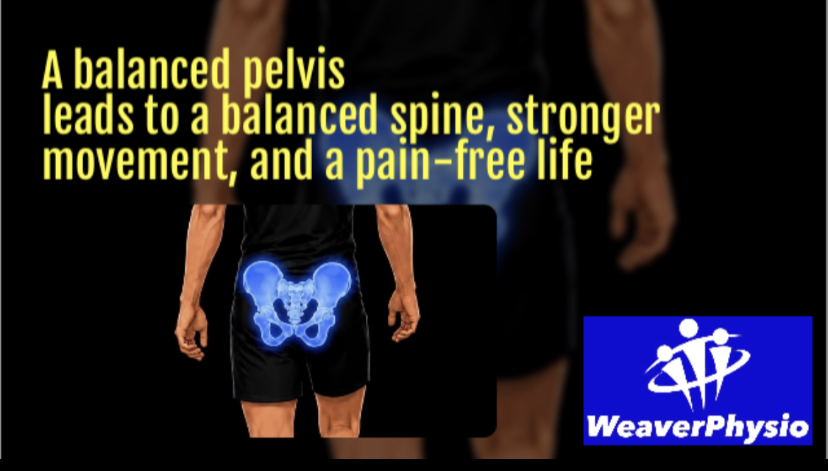
At Weaver Physiotherapy & Sports Injury Clinic in Northwich, we often explain to patients that the pelvis is the foundation of the entire body. When the pelvis moves well and remains balanced, the spine, hips, knees and even the feet are able to function more efficiently. However, when pelvic movement, stability or alignment becomes compromised, the body often compensates — leading to pain, stiffness, overload and reduced performance.
Whether you are suffering from lower back pain, sciatica, hip pain, recurrent running injuries or postural problems, pelvic control and biomechanics are often a major piece of the puzzle.
A balanced pelvis helps create:
✔ Better spinal alignment
✔ Improved posture and movement efficiency
✔ Reduced stress on muscles and joints
✔ Greater strength and power production
✔ Improved running and walking mechanics
✔ Reduced risk of injury and overload
✔ Better long-term movement health
At Weaver Physio, our Chartered Physiotherapists and Sports Injury Specialists assess how your pelvis, spine and lower limb mechanics work together to identify the true root cause of pain and dysfunction.
Why Is The Pelvis So Important?
The pelvis acts as the central link between the upper and lower body. It transfers force through the spine, hips and legs during almost every movement you perform.
Walking, running, lifting, squatting, climbing stairs and even standing all rely on efficient pelvic control.
If the pelvis becomes excessively tilted, rotated or unstable, it can create abnormal stress throughout the body. This may contribute to:
✔ Lower back pain
✔ SI joint pain
✔ Hip impingement
✔ Sciatica
✔ Gluteal pain
✔ Hamstring overload
✔ Knee pain
✔ Achilles problems
✔ Plantar fasciitis
✔ Running injuries
Many people focus purely on the site of pain. However, the body works as a connected chain. Poor pelvic mechanics often create compensations elsewhere.
For example:
Reduced hip stability can increase knee stress.
Pelvic drop during running may overload the IT band.
Excessive pelvic rotation may contribute to spinal stiffness and muscular tension.
Weak gluteal muscles can increase stress on the lumbar spine and hamstrings.
At Weaver Physiotherapy & Sports Injury Clinic, we look beyond symptoms to identify why pain developed in the first place.
Common Causes of Pelvic Imbalance
Pelvic dysfunction is rarely caused by one single issue. Instead, it is usually a combination of factors including:
Muscle Weakness
Weak gluteal muscles, deep core muscles and hip stabilisers can reduce pelvic control during movement.
Poor Posture
Long periods of sitting, desk work and inactivity can affect pelvic positioning and spinal mechanics.
Previous Injuries
Old ankle sprains, knee injuries, hip problems or back pain can alter movement patterns long after tissues have healed.
Running & Training Errors
Sudden increases in mileage, poor load management or inefficient biomechanics may overload the pelvis and spine.
Mobility Restrictions
Reduced hip mobility or spinal stiffness can force the pelvis to compensate excessively.
Pregnancy & Postnatal Changes
Changes in pelvic stability and abdominal control can contribute to pain and movement dysfunction.
Signs Your Pelvis May Not Be Functioning Optimally
Many people are unaware that pelvic imbalance may be contributing to their symptoms.
Common signs include:
✔ One-sided lower back pain
✔ Hip stiffness or pinching
✔ Glute tightness
✔ Recurrent hamstring strains
✔ Uneven posture
✔ Knee pain during running or squatting
✔ Feeling unstable on one leg
✔ Recurring sports injuries
✔ Reduced running efficiency
✔ Persistent muscle tightness despite stretching
These issues often develop gradually over time as the body compensates around poor movement patterns.
The Relationship Between The Pelvis & Spine
A balanced pelvis supports a balanced spine.
The lumbar spine sits directly on top of the pelvis. If pelvic positioning becomes altered, spinal mechanics often change alongside it.
For example:
Excessive anterior pelvic tilt may increase lumbar extension and compressive loading.
Posterior pelvic tilt may reduce spinal mobility and alter movement efficiency.
Pelvic rotation may increase asymmetrical spinal stress and muscular tension.
Over time, these compensations may contribute to:
✔ Chronic lower back pain
✔ Disc irritation
✔ Facet joint irritation
✔ Muscle spasm and guarding
✔ Reduced mobility
✔ Nerve irritation
This is why addressing spinal pain without considering pelvic mechanics often only provides temporary relief.
Pelvic Stability & Running Performance
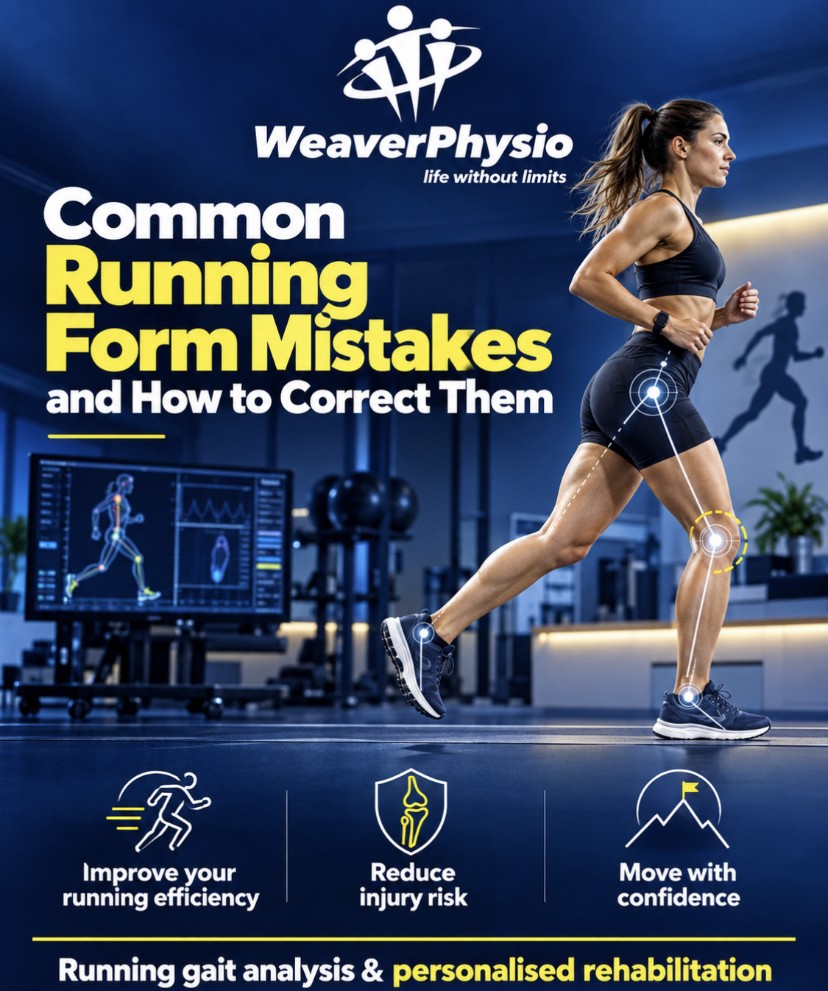
At Weaver Physio, we specialise in Running Injury Rehabilitation and Running Gait Analysis.
One of the most common findings we see during high-speed video gait analysis is poor pelvic control.
During running, the pelvis must remain stable while transferring force through a single leg repeatedly. Weakness, instability or poor control can significantly affect performance and injury risk.
Poor pelvic mechanics may contribute to:
✔ Over-striding
✔ Increased ground reaction force
✔ Knee collapse
✔ IT Band Syndrome
✔ Achilles Tendinopathy
✔ Shin Splints
✔ Patellofemoral Pain
✔ Lower back tightness
Improving pelvic strength and control often helps runners:
✔ Run more efficiently
✔ Reduce injury risk
✔ Improve cadence and posture
✔ Generate more power
✔ Reduce excessive energy loss
Our Runner’s MOT at Weaver Physio includes:
✔ High-Speed Video Gait Analysis
✔ Pelvic & Hip Stability Assessment
✔ Strength Testing
✔ Biomechanical Screening
✔ Personalised Strength & Conditioning Programmes
How Weaver Physio Assesses Pelvic Function
At Weaver Physiotherapy & Sports Injury Clinic in Northwich, every assessment is designed to identify the root cause of pain and movement dysfunction.
Your assessment may include:
✔ Postural Assessment
✔ Pelvic & Spinal Movement Analysis
✔ Hip Mobility Testing
✔ Core Stability Assessment
✔ Glute Strength Testing
✔ Walking & Running Biomechanics
✔ Functional Movement Screening
We assess how your entire body moves together rather than simply focusing on isolated symptoms.
Treatment For Pelvic & Spinal Dysfunction
Successful treatment requires more than short-term symptom relief.
At Weaver Physio, we focus on restoring movement quality, improving strength and building long-term resilience.
Treatment may include:
Hands-On Physiotherapy
Manual therapy can help improve mobility, reduce stiffness and restore movement.
Strength & Rehabilitation
Targeted exercises improve pelvic stability, glute strength and spinal support.
Running Gait Analysis
We identify movement inefficiencies contributing to overload and injury.
Sports Massage & Soft Tissue Therapy
Helps reduce excessive muscular tension and improve recovery.
Shockwave Therapy
May help persistent tendon or overload-related pain when appropriate.
Movement Re-Education
We help retrain efficient movement patterns for walking, running and sport.
Why Strength Matters More Than Stretching
Many people repeatedly stretch tight muscles without addressing the real problem.
Often, muscles become tight because they are overworking to compensate for poor stability elsewhere.
For example:
Tight hamstrings may actually reflect weak glutes.
Hip tightness may stem from poor pelvic control.
Lower back tension may be related to insufficient core stability.
This is why strengthening and movement correction are usually far more effective long-term solutions than stretching alone.
Building A Stronger, Pain-Free Body
A balanced pelvis creates the foundation for:
✔ Better posture
✔ More efficient movement
✔ Improved athletic performance
✔ Reduced injury risk
✔ Greater long-term spinal health
At Weaver Physiotherapy & Sports Injury Clinic, we help patients across Northwich and Cheshire move better, feel stronger and stay active through evidence-based physiotherapy and rehabilitation.
Whether you are dealing with persistent back pain, running injuries, hip problems or movement dysfunction, identifying and correcting pelvic mechanics may be the missing link in your recovery.
Expert Physiotherapy In Northwich, Cheshire
Weaver Physiotherapy & Sports Injury Clinic provides expert:
✔ Physiotherapy
✔ Sports Injury Rehabilitation
✔ Running Injury Treatment
✔ Runner’s MOT & Gait Analysis
✔ Shockwave Therapy
✔ Sports Massage
✔ Strength & Conditioning Rehabilitation
With over 70 years of combined clinical experience, our team helps patients throughout Northwich, Knutsford, Winsford, Middlewich, Tarporley and Cheshire achieve long-term results — not quick fixes.
📍 Northwich, Cheshire
📞 01606 227484
🌐 www.weaverphysio.com
Move Better. Get Stronger. Stay Pain-Free.
#PhysioNorthwich #RunningInjuries #SportsInjuryClinic #BackPainRelief #WeaverPhysio