Muscle Injury Recovery Physiotherapy in Northwich
Specialist Rehabilitation for Stronger Recovery
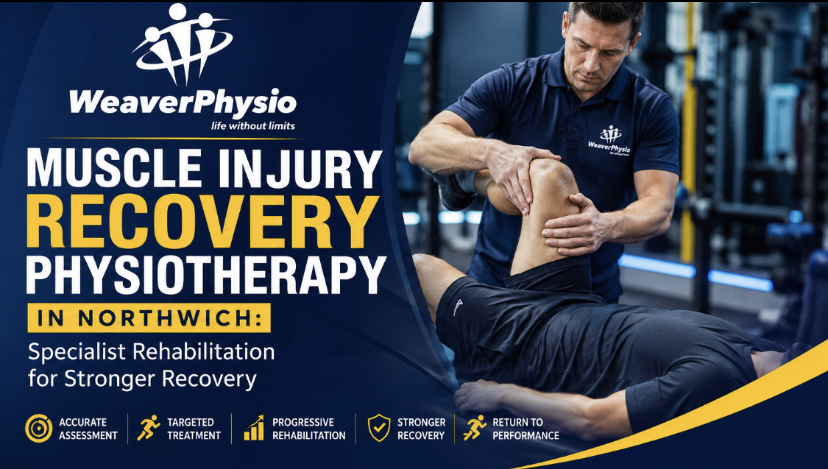
A muscle injury can happen in an instant, but recovering properly takes more than simply waiting for the pain to disappear. Whether you have strained a hamstring while sprinting, injured your calf during running, pulled a quadriceps playing football or developed persistent muscle pain after training, the quality of your rehabilitation can make a major difference to how confidently you return to activity.
At Weaver Physiotherapy & Sports Injury Clinic in Northwich, our approach to muscle injury recovery physiotherapy is built around accurate assessment, progressive rehabilitation and a carefully managed return to activity. Rather than relying on prolonged rest, we help patients understand what has been injured, what the tissue can currently tolerate and how to rebuild strength progressively.
Our aim is not simply to help the injury feel better. We want the injured area to regain the strength, mobility, capacity and confidence required for everyday life, running, training and sport.
What Is a Muscle Strain?
A muscle strain occurs when muscle fibres are overloaded beyond their current capacity. This can range from relatively minor microscopic fibre damage to a significant partial or complete tear.
Muscle injuries are particularly common during activities involving rapid acceleration, deceleration, jumping, kicking or changes of direction. They can also occur during heavy lifting or when a muscle is suddenly loaded while lengthening.
Common muscle injuries treated at Weaver Physio include:
Hamstring strains
Calf strains
Quadriceps injuries
Groin and adductor strains
Hip flexor injuries
Gluteal muscle injuries
Shoulder and upper-limb muscle strains
Running-related muscle injuries
Recurrent sporting muscle tears
Muscle injuries are commonly described as Grade 1, Grade 2 or Grade 3, although grading alone does not determine exactly how long someone will need to recover.
A mild Grade 1 injury generally involves relatively limited fibre damage. A Grade 2 injury represents a more substantial partial tear, while a Grade 3 injury describes severe disruption or complete rupture.
For that reason, a professional physiotherapy assessment in Northwich can be valuable following a significant muscle injury, particularly when there is considerable pain, bruising, swelling, weakness or difficulty walking.
Signs You May Have Sustained a Muscle Injury
Symptoms vary depending on the location and severity of the injury, but commonly include:
Sudden pain during running, lifting or sport
A pulling, tearing or sharp sensation
Localised tenderness
Pain when stretching the muscle
Pain or weakness when contracting the muscle
Swelling
Bruising
Reduced movement
Loss of strength or power
Difficulty running, walking or performing normal activities
More severe injuries can occasionally be accompanied by a popping sensation, substantial bruising or an obvious loss of function.
If symptoms are significant or the diagnosis is uncertain, assessment can help determine whether the problem is likely to be muscular or whether another structure may be involved.
Why Complete Rest Isn’t Usually the Whole Answer
Immediately after an injury, reducing aggravating activity is often sensible. However, there is an important difference between protecting an injured muscle and completely avoiding movement for an extended period.
Muscle tissue adapts to appropriate mechanical loading. Once it is safe to begin, progressively reintroducing movement and resistance can form an important part of rehabilitation.
Too little loading may leave the muscle inadequately prepared for the demands of running or sport. Too much loading, too soon, can aggravate symptoms.
Effective muscle injury physiotherapy therefore involves finding the appropriate level of activity for the individual and progressing it as recovery allows.
At Weaver Physio, rehabilitation is based on your presentation rather than an arbitrary calendar date.
The Early Stages of Muscle Injury Recovery
Modern soft-tissue injury management has moved beyond relying solely on the traditional RICE approach of rest, ice, compression and elevation.
The PEACE & LOVE framework provides a broader approach to soft-tissue rehabilitation.
During the early stage, PEACE represents:
Protection – temporarily modify movements and activities that significantly aggravate the injury.
Elevation – elevation may be considered where swelling is an issue.
Avoid anti-inflammatory modalities – the inflammatory response forms part of normal tissue healing, although decisions about medication should always be discussed with an appropriate healthcare professional.
Compression – compression can sometimes help manage swelling following certain soft-tissue injuries.
Education – understanding the injury, expected recovery and appropriate activity levels can reduce uncertainty and encourage active rehabilitation.
As recovery progresses, the emphasis moves towards LOVE:
Load – Optimism – Vascularisation – Exercise
This reflects one of the central principles of modern muscle injury rehabilitation: progressively restoring the tissue’s capacity rather than simply waiting for symptoms to disappear.
How Physiotherapy Can Help Muscle Injury Recovery
At Weaver Physio, muscle injury rehabilitation starts with a detailed clinical assessment.
We consider how the injury occurred, the movements that reproduce symptoms, your current strength and mobility and, importantly, the activities you need to return to.
Assessment may include:
Range-of-motion testing
Muscle strength testing
Palpation where clinically appropriate
Functional movement assessment
Neurological screening when indicated
Balance and control testing
Running or sport-specific testing
Comparison between injured and non-injured sides
This information allows us to develop a personalised muscle rehabilitation programme rather than relying on a generic collection of stretches.
Progressive Loading: Rebuilding a Stronger Muscle
Exercise rehabilitation is one of the most important elements of recovering from a muscle strain.
Early exercises may initially involve gentle movement and low-level muscle contractions. As symptoms settle and capacity improves, resistance can progressively increase.
Depending on the injury, rehabilitation may progress through:
Isometric exercise – producing muscular force without substantial joint movement.
Controlled resistance exercise – gradually restoring strength through an appropriate range of movement.
Eccentric strengthening – developing the muscle’s ability to tolerate force while lengthening.
Heavy resistance training – rebuilding strength and load tolerance where appropriate.
Faster movements – progressively preparing the muscle for higher-speed activity.
Plyometric and reactive exercises – developing the ability to absorb and generate force rapidly.
Sport-specific rehabilitation – reproducing the acceleration, sprinting, jumping, kicking or change-of-direction demands required by your activity.
The progression is individual. A recreational runner recovering from a calf strain will require a different programme from a footballer recovering from a hamstring tear or someone returning to manual work after a lifting injury.
Treating the Person, Not Just the Painful Muscle
A muscle injury does not always occur in isolation.
Movement patterns, previous injuries, strength deficits, training changes, fatigue and the physical demands of a particular sport can all influence injury risk.
This is why our rehabilitation considers more than the painful area.
For example, rehabilitation following a hamstring injury may include assessment of hip and trunk strength, running mechanics, sprint exposure and the athlete’s ability to tolerate high-speed loading.
A calf injury may require assessment of calf strength, ankle function, running volume and the ability to tolerate repeated hopping or propulsion.
Identifying these factors enables rehabilitation to address the demands that contributed to the injury and the demands required for successful return to activity.
Hands-On Physiotherapy and Sports Massage
Exercise rehabilitation is usually central to muscle recovery, but other physiotherapy treatments may be incorporated when clinically appropriate.
These can include:
Manual therapy
Soft-tissue techniques
Sports massage
Mobility work
Acupuncture
Dry needling
Exercise therapy
Strength and conditioning
Movement retraining
These treatments should support rehabilitation rather than replace progressive exercise.
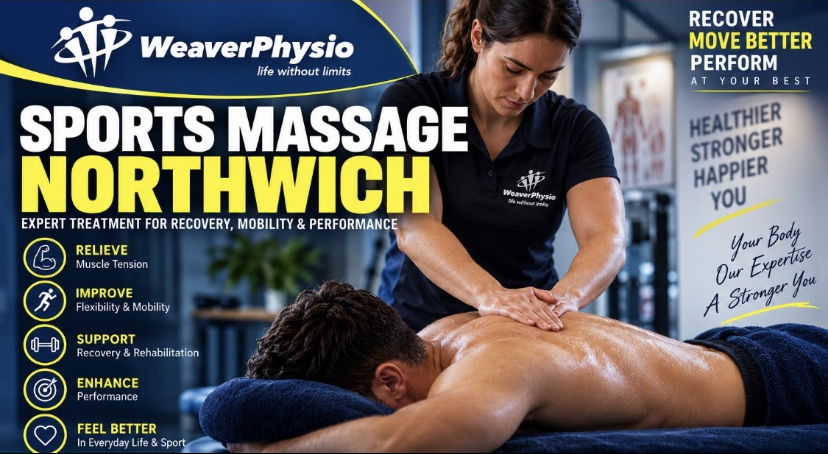
You can learn more about Sports Massage in Northwich and the wider range of treatment options available through Weaver Physiotherapy & Sports Injury Clinic
Can Shockwave Therapy Help a Muscle Injury?
Extracorporeal Shockwave Therapy (ESWT) is not routinely required for an uncomplicated acute muscle strain.
However, shockwave therapy may be considered for selected persistent soft-tissue or tendon-related problems following appropriate assessment.
At Weaver Physio, treatment is chosen according to the diagnosis rather than automatically applying a particular modality.
Patients with persistent tendon-related pain can learn more about Shockwave Therapy in Northwich and whether it may be appropriate for their condition.
The Biggest Mistake: Returning as Soon as the Pain Stops
Feeling better is important, but being pain-free does not necessarily mean a muscle has regained the capacity required for sport.
This is particularly relevant for runners and athletes.
A hamstring might feel comfortable while walking yet remain insufficiently prepared for maximal sprinting. A calf might be pain-free during everyday activity but struggle with repeated high-force contractions during running.
This gap between symptom recovery and performance recovery is one reason structured rehabilitation is so important.
Before progressing towards unrestricted sport, we may assess factors such as:
Strength
Range of movement
Repeated loading capacity
Single-leg control
Hopping ability
Running tolerance
Acceleration and deceleration
Change of direction
Sport-specific movements
Confidence in the previously injured area
Return-to-sport decisions should therefore consider the demands of the individual rather than relying on pain alone.
Muscle Injury Rehabilitation for Runners
Running places considerable repetitive demand on the muscles of the lower limb, particularly the calves, hamstrings, quadriceps, gluteals and hip musculature.
For runners experiencing recurrent muscle injuries, simply treating the painful area may not provide the complete picture.
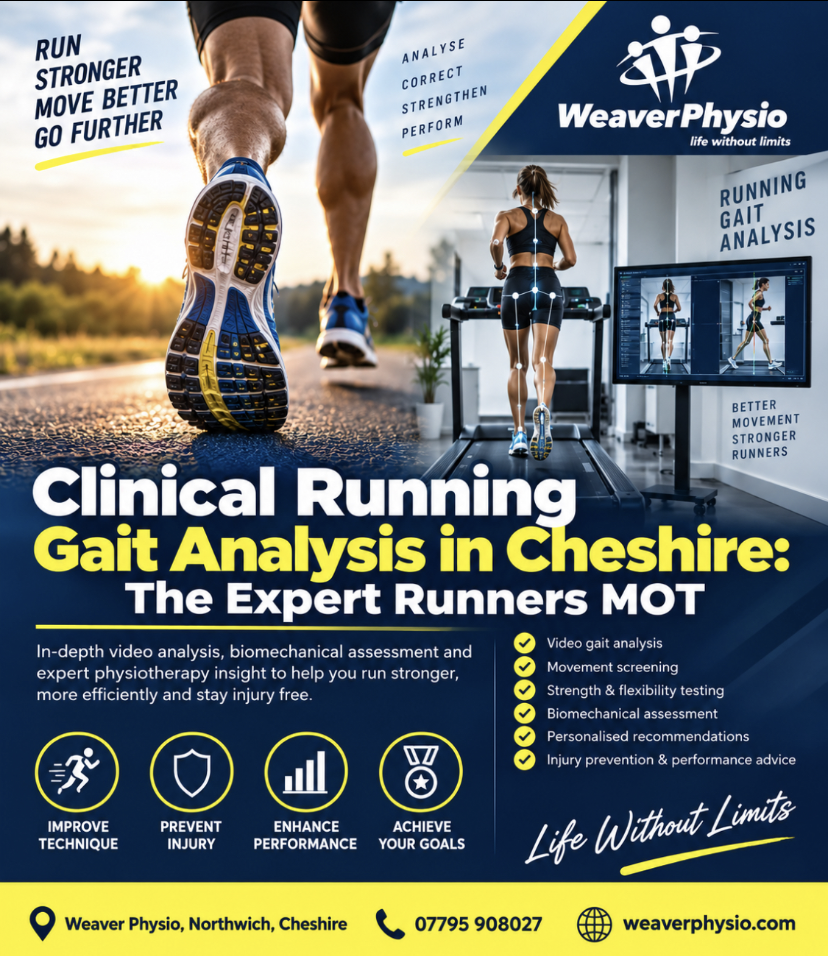
Our running gait analysis and Runner’s MOT service in Northwich can be incorporated into rehabilitation when appropriate.
This allows us to examine factors such as:
Running technique
Lower-limb control
Strength
Stability
Mobility
Training demands
Running-specific load tolerance
Slow-motion video gait analysis can also help identify movement characteristics that may be relevant to rehabilitation.
Learn more about Running Gait Analysis in Northwich and how Weaver Physio helps recreational and competitive runners return to training.
Preventing Recurrent Muscle Injuries
No rehabilitation programme can guarantee that another injury will never occur. However, improving the body’s ability to tolerate the demands placed upon it is a fundamental part of reducing future injury risk.
Our approach may therefore include:
Progressive strength training
Eccentric muscle conditioning
Plyometric training
Balance and stability exercises
Running drills
Gradual exposure to speed
Sport-specific conditioning
Training-load management
Appropriate warm-up strategies
Education about recovery
The objective is simple: prepare the muscle for what you actually need it to do.
If your sport requires sprinting, rehabilitation eventually needs to prepare you to sprint. If you need to jump, change direction or lift heavy loads, those demands should be progressively incorporated before full return.
Specialist Muscle Injury Physiotherapy in Northwich
At Weaver Physiotherapy & Sports Injury Clinic, we help patients from Northwich and surrounding areas recover from muscle injuries through evidence-informed assessment, treatment and progressive rehabilitation.
With 70+ years of combined clinical experience, our team works with everyone from recreational runners and gym users to competitive athletes and people simply trying to return comfortably to work and everyday life.
Our services include:
Physiotherapy
Sports injury rehabilitation
Running injury rehabilitation
Sports massage
Strength and conditioning
Acupuncture and dry needling
Shockwave therapy
Running gait analysis
Runner’s MOT assessments
Rather than concentrating solely on temporary symptom relief, our aim is to help you restore movement, rebuild strength, regain confidence and return to the activities that matter to you.
Visit Weaver Physio to discover more about our physiotherapy and sports injury services in Northwich.
Start Your Muscle Injury Recovery at Weaver Physio
Whether you have recently pulled a muscle or have experienced repeated strains in the same area, a structured rehabilitation programme can provide a clearer route back to activity.
Effective muscle injury recovery involves much more than waiting.
It means understanding the injury, introducing appropriate movement, progressively rebuilding strength and eventually exposing the muscle to the forces it needs to tolerate in real life.
At Weaver Physiotherapy & Sports Injury Clinic in Northwich, we can guide you through each stage — from initial assessment through rehabilitation and ultimately back to running, sport, work or everyday activity.
Recover well. Rebuild strength. Return with confidence.
Frequently Asked Questions About Muscle Injury Recovery
How long does a Grade 2 muscle strain take to heal?
There is no single recovery time that applies to every Grade 2 muscle injury. Recovery depends on factors including the muscle involved, location and extent of tissue damage, previous injuries, physical demands and rehabilitation progress. Some moderate strains may recover over several weeks, while more substantial injuries can require considerably longer.
Rather than relying solely on a predetermined timeframe, physiotherapy can use symptoms, strength and functional progression to help guide return to activity.
Should I use ice after a muscle strain?
Ice can provide short-term pain relief for some people following an acute injury, but prolonged or excessive icing is not considered essential for tissue healing. If you choose to use ice, protect the skin and use it primarily for symptom relief rather than assuming it will accelerate repair.
Can I exercise with a minor muscle strain?
In many cases, some activity can continue provided it does not significantly aggravate the injury. The important consideration is selecting an appropriate type, intensity and volume of exercise.
A physiotherapy assessment can help establish which activities are currently appropriate and how they can be progressed safely.
Should I stretch a pulled muscle?
Aggressive stretching immediately following a muscle injury is not always appropriate. Early rehabilitation generally focuses on protecting the injured tissue while gradually restoring comfortable movement. Stretching and greater range-of-motion exercises can then be introduced according to the injury and stage of recovery.
Why does the same muscle keep getting injured?
Recurrent muscle strains can have several contributing factors. These may include incomplete rehabilitation, insufficient strength, inadequate exposure to high-speed activity, previous injury, sudden increases in training demand or returning to sport before the muscle has regained sufficient capacity.
A comprehensive assessment can help identify potentially modifiable factors rather than repeatedly treating the painful area alone.
When should I see a physiotherapist for a muscle injury?
Consider seeking professional assessment if you experience significant pain, weakness, bruising or swelling; difficulty walking or using the affected limb; repeated injuries in the same area; symptoms that are failing to improve; or uncertainty about the diagnosis.
Early assessment can provide a clearer understanding of the injury and an appropriate rehabilitation pathway.
Can gait analysis help with recurring running injuries?
For runners, gait analysis can provide useful additional information about running mechanics and movement patterns. When combined with assessment of strength, mobility, training load and injury history, it can help inform a more comprehensive running rehabilitation programme.
Weaver Physiotherapy & Sports Injury Clinic
110 Middlewich Road, Northwich, Cheshire CW9 7DP
www.weaverphysio.com