Therapeutic Massage in Northwich:

M NORMAN • August 18, 2026

Clinical Massage, Sports Massage & Deep Tissue Therapy
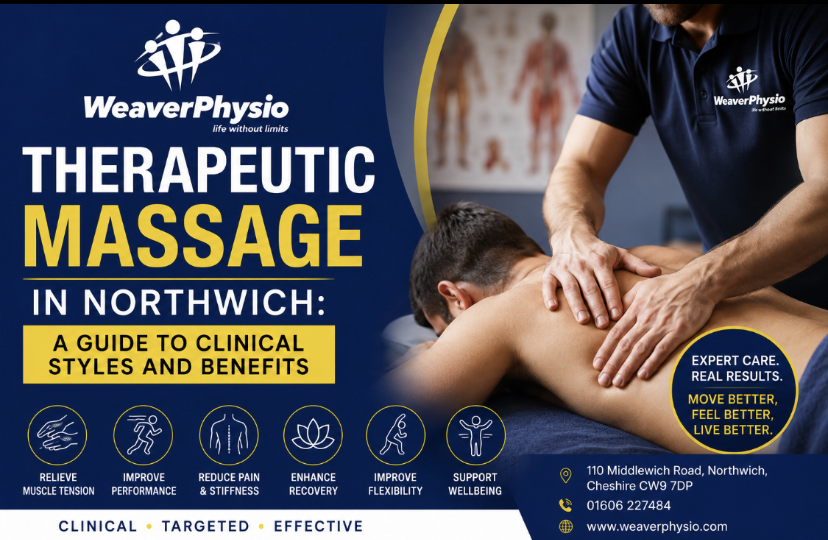
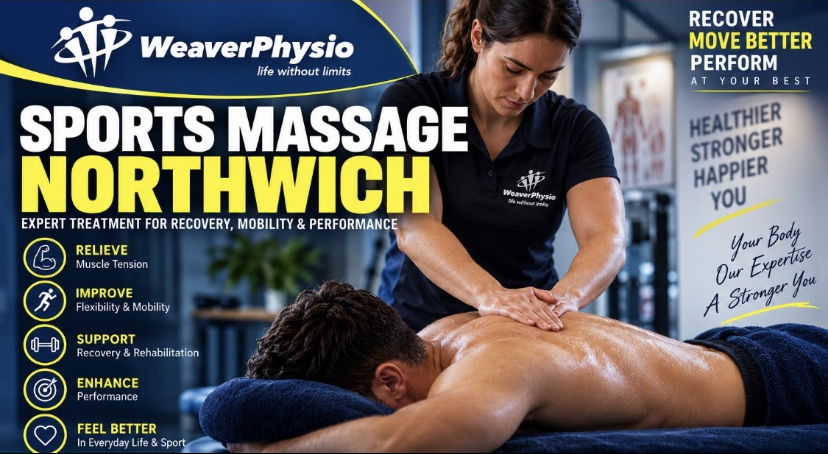
Persistent muscle tightness, stiffness or recurring aches can affect far more than your comfort. They can interfere with work, exercise, running, sport, sleep and everyday movement. While massage is often associated with relaxation, therapeutic massage delivered in a clinical environment has a different purpose: to address soft-tissue problems, improve movement and support recovery.


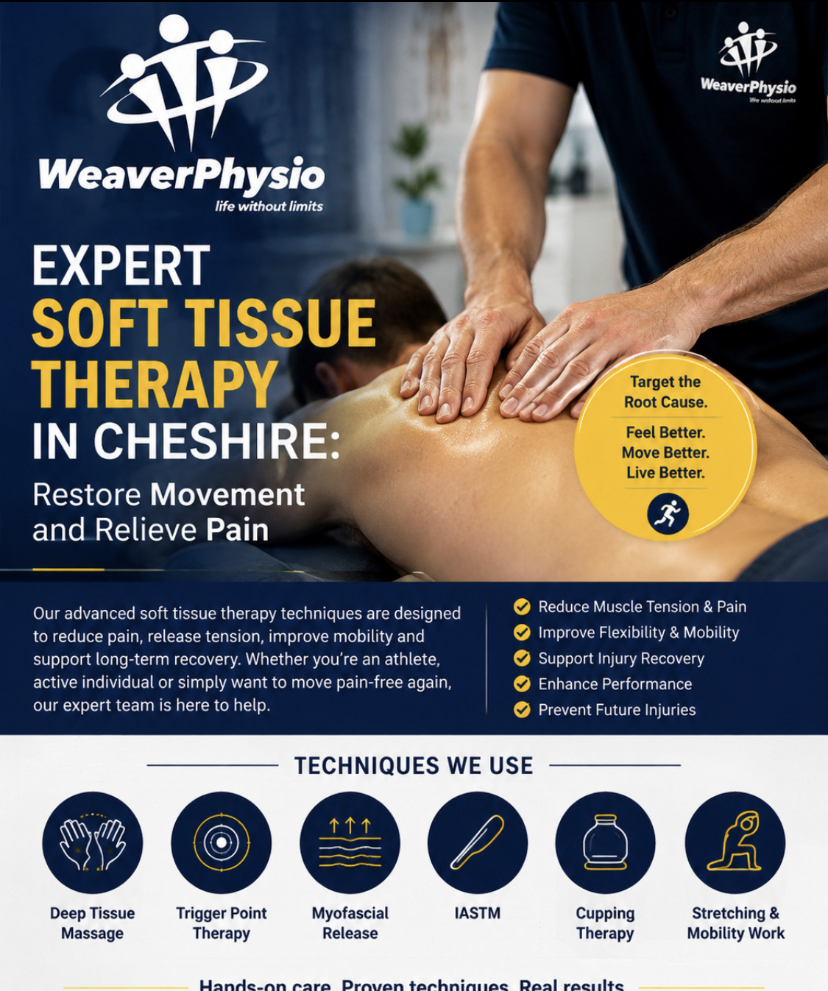
At Weaver Physiotherapy & Sports Injury Clinic in Northwich, therapeutic massage is tailored to the individual rather than delivered as a standard routine. Depending on your symptoms and goals, treatment may incorporate sports massage, deep tissue techniques, soft-tissue therapy, trigger point work, myofascial techniques, stretching and other hands-on approaches.


Our focus is straightforward: understand what is contributing to your symptoms, select appropriate treatment techniques and help you move towards better mobility, function and physical confidence.


Whether you are recovering from an injury, managing muscular tension, training for sport or simply feeling restricted and uncomfortable, therapeutic massage can form a valuable part of a wider recovery or performance programme.


What Is Therapeutic Massage?


Therapeutic massage is the targeted treatment of muscles and other soft tissues with the aim of reducing discomfort, improving mobility and supporting normal physical function.


Unlike a general relaxation massage, clinical therapeutic massage is usually guided by a specific problem or objective. You may be experiencing calf tightness during running, persistent neck and shoulder tension after long periods at a desk, muscular soreness following training, or stiffness that makes everyday movement uncomfortable.


Rather than treating every person in exactly the same way, the therapist considers factors such as:


Where your symptoms are located

How long the problem has been present

Which movements aggravate your symptoms

Your occupation and daily activities

Your exercise and sporting demands

Previous injuries

Areas of muscular tightness or sensitivity

Your mobility and functional goals


Treatment can then be adapted according to what is clinically appropriate and comfortable for you.


At Weaver Physio Northwich, we believe this individualised approach is an important distinction between therapeutic massage and a generic massage experience.


Therapeutic Massage vs Relaxation Massage


Both forms of massage can have value, but they generally have different objectives.


A relaxation or spa massage is primarily designed to promote comfort, relaxation and general wellbeing. The environment and experience are often as important as the physical treatment itself.


Clinical therapeutic massage is more problem-focused.


The treatment may concentrate on a particular muscle group, movement restriction, sporting demand or area of persistent tension. Pressure, techniques and treatment position can all be modified depending on the individual’s presentation.


For example, somebody preparing for a running event may require very different treatment from someone experiencing neck and shoulder tension after working at a computer.


The objective is not simply to provide a pleasant massage. It is to use appropriate soft-tissue techniques to support movement, recovery and function.


Types of Therapeutic Massage Available in Northwich


There is no single massage technique that is appropriate for every person. Different approaches can be selected or combined according to your needs.


Sports Massage


Despite its name, sports massage isn’t only for competitive athletes.


It can be useful for runners, cyclists, gym users, golfers, footballers, recreational athletes and anyone whose muscles are exposed to regular physical demands.


Sports massage may be used as part of a programme designed to:


Manage muscular tightness

Support recovery following exercise

Improve comfortable movement

Address areas of soft-tissue restriction

Complement strength and conditioning

Support preparation for training or competition

Help manage the muscular demands associated with sport


For runners in particular, treatment may focus on areas such as the calves, hamstrings, quadriceps, gluteal muscles and hip region depending on the individual’s presentation.


At Weaver Physio, sports massage can also be combined with physiotherapy, rehabilitation and running gait assessment when appropriate.


Deep Tissue Massage


Deep tissue massage uses slower, more focused techniques to work with deeper muscular and connective-tissue structures.


It may be appropriate for people experiencing persistent muscular tension or areas that feel chronically stiff and restricted.


However, deeper does not automatically mean better.


Effective treatment does not require excessively painful pressure. The intensity should be appropriate to the individual, the area being treated and the clinical objective.


Our aim is to provide purposeful treatment rather than simply applying the greatest possible pressure.


Trigger Point Therapy


Sensitive areas can sometimes develop within muscles and may be associated with local discomfort or referred symptoms elsewhere.


Trigger point techniques use focused pressure or other soft-tissue approaches to address these areas where clinically appropriate.


This can be incorporated into a broader therapeutic massage session rather than being treated as an isolated technique.


Myofascial and Soft-Tissue Techniques


The body does not operate as a collection of isolated muscles. Muscles, fascia, tendons, joints and the nervous system work together to produce movement.


For this reason, therapeutic massage may include a combination of soft-tissue and myofascial techniques designed to address areas of restriction and improve comfortable movement.


Depending on your assessment, treatment may also incorporate stretching, movement work and advice regarding mobility or strengthening.


Sports Massage or Deep Tissue Massage: Which Is Better?


Neither is automatically better.


The most appropriate treatment depends on what you are trying to achieve.


Sports massage may be particularly suitable when treatment relates to training, sporting performance, exercise recovery or a specific musculoskeletal problem associated with activity.


Deep tissue techniques may be useful when persistent muscular tension and deeper areas of restriction are prominent.


In practice, the distinction is not always rigid. An experienced therapist may combine several techniques within the same appointment.


Rather than choosing a treatment simply because of its name, it is often more useful to identify the problem first and then determine which techniques are most appropriate.


What Can Therapeutic Massage Help With?


People seek therapeutic massage for many different reasons.


At our Northwich clinic, massage and soft-tissue therapy may be considered for people experiencing:


Muscular tightness and stiffness

Exercise-related muscle soreness

Neck and shoulder tension

Back muscular tension

Restricted movement

Tight calves or hamstrings

Hip and gluteal muscle tension

Training-related muscular fatigue

Postural muscle discomfort

Recovery following sporting activity

Recurrent areas of muscle tightness


Massage can also complement rehabilitation for certain musculoskeletal problems where muscular tension or protective guarding is contributing to symptoms.


However, massage is not a universal solution for every injury. Persistent, unexplained, severe or neurological symptoms may require a more comprehensive clinical assessment.


This is one of the advantages of choosing a clinic where physiotherapy and rehabilitation services are available alongside therapeutic massage.


The Weaver Physio Approach: More Than Just Massage


One of the most important principles at Weaver Physio is that treatment should be appropriate to the person rather than dictated by a predetermined routine.


If muscular tightness is part of a larger movement or injury problem, repeatedly treating the tight muscle without considering why it keeps becoming overloaded may only provide temporary relief.


For example, a runner experiencing recurring calf tightness may also benefit from assessment of ankle mobility, lower-limb strength, running load, biomechanics or running technique.


Similarly, someone experiencing recurring neck and shoulder tension may need to consider movement habits, working positions, strength, mobility and activity levels alongside hands-on treatment.


This is why therapeutic massage can be particularly effective when integrated into a broader rehabilitation strategy.


Combining Massage with Physiotherapy and Rehabilitation


For some people, massage alone may be entirely appropriate. For others, it works best as one component of a more comprehensive programme.


At Weaver Physiotherapy & Sports Injury Clinic, treatment can be complemented by services including:


Physiotherapy

Sports injury rehabilitation

Exercise rehabilitation

Strength and conditioning

Acupuncture

Dry needling

Shockwave therapy

Running gait analysis

Mobility and flexibility programmes


This allows treatment to progress as your needs change.


Hands-on therapy may initially help reduce muscular tension and improve comfortable movement, while progressive exercise can then focus on developing strength, capacity and resilience.


The objective is not to make you dependent on regular treatment. Wherever possible, we want to help you understand your body and develop the physical capacity required for the activities that matter to you.


Therapeutic Massage for Runners and Active People


Northwich and the surrounding Cheshire area has a thriving community of runners, cyclists, gym users and recreational athletes.


Regular training creates physical demands that need to be managed appropriately.


Therapeutic and sports massage may be incorporated into a wider recovery strategy to help manage muscular tightness and support comfortable movement between training sessions.


For runners, treatment may focus on the:


Calves

Hamstrings

Quadriceps

Gluteal muscles

Hip musculature

Lower back


However, repeatedly massaging a tight muscle does not necessarily address the reason it feels tight.


This is where combining massage with strength assessment, rehabilitation and running gait analysis can be particularly useful.


At Weaver Physio, our approach is to consider the runner as a whole rather than simply treating the area that currently hurts.


Therapeutic Massage for Desk Workers


You do not need to play sport to benefit from clinical massage.


Long periods spent sitting, driving or working at a computer can be associated with muscular discomfort and feelings of stiffness, particularly around the neck, shoulders and upper back.


Therapeutic massage may help reduce muscular tension and make movement feel easier. Where appropriate, this can be combined with mobility exercises, strengthening and practical advice to help manage the physical demands of work.


The aim is not to create a mythical “perfect posture”, but to encourage movement variety and improve your body’s tolerance to the positions and activities your day requires.


Should Therapeutic Massage Hurt?


A clinical massage can sometimes feel intense, particularly when treating sensitive or tight areas, but treatment does not need to be extremely painful to be effective.


Communication between you and your therapist is important.


Pressure should be adjusted according to the area being treated, your individual sensitivity and the purpose of the technique.


The old idea that massage must hurt significantly to achieve results is misleading. More pressure is not automatically more therapeutic.


Our priority is appropriate, controlled treatment that you can tolerate comfortably.


How Often Should You Have Therapeutic Massage?


There is no universal schedule.


Frequency depends on why you are attending, your symptoms, activity levels, training demands and how you respond to treatment.


Someone dealing with a short-term muscular problem may initially benefit from appointments closer together, whereas an active individual using massage as part of their general recovery strategy may prefer occasional maintenance sessions.


Rather than automatically recommending massage every few weeks indefinitely, we believe treatment frequency should have a clear purpose.


Why Choose Weaver Physio for Therapeutic Massage in Northwich?


At Weaver Physiotherapy & Sports Injury Clinic, we combine hands-on treatment with a broader understanding of musculoskeletal health, rehabilitation and physical performance.


Our team has 70+ years of combined clinical experience, and our approach is centred around assessment, individualised treatment and progressive rehabilitation.


We help people from Northwich, Hartford, Weaverham, Winsford, Middlewich, Knutsford and communities throughout Cheshire with a wide range of musculoskeletal, sporting and movement-related problems.


Whether your goal is to recover from injury, manage persistent muscular tension, return to running, improve your movement or simply feel physically better, we aim to provide treatment that has a clear clinical purpose.


Book Therapeutic Massage in Northwich


Persistent muscular tightness doesn’t have to become something you simply accept.


A carefully selected combination of therapeutic massage, sports massage, soft-tissue treatment and rehabilitation can help address muscular restriction while supporting better movement and physical function.


At Weaver Physiotherapy & Sports Injury Clinic, your treatment is tailored around your symptoms, lifestyle, activity levels and goals.


If your problem requires more than massage, our wider physiotherapy and sports injury services mean your treatment plan can be adapted accordingly.


Weaver Physiotherapy & Sports Injury Clinic

110 Middlewich Road

Northwich, Cheshire

CW9 7DP


Telephone: 01606 227484

Website: http://www.weaverphysio.com


Frequently Asked Questions


What is the difference between therapeutic massage and sports massage?


Therapeutic massage is a broad term describing massage used to address physical symptoms such as muscular tightness, discomfort and restricted movement. Sports massage is a more activity-focused form of soft-tissue treatment commonly used to support people involved in sport and exercise. There is considerable overlap, and techniques may be combined depending on your needs.


Do I need to be an athlete to have sports massage?


No. Sports massage can be appropriate for anyone experiencing muscular tightness or physical restrictions, regardless of whether they compete in sport. Runners and athletes commonly use it, but it can also be helpful for recreational exercisers and people experiencing muscle tension related to work or everyday activities.


Can therapeutic massage help back pain?


Massage may help some people manage muscular tension, stiffness and protective muscle guarding associated with back pain. However, back pain has many potential causes, so persistent or significant symptoms should be appropriately assessed rather than assuming that muscular tightness is the sole problem.


Can massage treat sciatica?


Massage may help with secondary muscular tension associated with some presentations of back and leg pain, but it does not directly remove a disc protrusion or automatically resolve nerve compression. Symptoms such as persistent radiating leg pain, weakness, numbness or altered reflexes warrant an appropriate clinical assessment.


What should I wear for a sports massage appointment?


Comfortable clothing is recommended. Shorts are particularly useful when treating the legs, while a vest or suitable top may make treatment of the shoulders and upper body easier. Your therapist will explain what access is required and maintain your comfort, dignity and privacy throughout treatment.


How often should I book a sports or therapeutic massage?


This varies considerably. Your ideal frequency depends on your symptoms, training volume, goals and response to treatment. Some people attend during periods of heavy training, while others book occasionally when they develop muscular tightness. There is no clinical requirement for everybody to have massage at predetermined intervals.


Is deep tissue massage better than sports massage?


Not necessarily. Deep tissue and sports massage have different applications, and the most appropriate approach depends on your presentation. In many clinical sessions, techniques from both may be combined rather than choosing one exclusively.


Can massage prevent sports injuries?


Massage may form part of a broader recovery and training strategy, but no massage technique can guarantee injury prevention. Appropriate training progression, strength, recovery, sleep, nutrition and management of overall training load are also important factors in reducing injury risk.


Where can I find therapeutic massage in Northwich?


Weaver Physiotherapy & Sports Injury Clinic provides therapeutic massage, sports massage and soft-tissue treatment from our clinic at 110 Middlewich Road, Northwich, Cheshire CW9 7DP. Our wider services include physiotherapy, sports injury rehabilitation, shockwave therapy, acupuncture, dry needling, strength and conditioning and running gait analysis.

August 17, 2026
Iliotibial Band Syndrome Treatment & Running Rehabilitation in Northwich
August 17, 2026
Specialist Physiotherapy for Dizziness, Vertigo & Balance Problems
August 12, 2026
Clinical Recovery & Performance at Weaver Physio
August 11, 2026
5 Proactive Strategies to Stay Strong, Consistent and Injury-Free
August 11, 2026
Common Causes, Treatment & Prevention
August 10, 2026
A Complete Guide for Runners
August 9, 2026
A Comprehensive Guide to Safe Recovery and Peak Performance
August 9, 2026
5 Key Principles for Running Injury Rehabilitation
August 9, 2026
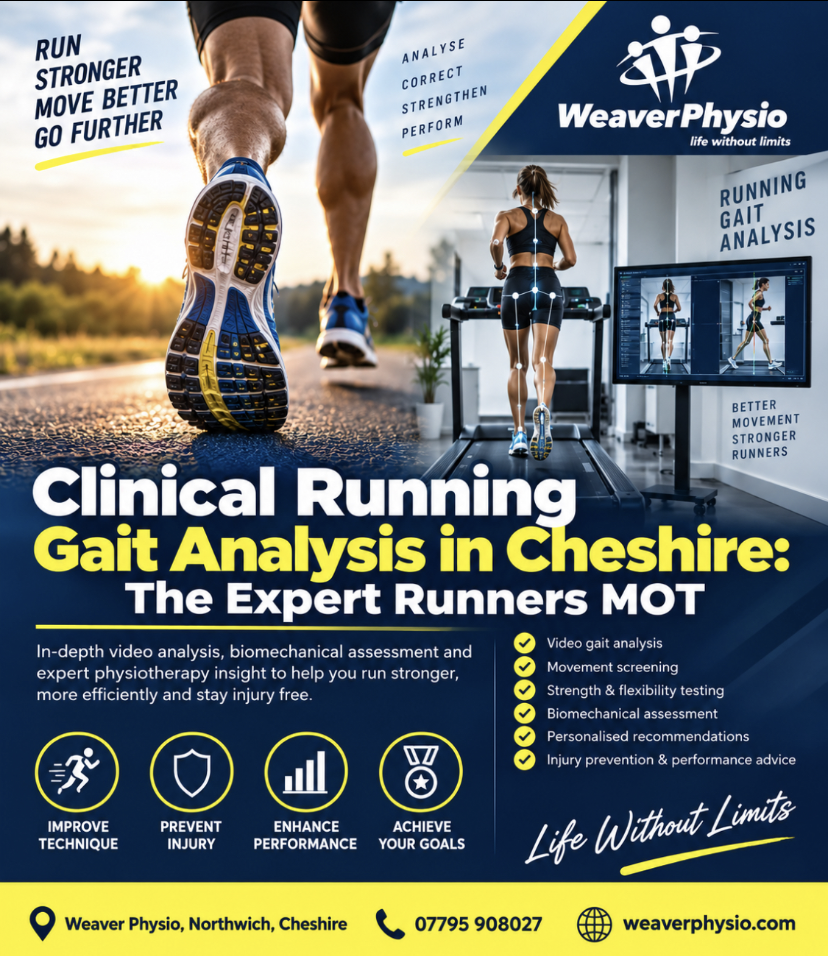
Whether you are preparing for your first 5K, chasing a new marathon personal best or simply trying to run consistently without recurring aches and injuries, understanding how your body moves can make a significant difference. At Weaver Physiotherapy & Sports Injury Clinic in Northwich, our Runner’s MOT Cheshire service provides a detailed assessment of your running biomechanics, strength, mobility, stability and movement control. Running injuries are rarely as simple as one tight muscle or the wrong pair of trainers. Problems can develop through a combination of training load, previous injury, strength deficits, reduced mobility, running mechanics and the body’s ability to tolerate repeated impact. That is why our Runner’s MOT looks beyond the painful area. Using slow-motion video gait analysis, functional movement screening, strength testing and mobility assessment, we build a detailed picture of how your body performs when you run. The aim is to identify factors that may be contributing to injury, limiting performance or preventing you from progressing your training. Whether you run around Northwich and the Cheshire countryside, belong to a local running club or are training for a 10K, half marathon, marathon or ultra, our goal is simple: help you run stronger, move more efficiently and become more resilient. What Is a Runner’s MOT? A Runner’s MOT in Cheshire is a comprehensive clinical and performance assessment specifically designed for runners. Rather than waiting until an injury stops you running, a Runner’s MOT can identify areas that may benefit from improvement before they become significant problems. It can also be extremely valuable for runners already struggling with recurring pain, unexplained performance limitations or repeated injuries. At Weaver Physio, we assess the runner as a whole. Your running technique is only one part of the picture. We also consider your training history, previous injuries, current symptoms, goals, strength, mobility, stability, coordination and capacity to tolerate the demands of running. This provides far more useful information than simply looking at whether your foot pronates or what type of running shoe you wear. The objective isn’t to create a theoretically “perfect” running style. Every runner moves differently. Instead, we look for potentially modifiable factors that are relevant to your body, your symptoms and your running goals. Clinical Running Gait Analysis vs Running Shop Gait Analysis Many runners first experience gait analysis when buying running shoes. Retail assessments can be useful when selecting footwear, but a clinical running gait analysis has a different purpose. At Weaver Physio, we are interested in the entire movement chain. Your foot and ankle matter, but so do your knees, hips, pelvis and trunk. We consider how these areas interact as you repeatedly absorb and generate force while running. For example, a runner experiencing knee pain may have perfectly reasonable foot mechanics but demonstrate reduced hip control, insufficient calf capacity, restricted ankle movement or a training load that has progressed faster than their body can currently tolerate. Simply changing trainers may therefore fail to address the main contributing factors. Our Runner’s MOT Cheshire combines video analysis with clinical testing to help determine why particular movement patterns may be occurring and whether they are actually relevant to your symptoms or performance. Slow-Motion Video Running Gait Analysis Running happens quickly, and many important movement patterns are difficult to assess accurately with the naked eye. Slow-motion video allows our clinicians to examine your running technique in considerably greater detail. We can review different stages of your running cycle and assess features such as cadence, stride characteristics, foot placement, knee position, hip and pelvic control, trunk movement and overall running posture. Importantly, these findings are interpreted alongside your physical assessment. A movement pattern seen on video isn’t automatically a problem. Running biomechanics vary considerably between individuals, so our job is to determine whether a particular finding is relevant to your injury history, symptoms, physical capacity or performance goals. This clinical interpretation is one of the most important elements of a professional running gait analysis in Cheshire. Strength, Mobility and Movement Screening for Runners Video analysis tells us what happens when you run. Physical testing can help us understand why. Running requires the body to repeatedly absorb and produce force thousands of times during a single training session. Adequate strength, control and mobility are therefore essential. Your Runner’s MOT may examine areas including calf capacity, hip strength, single-leg control, balance, ankle mobility, lower-limb flexibility, pelvic stability and functional movement. Where appropriate, we can also assess more demanding movements relevant to running performance. This helps us identify differences between sides and areas where your current physical capacity may not match the demands of your training. For example, reduced calf capacity may be particularly relevant to a runner experiencing recurrent Achilles problems, while poor single-leg control could potentially influence the management of some knee or hip complaints. Rather than relying on generic exercises, we use your assessment findings to create a programme specifically targeted to you. Runner’s MOT for Running Injury Prevention No assessment can guarantee that a runner will never become injured. Running injuries are influenced by multiple factors, including training load, recovery, sleep, previous injury, strength and overall health. However, identifying modifiable risk factors can help runners make more informed decisions about their training. One of the biggest advantages of a Runner’s MOT Cheshire is that you do not necessarily need to wait until something hurts. If you are planning to significantly increase your mileage, return to running after time away or move from shorter distances towards a half marathon or marathon, a running assessment can help establish whether your body is adequately prepared for the increased workload. We can identify areas where additional strength, mobility or conditioning may be beneficial and develop a structured plan to improve your physical capacity. The goal is not simply injury prevention. It is to build a body capable of tolerating the running you want to do. Runner’s MOT for Existing Running Injuries Our Runner’s MOT can also form part of the assessment and rehabilitation of persistent or recurring running injuries. We regularly assess runners experiencing problems such as: Achilles tendon pain and Achilles tendinopathy Plantar heel pain and plantar fasciitis Runner’s knee and patellofemoral pain Shin pain and medial tibial stress syndrome IT band-related pain Calf strains Hamstring injuries Hip and gluteal pain Knee pain Ankle and foot problems Recurring muscle injuries The location of your pain does not always tell us why the problem developed. For example, persistent knee symptoms may be influenced by several factors involving training load, lower-limb strength, movement strategy or previous injury. A comprehensive assessment allows us to investigate these possibilities rather than repeatedly treating the painful area in isolation. Personalised Running Rehabilitation and Performance Plan The most valuable part of a Runner’s MOT is what happens after the assessment. Information is only useful when it leads to meaningful action. We use your findings to develop an individual plan designed around your current ability, running goals and assessment results. Depending on what we identify, this may involve improving calf strength, developing hip and gluteal capacity, increasing single-leg stability, restoring ankle mobility, improving coordination or introducing running-specific strength and plyometric exercises. Where appropriate, we may also suggest modifications to aspects of your running technique or training progression. The aim is to provide clear, practical recommendations that you can incorporate into your normal training rather than overwhelming you with dozens of unnecessary exercises. Improve Running Performance – Not Just Injury Recovery A Runner’s MOT isn’t exclusively for injured runners. Many healthy runners choose a running performance assessment in Cheshire because they want to understand their body better and identify areas that could potentially improve their running. You may feel that your times have plateaued despite increasing your training. You might struggle to maintain good form when fatigued or notice that one side feels considerably stronger than the other. Strength and conditioning can be an important component of running performance. Developing appropriate lower-limb strength, stiffness, stability, coordination and power can help prepare the body for the demands of faster and longer running. Our approach therefore extends beyond simply getting you pain-free. We want to help you develop the physical qualities required to run stronger, tolerate greater training demands and perform with confidence. Preparing for a 5K, 10K, Half Marathon or Marathon? Increasing distance changes the demands placed on your body. A runner comfortable completing a weekly 5K may discover that weaknesses become more apparent when training volume increases for a 10K, half marathon or marathon. This is where a Runner’s MOT in Cheshire can be particularly useful. Having your strength, mobility and running mechanics assessed before a major training block gives you time to address potential limitations while progressively increasing your mileage. Whether your target is a local Cheshire race, your first marathon or a new personal best, we can help you develop a more structured approach to preparing your body for the challenge ahead. Why Choose Weaver Physio for Your Runner’s MOT in Cheshire? Weaver Physiotherapy & Sports Injury Clinic provides specialist assessment, physiotherapy and rehabilitation for runners from Northwich and across Cheshire. Our experienced clinical team combines physiotherapy knowledge with running-specific biomechanical assessment, rehabilitation and strength and conditioning principles. With more than 70 years of combined clinical experience, our focus is not simply on identifying what hurts. We aim to understand the factors contributing to the problem and develop a clear pathway towards your individual running goals. We regularly work with runners from Northwich, Hartford, Weaverham, Winsford, Middlewich, Knutsford, Tarporley, Frodsham, Sandbach and surrounding areas of Cheshire. Whether you’re an experienced competitive runner or have only recently completed Couch to 5K, your assessment is based on your individual needs rather than your running ability. Run Stronger. Move Better. Perform With Confidence. You invest hours in your training. A Runner’s MOT Cheshire can help you understand whether your body is prepared for what you are asking it to do. Through clinical assessment, slow-motion video gait analysis, strength and mobility testing and individual rehabilitation planning, Weaver Physio can help identify the factors that may be limiting your running. If recurring injuries keep interrupting your training, you’re returning to running following an injury or you simply want to understand your biomechanics and performance in greater detail, our Northwich team is here to help. Book your Runner’s MOT at Weaver Physiotherapy & Sports Injury Clinic in Northwich and take a more informed approach to your running. Assess. Strengthen. Improve. Perform. Frequently Asked Questions About Our Runner’s MOT Cheshire Who is a Runner’s MOT suitable for? Almost any runner can benefit from a running assessment. You don’t need to be competitive or particularly fast. We assess beginners, recreational runners, club athletes and experienced marathon runners. A Runner’s MOT can be useful if you’re experiencing an injury, returning after time away from running, increasing your mileage or simply looking to improve your performance. Can a Runner’s MOT help with recurring running injuries? It can help identify factors that may be contributing to recurring problems. Rather than looking only at where you experience pain, we assess your running mechanics, strength, mobility and movement control alongside your training history. This helps us develop a more individual rehabilitation strategy. Can running gait analysis help with knee pain? Running-related knee pain can have multiple contributing factors. Video gait analysis allows us to examine how your hip, knee, ankle, pelvis and trunk behave during running. We combine this information with strength and mobility testing to determine which findings may be relevant to your symptoms. What should I bring to my Runner’s MOT? Bring comfortable running clothing and the running shoes you normally use. If you regularly alternate between different trainers, you may wish to bring those too. Information about your current weekly mileage, typical running pace, recent training and previous injuries can also be useful. Is the assessment only for injured runners? No. Many runners attend while completely pain-free because they want to understand their biomechanics, identify potential weaknesses or prepare for increased training demands. A Runner’s MOT can therefore be used for both rehabilitation and performance development. When should I have a running assessment? There is no fixed schedule that suits everyone. An assessment can be particularly valuable when returning from injury, beginning a new training programme, substantially increasing running distance or preparing for an important event. A review can also be useful if your running goals or training demands change significantly. Where can I get a Runner’s MOT in Cheshire? Weaver Physiotherapy & Sports Injury Clinic provides Runner’s MOT assessments and running gait analysis from our Northwich clinic, making the service accessible to runners throughout Mid Cheshire and surrounding areas. If you’re searching for a Runner’s MOT Cheshire, running gait analysis Northwich, running injury assessment Cheshire or biomechanical running assessment, contact Weaver Physio to arrange your assessment and start building a stronger foundation for your running.
August 5, 2026
Sports Injury Recovery in Northwich: Helping You Return Stronger, Safer and More Confidently A sports injury can disrupt far more than your training schedule. Whether you’re a runner preparing for your next race, a footballer eager to return to the pitch, a gym enthusiast, cyclist or someone who simply enjoys staying active, an injury can quickly affect your confidence, fitness and everyday life. Many people are still told to simply “rest until it feels better.” Whilst rest has an important role immediately after an injury, modern rehabilitation is far more sophisticated. Research consistently shows that the right treatment at the right time helps injured tissues heal more effectively, reduces the likelihood of recurring problems and allows you to return to sport with greater confidence. At Weaver Physiotherapy & Sports Injury Clinic, our Chartered Physiotherapists combine over 70 years of clinical experience helping patients throughout Northwich, Winsford, Middlewich, Knutsford, Hartford, Weaverham, Tarporley, Frodsham, Sandbach and across Cheshire recover from sports injuries using evidence-based rehabilitation programmes tailored to every individual. Whether you’ve recently injured yourself or you’re struggling with a long-standing problem that simply won’t settle, this guide explains exactly how professional sports injury rehabilitation can help you recover safely and perform at your best again. Understanding Sports Injuries Sports injuries occur when muscles, tendons, ligaments, joints or bones are subjected to loads greater than they can tolerate. Sometimes this happens suddenly through trauma, whilst other injuries develop gradually because tissues have been overloaded over weeks or months. Common injuries we regularly treat include: ● Muscle strains ● Ligament sprains ● Ankle injuries ● Knee injuries ● Shoulder pain ● Rotator cuff injuries ● Achilles tendinopathy ● Plantar fasciitis ● Tennis elbow ● Hamstring injuries ● Calf strains ● Patellar tendinopathy ● Shin splints ● Hip pain ● Running injuries ● Back pain ● Neck pain Every injury has its own healing timeline, meaning there is no “one-size-fits-all” recovery programme. This is why a detailed assessment is essential before beginning treatment. The Modern Approach to Sports Injury Recovery The old RICE protocol (Rest, Ice, Compression and Elevation) has gradually been replaced by a more comprehensive evidence-based approach known as PEACE & LOVE. Rather than focusing purely on reducing inflammation, this model supports the body’s natural healing process whilst encouraging a safe progression back to activity. The PEACE Phase (First 72 Hours) During the early stages following an injury the priorities are to protect damaged tissues without creating unnecessary stiffness or weakness. Protect Reduce activities that significantly increase pain whilst avoiding complete immobilisation unless medically necessary. Elevate Keeping the injured limb elevated can assist with swelling management during the first few days. Avoid Routine Anti-Inflammatory Medication Inflammation is a normal part of tissue repair. Whilst anti-inflammatory medication may occasionally be appropriate, routinely suppressing inflammation immediately after injury may interfere with optimal healing. Always seek appropriate medical advice before taking medication. Compression Compression garments or supportive bandages can help reduce excessive swelling and improve comfort. Education Understanding what has been injured, how tissues heal and what to expect during rehabilitation helps reduce anxiety and improves recovery outcomes. LOVE: The Active Rehabilitation Phase After the initial inflammatory phase, rehabilitation becomes increasingly active. Load One of the biggest myths surrounding sports injuries is that pain-free rest equals recovery. In reality, injured tissues become stronger through carefully prescribed loading. Our Chartered Physiotherapists gradually increase loading according to your symptoms, tissue healing stage and sporting goals. Optimism Research has shown that psychological wellbeing significantly influences rehabilitation outcomes. Understanding your injury and having a clear recovery plan reduces fear and builds confidence throughout rehabilitation. Vascularisation Maintaining cardiovascular fitness through appropriate pain-free exercise improves circulation and supports tissue healing. Depending on your injury this may include: ● Walking ● Cycling ● Swimming ● Cross trainer ● Upper body conditioning Exercise Targeted rehabilitation exercises remain the single most important part of successful sports injury recovery. Every exercise programme at Weaver Physio is individually prescribed and progressed according to your recovery. Why Professional Assessment Makes All the Difference Many people attempt to diagnose themselves online before beginning random exercises they find on social media. Unfortunately, different injuries often produce similar symptoms. For example: ● A calf strain can mimic an Achilles injury. ● Hip weakness can cause knee pain. ● Lumbar spine problems can resemble hamstring injuries. ● Plantar fasciitis can actually be heel fat pad irritation or nerve pain. Treating the wrong diagnosis wastes valuable recovery time. Our comprehensive physiotherapy assessment identifies: ● The exact injured structure ● Contributing biomechanical factors ● Muscle weaknesses ● Joint restrictions ● Movement compensations ● Training errors ● Running technique issues ● Lifestyle factors affecting recovery Only once we’ve established the true cause of your symptoms do we design your personalised rehabilitation programme. Evidence-Based Sports Injury Rehabilitation Successful rehabilitation progresses through carefully controlled stages. Pain Reduction Initially our aim is to reduce pain and improve comfort whilst protecting healing tissues. Treatment may include: ● Manual therapy ● Joint mobilisation ● Soft tissue therapy ● Sports massage ● Acupuncture ● Dry needling ● Taping ● Education ● Individual exercise prescription Restoring Movement Once pain settles, we focus on restoring normal movement. Restricted joints, muscle tightness and poor mobility often remain after an injury and increase the risk of recurrence. Treatment focuses on restoring: ● Range of movement ● Flexibility ● Coordination ● Muscle activation ● Joint mechanics Rebuilding Strength Strong muscles protect joints. Every rehabilitation programme progresses through evidence-based strengthening including: Isometric Exercises Static contractions reduce pain whilst improving tendon and muscle capacity. Isotonic Strengthening Controlled resistance exercises rebuild muscle size, strength and endurance. Functional Strength Exercises become increasingly sport-specific to replicate real-life movement. Plyometric Training Jumping, landing and explosive exercises prepare tissues for running, cutting, sprinting and sport-specific demands. Shockwave Therapy for Chronic Sports Injuries Some tendon injuries become persistent despite good rehabilitation. At Weaver Physio we provide Radial Shockwave Therapy for conditions including: ● Achilles tendinopathy ● Plantar fasciitis ● Patellar tendinopathy ● Tennis elbow ● Golfer’s elbow ● Gluteal tendinopathy ● Calcific shoulder tendinopathy Shockwave Therapy stimulates tissue healing, encourages blood vessel formation and helps restart healing in long-standing tendon injuries when appropriate. Combined with progressive rehabilitation exercises, it can significantly improve recovery in suitable patients. Returning to Sport Safely Being pain-free does not automatically mean you are ready to compete. Returning too quickly is one of the most common reasons injuries return. At Weaver Physio we use objective return-to-sport testing to assess: ● Strength ● Balance ● Single-leg control/Coordination ● Stability ● Power ● Endurance ● Functional movement ● Sport-specific performance Only when these measures are appropriate do we begin your return to unrestricted activity. Running Gait Analysis Many injured runners unknowingly develop movement compensations. These altered mechanics can increase stress elsewhere in the body and contribute to recurring injuries. Our Runner’s MOT and Video Running Gait Analysis identifies issues such as: ● Excessive overstride ● Poor cadence ● Hip instability ● Pelvic drop ● Foot strike abnormalities ● Reduced ankle mobility ● Running asymmetries Correcting these factors improves efficiency whilst reducing future injury risk. The Psychological Side of Recovery Physical rehabilitation is only part of successful recovery. Many athletes lose confidence following injury. Fear of re-injury can alter movement patterns, reduce performance and increase injury risk. Throughout rehabilitation we progressively expose you to sport-specific activities that rebuild trust in your body. By the time you return to full training, you should feel physically prepared and mentally confident. Common Sports Injury Recovery Mistakes The most common reasons rehabilitation fails include: ● Returning to sport too early. ● Ignoring pain that persists during exercise. ● Stopping rehabilitation once symptoms improve. ● Following generic online exercise programmes. ● Neglecting strength training. ● Failing to address the underlying cause of the injury. ● Increasing training volume too rapidly. ● Continuing to train through significant pain. Avoiding these mistakes can dramatically improve both recovery time and long-term performance. Why Choose Weaver Physiotherapy & Sports Injury Clinic? At Weaver Physio, we believe successful rehabilitation goes beyond simply relieving pain. Our goal is to help you move better, perform better and reduce the risk of future injuries. Our experienced Chartered Physiotherapists provide personalised, evidence-based care using the latest rehabilitation principles and advanced treatment techniques. Every rehabilitation programme is tailored to your sport, your goals and your lifestyle. Patients choose Weaver Physio because we offer: ● Comprehensive physiotherapy assessments ● Evidence-based rehabilitation programmes ● Sports injury expertise ● Running gait analysis ● Shockwave Therapy ● Sports massage ● Acupuncture and dry needling ● Strength and conditioning rehabilitation ● Return-to-sport testing ● Over 70 years of combined clinical experience Whether you’re recovering from your first injury or aiming to return to elite competition, we’re here to help you recover stronger than before. Book Your Sports Injury Assessment in Northwich If pain is preventing you from training, competing or enjoying the activities you love, don’t simply wait and hope it improves. Early assessment often leads to quicker recovery, fewer complications and a safer return to activity. At Weaver Physiotherapy & Sports Injury Clinic, we’re proud to help active people across Northwich, Winsford, Middlewich, Knutsford, Hartford, Weaverham, Tarporley, Frodsham, Sandbach and throughout Cheshire recover with confidence. Recover Stronger. Move Better. Stay Active. Frequently Asked Questions How long does a sports injury take to recover? Recovery depends on the injured tissue, severity of damage, your overall health and how well you follow rehabilitation. Mild muscle injuries may recover within a few weeks, whilst tendon, ligament and cartilage injuries often require several months of structured rehabilitation. Should I stop exercising completely after an injury? Usually not. Relative rest is generally more beneficial than complete inactivity. Maintaining fitness through appropriate exercise can support healing whilst reducing strength and conditioning losses. Your physiotherapist will advise what activities remain safe. When should I see a physiotherapist? Seek professional assessment if your pain is severe, swelling is significant, you cannot bear weight, symptoms persist beyond a few days, or the injury is limiting your ability to work, exercise or play sport. Early diagnosis often leads to faster and more effective recovery. Can physiotherapy help prevent future sports injuries? Yes. Physiotherapy doesn’t just treat existing injuries—it also identifies movement faults, muscle imbalances, mobility restrictions and training errors that increase injury risk. Correcting these issues can improve performance whilst helping you stay injury-free over the long term. Is Shockwave Therapy suitable for every sports injury? No. Shockwave Therapy is most effective for specific chronic tendon conditions and certain soft tissue injuries. During your assessment, we’ll determine whether it’s appropriate for your condition or whether another evidence-based treatment approach is more suitable.
Show More