
Foot Health Matters More Than You Think: Why Strong Feet Create Strong Movement
Weaver Physiotherapy & Sports Injury Clinic | Physio Northwich
Most people never think about their feet until pain develops.
But your feet are the foundation of every step, squat, run, jump and movement you make. If that foundation is weak, unstable or poorly controlled, the effects can travel all the way up the body — influencing your ankles, knees, hips, pelvis, spine and posture.
At Weaver Physiotherapy & Sports Injury Clinic in Northwich, we regularly see patients struggling with knee pain, plantar fasciitis, Achilles problems, shin splints, hip pain, poor balance and recurring injuries where the real issue starts at ground level: the feet.
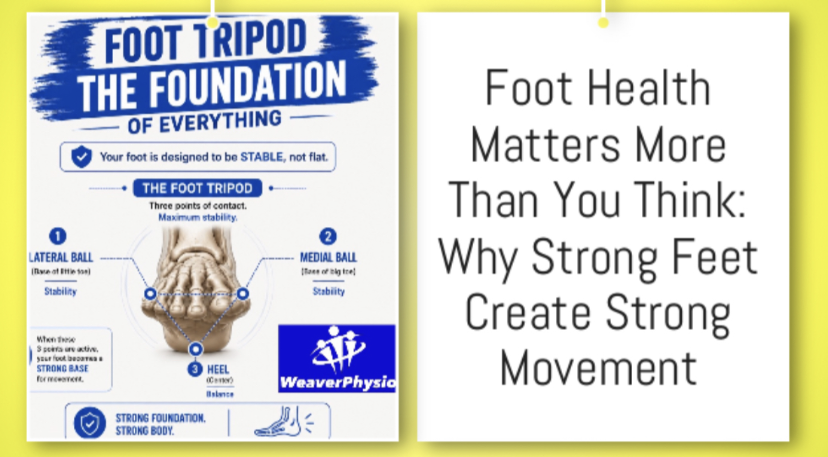
One of the most important concepts in biomechanics and movement is something called the Foot Tripod.
Understanding it can completely change how you move, train and recover from injury.
What Is the Foot Tripod?
The “foot tripod” refers to the three key contact points of your foot that create stability and balance.
These three points are:
The base of the big toe
The base of the little toe
The heel
When these three points work together correctly, your foot becomes a strong and stable platform for movement.
Think of it like the tripod of a camera. A tripod with three balanced points creates stability. If one leg collapses or loses contact, the entire structure becomes unstable.
Your foot works exactly the same way.
The foot tripod helps distribute force efficiently through the body while supporting balance, movement control and shock absorption.
Why Your Feet Matter So Much
Your feet are incredibly complex.
Each foot contains:
26 bones
33 joints
More than 100 muscles, tendons and ligaments
Every time you walk or run, your feet absorb and transfer force throughout the body.
During running, the load going through your feet can be several times your bodyweight with every step.
If the foot lacks strength, control or stability, the body often compensates elsewhere.
This can contribute to problems such as:
Knee pain
Shin splints
Achilles tendinopathy
Plantar fasciitis
Hip pain
Lower back pain
Poor posture
Reduced athletic performance
Balance issues
At Weaver Physio, we frequently assess how foot mechanics influence movement patterns higher up the chain.
The body works as one connected system.
A poor foundation affects everything built above it.
The Link Between Foot Stability and Knee Pain
Many people with knee pain focus only on the knee itself.
But often the knee is simply reacting to poor control below.
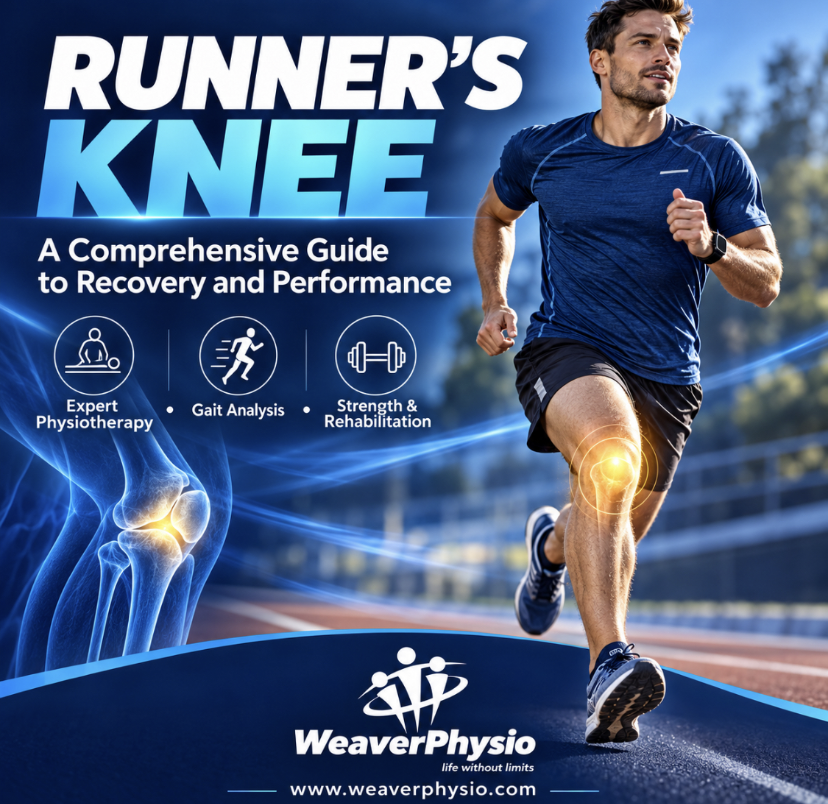
When the foot collapses excessively or loses tripod stability, it can cause the lower leg to rotate inward. This changes the mechanics of the knee joint and increases stress through structures such as:
The patellofemoral joint
Patellar tendon
IT band
Medial knee structures
This is especially common in runners and active individuals.
At our Running Injury Clinic in Northwich, we regularly assess foot mechanics during gait analysis because poor foot stability can contribute to recurring running injuries.
Improving foot strength and control can significantly reduce unnecessary stress through the knees.
Flat Feet Are Not Always the Problem
One of the biggest misconceptions in biomechanics is that flat feet are automatically bad.
In reality, the issue is often not the shape of the foot — but the control of the foot.
Some people naturally have flatter arches and function perfectly well without pain.
Others may have arches that collapse excessively under load due to weakness, instability or poor muscular control.
Your foot is designed to be adaptable, mobile and stable when needed.
The key is not creating a perfectly arched foot.
The goal is creating a foot that can:
Control load effectively
Maintain tripod contact
Stabilise during movement
Transfer force efficiently
At Weaver Physiotherapy & Sports Injury Clinic, we assess foot function rather than simply looking at foot shape alone.
Why Strong Feet Improve Balance and Posture
Your feet provide constant feedback to the brain.
They help your nervous system understand:
Where your body is in space
How balanced you are
How to react to movement and instability
Weak or poorly controlled feet can reduce stability and affect balance strategies throughout the body.
This can lead to:
Increased wobbling during single-leg balance
Reduced ankle stability
Poor posture
Compensatory tension through the hips and lower back
The foot tripod creates a stable base which allows the rest of the body to move more efficiently.
This is particularly important for:
Runners
Athletes
Older adults
People recovering from injury
Individuals with recurrent ankle sprains
Strong feet often equal better movement quality.
The Connection Between Feet and Running Injuries
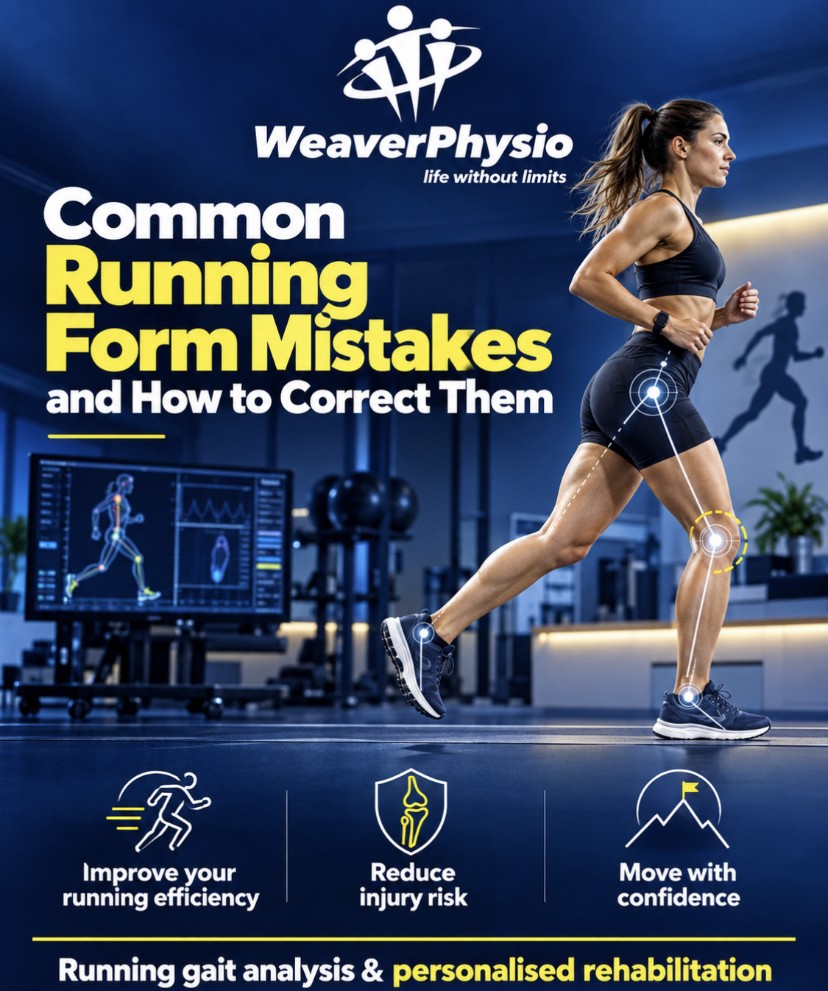
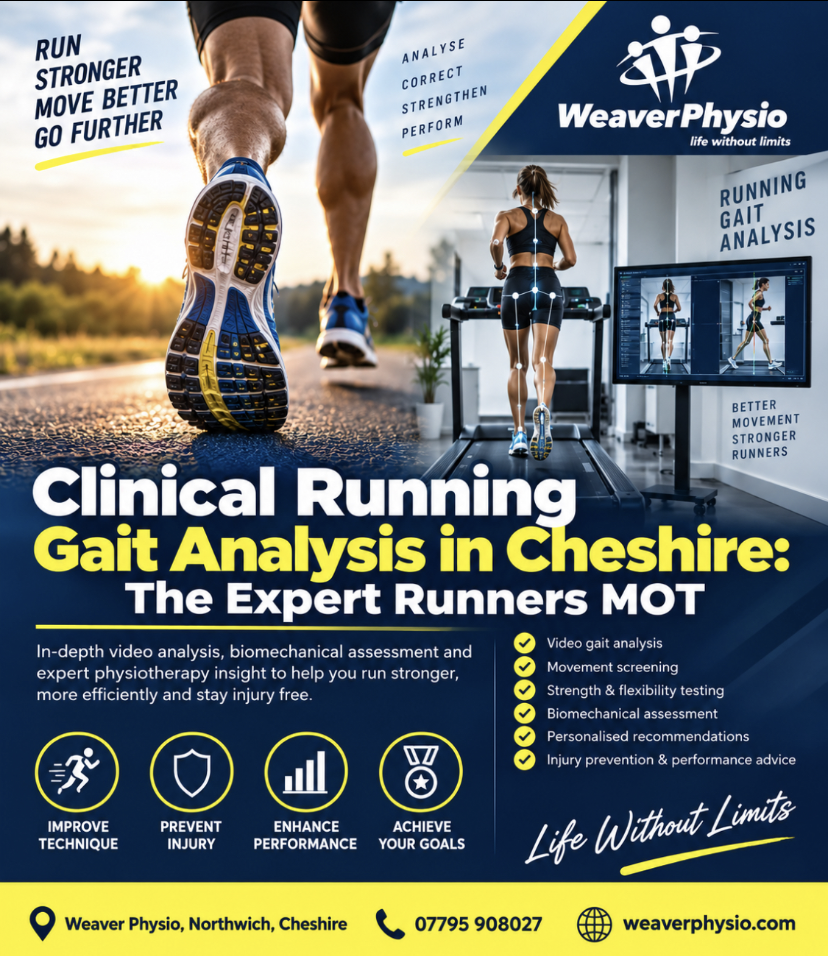
At Weaver Physio, we specialise in running injuries and running gait analysis.
One of the most common findings during our Runner’s MOT assessments is poor foot control and instability during running.
If the foot collapses excessively during stance phase, it can influence:
Running efficiency
Force transfer
Cadence mechanics
Knee loading
Achilles tendon stress
Plantar fascia strain
Over time, repeated poor loading patterns can contribute to persistent injuries.
Common running injuries linked with poor foot mechanics include:
Plantar fasciitis
Achilles tendinopathy
Shin splints
Patellofemoral pain
IT band syndrome
Calf strains
This does not mean everyone needs orthotics or supportive footwear.
Often the solution involves improving strength, load tolerance and movement control.
The Importance of Foot Strength
Modern footwear and lifestyle habits mean many people have weak intrinsic foot muscles.
These are the small muscles within the foot responsible for stability and control.
If these muscles become weak, the foot may rely excessively on passive structures such as ligaments and fascia.
Over time this can contribute to overload and pain.
Foot strengthening exercises can help improve:
Arch control
Balance
Stability
Running mechanics
Force production
Injury resilience
At Weaver Physiotherapy & Sports Injury Clinic, we often integrate foot strengthening into rehabilitation programmes for both athletes and non-athletes.
Signs Your Foot Stability May Need Work
You may benefit from improving foot strength and control if you experience:
Frequent ankle sprains
Flat feet with poor control
Knee pain during running or walking
Achilles pain
Plantar fasciitis
Poor balance
Foot fatigue
Shin splints
Hip instability
Lower back discomfort
Many people are surprised how much improvement occurs when they start training from the ground up.
Simple Ways to Improve Foot Strength
Improving foot stability does not need to be complicated.
Simple exercises can help retrain the foot tripod and improve muscular control.
Examples may include:
Short Foot Exercise
This involves gently creating an arch without curling the toes.
The goal is to activate the intrinsic foot muscles while maintaining tripod contact.
Barefoot Balance Work
Controlled barefoot balance exercises can improve proprioception and foot stability.
This may include:
Single-leg balance
Balance reaches
Controlled calf raises
Toe Strengthening
Improving toe control can enhance foot function and stability during movement.
Calf Strengthening
The calf muscles work closely with the foot and ankle complex.
Weak calves often contribute to poor lower limb loading mechanics.
Running Gait Analysis
For runners, detailed movement assessment can identify whether foot mechanics are contributing to injury or inefficiency.
At Weaver Physio, our Runner’s MOT includes:
High-speed video gait analysis
Biomechanical assessment
Strength testing
Running technique analysis
Personalised rehabilitation strategies
Why Orthotics Are Not Always the First Answer
Orthotics can sometimes help certain individuals.
However, relying solely on passive support without improving strength and control may not address the root cause.
At Weaver Physiotherapy & Sports Injury Clinic, we focus on identifying why the foot is struggling in the first place.
This often involves addressing:
Strength deficits
Load management
Running mechanics
Mobility restrictions
Stability control
Movement patterns
Long-term resilience usually comes from improving function — not simply adding support.
Foot Health and Ageing
Foot strength and balance become even more important as we age.
Reduced foot stability can increase the risk of:
Falls
Balance problems
Reduced mobility
Loss of confidence walking
Maintaining strong feet helps people stay active, mobile and independent for longer.
This is why balance and lower limb strength training are so important across all age groups.
Train From the Ground Up
The body functions as a connected chain.
If the foundation is unstable, the rest of the system must compensate.
Strong feet support:
Better posture
Better balance
Better movement quality
Improved running efficiency
Reduced injury risk
Enhanced performance
Whether you are a runner, gym-goer, footballer, walker or simply someone wanting to move pain-free, foot function matters more than most people realise.
Expert Assessment at Weaver Physio, Northwich
At Weaver Physiotherapy & Sports Injury Clinic, we provide expert assessment and rehabilitation for:
Foot pain
Plantar fasciitis
Achilles tendinopathy
Running injuries
Knee pain
Biomechanical problems
Balance and stability issues
Our team combines physiotherapy, strength and conditioning, gait analysis and rehabilitation to help patients move better and stay injury-free.
We focus on treating the root cause — not simply masking symptoms.
With over 70 years of combined clinical experience, we help people across Northwich and Cheshire build stronger, more resilient movement from the ground up.
Move Better With Weaver Physio
If you are struggling with:
Flat feet
Knee pain
Running injuries
Balance problems
Achilles pain
Plantar fasciitis
Poor posture
our expert team can help.
📍 Weaver Physiotherapy & Sports Injury Clinic – Northwich, Cheshire
🌐 www.weaverphysio.com
📞 01606 227484
Strong feet create strong movement.
Train from the ground up.
#FootTripod #FootStrength #PhysioNorthwich #RunningInjuries #FlatFeet #Biomechanics #MovementMatters #KneePain #PostureCorrection #FootHealth