
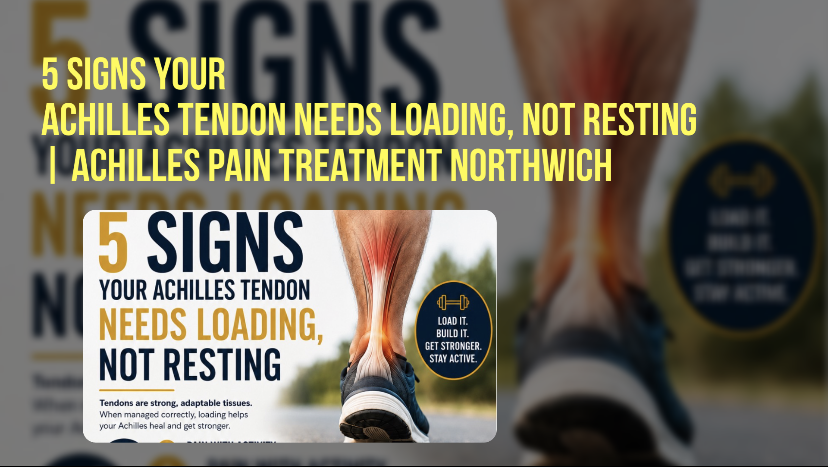
5 Signs Your Achilles Tendon Needs Loading, Not Resting
Achilles Pain in Northwich: Why Rest Isn’t Always the Answer
If you’ve been struggling with Achilles tendon pain for weeks or months, you’ve probably been told to rest, avoid exercise and wait for it to settle.
While rest may help reduce symptoms in the short term, it is rarely the solution for persistent Achilles tendon pain.
At Weaver Physiotherapy & Sports Injury Clinic in Northwich, we regularly see runners, walkers, gym-goers and active individuals who have rested for weeks, only to find their Achilles pain returns as soon as they try to become active again.
The reason? Most long-term Achilles problems are not inflammatory conditions—they are tendon capacity problems.
The Achilles tendon is designed to handle load. In fact, appropriate loading is one of the most effective ways to stimulate healing, improve tendon strength and restore function.
So how do you know if your Achilles tendon needs loading rather than resting?
Here are five key signs.
Understanding Achilles Tendinopathy
Before looking at the signs, it’s important to understand what is happening inside the tendon.
The Achilles tendon connects your calf muscles to your heel bone and plays a crucial role in walking, running, jumping and changing direction.
When the amount of load placed on the tendon exceeds its ability to tolerate it, the tendon begins to become irritated and painful.
This is known as Achilles tendinopathy.
Common causes include:
Increasing running mileage too quickly
Starting a new exercise programme
Reduced calf strength
Poor load management
Changes in footwear
Hill running
Returning to sport after injury
Reduced ankle mobility
Many people assume pain means damage and therefore stop exercising completely. Unfortunately, prolonged rest can reduce tendon capacity even further.
The goal isn’t complete rest.
The goal is appropriate loading.
Sign #1: Your Achilles Pain Improves As You Warm Up
One of the classic signs of Achilles tendinopathy is pain or stiffness when you first start moving that gradually improves as activity continues.
You may notice:
Pain during the first few minutes of a run
Stiffness when walking downstairs
Discomfort when getting out of bed
Symptoms easing once you’ve been moving for a while
This warm-up effect is common in tendon conditions.
The tendon often responds positively to movement and load.
If symptoms improve during activity rather than worsen significantly, it may indicate that your Achilles requires progressive strengthening rather than prolonged rest.
Sign #2: Morning Stiffness Is Your Main Symptom
Do your first few steps in the morning feel stiff, tight or uncomfortable?
Morning stiffness is one of the most common symptoms of Achilles tendinopathy.
Many people report:
A tight Achilles when getting out of bed
Difficulty walking normally for the first few minutes
Stiffness after sitting for long periods
Symptoms improving once they start moving
Morning stiffness often reflects reduced tendon capacity rather than an acute injury.
Research consistently shows that progressive loading programmes are highly effective for reducing stiffness and restoring normal tendon function.
If your Achilles feels worse after inactivity but improves with movement, loading may be the missing piece.
Sign #3: You Have Tenderness 2–6cm Above The Heel
Achilles tendinopathy commonly develops in the mid-portion of the tendon.
This area is typically located between 2 and 6 centimetres above the heel bone.
You may notice:
Tenderness when pressing the tendon
Thickening of the tendon
Localised soreness
Pain when squeezing the affected area
This region has a relatively poor blood supply compared to other tissues and often requires targeted strengthening exercises to stimulate adaptation and healing.
Rest alone rarely restores tendon capacity.
Appropriate progressive loading encourages the tendon to become stronger and more resilient over time.
Sign #4: Your Symptoms Have Been Present For Weeks Or Months
If your Achilles pain has been present for more than a few weeks, simply resting is unlikely to solve the problem.
Many patients tell us:
“I’ve rested several times but the pain keeps coming back.”
This is extremely common.
Each time activity resumes, the tendon is exposed to loads it can no longer tolerate.
Without rebuilding strength and capacity, the cycle continues.
Persistent Achilles pain often requires:
Progressive calf strengthening
Tendon loading exercises
Running load management
Mobility work
Biomechanical assessment
Return-to-running guidance
At Weaver Physio, we focus on identifying why the tendon became overloaded in the first place so we can prevent recurrence.
Sign #5: You Want To Stay Active And Prevent Future Problems
The Achilles tendon adapts to the demands placed upon it.
If you stop loading the tendon completely, it gradually loses capacity.
This can leave you more vulnerable to:
Recurrent Achilles pain
Calf strains
Running injuries
Reduced performance
Future tendon problems
A properly designed loading programme helps:
Improve tendon strength
Increase calf muscle capacity
Improve running efficiency
Reduce pain
Restore confidence
Prevent recurrence
For runners, this is particularly important.
The Achilles tendon acts like a powerful spring during running, storing and releasing energy with every stride.
A stronger tendon often means better performance and reduced injury risk.
Why Loading Works
Modern research strongly supports progressive loading as the cornerstone of Achilles tendinopathy rehabilitation.
Loading stimulates positive adaptations within the tendon by:
Increasing tendon stiffness
Improving collagen organisation
Enhancing force production
Restoring tendon capacity
Reducing pain sensitivity
The key is applying the correct amount of load at the right stage of recovery.
Too much load can aggravate symptoms.
Too little load may slow recovery.
This is where expert physiotherapy guidance becomes invaluable.
How Weaver Physio Treats Achilles Tendon Pain
At Weaver Physiotherapy & Sports Injury Clinic in Northwich, we specialise in tendon rehabilitation and running injury management.
Every assessment includes:
Comprehensive Assessment
We identify:
Training errors
Strength deficits
Mobility restrictions
Running biomechanics
Contributing lifestyle factors
Progressive Loading Programmes
Tailored exercises designed to:
Build tendon capacity
Improve calf strength
Reduce pain
Restore function
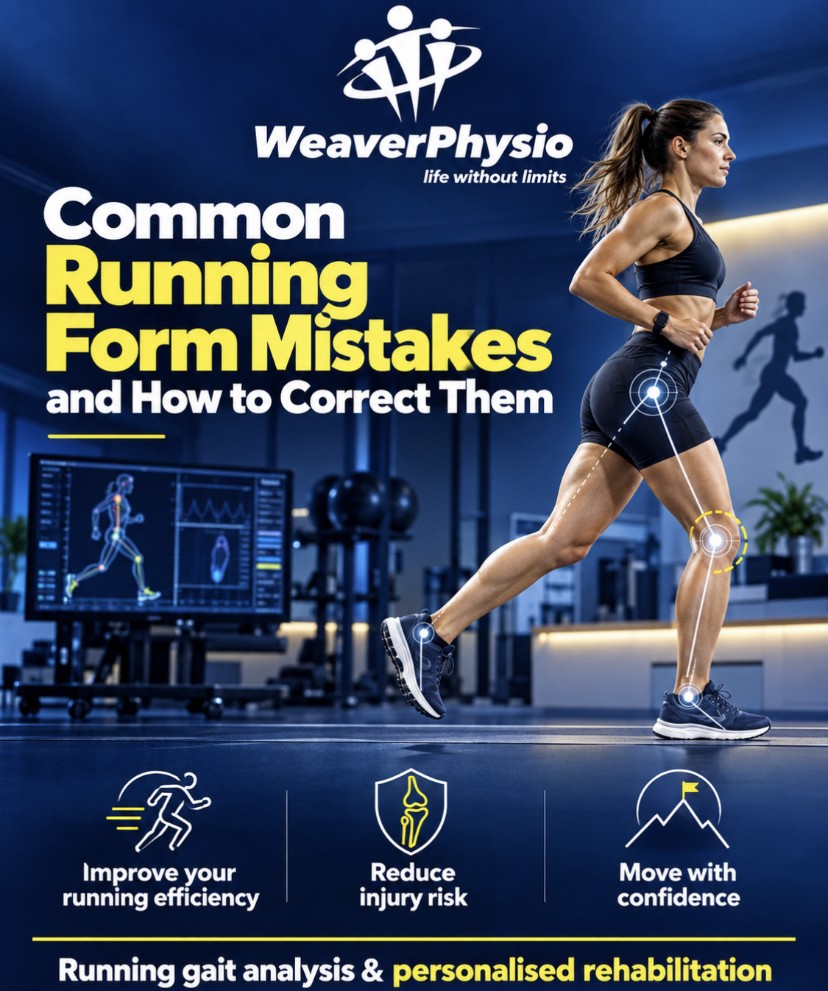
Video Gait Analysis
Our Runner’s MOT can identify:
Over-striding
Poor running mechanics
Load management issues
Biomechanical factors contributing to tendon stress
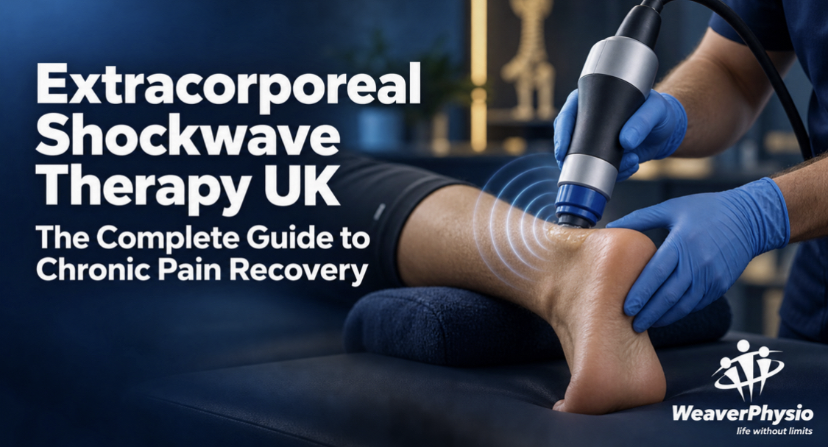
Shockwave Therapy
For stubborn Achilles tendinopathy, Shockwave Therapy may help stimulate healing and reduce pain when combined with progressive rehabilitation.
Return-To-Running Plans
We help runners safely return to training while reducing the risk of recurrence.
When Should You Seek Professional Help?
Consider seeing a physiotherapist if:
Achilles pain persists beyond 2–3 weeks
Symptoms keep returning
Running is becoming difficult
Morning stiffness is worsening
You are avoiding activities you enjoy
Early intervention often leads to faster recovery and better long-term outcomes.
Achilles Pain Treatment In Northwich
If you’re struggling with Achilles tendon pain, remember this:
Pain doesn’t always mean you need more rest.
In many cases, your Achilles tendon needs the right type of loading to become stronger, healthier and more resilient.
At Weaver Physiotherapy & Sports Injury Clinic, we help people across Northwich, Cheshire, Knutsford, Winsford, Middlewich, Tarporley and Frodsham recover from Achilles tendinopathy using evidence-based rehabilitation, strength training, gait analysis and Shockwave Therapy.
Don’t let Achilles pain keep holding you back.
Book Your Assessment Today
📍 Weaver Physiotherapy & Sports Injury Clinic, Northwich
📞 01606 227484
🌐 www.weaverphysio.com
Move Better. Get Stronger. Stay Pain-Free.