
Massage for Better Sleep:

July 5, 2026

How Massage Therapy Can Improve Sleep Quality, Recovery and Overall Health
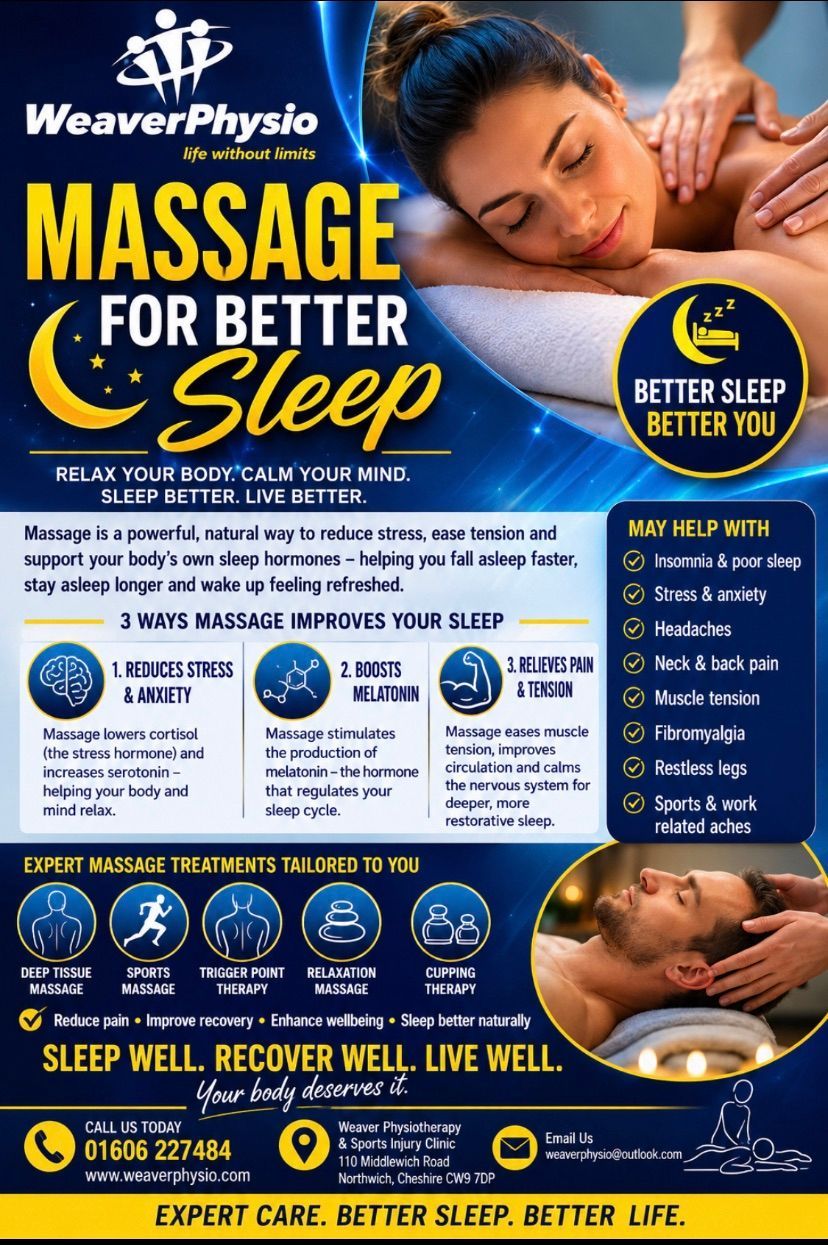
Sleep is one of the most important pillars of good health, yet millions of people struggle to get enough quality rest. Whether it’s difficulty falling asleep, waking frequently during the night, or waking feeling exhausted despite spending enough hours in bed, poor sleep can have a significant impact on every aspect of your physical and mental wellbeing.


Many people think of massage simply as a relaxing treat, but growing evidence suggests it can be a valuable part of improving sleep quality. Massage therapy helps calm the nervous system, reduce stress hormones, ease muscle tension and promote the release of hormones that support deeper, more restorative sleep.


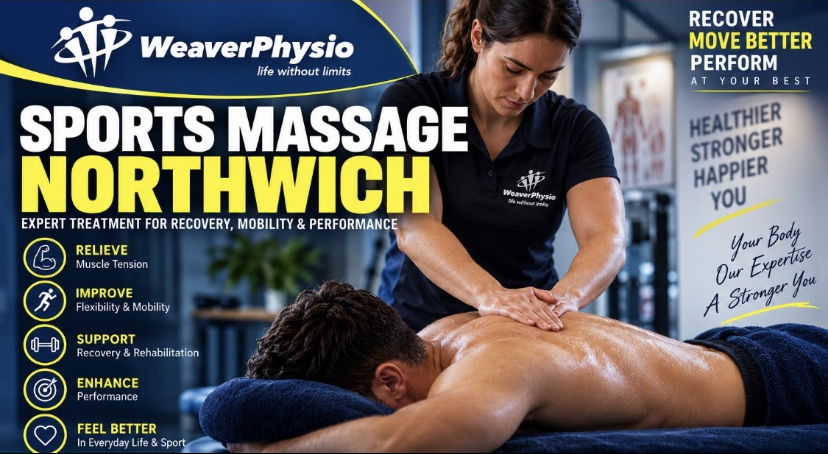
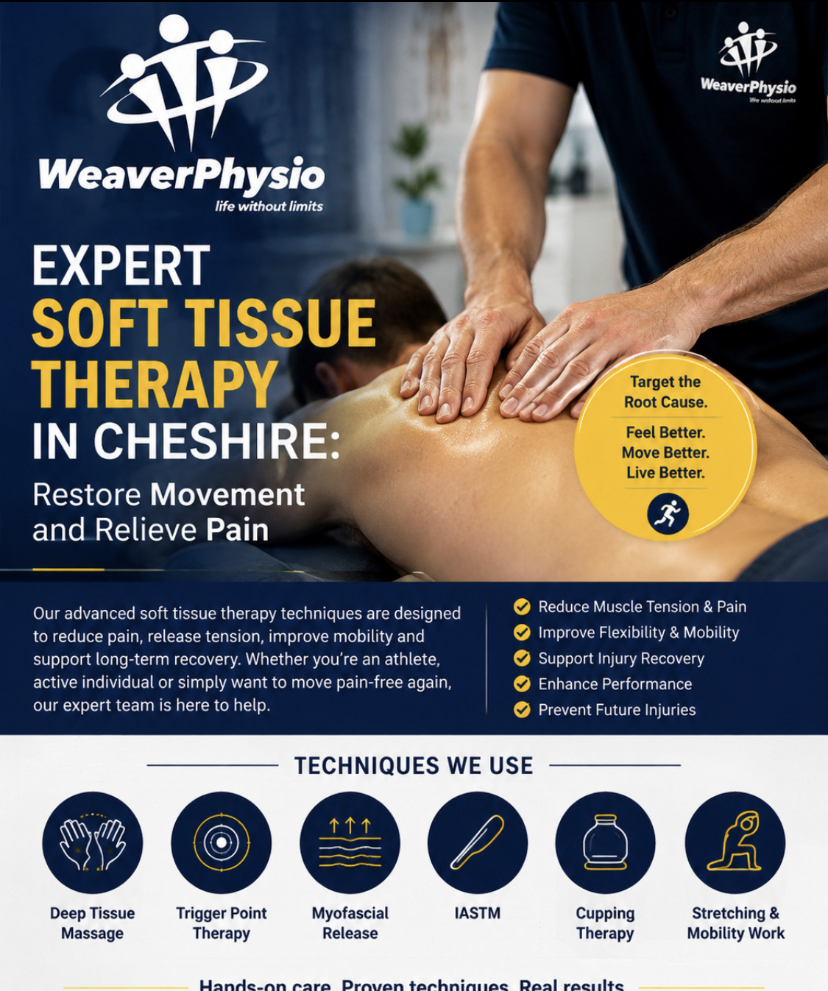
At Weaver Physiotherapy & Sports Injury Clinic in Northwich, Cheshire, we provide professional Sports Massage, Deep Tissue Massage and relaxation treatments designed to help you recover, sleep better and feel your best. With 70+ years of combined clinical experience, our team combines evidence-based hands-on therapy with personalised care to help you achieve lasting improvements in health and wellbeing.


Why Sleep Matters


Although individual sleep requirements vary, most adults need between 7 and 9 hours of quality sleep each night.


However, good sleep is about much more than the number of hours spent in bed.


Your body cycles through different stages of sleep, including deep sleep and Rapid Eye Movement (REM) sleep. These stages are essential for:


Physical recovery

Muscle repair

Tissue healing

Brain function

Learning and memory

Hormone regulation

Immune system function

Emotional wellbeing


Interrupted or poor-quality sleep means your body misses out on these restorative processes, leaving you feeling tired, irritable and less able to cope with everyday demands.


The Consequences of Poor Sleep


Sleep deprivation affects far more than energy levels.


Long-term poor sleep has been linked with:


Increased stress and anxiety

Reduced concentration

Poor memory

Slower reaction times

Lower productivity

Weakened immune system

Increased pain sensitivity

Obesity

Cardiovascular disease

Type 2 diabetes

Depression

Reduced sporting performance


Many people also notice persistent muscle aches, headaches and stiffness becoming worse after several nights of poor sleep.


The Relationship Between Sleep and Pain


Pain and sleep influence one another in a continuous cycle.


When you’re in pain:


It becomes harder to fall asleep.

You wake more frequently during the night.

You struggle to find a comfortable position.


Poor sleep then makes the nervous system more sensitive, meaning pain often feels worse the following day.


This creates a vicious cycle:


Pain → Poor Sleep → Increased Pain → More Poor Sleep


Massage therapy can help interrupt this cycle by reducing muscle tension, improving circulation and calming the nervous system.


How Massage Helps You Sleep Better


Massage produces several physiological changes throughout the body that encourage relaxation and support healthy sleep.


1. Massage Reduces Stress


One of the biggest reasons people struggle to sleep is stress.


During a massage, your body naturally shifts from its “fight or flight” response into a more relaxed “rest and digest” state.


Research suggests massage helps lower cortisol, the body’s primary stress hormone.


As cortisol falls, many people experience:


Reduced anxiety

Lower stress levels

Improved relaxation

Slower heart rate

Reduced blood pressure

A calmer mind


Simply lying quietly in a peaceful environment without phones, emails or other distractions allows your nervous system to slow down and reset.


2. Massage Increases Serotonin


Massage stimulates the release of serotonin, often referred to as the body’s “feel-good” neurotransmitter.


Serotonin helps:


Improve mood

Reduce anxiety

Promote relaxation

Create feelings of wellbeing


Importantly, serotonin is also required to produce melatonin, the hormone responsible for regulating your sleep-wake cycle.


3. Massage Supports Melatonin Production


Melatonin is your body’s natural sleep hormone.


It regulates your circadian rhythm—your internal body clock—which controls when you feel awake and when you feel sleepy.


Higher melatonin levels in the evening help your body prepare for restful sleep.


Although massage doesn’t directly create melatonin, increasing serotonin may indirectly support healthy melatonin production, encouraging better sleep quality.


4. Massage Reduces Muscle Tension


Stress often causes muscles to tighten without us even realising it.


Common areas include:


Neck

Shoulders

Upper back

Lower back

Jaw

Hips


Muscle tightness makes finding a comfortable sleeping position difficult.


Massage helps by:


Releasing tight muscles

Reducing trigger points

Improving flexibility

Restoring normal movement

Increasing circulation


Relaxed muscles make it easier to settle into comfortable, uninterrupted sleep.


5. Massage Helps Reduce Pain


Pain is one of the leading causes of sleep disturbance.


Massage may help relieve:


Back pain

Neck pain

Headaches

Fibromyalgia

Sports injuries

Muscle strains

Myofascial pain

Soft tissue injuries

Temporomandibular joint (TMJ) pain

Restless legs


Reducing pain often leads to improved sleep, while better sleep supports faster healing.


Massage and the Nervous System


During massage, touch receptors within the skin send calming signals to the brain.


These signals encourage the nervous system to slow down.


Massage has been shown to:


Lower heart rate

Reduce blood pressure

Improve breathing patterns

Reduce nervous system overactivity


Many patients describe feeling mentally calmer long after their treatment has finished.


Conditions That May Benefit


Massage may help improve sleep in people experiencing:


Insomnia

Stress-related sleep problems

Anxiety

Fibromyalgia

Headaches

Chronic pain

Digestive disorders

Muscle tension

Soft tissue injuries

Restless Leg Syndrome

Cancer-related fatigue (where appropriate and advised)

Neurological conditions causing muscle tightness


While massage is not a cure for medical sleep disorders, it can be an effective complementary treatment as part of a wider healthcare plan.


Which Type of Massage Is Best?


Different techniques may be recommended depending on your symptoms.


Sports Massage


Ideal for active people experiencing muscle tightness following training.


Benefits include:


Faster recovery

Reduced soreness

Improved flexibility

Better sleep after exercise


Deep Tissue Massage


Targets deeper muscle layers.


Ideal for:


Chronic tension

Persistent muscle stiffness

Long-standing pain


Swedish Massage


Gentle, flowing movements encourage deep relaxation.


Perfect for reducing stress and promoting restful sleep.


Trigger Point Therapy


Targets painful knots within muscles that may disturb sleep.


Often beneficial for headaches, neck pain and shoulder tension.


Reflexology


Focuses on specific pressure points within the feet that may promote relaxation and improve overall wellbeing.


Aromatherapy Massage


Combines massage with carefully selected essential oils that encourage relaxation and stress reduction.


Many people find this particularly beneficial before bedtime.


Supporting Better Sleep at Home


Massage works best when combined with healthy sleep habits.


Simple strategies include:


Maintain a consistent bedtime.

Reduce screen time before bed.

Dim lights during the evening.

Keep your bedroom cool and quiet.

Avoid caffeine late in the day.

Exercise regularly.

Spend time outdoors during daylight.

Practise deep breathing or mindfulness.

Stay hydrated.

Book regular massage treatments if stress and muscle tension are recurring problems.


These habits support your body’s natural circadian rhythm and complement the relaxing effects of massage.


Why Choose Weaver Physiotherapy & Sports Injury Clinic?


At Weaver Physio, we understand that poor sleep often has multiple causes. Muscle tension, stress, pain, injury and lifestyle factors all play a role.


Our experienced team provides personalised treatments designed to address the underlying factors affecting your sleep—not simply the symptoms.


Patients choose us because we offer:


70+ years of combined clinical experience

Chartered Physiotherapists and Sports Injury Specialists

Sports Massage

Deep Tissue Massage

Trigger Point Therapy

Myofascial Release

Cupping Therapy

Evidence-based treatment

Individual treatment plans

Friendly, professional care


We proudly help patients from Northwich, Winsford, Middlewich, Knutsford, Hartford, Tarporley, Frodsham, Chester and throughout Cheshire improve their sleep, reduce pain and enjoy a healthier, more active lifestyle.


Sleep Better, Recover Better


Quality sleep is one of the most powerful tools your body has for healing, recovery and overall health. If stress, pain or muscle tension are preventing you from getting the rest you deserve, massage therapy may be the missing piece of the puzzle.


Professional massage can help calm your nervous system, reduce stress hormones, ease pain, improve circulation and encourage the deeper, restorative sleep your body needs to function at its best.


If you’re ready to wake feeling refreshed instead of exhausted, our team is here to help.


Book Your Massage Today


Weaver Physiotherapy & Sports Injury Clinic

πŸ“ 110 Middlewich Road, Northwich, Cheshire, CW9 7DP

πŸ“ž 01606 227484 

🌐 http://www.weaverphysio.com


Sleep Better. Recover Better. Live Better.

July 5, 2026
How Massage Therapy Can Reduce Stress, Improve Wellbeing and Help You Feel Your Best
July 3, 2026
Running is one of the most rewarding forms of exercise. It improves cardiovascular fitness, strengthens muscles and bones, supports mental wellbeing, and helps people of all ages stay active. However, recurring injuries can quickly turn an enjoyable hobby into a frustrating cycle of pain, rest, and disappointment. At Weaver Physiotherapy & Sports Injury Clinic in Northwich, Cheshire, we believe that simply treating pain isn’t enough. Our goal is to identify why an injury occurred, correct the underlying cause, and help you return to running stronger than before. That’s why we’ve developed the Weaver Physio 5-Step Running Recovery System™—a structured, evidence-based approach designed to reduce injury risk, improve performance, and keep runners moving confidently. With 70+ years of combined clinical experience, our Chartered Physiotherapists and Sports Injury Specialists have helped thousands of runners recover from injury and achieve their goals. Why Do Running Injuries Keep Coming Back? Many runners experience the same injury repeatedly. Common complaints include: Shin splints Plantar fasciitis Achilles tendinopathy IT Band Syndrome Runner’s knee Hamstring strains Calf injuries Hip pain Knee pain Foot pain Often these injuries aren’t caused simply by running too much. Instead they’re usually the result of several contributing factors combining together over time. Examples include: Poor balance Weak gluteal muscles Reduced ankle mobility Poor running mechanics Insufficient strength Poor stability Lack of coordination Returning to training too quickly Inadequate recovery Sudden increases in mileage or intensity Treating only the painful area often provides temporary relief—but unless these underlying issues are addressed, the injury frequently returns. The Weaver Physio Difference Rather than focusing solely on pain, Weaver Physio focuses on improving your entire movement system. Every runner is different. Your running style, strength, mobility, previous injuries, footwear, training history and biomechanics all influence how your body copes with the repetitive forces of running. Our clinicians look at the complete picture before creating an individual rehabilitation programme. The Foundation of Injury-Free Running The Weaver Running Recovery System™ is built around five key performance pillars: 1. Balance Balance provides the foundation for efficient movement. Every stride involves standing on one leg for a brief moment. Poor balance increases unwanted movement throughout the foot, ankle, knee and hip. Improving balance can: Reduce injury risk Improve control Enhance proprioception Improve confidence on uneven surfaces Increase running efficiency 2. Strength Strong muscles absorb force more effectively. Running places forces of up to three times your body weight through your legs every time your foot hits the ground. If muscles cannot absorb these loads efficiently, tendons and joints often become overloaded. Strength training helps: Reduce injury risk Improve running economy Increase power Improve endurance Reduce fatigue Support healthy tendons 3. Stability Strength alone isn’t enough. Your body also needs stability to control movement. Hip, pelvis, trunk and ankle stability all influence how efficiently force travels through your body. Improved stability helps: Reduce excessive movement Improve alignment Improve efficiency Protect joints Improve endurance 4. Coordination Running is a highly skilled movement. Better coordination allows muscles to work together more efficiently. Improved coordination means: Better movement patterns Improved technique Reduced wasted energy Lower injury risk Greater running efficiency 5. Plyometrics Once strength and stability have been restored, plyometric exercises teach your body to store and release energy efficiently. These exercises improve: Speed Power Elastic tendon function Running efficiency Return-to-sport readiness Plyometrics are introduced progressively when clinically appropriate, helping runners transition safely back to higher-speed running. The Weaver Physio 5-Step Running Recovery System™ Step 1 – Assess Everything starts with an expert assessment. Our comprehensive examination identifies: Injury history Training errors Biomechanics Strength deficits Mobility restrictions Running technique Balance Functional movement Tissue loading capacity Understanding the true cause allows us to design the most effective rehabilitation programme. Step 2 – Correct Next we address the underlying problems. Treatment may include: Hands-on physiotherapy Soft tissue treatment Joint mobilisation Running gait retraining Exercise prescription Mobility work Shockwave Therapy (where appropriate) Acupuncture Sports massage The aim is to restore normal movement while reducing pain. Step 3 – Strengthen Once pain is improving, rehabilitation becomes more active. Your programme may include: Glute strengthening Calf strengthening Core stability Single-leg control Foot strengthening Hip stability Tendon loading exercises Functional strengthening Each programme is tailored specifically to your injury and running goals. Step 4 – Progress Many injuries recur because runners return too quickly. Our clinicians carefully guide your return using progressive loading principles. We monitor: Pain response Running volume Speed Recovery Functional capacity Strength improvements This structured progression builds confidence while minimising the risk of re-injury. Step 5 – Perform Recovery isn’t simply about becoming pain-free. It’s about returning stronger than before. We aim to help runners: Run further Run faster Stay injury-free Improve efficiency Build resilience Achieve personal bests Whether you’re training for your first 5K or your next marathon, we help you perform with confidence. Conditions We Commonly Treat Our experienced clinicians regularly help runners recover from: Achilles tendinopathy Plantar fasciitis Shin splints (Medial Tibial Stress Syndrome) Runner’s knee Patellar tendinopathy IT Band Syndrome Hamstring injuries Calf strains Hip pain Gluteal tendinopathy Stress reactions Foot and ankle pain Muscle strains Tendon injuries Why Early Assessment Matters Many runners try to push through pain. Unfortunately, continuing to train with an underlying injury often makes rehabilitation longer and more complicated. Seeking assessment early allows us to: Identify the cause sooner Reduce recovery time Prevent compensation injuries Keep you active where possible Develop a clear recovery plan Why Choose Weaver Physio? Choosing the right physiotherapy clinic can make a significant difference to your recovery. At Weaver Physio we offer: 70+ years of combined clinical experience Chartered Physiotherapists Sports Injury Specialists Evidence-based rehabilitation Individual treatment plans Comprehensive movement assessment Running injury expertise Hands-on treatment Exercise rehabilitation Shockwave Therapy Acupuncture Sports Massage Friendly, supportive care Convenient Northwich location We don’t believe in quick fixes. We believe in creating stronger, healthier runners. Helping Runners Across Cheshire Our Northwich clinic welcomes runners from across Cheshire, including: Northwich Knutsford Winsford Middlewich Tarporley Frodsham Hartford Lostock Gralam Weaverham Chester Warrington Sandbach Whether you’re recovering from injury or looking to prevent one, our team is here to help. Book Your Running Assessment Today If recurring injuries are stopping you from reaching your potential, now is the time to take action. Discover the Weaver Physio 5-Step Running Recovery System™ and experience a structured, evidence-based approach designed to help you recover, rebuild and return to running with confidence. Our expert team will identify the root cause of your injury, create a personalised rehabilitation programme and support you every step of the way. Weaver Physiotherapy & Sports Injury Clinic 110 Middlewich Road, Northwich, Cheshire, CW9 7DP ☎ 01606 227484 🌐 http://www.weaverphysio.com Run Stronger. Recover Smarter. Stay Injury-Free. At Weaver Physio, we believe every injury is an opportunity to build a stronger foundation. By combining expert assessment with balance, strength, stability, coordination and plyometric training, we help runners break the cycle of recurring injuries and enjoy long-term success. Whether your goal is to complete your first parkrun, achieve a marathon personal best or simply run without pain, our team has the expertise to help you get there safely and confidently. Your recovery starts with the right plan—and we’re here to guide you every step of the way.
July 1, 2026
By Weaver Physio & Sports Injury Clinic – Cheshire’s Running & Tendon Rehabilitation Specialists
July 1, 2026
Expert Running Advice from Cheshire’s Running & Tendon Specialists
June 9, 2026
Cheshire Running Injury Specialists | Weaver Physiotherapy & Sports Injury Clinic
May 29, 2026
Plantar Fasciitis Treatment in Northwich | Weaver Physiotherapy & Sports Injury Clinic
May 29, 2026
Achilles Pain in Northwich: Why Rest Isn’t Always the Answer
May 27, 2026
Weaver Physiotherapy & Sports Injury Clinic | Physio Northwich
May 27, 2026
Weaver Physiotherapy & Sports Injury Clinic | Physio Northwich
May 13, 2026
Back Pain Treatment in Northwich, Cheshire
Show More