
Acupuncture Physiotherapy in Northwich
Evidence-Based Treatment for Pain, Muscle Tension & Recovery
Persistent pain, muscle tightness or an injury that refuses to settle can affect far more than your ability to exercise. It can interfere with work, sleep, walking, training and everyday life.
At Weaver Physiotherapy & Sports Injury Clinic in Northwich, acupuncture can be used as part of a comprehensive physiotherapy treatment and rehabilitation programme to help manage pain, reduce muscle tension and make movement and exercise more comfortable.
Our approach is clinical and individualised. Rather than viewing acupuncture as a standalone treatment or a quick fix, our physiotherapists consider whether it is appropriate following a detailed assessment and, where indicated, integrate it with rehabilitation, manual therapy, exercise and progressive strengthening.
If you’re searching for acupuncture physiotherapy in Northwich, our aim is to provide a professional, evidence-informed approach focused on one thing: helping you move and function better.
What Is Acupuncture Physiotherapy?
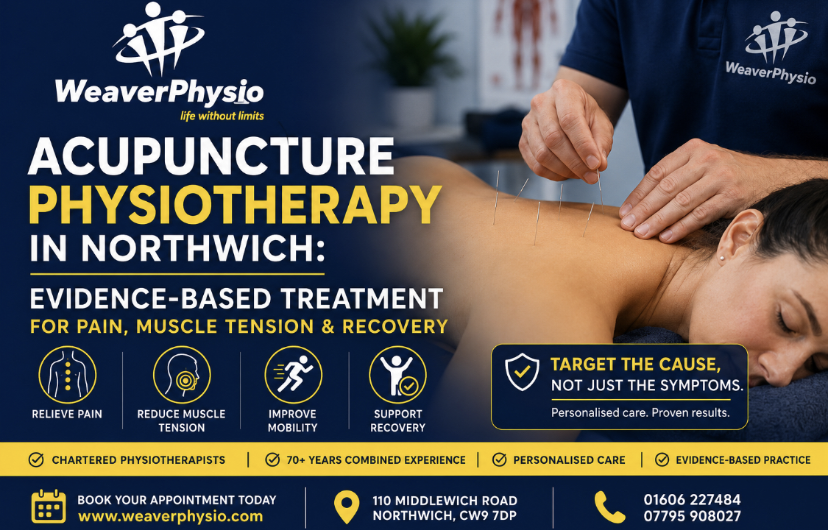
Acupuncture used within physiotherapy involves inserting very fine, sterile needles into carefully selected areas of the body as part of the management of pain and musculoskeletal problems.
Modern physiotherapy acupuncture can be considered through current understanding of anatomy, pain science and neurophysiology. Needle stimulation may influence sensory input and pain-processing mechanisms within the peripheral and central nervous systems.
For some patients, this can help reduce pain or muscle guarding sufficiently to make movement and rehabilitation easier.
At Weaver Physio, however, acupuncture does not replace a thorough clinical assessment.
Before recommending treatment, we consider your symptoms, medical history, movement, strength, mobility, functional limitations and personal goals. This helps us determine not simply where it hurts, but what factors may be contributing to the problem.
How Can Acupuncture Help with Pain?
Pain is complex. Although tissue irritation or injury may initially trigger symptoms, persistent pain can involve changes in how the nervous system processes and responds to sensory information.
Acupuncture provides a controlled sensory stimulus that may influence these pain-modulating mechanisms.
Depending on the individual and condition being treated, acupuncture may be used to help:
Reduce pain
Decrease protective muscle tension
Improve tolerance of movement
Complement physiotherapy and rehabilitation
Make therapeutic exercise more comfortable
Support recovery from certain musculoskeletal problems
Importantly, acupuncture is rarely the whole solution.
If weakness, reduced mobility, training load, movement patterns or other physical factors are contributing to your symptoms, these still need to be addressed. That is why we generally use acupuncture as one component of a wider physiotherapy programme.
Medical Acupuncture and Dry Needling: What’s the Difference?
Although the terms are sometimes used interchangeably, medical acupuncture and dry needling can have slightly different clinical aims.
Medical Acupuncture
Medical acupuncture may involve needling selected areas to influence pain-processing mechanisms and provide short-term symptom modulation. This can sometimes create an opportunity to progress movement, exercise and rehabilitation more comfortably.
Dry Needling
Dry needling is commonly directed towards areas of muscular sensitivity or myofascial trigger points.
A trigger point can be experienced as a sensitive area within muscle tissue and may be associated with local discomfort, referred pain, stiffness or altered muscle function.
During dry needling, some patients experience a brief local twitch response. Treatment is then considered alongside the wider clinical picture rather than assuming that every painful muscle simply needs to be “released.”
At Weaver Physio, the technique selected depends on your assessment, symptoms and rehabilitation goals.
Conditions We May Use Acupuncture to Help Manage
People looking for acupuncture in Northwich often come to us after pain, stiffness or muscle tension has started interfering with their normal activities.
Depending on the findings from your assessment and whether treatment is clinically appropriate, acupuncture may be considered as part of physiotherapy management for problems such as:
Lower back pain
Neck pain and stiffness
Muscular tension
Shoulder pain
Hip and knee pain
Sports-related muscle pain
Headaches associated with musculoskeletal factors
Persistent musculoskeletal pain
Myofascial pain
Certain tendon and overuse problems
Not every condition requires acupuncture, and not everybody will respond in the same way.
Our physiotherapists will discuss the potential advantages, limitations and alternatives before treatment.
Acupuncture for Back Pain in Northwich
Back pain is one of the most common reasons people seek physiotherapy.
Symptoms may be influenced by numerous factors, including changes in activity, prolonged positions, reduced movement tolerance, muscular guarding, sleep, previous injury and general physical conditioning.
Where clinically appropriate, acupuncture may be incorporated into a broader back pain physiotherapy programme to help manage symptoms.
The important part comes next.
As symptoms become more manageable, treatment can progress towards restoring movement, rebuilding strength and gradually increasing tolerance to the activities that matter to you.
This might mean comfortably walking again, returning to the gym, working without persistent discomfort or getting back to running and sport.
Acupuncture for Neck and Shoulder Pain
Long hours at a desk, repetitive work, training and changes in physical activity can all contribute to neck and shoulder symptoms.
For some people, persistent pain is accompanied by muscle guarding and sensitivity around the neck, upper back and shoulder.
Acupuncture or dry needling may sometimes be incorporated into treatment to help manage these symptoms. We can then combine this with interventions such as mobility work, strengthening, movement modification and advice appropriate to your individual presentation.
The objective isn’t simply temporary relaxation.
We want to help improve your ability to move, work and exercise confidently.
Acupuncture for Sports Injuries and Active People
Runners, cyclists, gym users and athletes can develop pain or muscular symptoms when the demands placed on their body exceed its current capacity to recover and adapt.
Simply treating the painful area without considering why symptoms developed can leave important contributing factors unaddressed.
At Weaver Physio, acupuncture may occasionally be used to help manage pain or muscle sensitivity while your rehabilitation programme tackles the bigger picture.
Depending on your sport and injury, this may include:
Strength and conditioning
Progressive loading
Mobility work
Balance and stability training
Running rehabilitation
Movement retraining
Return-to-sport progression
Training-load modification
This integrated approach is particularly important when your goal isn’t merely to feel better but to return to performance safely and confidently.
Acupuncture Is Part of the Treatment – Not the Entire Treatment
One of the most important principles of our approach is that passive treatment should not become the end goal of rehabilitation.
Acupuncture can sometimes reduce symptoms enough to make movement or exercise easier, but long-term recovery frequently requires an active component.
For example, somebody with recurrent knee pain may also require progressive quadriceps and hip strengthening. A runner experiencing persistent symptoms may need rehabilitation alongside an assessment of training load, strength or running mechanics. Someone experiencing recurrent back pain may benefit from progressively rebuilding confidence, mobility and physical capacity.
This is why acupuncture at Weaver Physio can be combined with:
Physiotherapy
Exercise rehabilitation
Manual therapy
Strength and conditioning
Sports rehabilitation
Running gait analysis
Sports massage and soft-tissue techniques
Shockwave therapy where clinically indicated
Education and self-management strategies
Treatment is selected according to your individual presentation rather than applying the same protocol to everybody.
What Happens at Your First Appointment?
Your first appointment starts with a comprehensive physiotherapy assessment.
We want to understand what is happening before deciding how to treat it.
Your physiotherapist may discuss and assess:
How and when your symptoms started
The location and behaviour of your pain
Previous injuries
Medical history
Medication
Work and lifestyle
Sport and training
Range of movement
Strength
Neurological symptoms where relevant
Functional movements
Your recovery goals
Once the assessment is complete, we’ll explain our findings and discuss the treatment options that may be appropriate.
If acupuncture is considered suitable, we’ll explain what treatment involves and answer any questions before proceeding.
Does Acupuncture Hurt?
Acupuncture needles are extremely fine, and many people are surprised by how little they feel during insertion.
Sensations vary between individuals. You might experience a mild prick, heaviness, warmth, tingling or a dull aching sensation around a needle.
Dry needling of a sensitive muscular area can sometimes produce a brief twitch or stronger sensation.
Your comfort remains important throughout treatment. If you’re nervous about needles, tell your physiotherapist. Treatment can be adapted, and you remain in control throughout your appointment.
Is Acupuncture Safe?
Acupuncture is generally considered a low-risk intervention when appropriately delivered by a suitably trained healthcare professional, although no treatment is completely risk-free.
We use single-use, sterile, disposable needles and appropriate infection-control procedures.
Temporary effects can include minor bruising, bleeding, soreness, fatigue or light-headedness. Less common complications are possible, which is why screening, appropriate clinical technique and informed consent are important.
Before treatment, your physiotherapist will consider your medical history and any factors that could affect whether acupuncture is appropriate.
Acupuncture and Blood-Thinning Medication
Taking anticoagulant or antiplatelet medication does not automatically mean acupuncture cannot be considered, but it makes appropriate clinical screening particularly important because bruising or bleeding risk may be increased.
Always tell your physiotherapist about all medication you are taking, including prescribed medication and supplements.
We can then assess the potential risks and decide whether acupuncture is appropriate or whether another physiotherapy treatment would be preferable.
How Many Acupuncture Sessions Will I Need?
There isn’t a universal number.
Your response can depend on factors such as the condition being treated, how long symptoms have been present, your general health and how acupuncture fits into the wider rehabilitation programme.
Some people notice changes relatively quickly, while others respond gradually or gain little benefit.
We therefore continually reassess treatment rather than prescribing an arbitrary number of sessions.
If acupuncture isn’t providing meaningful benefit, your treatment plan should change.
From Pain Relief to Active Rehabilitation
Reducing pain can be valuable, but for many musculoskeletal problems it represents the beginning rather than the end of rehabilitation.
As symptoms improve, we aim to progressively restore your physical capacity.
Your rehabilitation might therefore move through stages such as:
Manage symptoms → Restore movement → Rebuild strength → Increase physical capacity → Return to activity
This progression helps shift the emphasis away from repeatedly relying on treatment and towards giving you the physical confidence and capacity to manage everyday life, exercise or sport.
Why Choose Weaver Physio for Acupuncture Physiotherapy in Northwich?
At Weaver Physiotherapy & Sports Injury Clinic, acupuncture is delivered within a broader physiotherapy and rehabilitation approach.
Our team brings 70+ years of combined clinical experience, helping people from Northwich and surrounding Cheshire communities with pain, injury and movement problems.
We believe effective physiotherapy should be personalised.
That means assessing the individual in front of us, explaining the clinical findings clearly and selecting treatment according to what is most appropriate for that person.
Whether your goal is to reduce persistent pain, return to running, get back into the gym, recover from an injury or simply move more comfortably, our focus is on helping you make meaningful progress.
Acupuncture Physiotherapy in Northwich – A Modern Approach to Recovery
Acupuncture can be a useful addition to physiotherapy for selected patients, particularly when pain or muscle sensitivity is making movement and rehabilitation difficult.
But successful rehabilitation is rarely about one technique.
At Weaver Physio, we combine clinical assessment, appropriate treatment and progressive rehabilitation to help address both your symptoms and the factors influencing your recovery.
The objective is straightforward:
Reduce pain. Restore movement. Rebuild strength. Return to the activities that matter to you.
Book an Acupuncture & Physiotherapy Assessment in Northwich
If pain, muscle tension or a recurring injury is limiting your work, exercise or everyday life, an assessment can help establish what may be contributing to your symptoms and what you can do next.
Contact Weaver Physiotherapy & Sports Injury Clinic in Northwich to arrange an assessment and discover whether acupuncture could form part of your personalised physiotherapy and rehabilitation programme.
⸻
Frequently Asked Questions About Acupuncture Physiotherapy
Is acupuncture safe?
Acupuncture is generally a low-risk treatment when appropriately performed by a trained healthcare professional. Minor bruising, bleeding, temporary soreness or light-headedness can occasionally occur. We use sterile, single-use disposable needles and screen patients before treatment to determine whether acupuncture is appropriate.
Does medical acupuncture hurt?
Most patients experience relatively little discomfort from needle insertion. You may notice a mild prick followed by sensations such as heaviness, tingling or a dull ache. Dry needling of a sensitive muscular area can sometimes create a brief twitch response. Tell your physiotherapist if you’re apprehensive so treatment can be adapted accordingly.
How many acupuncture sessions will I need?
There is no fixed number. Treatment depends on your condition, symptoms and individual response. We regularly reassess whether acupuncture is producing a worthwhile improvement and modify your physiotherapy programme accordingly.
Can acupuncture help back pain?
Acupuncture may be considered as one treatment option for some people experiencing back pain. At Weaver Physio, we generally combine symptom management with an active programme designed to improve movement, strength and functional capacity where appropriate.
Can I have acupuncture while taking blood thinners?
Possibly, but your medication and individual bleeding risk need to be considered before treatment. Always provide your physiotherapist with an accurate list of medications and relevant medical conditions before acupuncture or dry needling.
What’s the difference between acupuncture and dry needling?
Medical acupuncture can be used to provide sensory stimulation with the aim of influencing pain-processing mechanisms. Dry needling commonly focuses more specifically on sensitive muscular areas or myofascial trigger points. There can be overlap between the techniques, and the approach selected should depend on your clinical assessment.
Is acupuncture used on its own?
Usually not at Weaver Physio. Where appropriate, we integrate acupuncture into a broader programme that may include exercise rehabilitation, progressive strengthening, manual therapy, education, movement retraining and sport-specific rehabilitation.
Can acupuncture help sports injuries?
It may be useful for symptom management in selected sports-related conditions, but it doesn’t replace appropriate rehabilitation. Restoring strength, movement, tissue capacity and sport-specific function is typically important for a successful return to activity.
Do I need to be referred by my GP?
Private physiotherapy can generally be accessed without a GP referral. However, individual health insurers may have their own referral or authorisation requirements, so insured patients should check their policy before booking.
Is acupuncture covered by private medical insurance?
Cover varies considerably between insurers and individual policies. Some policies may fund physiotherapy that incorporates acupuncture, while others impose specific restrictions or require prior authorisation. We recommend checking directly with your insurer before treatment rather than assuming acupuncture will be covered.