🏃♂️ Why Runners Need Regular Sports Massage (Not Just When Injured)
Weaver Physiotherapy & Sports Injury Clinic | Sports Massage Northwich | Physio Northwich
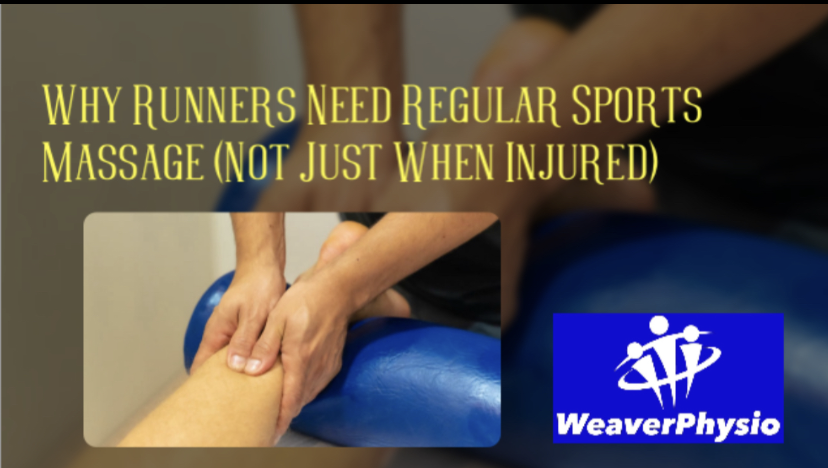
Running is one of the most effective ways to stay fit, improve mental wellbeing and build long-term health. Whether you’re training for a 5K, half marathon or marathon, or simply enjoy running to stay active, your body is exposed to repetitive load with every stride.
At Weaver Physiotherapy & Sports Injury Clinic in Northwich, we regularly see runners who only consider sports massage once pain has already developed. However, the reality is this:
👉 Sports massage is not just for injury — it’s one of the most effective tools for preventing it.
In this guide, we’ll explain why regular sports massage should be part of every runner’s routine, how it improves performance, and why a physiotherapy-led approach delivers better long-term results.
💡 Why Running Places Unique Stress on Your Body
Running is a repetitive, high-impact activity. With every step:
• Your body absorbs 2–3 times your bodyweight
• Your muscles and tendons store and release energy
• Key areas like the calves, Achilles, knees and hips are under constant load
Over time, this creates:
✔ Muscle tightness
✔ Reduced flexibility
✔ Increased tissue stress
✔ Fatigue and reduced recovery
Without proper recovery strategies, these factors gradually increase the risk of:
• Achilles tendinopathy
• Shin splints
• Runner’s knee
• Plantar fasciitis
• Calf strains
👉 This is where regular sports massage becomes essential—not optional.
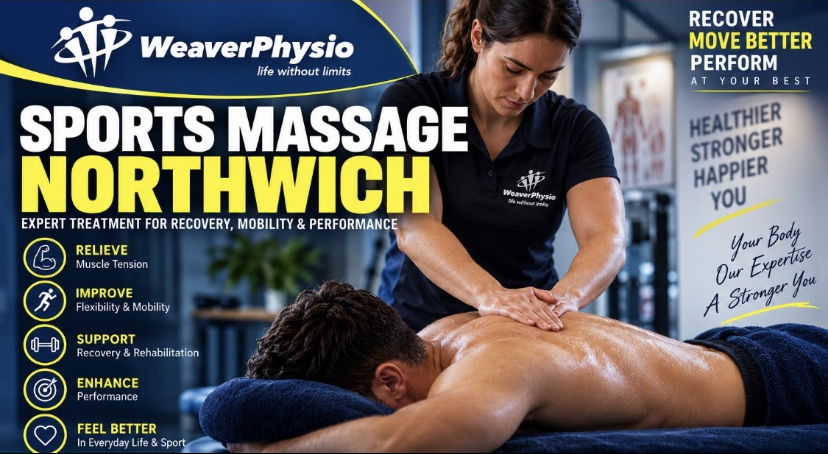
💆♂️ What Is Sports Massage?
Sports massage is a targeted, clinically informed treatment designed to:
• Reduce muscle tension
• Improve circulation
• Restore movement
• Support recovery
• Reduce injury risk
At Weaver Physio Northwich, sports massage is delivered within a physiotherapy-led environment, meaning:
✔ We assess movement first
✔ We identify the cause of tightness
✔ We treat with purpose—not just pressure
This is what separates effective treatment from a generic massage.
🔥 1. Sports Massage Reduces Injury Risk
One of the biggest mistakes runners make is waiting until something hurts.
In reality, injuries rarely appear suddenly. They develop over time due to:
• Accumulated training load
• Muscle imbalances
• Restricted mobility
• Poor recovery
Regular sports massage helps by:
✔ Reducing excessive muscle tightness
✔ Improving tissue quality
✔ Maintaining normal movement patterns
✔ Identifying early warning signs
👉 Think of it as preventative maintenance for your body.
🦵 2. It Improves Muscle Function and Efficiency
Tight, overworked muscles don’t function properly.
For runners, this commonly affects:
• Calves → Reduced shock absorption
• Hamstrings → Altered stride mechanics
• Glutes → Reduced power and control
• Hip flexors → Poor running posture
Sports massage helps restore:
✔ Normal muscle length
✔ Better activation patterns
✔ Improved coordination
This leads to:
👉 More efficient running
👉 Reduced energy waste
👉 Better performance
⚡ 3. Faster Recovery Between Runs
Recovery is where progress happens.
Without adequate recovery, you increase:
• Fatigue
• Injury risk
• Performance plateaus
Sports massage enhances recovery by:
✔ Increasing blood flow
✔ Reducing muscle stiffness
✔ Supporting tissue repair
✔ Promoting relaxation
For runners training multiple times per week, this is critical.
👉 Train hard—but recover smarter.
🧠 4. It Helps Identify Problems Before They Become Injuries
At Weaver Physio, we don’t just treat symptoms—we look for patterns.
During a sports massage session, we often identify:
• Early tendon irritation
• Muscle overload
• Movement restrictions
• Compensation patterns
This allows us to:
✔ Adjust your training early
✔ Introduce targeted exercises
✔ Prevent escalation into injury
👉 Many injuries can be avoided with early intervention.
🏃♀️ 5. Supports High Training Loads
If you’re increasing mileage or intensity, your body needs support.
Common scenarios where sports massage is essential:
• Marathon training
• Speed work phases
• Returning from injury
• Increasing weekly mileage
Without recovery strategies, load exceeds capacity → injury occurs.
Sports massage helps:
✔ Manage load more effectively
✔ Keep tissues resilient
✔ Maintain consistency in training
👉 Consistency—not perfection—is what improves performance.
💥 6. Reduces Muscle Tightness in Key Running Areas
Certain muscle groups take the brunt of running load:
🔹 Calves & Achilles
• High load during push-off
• Common source of stiffness and injury
🔹 Hamstrings
• Assist propulsion and deceleration
• Often tight in runners
🔹 Glutes
• Key for stability and power
• Frequently underactive
🔹 Hip Flexors
• Tightness affects posture and stride
Sports massage targets these areas to:
✔ Reduce tension
✔ Improve mobility
✔ Restore balance
🔄 7. Improves Flexibility and Range of Motion
Restricted movement changes how you run.
This can lead to:
• Overstriding
• Increased joint stress
• Inefficient mechanics
Sports massage improves:
✔ Tissue extensibility
✔ Joint mobility
✔ Movement quality
👉 Better movement = lower injury risk + improved performance
😌 8. Enhances Mental Recovery and Relaxation
Running is not just physical—it’s neurological.
High training loads can lead to:
• Mental fatigue
• Poor sleep
• Increased stress
Sports massage activates the parasympathetic nervous system, helping:
✔ Reduce stress
✔ Improve sleep
✔ Enhance recovery
👉 A relaxed body recovers faster.
⚖️ 9. Supports Long-Term Running Longevity
The goal isn’t just to run—it’s to keep running pain-free for years.
Runners who invest in regular recovery strategies:
✔ Stay consistent
✔ Avoid recurring injuries
✔ Maintain performance long-term
Sports massage plays a key role in:
👉 Sustainable running, not just short-term performance
❗ Why Massage Alone Isn’t Enough
This is important.
Massage is powerful—but it is not a standalone solution.
At Weaver Physio Northwich, we combine sports massage with:
✔ Strength & conditioning
✔ Load management advice
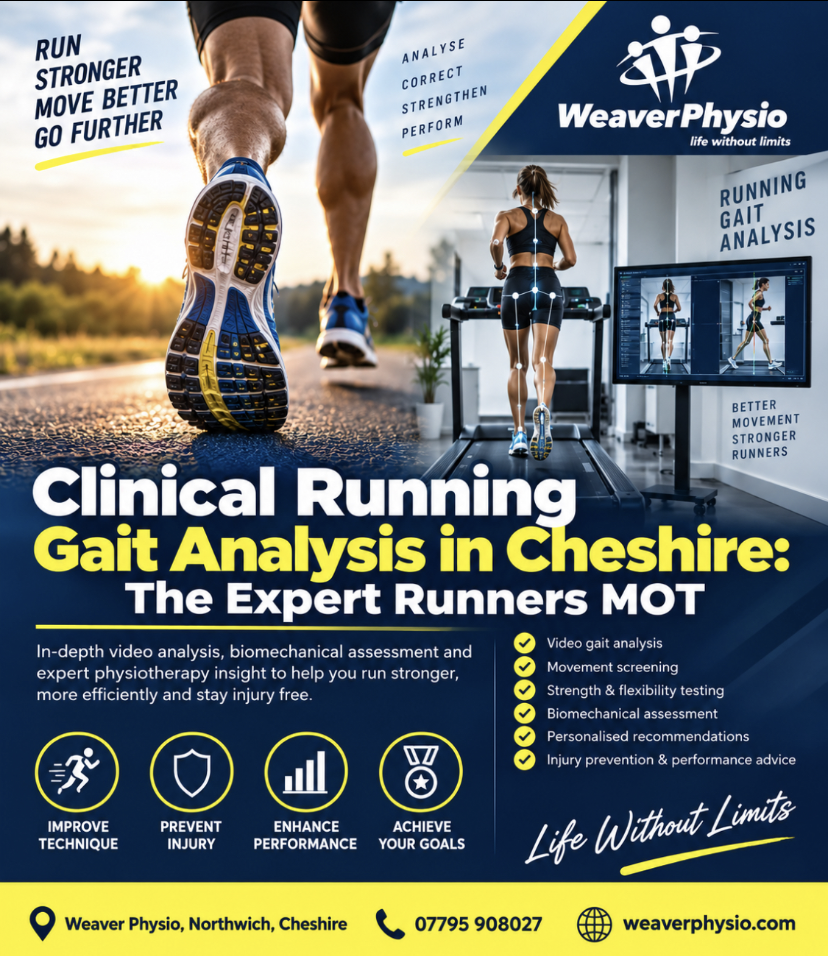
✔ Running gait analysis
✔ Rehabilitation programmes
👉 Because tight muscles are often a symptom—not the root cause.
📍 Why Choose Weaver Physio for Sports Massage in Northwich?
At Weaver Physiotherapy & Sports Injury Clinic, we offer more than just massage.
✔ Physiotherapy-led approach
Every session is guided by clinical expertise
✔ Targeted treatment
We assess and treat the cause—not just the symptom
✔ Runner-focused care
Specialists in running injuries and performance
✔ Integrated rehab gym
Combine treatment with strength and conditioning
✔ Trusted locally
Serving Northwich, Knutsford, Winsford, Middlewich, Tarporley & Frodsham
📅 How Often Should Runners Get Sports Massage?
This depends on your training:
• Recreational runners → Every 4–6 weeks
• Regular runners → Every 2–4 weeks
• High mileage / marathon training → Every 1–2 weeks
👉 Consistency is key—not just when pain appears.
🚀 Final Thoughts: Don’t Wait Until You’re Injured
If you only get sports massage when something hurts, you’re already behind.
The most successful runners:
✔ Prioritise recovery
✔ Stay proactive
✔ Invest in their body
👉 Sports massage is not a luxury—it’s part of performance and injury prevention.
📞 Book Your Sports Massage in Northwich
Ready to run stronger, recover faster and stay injury-free?
At Weaver Physiotherapy & Sports Injury Clinic, we provide expert Sports & Deep Tissue Massage in Northwich designed specifically for runners.
📍 Northwich, Cheshire
🌐 www.weaverphysio.com
👉 Book your appointment today and take control of your running health