
Overtraining in Runners: Signs, Symptoms & How to Recover
Weaver Physiotherapy & Sports Injury Clinic | Physio Northwich

Running is one of the most effective ways to improve fitness, mental wellbeing and long-term health. But more training does not always mean better results.
At Weaver Physiotherapy & Sports Injury Clinic in Northwich, we regularly see runners who are doing “all the right things” — yet developing persistent fatigue, recurring injuries, and declining performance.
In many cases, the underlying issue is overtraining.
Understanding how to recognise, manage and prevent overtraining is essential if you want to stay consistent, injury-free and performing at your best.
What Is Overtraining?
Overtraining occurs when training load exceeds your body’s ability to recover.
This doesn’t just mean running too far — it includes:
• Running too often without rest
• Increasing mileage too quickly
• Adding intensity (intervals, hills) too frequently
• Not allowing adequate recovery between sessions
• Poor sleep, nutrition, or life stress
💡 The key concept:
👉 Fitness improves during recovery — not during training
When recovery is insufficient, the body enters a state of fatigue accumulation, increasing injury risk and reducing performance.
Common Signs of Overtraining in Runners
Overtraining rarely happens overnight. It develops gradually — and recognising early signs is critical.
🧠 Physical Symptoms
• Persistent fatigue or heavy legs
• Muscle soreness that doesn’t improve
• Reduced performance despite training
• Increased heart rate during easy runs
• Poor sleep quality
🦵 Injury Warning Signs
At Weaver Physio Northwich, overtraining is strongly linked with:
• Achilles tendinopathy
• Shin splints (medial tibial stress syndrome)
• Plantar fasciitis
• Runner’s knee (patellofemoral pain)
• Calf strains and tightness
These injuries often develop when the body is repeatedly loaded without adequate recovery.
🧠 Mental & Emotional Signs
• Loss of motivation
• Irritability or low mood
• Reduced enjoyment of running
• Feeling “burnt out”
Mental fatigue is often overlooked — but it is a key indicator that your system is under excessive stress.
Why Overtraining Leads to Injury
From a physiotherapy perspective, overtraining is fundamentally a load vs capacity problem.
Every tendon, muscle and joint has a load tolerance.
When:
👉 Load (training) > Capacity (strength & recovery)
➡️ Tissue breakdown occurs
This is why we see so many runners develop tendon injuries — particularly:
• Achilles tendon overload
• Patellar tendon irritation
• Plantar fascia stress
💡 Rest alone is not the solution — the key is improving tissue capacity while managing load.
The Biggest Training Mistakes Runners Make
1. Increasing Mileage Too Quickly
The classic mistake:
👉 “I feel good, so I’ll do more”
Sudden spikes in training load are one of the biggest risk factors for injury.
2. Too Much High-Intensity Training
Intervals, tempo runs and hill sessions place significant stress on:
• Tendons
• Calves
• Joints
Without recovery, this leads to overload.
3. Ignoring Early Warning Signs
Many runners push through:
• Tight calves
• Mild Achilles pain
• Knee discomfort
This often turns a manageable issue into a long-term injury.
4. Lack of Strength Training
Weakness — particularly in:
• Calves
• Glutes
• Hamstrings
👉 Reduces your body’s ability to tolerate running load.
5. Poor Recovery Habits
• Inadequate sleep
• Poor nutrition
• No rest days
Recovery is where adaptation happens.
How to Recover From Overtraining
If you’re already experiencing symptoms, the goal is not to stop completely — but to reset your system intelligently.
✅ 1. Reduce Training Load
This may involve:
• Lower mileage
• Removing speed sessions
• Increasing rest days
💡 Complete rest is rarely necessary — but relative rest is essential.
✅ 2. Address the Root Cause
At Weaver Physio Northwich, we don’t just tell you to “rest”.
We identify:
• Training errors
• Biomechanical issues
• Strength deficits
• Load management problems
✅ 3. Build Tissue Capacity
This is critical for long-term recovery.
Your programme may include:
• Progressive calf strengthening
• Tendon loading exercises
• Glute and hip strengthening
• Single-leg stability work
✅ 4. Improve Recovery
Focus on:
• Sleep quality
• Nutrition
• Hydration
• Stress management
✅ 5. Structured Return to Running
A gradual return plan ensures:
✔ Controlled progression
✔ Reduced injury risk
✔ Long-term consistency
How to Prevent Overtraining
Prevention is always better than rehab.
📈 Follow the 10% Rule (With Caution)
Increase weekly mileage gradually — typically no more than 5–10%.
⚖️ Balance Hard & Easy Days
A simple rule:
👉 Hard days hard
👉 Easy days easy
Avoid “grey zone” training where everything is moderately hard.
🏋️ Include Strength Training
At Weaver Physio, we emphasise:
• Calf strength (key for runners)
• Glute strength
• Single-leg control
This improves resilience and reduces overload risk.
🧠 Listen to Your Body
Pain is not weakness — it’s feedback.
Early intervention can prevent long-term problems.
🏃♂️ Get a Professional Running Assessment
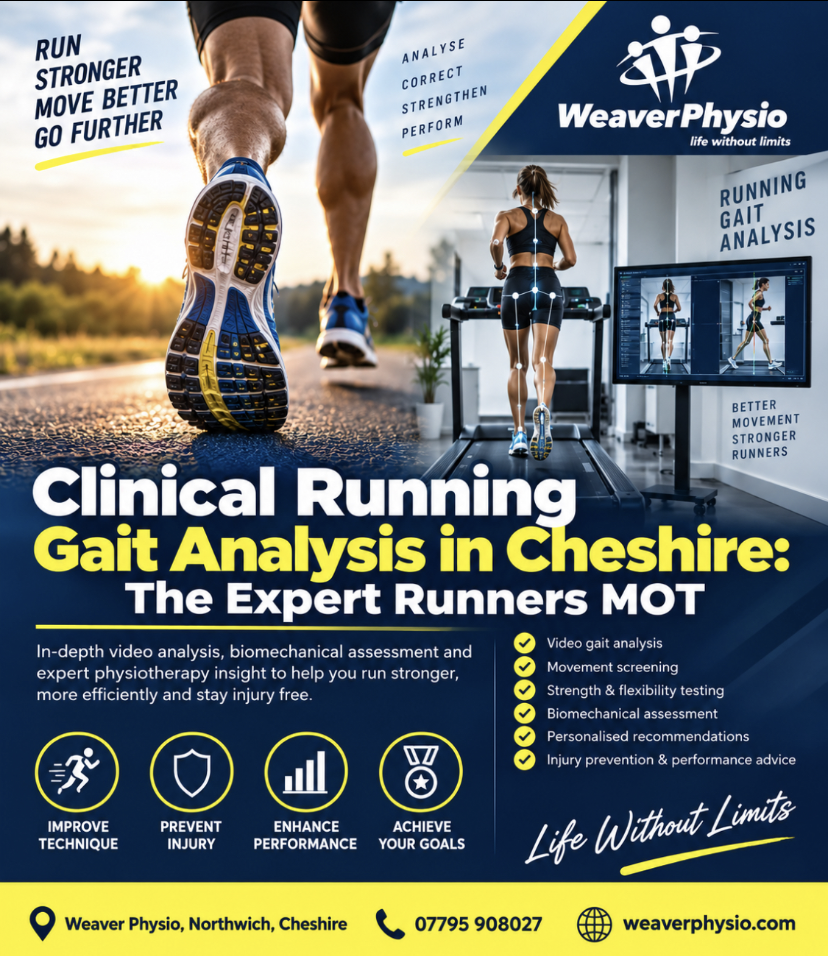
Our Runner’s MOT at Weaver Physio Northwich (£65) includes:
• High-speed video gait analysis
• Strength and mobility testing
• Biomechanical assessment
• Personalised running plan
This helps identify issues before they become injuries.
When Should You See a Physiotherapist?
You should seek expert help if you experience:
• Pain lasting more than 1–2 weeks
• Recurring injuries
• Declining performance despite training
• Persistent fatigue
Early intervention can significantly reduce recovery time.
How Weaver Physio Helps Runners Overcome Overtraining
At Weaver Physiotherapy & Sports Injury Clinic in Northwich, we specialise in treating runners and endurance athletes across Cheshire.
Our approach is different.
We don’t just treat symptoms — we identify and fix the root cause.
Your Assessment Includes:
✔ 45–60 minute in-depth consultation
✔ Training load analysis
✔ Strength and tendon capacity testing
✔ Running gait analysis
✔ Mobility and biomechanics screening
Your Treatment Plan May Include:
• Progressive rehabilitation programmes
• Strength & conditioning for runners
• Shockwave Therapy for persistent tendon pain
• Hands-on physiotherapy
• Structured return-to-running plans
The Key Takeaway
Overtraining is one of the most common — yet preventable — causes of running injuries.
If you remember one thing, make it this:
👉 More is not always better — better is better
Training smarter, not harder, is what leads to:
✔ Consistent progress
✔ Injury-free running
✔ Long-term performance
Ready to Run Stronger?
If you’re struggling with fatigue, recurring injuries, or feel like your training isn’t progressing, we can help.
📍 Weaver Physiotherapy & Sports Injury Clinic – Northwich
🌐 www.weaverphysio.com
Cheshire’s Running & Tendon Rehabilitation Specialists
👉 Book your assessment today and take control of your running.