
How Sports Massage Works: The Science Explained
Weaver Physiotherapy & Sports Injury Clinic | Physio Northwich | Sports Massage Northwich
Introduction: More Than Just a Massage
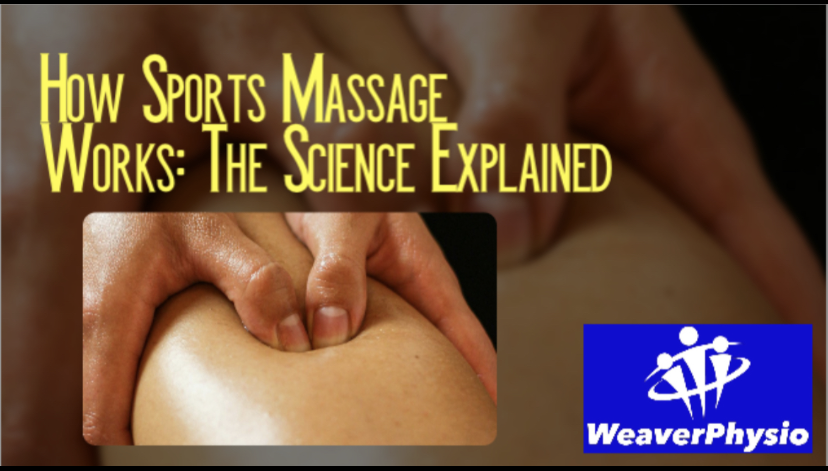
Sports massage is often misunderstood as simply a way to relax tight muscles. While it can feel great, the real value of sports massage lies in its physiological and neurological effects on the body.
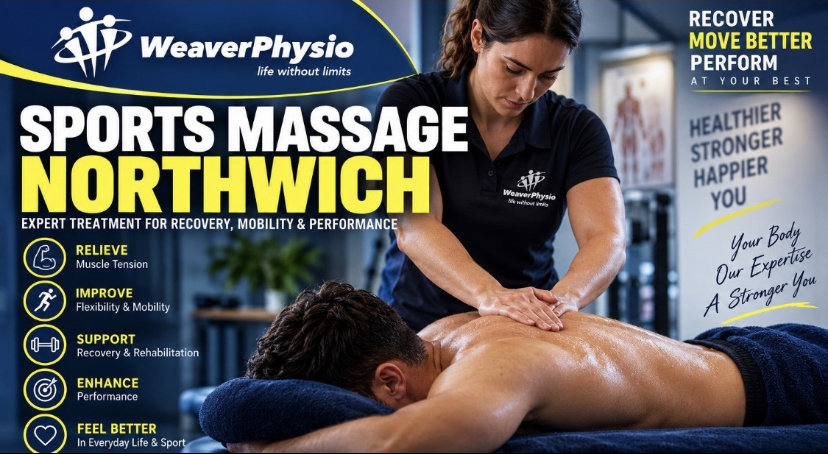
At Weaver Physiotherapy & Sports Injury Clinic in Northwich, we deliver clinically-led Sports & Deep Tissue Massage that goes far beyond relaxation. Every session is designed to reduce pain, improve movement, and support long-term recovery.
But how exactly does sports massage work?
In this blog, we break down the science behind sports massage, explaining how it influences muscles, nerves, circulation and recovery—helping you understand why it’s such a powerful tool for injury prevention and performance.
What Is Sports Massage?
Sports massage is a targeted, therapeutic treatment that focuses on:
Releasing muscle tension
Improving tissue mobility
Enhancing circulation
Supporting recovery and performance
Unlike spa-based massage, sports massage is clinically driven, meaning it’s based on an understanding of:
Anatomy and biomechanics
Injury mechanisms
Training loads and recovery demands
At Weaver Physio Northwich, every session starts with a focused assessment to identify the root cause of your symptoms—not just where it hurts.
The Key Systems Sports Massage Affects
To understand how sports massage works, we need to look at the systems it influences:
1. The Muscular System
2. The Nervous System
3. The Circulatory System
4. The Fascial System
Each plays a vital role in how your body moves, recovers and performs.
1. Effects on the Muscular System
Breaking Down Muscle Tightness
Muscle “tightness” is often caused by:
Increased muscle tone
Trigger points (localised areas of tension)
Protective guarding due to injury or overload
Sports massage works by applying mechanical pressure to these tissues, which helps:
✔ Reduce muscle stiffness
✔ Improve elasticity
✔ Restore normal muscle length
Trigger Points Explained
Trigger points are hypersensitive spots within muscle tissue that can cause:
Local pain
Referred pain (pain elsewhere)
Reduced strength and mobility
By applying sustained pressure, sports massage can help:
Decrease sensitivity
Improve blood flow
Reduce pain signals
The Mechanical Effect
From a scientific perspective, massage creates:
Shear forces between tissue layers
Stretching of muscle fibres
Realignment of collagen fibres
This is particularly important for:
Scar tissue
Post-injury stiffness
Chronic muscle tightness
2. Effects on the Nervous System
Pain Modulation (Gate Control Theory)
One of the most important ways sports massage works is through the nervous system.
The Gate Control Theory of Pain suggests that:
Non-painful input (like pressure from massage)
Can “block” pain signals travelling to the brain
This means massage can reduce how much pain you feel, even without changing the tissue itself immediately.
Switching Off the Stress Response
Massage stimulates the parasympathetic nervous system (your “rest and recover” mode), leading to:
✔ Reduced muscle tension
✔ Lower stress hormone levels (cortisol)
✔ Improved relaxation
Endorphin Release
Massage can also increase the release of endorphins, your body’s natural painkillers.
This contributes to:
Pain relief
Improved mood
Reduced perception of discomfort
3. Effects on Circulation & Recovery
Improving Blood Flow
Sports massage helps increase local circulation, which supports:
Oxygen delivery to tissues
Removal of metabolic waste
Tissue healing
This is particularly useful after:
Intense exercise
Long runs
Heavy training sessions
Lymphatic Drainage
Massage also supports the lymphatic system, which helps remove:
Fluid build-up
Waste products
Inflammatory by-products
This can reduce:
✔ Swelling
✔ Stiffness
✔ Post-exercise soreness (DOMS)
Does Massage “Flush Out Lactic Acid”?
This is a common myth.
Lactic acid is naturally cleared by the body quite quickly after exercise. However, massage still helps by:
Improving circulation
Reducing muscle tension
Enhancing recovery perception
4. Effects on Fascia (The Missing Link)
What Is Fascia?
Fascia is a connective tissue network that surrounds muscles, joints and organs.
When healthy, it allows smooth, efficient movement.
When restricted, it can cause:
Stiffness
Pain
Reduced mobility
How Sports Massage Helps Fascia
Techniques like:
Myofascial release
Deep tissue work
IASTM (muscle scraping)
Help to:
✔ Improve tissue glide
✔ Reduce restrictions
✔ Restore movement efficiency
Sports Massage & Performance
Sports massage isn’t just for injury—it’s a powerful performance tool.
Benefits for Athletes & Runners
Improved flexibility and mobility
Better movement efficiency
Reduced injury risk
Faster recovery between sessions
At Weaver Physio, we regularly combine sports massage with:
✔ Strength & conditioning
✔ Running gait analysis (Runner’s MOT)
✔ Movement screening
This ensures results go beyond short-term relief.
Sports Massage for Injury Prevention
Injuries often occur when:
Load > Capacity
Sports massage helps by:
Reducing excessive muscle tension
Improving movement quality
Identifying problem areas early
However, it’s important to be clear:
👉 Massage alone does not fix injuries
At Weaver Physio Northwich, we integrate massage with:
Progressive loading programmes
Strength training
Biomechanical correction
Common Conditions Sports Massage Helps
We regularly use sports massage to support:
Achilles tendinopathy
Plantar fasciitis
Shin splints
Runner’s knee
IT band syndrome
Back and neck pain
Muscle strains and tightness
It’s particularly effective when combined with a structured rehab plan.
Techniques Used at Weaver Physio
Our Sports & Deep Tissue Massage may include:
✔ Trigger Point Therapy
✔ Deep Tissue Techniques
✔ Muscle Energy Techniques (MET)
✔ PNF Stretching
✔ Cupping Therapy
✔ Instrument Assisted Soft Tissue Mobilisation (IASTM)
✔ Soft Tissue Release
Each technique is chosen based on your individual needs and goals.
What Does the Evidence Say?
Research shows that sports massage can:
Reduce pain perception
Improve short-term flexibility
Enhance recovery perception
Support relaxation and wellbeing
However, the biggest benefits come when massage is used as part of a wider rehabilitation strategy.
This is exactly how we use it at Weaver Physio.
Who Is Sports Massage For?
Sports massage is ideal for:
Runners (5K to marathon)
Gym-goers and athletes
Office workers with postural tension
Manual workers
Anyone experiencing muscle tightness or recurring aches
Whether you’re injured or just want to move better, it can play a key role.
Why Choose Weaver Physio Northwich?
At Weaver Physiotherapy & Sports Injury Clinic:
✔ Over 70 years combined clinical experience
✔ Clinically-led treatment—not spa massage
✔ Full assessment before treatment
✔ Integrated rehab and performance approach
✔ Five private treatment rooms + rehab gym
We don’t just treat symptoms—we identify and fix the root cause.
Sports Massage Northwich: Pricing
60 Minutes: £40
Targeted, effective and results-driven sessions
Final Thoughts: The Science Behind the Results
Sports massage works through a combination of:
Mechanical effects on muscle and fascia
Neurological pain modulation
Improved circulation and recovery
Reduced stress and muscle tone
But the key takeaway is this:
👉 It’s most effective when combined with the right rehabilitation and training strategy
That’s exactly what we deliver at Weaver Physio.
Ready to Book?
If you’re searching for:
Sports Massage Northwich
Deep Tissue Massage Northwich
Physio Northwich
We’re here to help.
📍 Northwich, Cheshire
📞 01606 227484
🌐 www.weaverphysio.com
Recover Stronger. Perform Better. Live Pain-Free.
Hashtags
#SportsMassageNorthwich #PhysioNorthwich #DeepTissueMassage #InjuryRecovery #CheshirePhysio