
How to Run Pain-Free: A Physiotherapist’s Guide
Running Injury Specialists | Physio Northwich | Weaver Physiotherapy & Sports Injury Clinic
Running is one of the most effective ways to improve fitness, boost mental wellbeing and enhance long-term health. But for many people, it comes with a frustrating downside—pain, recurring injuries and inconsistent progress.
At Weaver Physiotherapy & Sports Injury Clinic in Northwich, we work with runners of all levels—from beginners starting Couch to 5K to experienced marathon athletes. With over 70+ years of combined clinical experience, our team understands that running pain is rarely random. It’s usually the result of poor load management, reduced strength, impaired balance, limited stability, or inefficient coordination.
In this guide, we’ll break down exactly how to run pain-free using a physiotherapy-led approach, so you can stay consistent, perform better and avoid injury long term.
Why Running Injuries Happen
Running injuries don’t just “appear”—they develop over time when the body’s capacity is exceeded.
Common causes include:
Sudden increases in mileage or intensity
Poor running mechanics (e.g. overstriding)
Muscle weakness or imbalance
Reduced balance and control
Poor stability through key joints
Lack of coordination and movement efficiency
Inadequate recovery
The key concept is simple:
👉 Injury occurs when load > capacity
At Weaver Physio, our goal is to increase your capacity, not just reduce your pain.
The 4 Key Pillars of Pain-Free Running
To run without pain, your body needs to function efficiently across with a combination of four key areas, balance, strength, stability & coordination:
1. Balance
Balance is often overlooked—but it’s critical for runners.
Running is essentially a series of single-leg hops. Every step requires you to absorb force, stabilise and propel forward on one leg.
Poor balance can lead to:
Excessive joint stress
Reduced control during foot strike
Increased injury risk (especially knee, ankle and foot)
How to Improve Balance:
Single-leg stands (eyes open → closed progression)
Single-leg calf raises
Balance work on unstable surfaces
Controlled hopping drills
2. Strength
Strength is one of the biggest predictors of injury risk in runners.
Key muscle groups include:
Calves (critical for shock absorption and propulsion)
Glutes (hip control and power)
Quadriceps (knee stability)
Hamstrings (deceleration and control)
Weakness leads to overload in tendons and joints—often causing:
Achilles tendinopathy
Runner’s knee
Shin splints
Plantar fasciitis
Key Strength Exercises:
Heavy slow calf raises
Split squats
Deadlifts
Step-downs
Glute bridges
👉 Strong muscles = reduced strain on passive structures
3. Stability
Stability is your ability to control movement through joints, particularly:
Hips
Knees
Ankles
Poor stability often presents as:
Knee collapsing inward
Hip drop during running
Excessive foot pronation
This leads to inefficient movement and increased stress on tissues.
How to Improve Stability:
Single-leg squats
Lateral band walks
Step-down control drills
Hip strengthening exercises
At Weaver Physio, we frequently assess stability using functional movement tests to identify weaknesses that contribute to injury.
4. Coordination
Coordination is how well your body moves as a system.
Efficient runners demonstrate:
Smooth, controlled movement
Consistent rhythm (cadence)
Good timing between muscle groups
Poor coordination leads to:
Wasted energy
Increased fatigue
Higher injury risk
How to Improve Coordination:
Running drills (A-skips, B-skips)
Cadence work
Plyometric training
Technique-focused running
Running Technique: Why It Matters
You don’t need “perfect” form—but inefficient mechanics can increase injury risk.
Common issues we see at our Specialist Running Injury Clinic in Northwich, Cheshire:
Overstriding (landing too far in front of the body)
Low cadence (slow step rate)
Poor posture
Excessive vertical bounce
Lack of hip control
Key Technique Tips:
Increase cadence slightly (5–10%)
Aim for a “quiet” running style
Keep posture tall and relaxed
Avoid overreaching with your foot
The Role of Load Management
One of the biggest mistakes runners make is doing too much, too soon.
Your body adapts to load—but only if it’s applied progressively.
Key Principles:
Increase mileage gradually (typically <10% per week)
Avoid sudden spikes in intensity
Balance running with strength training
Prioritise recovery
👉 Consistency beats intensity every time
The Importance of Recovery
Recovery is where adaptation happens.
Without it, even the best training plan will lead to breakdown.
Essential Recovery Strategies:
Sleep (7–9 hours per night)
Nutrition (support tissue repair)
Active recovery (walking, mobility work)
Sports massage
Deload weeks
At Weaver Physio, we often integrate Sports Massage and recovery strategies alongside rehabilitation to optimise performance.
Common Running Injuries (And Why They Occur)
Understanding injury patterns helps prevent them.
1. Achilles Tendinopathy
Often caused by calf weakness and overload.
2. Runner’s Knee (Patellofemoral Pain)
Linked to poor hip strength and stability.
3. Shin Splints
Usually due to load spikes and poor mechanics.
4. Plantar Fasciitis
Associated with foot mechanics and calf tightness.
👉 These are rarely isolated issues—they’re usually part of a bigger movement problem.
How Physiotherapy Helps You Run Pain-Free
At Weaver Physiotherapy & Sports Injury Clinic, we don’t just treat symptoms—we identify and fix the root cause.
Your assessment may include:
Detailed injury and training history
Strength testing
Balance and stability assessment
Movement screening
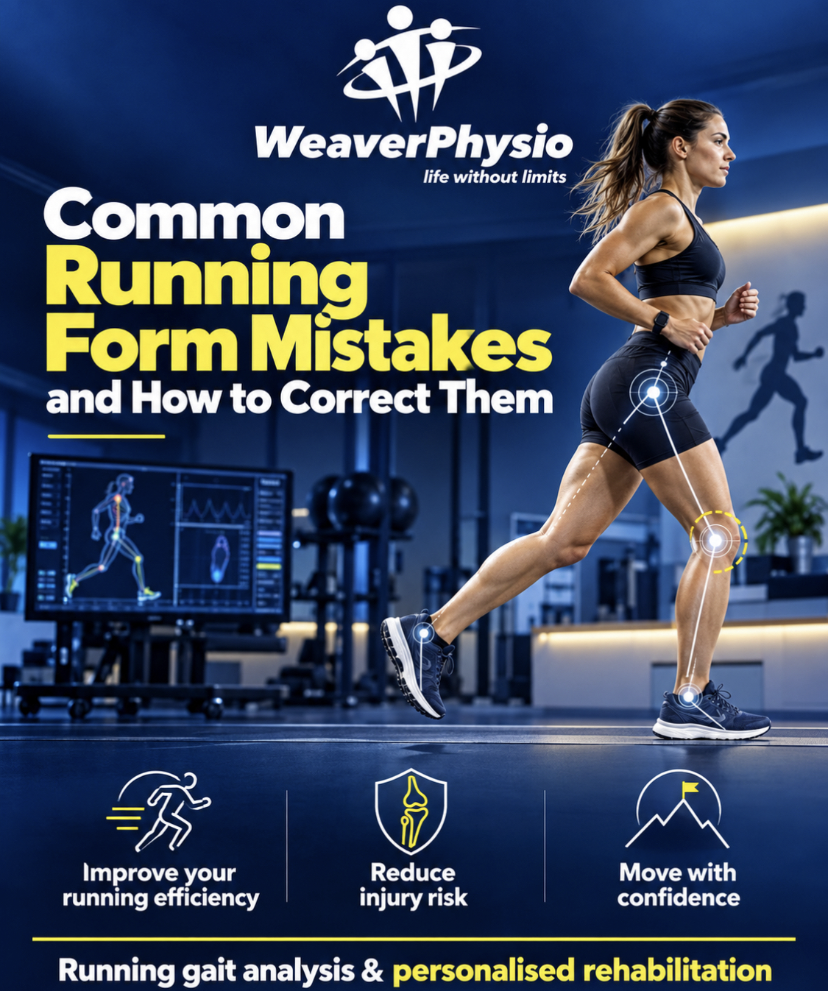
Running gait analysis (Runner’s MOT)
Our Proven Approach
We combine:
✔ Hands-on Physiotherapy
To reduce pain and improve movement
✔ Strength & Conditioning
To build resilience and capacity
✔ Running Gait Analysis
To identify inefficiencies
✔ Shockwave Therapy (if needed)
For persistent tendon pain
✔ Individualised Rehab Plans
Tailored to your goals and injury
The Runner’s MOT: The Ultimate Injury Prevention Tool
Our Runner’s MOT in Northwich (£65) is designed to help you:
Identify injury risk factors
Improve running technique
Build strength and control
Prevent recurring issues
Includes:
High-speed video gait analysis
Strength, balance and mobility testing
Personalised rehab & performance plan
When Should You See a Physiotherapist?
Don’t wait until pain stops you running.
Seek help if you:
Have persistent pain during or after running
Keep getting the same injury
Feel weak or unstable
Want to improve performance safely
👉 Early intervention = faster recovery
Final Thoughts: Run Stronger, Pain-Free
Running pain-free isn’t about luck—it’s about:
✔ Building strength
✔ Improving balance
✔ Developing stability
✔ Enhancing coordination
✔ Managing load effectively
When all of these come together, running becomes:
More efficient
More enjoyable
More sustainable
Why Choose Weaver Physio?
If you’re looking for expert help with running injuries in Northwich, Weaver Physio offers:
Chartered Physiotherapists with 70+ years combined experience
Specialist expertise in running and tendon injuries
Advanced gait analysis (Runner’s MOT)
Fully equipped rehab gym
Proven results-focused approach
📍 Weaver Physiotherapy & Sports Injury Clinic – Northwich, Cheshire
📞 01606 227484
🌐 www.weaverphysio.com
Recover Stronger. Perform Better. Live Pain-Free.