
Why Does My Achilles Hurt When I First Get Out of Bed?

July 27, 2026

Understanding Morning Achilles Pain and How to Treat It
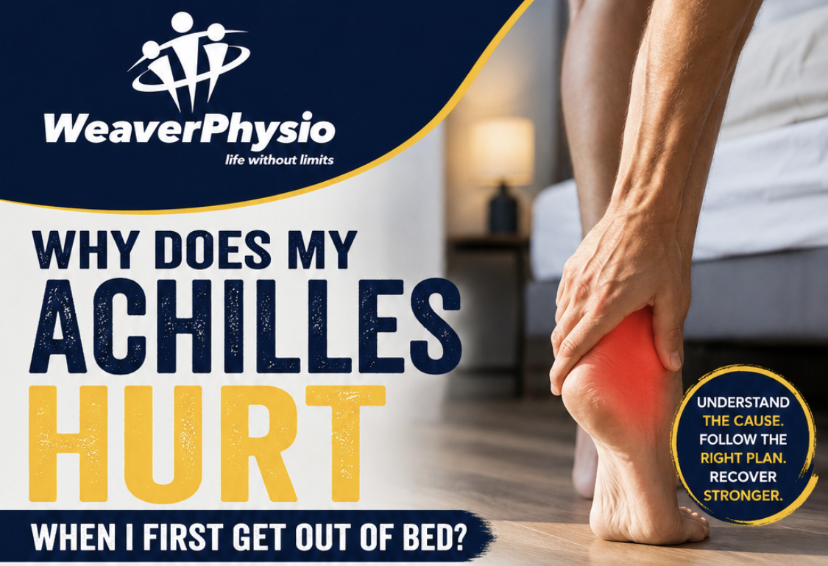
Do your first few steps out of bed feel painful, stiff or uncomfortable around the back of your ankle? If so, you’re not alone. Morning Achilles pain is one of the most common complaints we see at Weaver Physio & Sports Injury Clinic in Northwich.


Many people describe it as:


“It feels like my Achilles is really tight.”

“The first few steps are awful, then it eases.”

“It feels like someone is pulling on my heel.”

“It loosens up after walking for a few minutes.”


Although it often improves once you’ve been moving, this type of pain is usually an early warning sign that your Achilles tendon is becoming overloaded.


Ignoring it can eventually lead to more persistent pain, reduced performance and a much longer recovery.


Here’s why it happens—and what you can do about it.


What Is the Achilles Tendon?


The Achilles tendon is the strongest and thickest tendon in the human body.


It connects your calf muscles (gastrocnemius and soleus) to your heel bone (calcaneus) and plays a vital role every time you:


Walk

Run

Jump

Climb stairs

Rise onto your toes


Every step places significant force through the Achilles. During running it may experience 6–10 times your body weight, making it one of the hardest-working structures in your body.


Why Is It Worse First Thing in the Morning?


The most common reason is Achilles tendinopathy.


This isn’t usually an inflammatory condition—it is a tendon that has become irritated because it cannot tolerate the loads being placed upon it.


During sleep:


Your foot naturally rests in a slightly pointed position.

The tendon shortens slightly overnight.

Fluid distribution within the tendon changes.

The tendon becomes temporarily stiffer.


When you suddenly stand up, the Achilles is rapidly stretched while taking your full body weight.


This creates those painful first few steps.


As you continue walking:


Blood flow increases.

The tendon warms up.

Collagen fibres begin sliding more efficiently.

Stiffness reduces.


That is why many people feel considerably better after five to ten minutes.


Does Morning Pain Mean My Achilles Is Damaged?


Not necessarily.


Pain does not always mean the tendon is torn.


In most cases it indicates the tendon is becoming overloaded and needs better management.


Think of it as your body’s warning light.


Early treatment is much easier than waiting until walking, running or climbing stairs becomes consistently painful.


Common Causes of Morning Achilles Pain


Several factors increase stress on the tendon.


1. Running Too Much Too Soon


Increasing mileage rapidly is probably the biggest cause.


Examples include:


Marathon training

Couch to 5K

Returning after injury

Sudden hill training

Speed sessions


The tendon needs time to adapt.


2. Tight Calf Muscles


Limited calf flexibility increases pulling forces through the Achilles.


Many office workers sit for prolonged periods, allowing the calves to become tight.


3. Weak Calf Muscles


Strength is just as important as flexibility.


Weak calf muscles force the tendon to work harder.


Poor calf endurance is one of the biggest contributors to persistent Achilles pain.


4. Poor Ankle Mobility


Restricted ankle dorsiflexion changes the way forces travel through the tendon.


This often increases strain during:


Running

Squatting

Walking uphill

Climbing stairs


5. Foot Biomechanics


Some people naturally:


Overpronate

Have stiff feet

Have poor balance

Lack foot control


These alter loading through the Achilles.


6. Footwear


Old shoes lose cushioning and support.


Changing shoe type too quickly can also overload the tendon.


7. Age


Achilles tendons naturally become less elastic with age.


This is why tendinopathy becomes more common after 35–40 years.


Where Should Achilles Pain Be Felt?


Pain location often helps determine the diagnosis.


Mid-portion Achilles Tendinopathy


Pain occurs approximately 2–6 cm above the heel.


This is the most common presentation.


Insertional Achilles Tendinopathy


Pain occurs directly where the tendon attaches to the heel bone.


This can be aggravated by walking uphill or wearing rigid shoes.


Is Morning Stiffness a Bad Sign?


Morning stiffness is actually one of the hallmark signs of Achilles tendinopathy.


Physiotherapists often ask:


“How long does the stiffness last after getting out of bed?”


If the answer is:


2 minutes

5 minutes

10 minutes

20 minutes


…it provides useful information about tendon irritability.


Generally:


Shorter stiffness = milder symptoms.

Longer stiffness = more irritable tendon.


Should You Keep Running?


The answer depends on your symptoms.


Running may be acceptable if:


Pain stays below 3–4/10.

It settles quickly afterwards.

There is no significant increase the next morning.


Running should be modified or stopped temporarily if:


Pain becomes severe.

You limp.

Symptoms worsen every run.

Morning stiffness is increasing.

Swelling develops.


The goal is load management, not necessarily complete rest.


Should You Stretch It?


Not always.


Aggressive stretching of an irritated Achilles can sometimes make symptoms worse.


The best approach depends on whether you have:


Mid-portion tendinopathy

Insertional tendinopathy

Paratenon irritation

Retrocalcaneal bursitis


An accurate assessment is important before beginning a stretching programme.


The Best Treatment for Achilles Pain


Successful treatment rarely relies on one intervention.


At Weaver Physio we combine several evidence-based strategies.


Comprehensive Assessment


We identify:


Training errors

Foot mechanics

Running technique

Muscle weakness

Mobility deficits

Tendon irritability


Hands-On Physiotherapy


Treatment may include:


Soft tissue therapy

Joint mobilisation

Myofascial release

Massage

Movement correction


Progressive Strengthening


Research consistently shows that appropriately loaded strengthening exercises are one of the most effective treatments for Achilles tendinopathy.


This often includes:


Isometric exercises

Heavy slow resistance

Eccentric strengthening (where appropriate)

Single-leg calf raises

Plyometric progression

Return-to-running drills


Running Gait Analysis


Many Achilles problems stem from inefficient running mechanics.


Video gait analysis can identify:


Overstriding

Excessive vertical movement

Cadence issues

Foot strike patterns

Hip control deficits


Small adjustments can significantly reduce tendon loading.


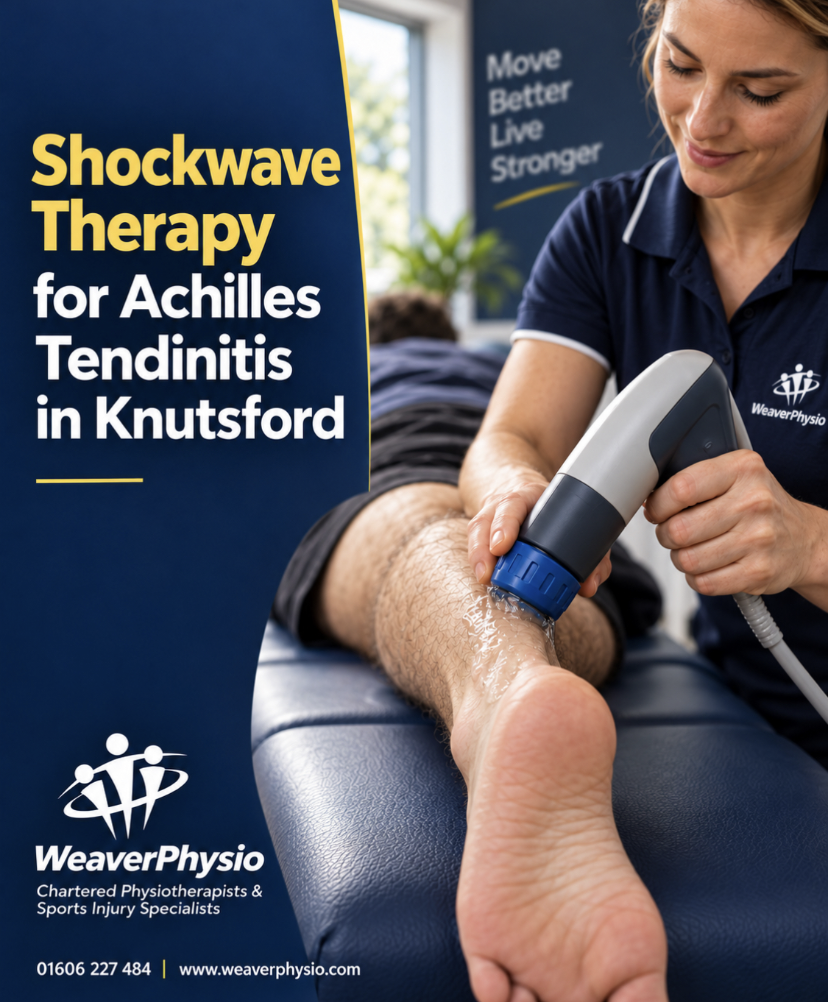
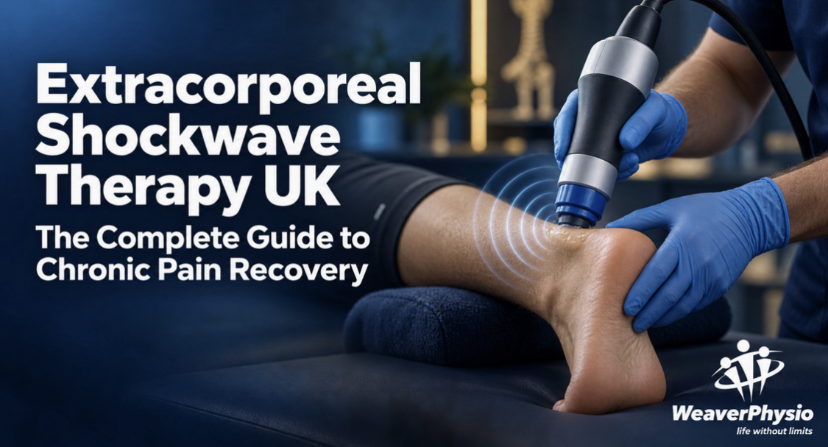
Shockwave Therapy


For stubborn or long-standing Achilles tendinopathy, Shockwave Therapy can stimulate the body’s natural healing response.


Combined with an exercise programme, it has strong evidence for improving pain and function in many patients.


Sports Massage


Sports massage can help:


Reduce calf muscle tension

Improve flexibility

Increase comfort

Complement rehabilitation


While massage doesn’t repair the tendon itself, it can improve the surrounding muscle function and support recovery.


Can You Prevent Achilles Pain?


Absolutely.


The best prevention strategies include:


Gradually increasing running mileage.

Strengthening your calves 2–3 times per week.

Improving ankle mobility.

Wearing appropriate footwear.

Allowing adequate recovery between hard sessions.

Addressing pain early rather than ignoring it.

Including balance, stability and plyometric exercises in your training.


When Should You See a Physiotherapist?


Arrange an assessment if:


Morning pain lasts more than two weeks.

Running becomes painful.

You have swelling or thickening of the tendon.

Pain is getting worse.

You cannot perform single-leg calf raises comfortably.

You keep getting recurring Achilles problems.


Early treatment is far more effective than waiting until the tendon becomes severely irritated.


How Weaver Physio Can Help


At Weaver Physio & Sports Injury Clinic, we regularly assess and treat Achilles tendinopathy in runners, walkers, footballers, cyclists and active individuals from Northwich, Winsford, Middlewich, Knutsford, Hartford, Weaverham, Tarporley, Frodsham, Sandbach and throughout Cheshire.


Our comprehensive approach includes:


Detailed physiotherapy assessment

Accurate diagnosis

Running gait analysis

Hands-on physiotherapy

Progressive strength and conditioning

Balance and stability training

Shockwave Therapy where appropriate

Sports massage

Individualised rehabilitation programmes

Return-to-running guidance

Long-term injury prevention strategies


With over 70 years of combined clinical experience, our Chartered Physiotherapists are committed to helping you recover safely, restore confidence and return to the activities you enjoy.


Final Thoughts


If your Achilles hurts when you first get out of bed, don’t ignore it. Morning stiffness is often an early sign that your tendon is struggling to cope with the demands placed upon it. The good news is that, with the right diagnosis, progressive rehabilitation and expert guidance, most people make an excellent recovery without surgery.


If you’re experiencing persistent Achilles pain, early assessment and treatment can prevent a minor problem from becoming a long-term injury.


Book your assessment with Weaver Physio & Sports Injury Clinic today and take the first step towards moving comfortably again.


Weaver Physio & Sports Injury Clinic

πŸ“ 110 Middlewich Road, Northwich, Cheshire CW9 7DP

πŸ“ž 07795 908027 


July 25, 2026
Expert Advice from Weaver Physiotherapy & Sports Injury Clinic, Northwich
July 25, 2026
Expert Sports Massage in Northwich | Weaver Physiotherapy & Sports Injury Clinic
July 5, 2026
How Massage Therapy Can Reduce Stress, Improve Wellbeing and Help You Feel Your Best
July 5, 2026
How Massage Therapy Can Improve Sleep Quality, Recovery and Overall Health
July 3, 2026
Running is one of the most rewarding forms of exercise. It improves cardiovascular fitness, strengthens muscles and bones, supports mental wellbeing, and helps people of all ages stay active. However, recurring injuries can quickly turn an enjoyable hobby into a frustrating cycle of pain, rest, and disappointment. At Weaver Physiotherapy & Sports Injury Clinic in Northwich, Cheshire, we believe that simply treating pain isn’t enough. Our goal is to identify why an injury occurred, correct the underlying cause, and help you return to running stronger than before. That’s why we’ve developed the Weaver Physio 5-Step Running Recovery System™—a structured, evidence-based approach designed to reduce injury risk, improve performance, and keep runners moving confidently. With 70+ years of combined clinical experience, our Chartered Physiotherapists and Sports Injury Specialists have helped thousands of runners recover from injury and achieve their goals. Why Do Running Injuries Keep Coming Back? Many runners experience the same injury repeatedly. Common complaints include: Shin splints Plantar fasciitis Achilles tendinopathy IT Band Syndrome Runner’s knee Hamstring strains Calf injuries Hip pain Knee pain Foot pain Often these injuries aren’t caused simply by running too much. Instead they’re usually the result of several contributing factors combining together over time. Examples include: Poor balance Weak gluteal muscles Reduced ankle mobility Poor running mechanics Insufficient strength Poor stability Lack of coordination Returning to training too quickly Inadequate recovery Sudden increases in mileage or intensity Treating only the painful area often provides temporary relief—but unless these underlying issues are addressed, the injury frequently returns. The Weaver Physio Difference Rather than focusing solely on pain, Weaver Physio focuses on improving your entire movement system. Every runner is different. Your running style, strength, mobility, previous injuries, footwear, training history and biomechanics all influence how your body copes with the repetitive forces of running. Our clinicians look at the complete picture before creating an individual rehabilitation programme. The Foundation of Injury-Free Running The Weaver Running Recovery System™ is built around five key performance pillars: 1. Balance Balance provides the foundation for efficient movement. Every stride involves standing on one leg for a brief moment. Poor balance increases unwanted movement throughout the foot, ankle, knee and hip. Improving balance can: Reduce injury risk Improve control Enhance proprioception Improve confidence on uneven surfaces Increase running efficiency 2. Strength Strong muscles absorb force more effectively. Running places forces of up to three times your body weight through your legs every time your foot hits the ground. If muscles cannot absorb these loads efficiently, tendons and joints often become overloaded. Strength training helps: Reduce injury risk Improve running economy Increase power Improve endurance Reduce fatigue Support healthy tendons 3. Stability Strength alone isn’t enough. Your body also needs stability to control movement. Hip, pelvis, trunk and ankle stability all influence how efficiently force travels through your body. Improved stability helps: Reduce excessive movement Improve alignment Improve efficiency Protect joints Improve endurance 4. Coordination Running is a highly skilled movement. Better coordination allows muscles to work together more efficiently. Improved coordination means: Better movement patterns Improved technique Reduced wasted energy Lower injury risk Greater running efficiency 5. Plyometrics Once strength and stability have been restored, plyometric exercises teach your body to store and release energy efficiently. These exercises improve: Speed Power Elastic tendon function Running efficiency Return-to-sport readiness Plyometrics are introduced progressively when clinically appropriate, helping runners transition safely back to higher-speed running. The Weaver Physio 5-Step Running Recovery System™ Step 1 – Assess Everything starts with an expert assessment. Our comprehensive examination identifies: Injury history Training errors Biomechanics Strength deficits Mobility restrictions Running technique Balance Functional movement Tissue loading capacity Understanding the true cause allows us to design the most effective rehabilitation programme. Step 2 – Correct Next we address the underlying problems. Treatment may include: Hands-on physiotherapy Soft tissue treatment Joint mobilisation Running gait retraining Exercise prescription Mobility work Shockwave Therapy (where appropriate) Acupuncture Sports massage The aim is to restore normal movement while reducing pain. Step 3 – Strengthen Once pain is improving, rehabilitation becomes more active. Your programme may include: Glute strengthening Calf strengthening Core stability Single-leg control Foot strengthening Hip stability Tendon loading exercises Functional strengthening Each programme is tailored specifically to your injury and running goals. Step 4 – Progress Many injuries recur because runners return too quickly. Our clinicians carefully guide your return using progressive loading principles. We monitor: Pain response Running volume Speed Recovery Functional capacity Strength improvements This structured progression builds confidence while minimising the risk of re-injury. Step 5 – Perform Recovery isn’t simply about becoming pain-free. It’s about returning stronger than before. We aim to help runners: Run further Run faster Stay injury-free Improve efficiency Build resilience Achieve personal bests Whether you’re training for your first 5K or your next marathon, we help you perform with confidence. Conditions We Commonly Treat Our experienced clinicians regularly help runners recover from: Achilles tendinopathy Plantar fasciitis Shin splints (Medial Tibial Stress Syndrome) Runner’s knee Patellar tendinopathy IT Band Syndrome Hamstring injuries Calf strains Hip pain Gluteal tendinopathy Stress reactions Foot and ankle pain Muscle strains Tendon injuries Why Early Assessment Matters Many runners try to push through pain. Unfortunately, continuing to train with an underlying injury often makes rehabilitation longer and more complicated. Seeking assessment early allows us to: Identify the cause sooner Reduce recovery time Prevent compensation injuries Keep you active where possible Develop a clear recovery plan Why Choose Weaver Physio? Choosing the right physiotherapy clinic can make a significant difference to your recovery. At Weaver Physio we offer: 70+ years of combined clinical experience Chartered Physiotherapists Sports Injury Specialists Evidence-based rehabilitation Individual treatment plans Comprehensive movement assessment Running injury expertise Hands-on treatment Exercise rehabilitation Shockwave Therapy Acupuncture Sports Massage Friendly, supportive care Convenient Northwich location We don’t believe in quick fixes. We believe in creating stronger, healthier runners. Helping Runners Across Cheshire Our Northwich clinic welcomes runners from across Cheshire, including: Northwich Knutsford Winsford Middlewich Tarporley Frodsham Hartford Lostock Gralam Weaverham Chester Warrington Sandbach Whether you’re recovering from injury or looking to prevent one, our team is here to help. Book Your Running Assessment Today If recurring injuries are stopping you from reaching your potential, now is the time to take action. Discover the Weaver Physio 5-Step Running Recovery System™ and experience a structured, evidence-based approach designed to help you recover, rebuild and return to running with confidence. Our expert team will identify the root cause of your injury, create a personalised rehabilitation programme and support you every step of the way. Weaver Physiotherapy & Sports Injury Clinic 110 Middlewich Road, Northwich, Cheshire, CW9 7DP ☎ 01606 227484 🌐 http://www.weaverphysio.com Run Stronger. Recover Smarter. Stay Injury-Free. At Weaver Physio, we believe every injury is an opportunity to build a stronger foundation. By combining expert assessment with balance, strength, stability, coordination and plyometric training, we help runners break the cycle of recurring injuries and enjoy long-term success. Whether your goal is to complete your first parkrun, achieve a marathon personal best or simply run without pain, our team has the expertise to help you get there safely and confidently. Your recovery starts with the right plan—and we’re here to guide you every step of the way.
July 1, 2026
By Weaver Physio & Sports Injury Clinic – Cheshire’s Running & Tendon Rehabilitation Specialists
July 1, 2026
Expert Running Advice from Cheshire’s Running & Tendon Specialists
June 9, 2026
Cheshire Running Injury Specialists | Weaver Physiotherapy & Sports Injury Clinic
May 29, 2026
Plantar Fasciitis Treatment in Northwich | Weaver Physiotherapy & Sports Injury Clinic
May 29, 2026
Achilles Pain in Northwich: Why Rest Isn’t Always the Answer
Show More