
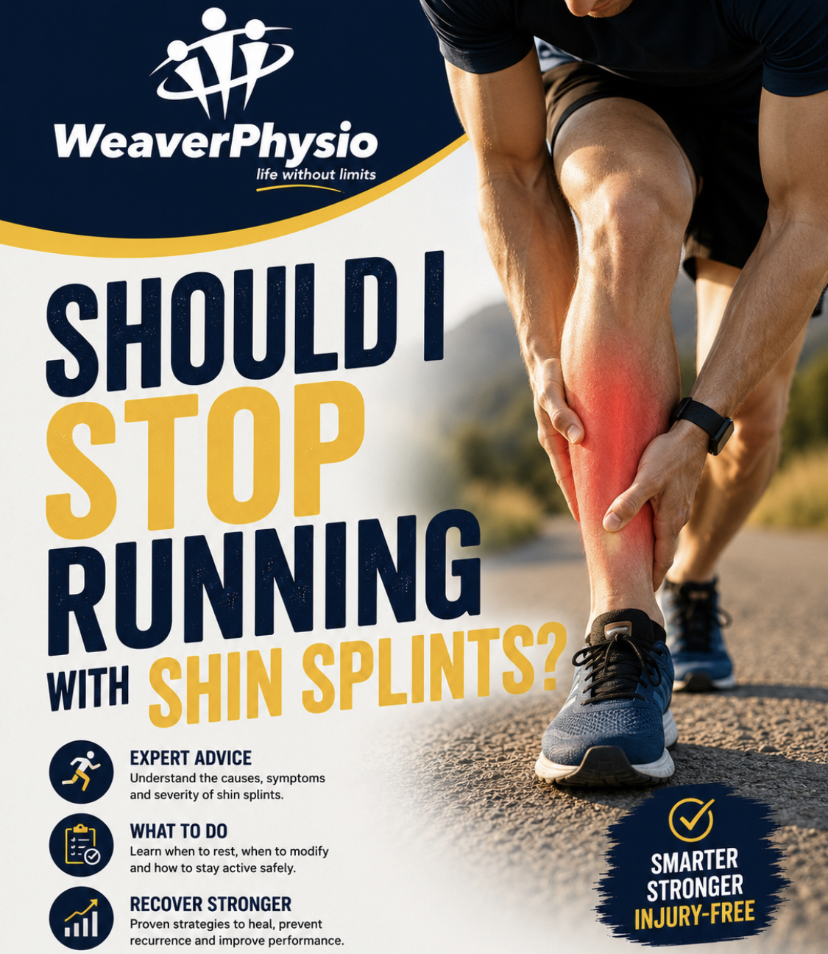
Should I Stop Running with Shin Splints?
Expert Advice from Weaver Physiotherapy & Sports Injury Clinic, Northwich
If you’re a runner, chances are you’ve experienced that nagging ache along the inside of your shin at some point. It often starts as a mild discomfort during a run, disappears afterwards, and then gradually becomes more painful until even walking can feel uncomfortable. This common condition, known as shin splints, affects runners of all abilities—from beginners training for their first 5K to experienced marathon runners increasing their mileage.
One of the most common questions we hear at Weaver Physiotherapy & Sports Injury Clinic is:
“Should I stop running with shin splints?”
The answer is it depends.
Stopping completely isn’t always necessary, but continuing to run through worsening pain can turn a relatively minor injury into a much longer recovery. The key is understanding what your symptoms are telling you and knowing when it’s safe to continue and when it’s time to seek professional advice.
In this guide, we’ll explain exactly what shin splints are, why they occur, whether you should stop running, how to recover safely, and how to prevent them from returning.
What Are Shin Splints?
Shin splints are commonly referred to as Medial Tibial Stress Syndrome (MTSS).
This condition causes pain along the inside edge of the shinbone (tibia), usually affecting the lower two-thirds of the leg.
The pain develops because the muscles, tendons and bone tissue surrounding the tibia become overloaded. Repeated impact from running causes the tissues to become irritated, particularly when the body hasn’t adapted to the training load.
Although shin splints are extremely common, they should never simply be ignored.
What Causes Shin Splints?
Shin splints are rarely caused by one single problem.
Instead, they usually develop because several factors combine to overload the tissues.
Common contributing factors include:
Increasing running mileage too quickly
Running faster than your body is prepared for
Starting hill training
Changing running shoes
Running on hard surfaces
Poor recovery between runs
Weak calf muscles
Weak glute muscles
Limited ankle mobility
Poor running mechanics
Reduced balance and stability
Returning to running after time off
Understanding why your shin splints developed is the most important step in successful recovery.
What Do Shin Splints Feel Like?
Symptoms often begin gradually.
Typical signs include:
Pain along the inside of the shin
Tenderness when touching the bone
Pain at the beginning of a run
Symptoms that improve as you warm up
Pain returning after running
Stiffness the following morning
Mild swelling in some cases
As the condition progresses, the pain usually becomes more persistent.
Eventually, pain may occur:
Throughout your run
When walking
Climbing stairs
Even at rest
At this stage, you should stop running and seek assessment.
Should I Stop Running?
The answer depends on the severity of your symptoms.
It may be safe to continue running if:
Pain is mild (3/10 or less)
Pain eases as you warm up
Symptoms settle within 24 hours
Running form remains normal
Pain isn’t worsening each week
However, continuing to run should only happen alongside reducing training load and beginning rehabilitation.
You should stop running if:
Pain becomes progressively worse during your run.
Pain causes you to limp.
Pain is severe.
Pain remains for several days afterwards.
Pain occurs while walking.
Pain wakes you during the night.
There is swelling over the bone.
You notice one very specific tender point.
These symptoms may indicate something more serious, including a stress reaction or stress fracture.
Could It Be a Stress Fracture?
One reason we take shin pain seriously is because shin splints and stress fractures can initially feel very similar.
A stress fracture is a small crack within the bone caused by repeated loading.
Unlike shin splints, stress fractures usually cause:
Highly localised pain
Pain even when resting
Pain hopping on one leg
Increasing night pain
Pain that progressively worsens regardless of activity
If these symptoms are present, further medical investigation may be required.
Why Rest Alone Doesn’t Work
Many runners stop completely for several weeks.
Their pain settles.
They return to running.
Within days the shin pain comes back.
Why?
Because rest removes the symptoms—but it doesn’t fix the reason the tissues became overloaded in the first place.
Without addressing strength, biomechanics and training errors, the tendon and bone simply become overloaded again.
The Weaver Physio Approach to Shin Splints
At Weaver Physiotherapy & Sports Injury Clinic, we focus on identifying the cause, not just treating the symptoms.
Our rehabilitation typically follows these stages.
Step 1 – Reduce Irritation
Initially we reduce excessive loading.
This doesn’t always mean complete rest.
Instead, we modify training by reducing:
Distance
Speed
Hills
Frequency
Many runners can continue some running while symptoms settle.
Step 2 – Improve Strength
Research consistently shows strengthening is one of the most effective long-term treatments.
We assess and strengthen:
Calves
Soleus
Tibialis posterior
Tibialis anterior
Glutes
Hamstrings
Core
Stronger muscles absorb more force, reducing stress on the shin.
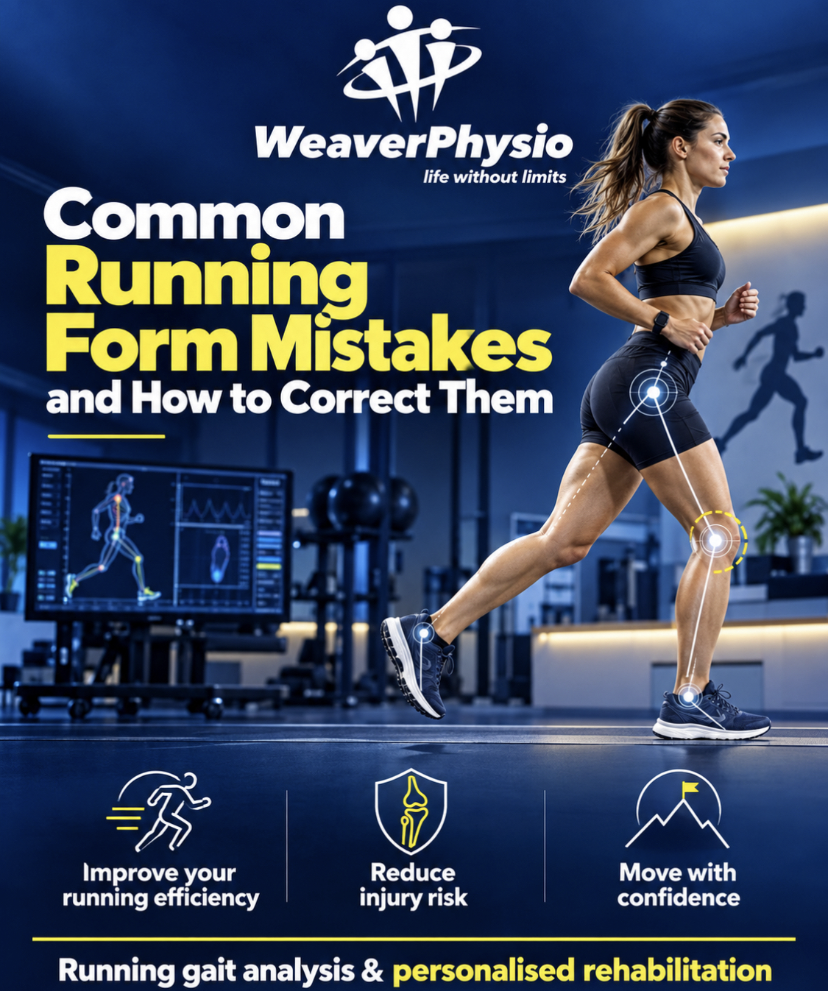
Step 3 – Improve Running Mechanics
Poor biomechanics increase the forces travelling through the lower leg.
Video gait analysis can identify issues such as:
Overstriding
Low cadence
Excessive braking forces
Poor pelvic control
Reduced hip extension
Excessive trunk movement
Small changes often produce significant reductions in shin loading.
Step 4 – Restore Ankle Mobility
Restricted ankle movement forces other tissues to work harder.
Improving ankle mobility often reduces stress throughout the lower leg.
Step 5 – Build Running Capacity
Recovery isn’t simply about becoming pain-free.
The tissues need gradually increasing loads to become stronger.
Rehabilitation includes progressive:
Walking
Jogging
Running
Speed work
Hills
Plyometrics
Should I Ice My Shin Splints?
Ice may temporarily reduce discomfort following activity.
However, it does not speed tissue healing.
Think of ice as a short-term pain management tool rather than a cure.
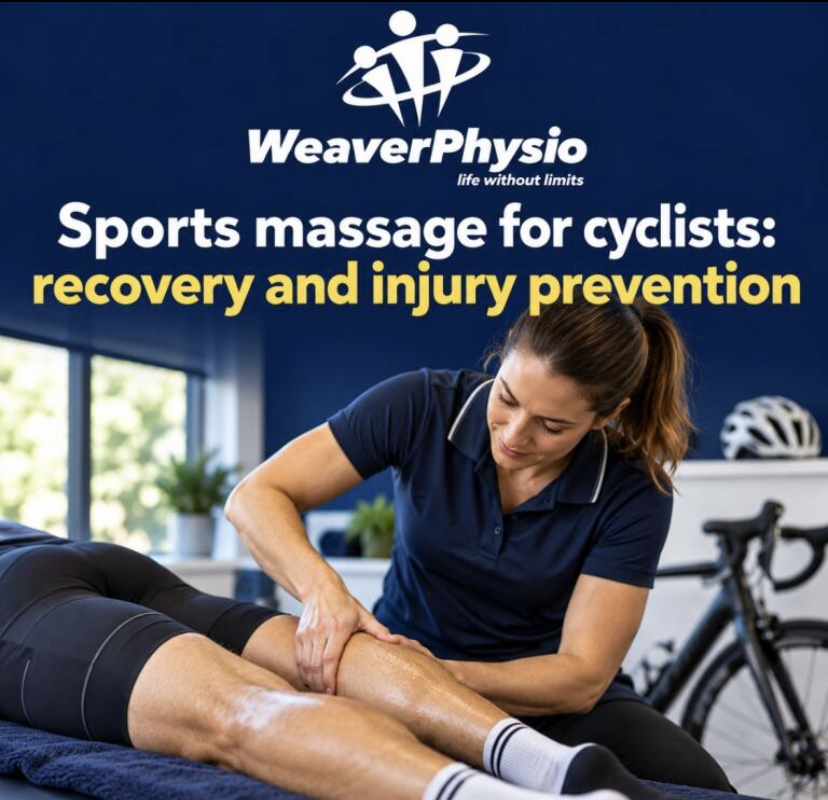
Does Massage Help Shin Splints?
Sports massage can be extremely useful.
Massage helps reduce tightness within:
Calves
Soleus
Tibialis posterior
Peroneals
Foot muscles
Combined with strengthening, massage often improves comfort and movement quality.
Massage alone, however, rarely solves the underlying problem.
Can Shockwave Therapy Help?
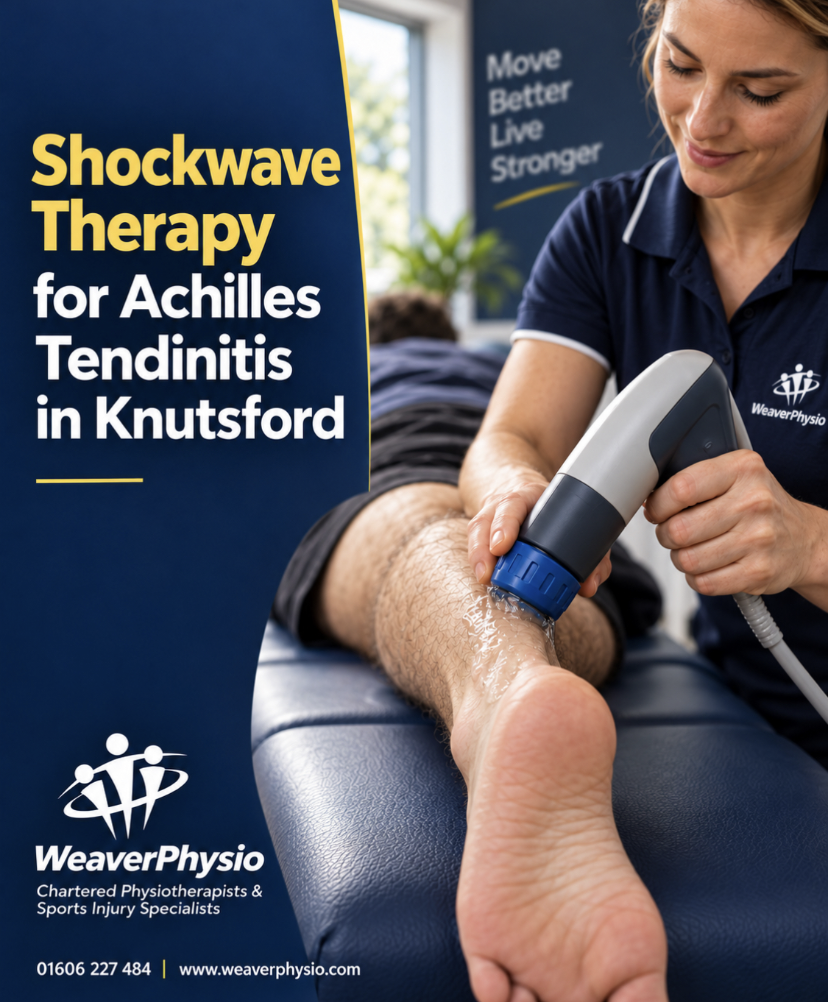
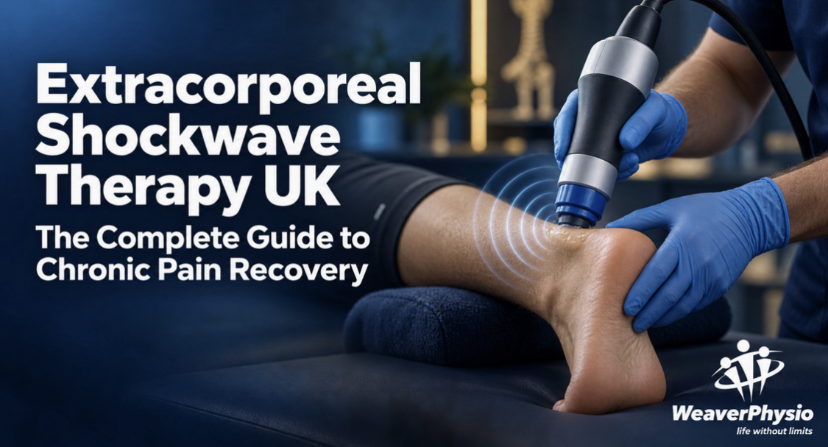
For long-standing shin pain, shockwave therapy may be appropriate in carefully selected cases.
Shockwave can help stimulate tissue healing while reducing pain sensitivity.
It is usually combined with progressive rehabilitation exercises.
Should I Change My Running Shoes?
Sometimes.
Worn-out shoes or footwear that doesn’t suit your running style can contribute to shin splints.
At Weaver Physio we assess:
Shoe wear patterns
Running biomechanics
Training history
Foot strength
Rather than recommending one type of shoe for everyone, we advise based on your individual needs.
Can Orthotics Help?
Orthotics can reduce stress in some runners.
However, they should never replace strengthening.
The strongest evidence suggests orthotics work best when combined with a structured rehabilitation programme.
Can I Cycle Instead?
Usually yes.
Many runners maintain cardiovascular fitness using:
Cycling
Swimming
Cross trainer
Deep-water running
These activities reduce impact while allowing tissues time to recover.
How Long Do Shin Splints Take to Heal?
Recovery depends on severity.
Mild cases may improve within:
2–4 weeks
Moderate cases often require:
4–8 weeks
Long-standing cases may take:
8–16 weeks
Stress fractures require considerably longer.
Early treatment almost always leads to quicker recovery.
How to Prevent Shin Splints
The best prevention strategies include:
Increase mileage gradually.
Avoid sudden increases in speed or hills.
Strength train twice weekly.
Improve calf strength.
Improve glute strength.
Develop balance and stability.
Maintain ankle mobility.
Replace worn running shoes.
Sleep well.
Allow recovery between hard sessions.
Don’t ignore early warning signs.
When Should You See a Physiotherapist?
You should arrange an assessment if:
Pain lasts more than two weeks
Running becomes increasingly painful
Symptoms keep returning
You’re training for an event
You’re unsure whether it’s shin splints or something more serious
Early intervention usually means a faster recovery and less time away from running.
Why Choose Weaver Physiotherapy & Sports Injury Clinic?
At Weaver Physiotherapy & Sports Injury Clinic, we specialise in diagnosing and treating running injuries using evidence-based rehabilitation.
With over 70 years of combined clinical experience, our Chartered Physiotherapists have helped runners across Northwich, Cheshire and the surrounding areas recover from shin splints, Achilles tendinopathy, plantar fasciitis, runner’s knee and many other overuse injuries.
Your assessment may include:
Comprehensive physiotherapy assessment
Running gait analysis
Strength testing
Mobility assessment
Load management advice
Sports massage
Exercise rehabilitation
Shockwave therapy (where appropriate)
Personalised return-to-running programme
Our goal isn’t simply to get you running again—it’s to help you return stronger, move more efficiently and reduce your risk of future injuries.
Frequently Asked Questions
Can I run through shin splints?
If your pain is mild, settles within 24 hours and isn’t worsening, you may be able to continue running with reduced training while following a rehabilitation programme. Persistent or increasing pain should not be ignored.
Are shin splints serious?
Most cases respond well to physiotherapy and progressive rehabilitation. However, persistent shin pain can sometimes indicate a stress reaction or stress fracture, which requires prompt assessment.
Is complete rest the best treatment?
Not usually. While reducing training load is important, complete rest without addressing the underlying causes often leads to recurring symptoms when you return to running.
Can sports massage help shin splints?
Yes. Sports massage can reduce muscle tightness and improve mobility in the calves and lower leg, but it is most effective when combined with strengthening and load management.
How can I stop shin splints from coming back?
The best prevention strategy includes gradual training progression, regular strength training, good running mechanics, appropriate footwear, adequate recovery and early treatment of symptoms.
Ready to Get Back to Running?
Shin splints don’t have to derail your running goals. With the right diagnosis, evidence-based treatment and a structured rehabilitation plan, most runners can make a full recovery and return stronger than before.
If you’re struggling with shin pain, the team at Weaver Physiotherapy & Sports Injury Clinic is here to help. We’ll identify the root cause of your symptoms, create a personalised recovery plan and guide you safely back to pain-free running.
Book your assessment today and take the first step towards stronger, healthier running with Weaver Physio.