
Can Massage Remove Knots? The Truth Behind Muscle Knots Explained
Expert Sports Massage in Northwich | Weaver Physiotherapy & Sports Injury Clinic
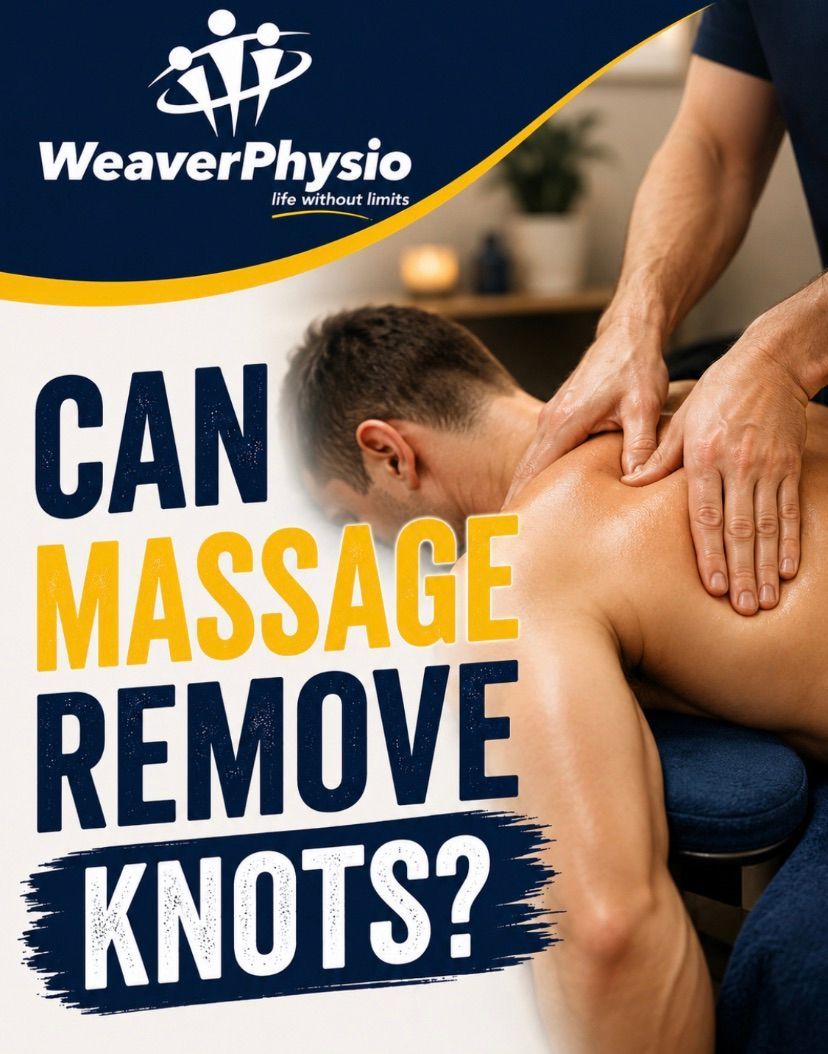
If you’ve ever said, “I’ve got a knot in my shoulder,” you’re certainly not alone. Muscle knots are one of the most common reasons people book a sports massage or deep tissue massage. Whether you’re an office worker with stiff shoulders, a runner with tight calves, or a gym enthusiast struggling with sore muscles, you’ve probably wondered:
Can massage actually remove muscle knots?
The short answer is yes—but not quite in the way most people think.
At Weaver Physiotherapy & Sports Injury Clinic in Northwich, we help hundreds of patients every year overcome muscle tightness, improve movement and reduce pain through evidence-based Sports & Deep Tissue Massage. Understanding what muscle knots really are can help you appreciate why massage is such an effective treatment.
What Are Muscle Knots?
Despite the name, muscle knots are not literally knots tied in your muscles.
The medical term often associated with muscle knots is myofascial trigger points. These are small, highly sensitive areas within a tight band of muscle fibres that become irritated, painful and overactive.
When pressure is applied, they often feel like:
Small lumps
Tight bands
Tender spots
Hardened areas
Areas that reproduce familiar pain
Many people can actually feel these tight areas themselves, particularly around the neck, shoulders, calves and upper back.
Why Do Muscle Knots Develop?
Muscles are designed to contract and relax efficiently.
When muscles become overloaded, fatigued or remain in one position for prolonged periods, they can develop areas of increased tension.
Common causes include:
Poor posture
Hours spent working at a desk can overload:
Upper trapezius
Levator scapulae
Neck muscles
Upper back
This is one of the biggest causes of shoulder and neck “knots.”
Stress
Stress doesn’t just affect your mind.
It causes muscles to remain in a protective state of contraction, particularly around the:
Neck
Jaw
Shoulders
Upper back
Many patients notice their muscles tighten significantly during stressful periods.
Sports and exercise
Running, cycling, football, tennis and gym training all create repetitive loading.
Without adequate recovery, muscles can become:
Tight
Fatigued
Less efficient
Painful
Massage helps restore normal muscle function following heavy training.
Previous injury
Following an injury, surrounding muscles often tighten to protect the affected area.
Sometimes this protective tension remains long after tissues have healed.
Repetitive movements
Repeated lifting, typing, driving or manual work can overload the same muscle fibres day after day.
Lack of movement
Ironically, doing too little movement can be just as problematic.
Remaining seated for long periods reduces circulation and increases muscle stiffness.
Are Muscle Knots Dangerous?
Fortunately, muscle knots are rarely dangerous.
However, they can cause significant discomfort and interfere with normal movement.
Symptoms may include:
Aching muscles
Local tenderness
Reduced flexibility
Pain when stretching
Headaches
Shoulder pain
Neck stiffness
Lower back pain
Reduced athletic performance
In some cases, trigger points can also produce referred pain, meaning pain is felt somewhere different from the actual source.
For example:
A trigger point in the shoulder may cause pain into the arm.
A trigger point in the neck may trigger headaches.
A trigger point in the gluteal muscles may mimic sciatica.
So Can Massage Remove Knots?
This is where the science becomes interesting.
Massage does not physically untie a knot because no actual knot exists.
Instead, massage helps by improving several important physiological processes.
1. Reduces Muscle Tension
Deep tissue massage encourages overactive muscle fibres to relax.
As tension decreases, movement becomes easier and pain reduces.
2. Improves Blood Flow
Tight muscles often have poorer local circulation.
Massage increases blood flow which helps deliver:
Oxygen
Nutrients
Healing chemicals
while assisting removal of metabolic waste products.
3. Calms the Nervous System
Many painful trigger points are driven by an over-sensitive nervous system.
Massage stimulates pressure receptors that help reduce muscle guarding and decrease pain sensitivity.
4. Restores Normal Movement
As muscles relax, joints can move more freely.
Improved movement often reduces strain elsewhere in the body.
5. Breaks the Pain Cycle
Pain causes guarding.
Guarding causes stiffness.
Stiffness creates more pain.
Massage interrupts this cycle.
What Does the Research Say?
Research suggests massage can provide:
Reduced pain
Improved range of movement
Better flexibility
Reduced muscle soreness
Improved recovery
Better wellbeing
Rather than “breaking up scar tissue” or “removing toxins,” modern research suggests massage primarily influences:
The nervous system
Circulation
Muscle tone
Pain perception
Tissue mobility
This is why people often feel lighter, looser and move more freely after treatment.
Which Areas Commonly Develop Knots?
At Weaver Physio, the most common areas include:
Neck
Often caused by desk work and stress.
Upper Trapezius
The classic shoulder knot.
Rhomboids
Pain between the shoulder blades.
Lower Back
Frequently seen in office workers and manual labourers.
Glutes
Common in runners and cyclists.
Hip Flexors
Associated with prolonged sitting.
Calves
One of the most common running complaints.
Hamstrings
Often become overloaded after sprinting.
Forearms
Common in golfers, tennis players and office workers.
Can Foam Rolling Remove Knots?
Foam rolling can help reduce muscle tightness and improve mobility.
However, it is usually:
Less specific
Less comfortable
Harder to target deeper trigger points
It works best alongside massage and exercise.
Can Stretching Remove Knots?
Stretching alone rarely solves persistent trigger points.
Stretching works best after massage because muscles are already more relaxed.
This combination often provides the greatest improvement in flexibility.
How Many Massage Sessions Will I Need?
This depends on:
How long symptoms have been present
Activity levels
Stress
Work demands
Previous injuries
Many patients notice improvement after one session.
Long-standing problems often require several treatments combined with rehabilitation exercises.
Should You Massage a Knot Yourself?
Self-massage using:
Massage balls
Foam rollers
Massage guns
can all help.
However, applying excessive pressure can irritate already sensitive tissues.
More pressure does not necessarily mean better results.
Why Do Knots Keep Coming Back?
This is one of the most important questions.
Massage treats the symptom.
But unless the underlying cause changes, the tension often returns.
Common reasons include:
Poor posture.
Weakness.
Poor running mechanics.
Training errors.
Lack of recovery.
Stress.
Reduced mobility.
Poor workstation setup.
This is why Weaver Physio always looks beyond the painful muscle.
Why Sports Massage Works Best Alongside Physiotherapy
The best long-term results usually come from combining massage with expert physiotherapy.
Our physiotherapists assess:
Movement patterns
Strength
Flexibility
Joint mobility
Running biomechanics
Training habits
This allows us to identify why the muscle keeps tightening.
Treatment may include:
Sports Massage
Deep Tissue Massage
Trigger Point Therapy
Myofascial Release
Stretching
Exercise Rehabilitation
Strength Training
Running Gait Analysis
Postural Advice
Shockwave Therapy (where appropriate)
Can Massage Prevent Future Knots?
Absolutely.
Regular sports massage can:
Reduce muscle tension
Improve flexibility
Improve recovery
Maintain healthy movement
Reduce injury risk
Improve athletic performance
Help manage work-related stiffness
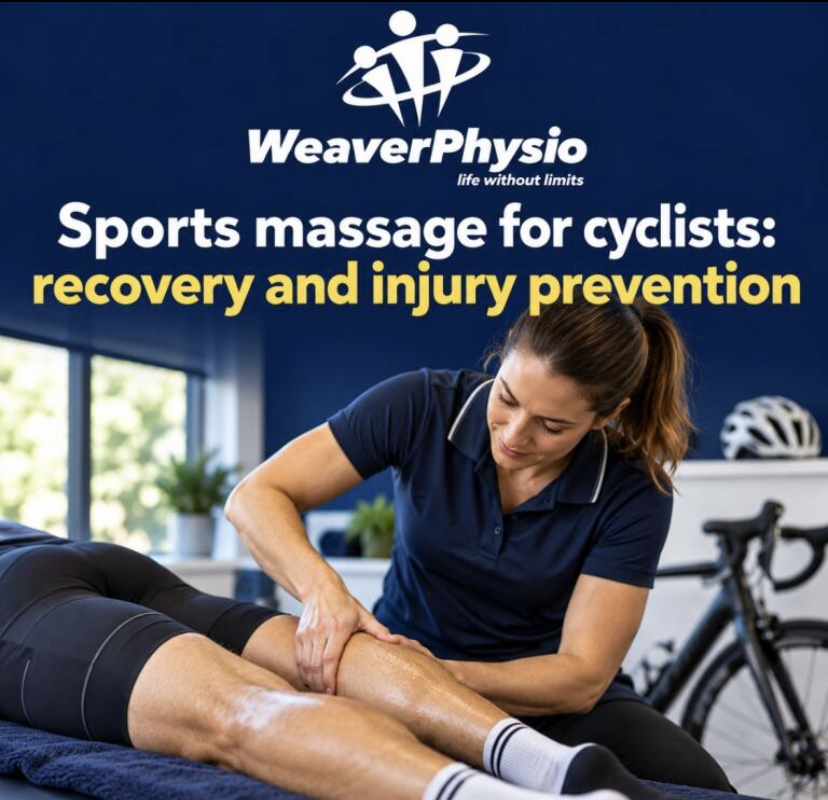
Many runners, cyclists and active individuals use massage as part of their regular recovery routine rather than waiting until pain develops.
Why Choose Weaver Physiotherapy & Sports Injury Clinic?
At Weaver Physiotherapy & Sports Injury Clinic, we combine expert Sports Massage with advanced physiotherapy to deliver long-lasting results—not just temporary relief.
With over 70 years of combined clinical experience, our team treats everyone from office workers and manual labourers to runners, cyclists, gym-goers and elite athletes.
Your treatment may include:
Sports & Deep Tissue Massage
Trigger Point Therapy
Myofascial Release
Assisted Stretching
Instrument Assisted Soft Tissue Mobilisation (IASTM)
Exercise Rehabilitation
Physiotherapy
Running Gait Analysis
Injury Prevention Advice
Rather than simply treating where it hurts, we identify the underlying cause of your muscle tightness and create a personalised treatment plan to help you move better, recover faster and reduce the risk of future injuries.
Frequently Asked Questions
Can massage completely remove muscle knots?
Massage can significantly reduce trigger points and muscle tension, but lasting improvement depends on addressing the underlying cause through movement, strength and rehabilitation.
Does deep tissue massage have to hurt?
No. Some discomfort is normal, but effective treatment should be tolerable. Excessive pressure is not necessary for good results.
Can massage help headaches caused by tight muscles?
Yes. Tension-type headaches are often linked to tight muscles in the neck and shoulders, and massage can help reduce muscle tension and improve symptoms.
Is sports massage only for athletes?
Not at all. Office workers, gardeners, tradespeople, parents and anyone with muscle tightness or stiffness can benefit from sports massage.
How often should I have a massage?
This depends on your goals. Some people benefit from treatment every few weeks for maintenance, while others only need occasional sessions during periods of increased activity or discomfort.
Book Your Sports Massage in Northwich
If you’re struggling with persistent muscle tightness, neck pain, shoulder stiffness, back pain or recurring sports injuries, don’t let “muscle knots” hold you back.
At Weaver Physiotherapy & Sports Injury Clinic, we’ll identify the cause of your symptoms and provide a personalised treatment plan to help you recover, move freely and stay active.
Whether you’re preparing for your next race, recovering from hard training or simply looking to ease everyday muscle tension, our expert team is here to help you get back to doing what you love.
Weaver Physiotherapy & Sports Injury Clinic – Expert Sports Massage in Northwich, helping Cheshire move better, recover faster and live life without limits.