What Happens After Shockwave Therapy? A Complete Recovery Guide from Weaver Physio
Wondering What Happens After Shockwave Therapy?
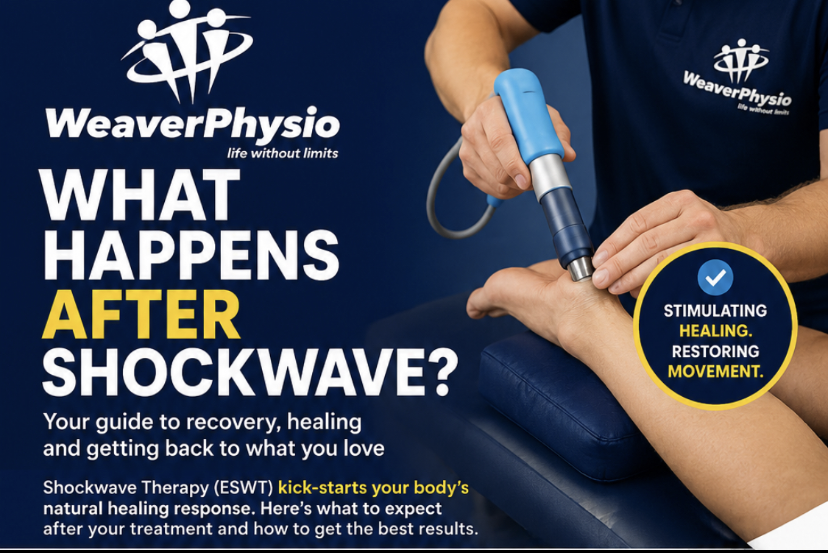
If you’ve recently had Shockwave Therapy or you’re considering it, one of the most common questions patients ask is:
“What happens after Shockwave Therapy?”
The good news is that Shockwave Therapy (Extracorporeal Shockwave Therapy – ESWT) is designed to stimulate your body’s natural healing response. Unlike injections or medication that simply reduce symptoms, Shockwave aims to encourage damaged tissue to repair itself.
However, understanding what to expect after treatment is essential to achieving the best possible outcome.
At Weaver Physiotherapy & Sports Injury Clinic, our experienced Chartered Physiotherapists use evidence-based Shockwave Therapy alongside comprehensive rehabilitation programmes to help patients throughout Northwich, Winsford, Hartford, Weaverham, Middlewich, Knutsford, Tarporley, Frodsham, Sandbach and across Cheshire recover from persistent tendon and musculoskeletal conditions.
This guide explains exactly what happens after Shockwave Therapy, what is normal, what to avoid and how you can maximise your recovery.
What Is Shockwave Therapy?
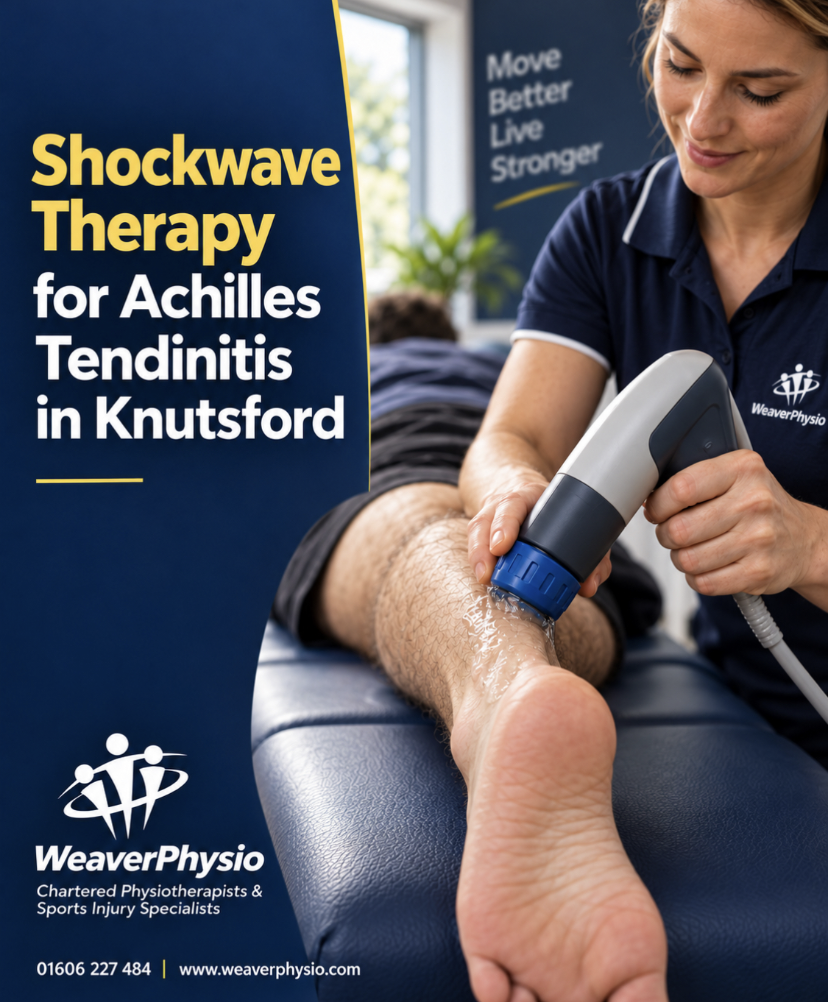
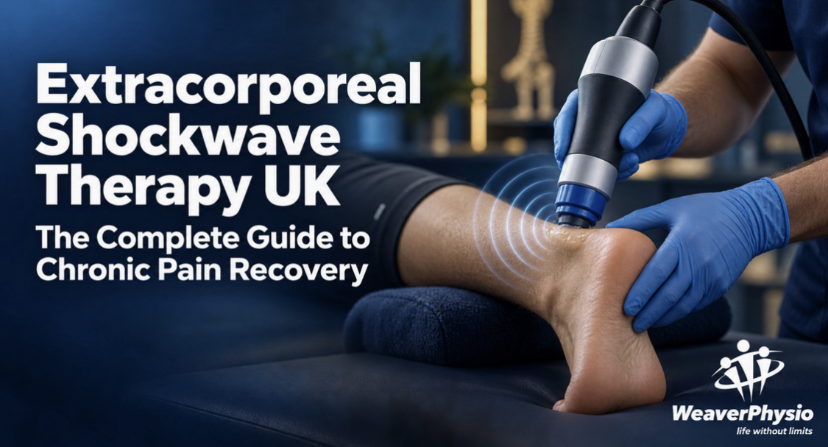
Shockwave Therapy uses high-energy acoustic waves that are delivered into injured tissue.
These acoustic waves stimulate a range of biological processes including:
Increased blood circulation
Activation of the body’s healing response
Improved cellular activity
Stimulation of collagen production
Breakdown of abnormal or calcified tissue in some conditions
Pain modulation through effects on local nerve endings
Rather than masking pain, Shockwave encourages long-term tissue repair.
It is commonly used for:
Plantar fasciitis
Achilles tendinopathy
Patellar tendinopathy
Tennis elbow
Golfer’s elbow
Greater Trochanteric Pain Syndrome (gluteal tendinopathy)
Calcific shoulder tendinopathy
Proximal hamstring tendinopathy
Chronic tendon pain that has failed to improve with rest alone
What Happens Immediately After Shockwave Therapy?
Most patients leave the clinic able to walk and continue with everyday activities.
It is completely normal to experience:
Mild soreness
Tenderness
Aching
Temporary redness
Slight swelling
Increased sensitivity over the treated area
This usually settles within 24–72 hours.
Many patients describe the sensation as being similar to the muscles feeling bruised after a challenging workout.
This response is often a positive sign that the body has begun its healing process.
Why Can Pain Sometimes Feel Worse?
One of the biggest concerns patients have is:
“Why does it hurt more after treatment?”
This temporary increase in discomfort is actually expected.
Shockwave deliberately stimulates a controlled healing response.
During this process:
Blood flow increases
Inflammatory cells are recruited
Healing chemicals are released
Tissue remodelling begins
Because of this, some patients experience increased discomfort before they start feeling better.
This is not usually a sign that the treatment has caused damage.
How Long Does the Soreness Last?
Most people experience soreness for:
24 hours
48 hours
Occasionally up to 5 days
Everyone heals differently.
Factors influencing recovery include:
Age
General health
Smoking status
Activity levels
Duration of symptoms
Severity of tendon damage
Rehabilitation compliance
When Will I Start Feeling Better?
One of the most important things to understand is that Shockwave Therapy is not an instant fix.
Healing occurs gradually.
Many patients notice improvements after:
Week 1
Reduction in constant aching.
Week 2
Improved comfort during walking or everyday activities.
Week 3–4
Better function.
Reduced morning pain.
Improved loading tolerance.
Week 6–12
This is where many patients notice the greatest improvements.
Tendons require time to remodel.
The treatment continues working long after the appointment has finished.
Is It Normal to Have Good Days and Bad Days?
Absolutely.
Recovery is rarely linear.
Many patients experience:
Better days
Slight flare-ups
Variable stiffness
Different pain levels depending on activity
This is completely normal during tendon rehabilitation.
Healing is a process—not a straight line.
⸻
Can I Exercise After Shockwave Therapy?
This depends on the condition being treated.
Generally:
Walking
Usually encouraged.
Gentle movement
Recommended.
Heavy loading
May need to be reduced for 24–48 hours.
High-impact sport
Often modified temporarily.
Running
May need adjusting depending on symptoms.
Your physiotherapist will advise you based on your individual condition and stage of rehabilitation.
What Should You Avoid After Shockwave Therapy?
To maximise the benefits, avoid:
Heavy gym sessions immediately afterwards
Sprinting
Jumping
High-impact exercise
Aggressive stretching
Massaging directly over the treated area if it aggravates symptoms
The aim is not complete rest but sensible loading.
Should I Take Anti-inflammatory Medication?
This is an important point.
Many physiotherapists recommend avoiding anti-inflammatory medication (such as ibuprofen or naproxen) for a period after Shockwave Therapy unless advised otherwise by your GP or prescribing clinician.
The treatment relies on stimulating the body’s healing response, and suppressing that response may not be desirable.
If you require pain relief, discuss suitable options with your healthcare professional.
Why Is Exercise So Important After Shockwave?
Shockwave Therapy is only part of the solution.
Research consistently shows that combining Shockwave with progressive rehabilitation often provides better outcomes than passive treatment alone.
At Weaver Physio, rehabilitation may include:
Progressive strengthening
Balance exercises
Mobility work
Tendon loading programmes
Plyometric progression where appropriate
Running gait analysis
Biomechanical assessment
Activity modification
Return-to-sport planning
The goal is not simply to reduce pain but to improve the tendon’s capacity to cope with everyday and sporting demands.
How Many Sessions Will I Need?
Many chronic tendon problems respond well to:
3–5 Shockwave sessions
These are commonly spaced approximately one week apart, although the exact programme depends on the condition, severity and your clinical assessment.
Your physiotherapist will review your progress throughout treatment and adjust your rehabilitation plan accordingly.
Conditions That Often Respond Well to Shockwave Therapy
Shockwave is commonly used for:
Plantar Fasciitis
Often reducing stubborn heel pain that has persisted for months.
Achilles Tendinopathy
Helping stimulate tendon healing alongside a structured strengthening programme.
Tennis Elbow
Reducing chronic tendon pain affecting grip and lifting.
Golfer’s Elbow
Supporting recovery where symptoms have become persistent.
Patellar Tendinopathy
Useful for jumping athletes and active individuals with long-standing knee tendon pain.
Greater Trochanteric Pain Syndrome
Helping improve pain around the outside of the hip.
Calcific Shoulder Tendinopathy
Shockwave may help stimulate healing and, in some cases, assist with the breakdown of calcium deposits.
What If I Don’t Feel Better Straight Away?
This is completely normal.
Shockwave stimulates healing—but healing takes time.
Some patients improve after the first session.
Others notice improvements after the second or third treatment.
Some experience their biggest improvements several weeks after completing the course.
Patience is important.
What Can I Do to Improve My Results?
Successful recovery is a partnership between you and your physiotherapist.
You can optimise your results by:
Completing your prescribed exercises
Avoiding sudden spikes in activity
Staying generally active
Eating a balanced diet to support tissue repair
Prioritising good sleep
Managing training loads sensibly
Attending follow-up appointments
Reporting any significant changes in symptoms
Small, consistent improvements over time are often more valuable than trying to do too much too soon.
Why Choose Weaver Physio for Shockwave Therapy?
At Weaver Physiotherapy & Sports Injury Clinic, we believe successful treatment starts with understanding why your injury developed—not simply treating where it hurts.
Our approach combines:
Comprehensive physiotherapy assessment
Accurate diagnosis
Evidence-based Shockwave Therapy
Progressive rehabilitation
Manual therapy where appropriate
Strength and conditioning
Running gait analysis for runners
Education and long-term injury prevention strategies
With over 70 years of combined clinical experience, our team has helped thousands of patients across Northwich, Cheshire and the surrounding areas overcome persistent tendon pain and return to the activities they enjoy.
Rather than relying on passive treatment alone, we create a personalised recovery plan designed to restore movement, build resilience and reduce the risk of symptoms returning.
Frequently Asked Questions
Is soreness after Shockwave Therapy normal?
Yes. Mild soreness for a few days is common and usually reflects the body’s natural healing response.
Can I drive home after treatment?
In most cases, yes. Shockwave Therapy does not usually affect your ability to drive, although the treated area may feel tender.
Can I walk after Shockwave Therapy?
Yes. Gentle walking is generally encouraged unless your physiotherapist advises otherwise.
How quickly does Shockwave Therapy work?
Some patients notice improvements within a couple of weeks, while others experience the greatest benefits between six and twelve weeks after starting treatment.
Is Shockwave Therapy a cure?
Shockwave Therapy can be highly effective for many chronic tendon conditions, but the best outcomes are typically achieved when it is combined with an individualised rehabilitation programme and appropriate activity management.
Take the First Step Towards Lasting Recovery
If you’ve been struggling with persistent heel pain, Achilles tendinopathy, tennis elbow, gluteal pain or another long-standing tendon problem, you don’t have to put up with it.
At Weaver Physiotherapy & Sports Injury Clinic, we combine expert assessment, evidence-based Shockwave Therapy and personalised rehabilitation to help you recover with confidence.
Whether you’re an athlete aiming to return to competition, a keen runner preparing for your next event or simply someone who wants to walk comfortably again, our experienced team is here to help.
Book your assessment today and discover whether Shockwave Therapy could be the catalyst your recovery needs. Together, we’ll identify the root cause of your pain, guide you through every stage of rehabilitation and help you get back to moving better, performing better and living with less pain.