
How Long Do Tendon Injuries Really Take to Recover? The Truth About Tendon Healing, Recovery Timelines and Getting Back to Doing What You Love
Weaver Physiotherapy & Sports Injury Clinic | Northwich, Cheshire

“Why Isn’t My Tendon Injury Getting Better?”
If you’ve been struggling with an Achilles tendon injury, tennis elbow, plantar heel pain or another persistent tendon problem, you’ve probably asked yourself one question countless times:
“How long is this actually going to take to heal?”
It’s a completely understandable question.
Perhaps you’ve rested for weeks, tried stretching, bought new shoes or even stopped exercising altogether—yet the pain keeps returning every time you try to get back to normal.
The reality is that tendon injuries rarely recover overnight.
In fact, one of the biggest reasons people become frustrated is because they underestimate just how long tendon healing can take.
The encouraging news is that most tendon injuries improve significantly with the right diagnosis, appropriate rehabilitation and patience.
At Weaver Physiotherapy & Sports Injury Clinic, we help people across Northwich, Winsford, Middlewich, Knutsford, Hartford, Weaverham, Tarporley, Frodsham and throughout Cheshire recover from stubborn tendon injuries every day.
This guide explains why tendons heal differently, realistic recovery timelines and what you can do to give yourself the best chance of making a full recovery.
What Is a Tendon?
Tendons are incredibly strong bands of collagen that connect muscles to bones.
Every time you:
Walk
Run
Jump
Climb stairs
Lift shopping
Throw a ball
Stand on your toes
your tendons are transmitting force from muscle to bone to create movement.
Healthy tendons are remarkably strong. In fact, your Achilles tendon can tolerate forces of six to eight times your body weight when running.
However, tendons are designed to adapt gradually. When the demands placed on them increase faster than they can adapt, problems often develop.
What Is Tendinopathy?
Many people still use the word tendonitis, suggesting inflammation.
Research now tells us that most long-standing tendon problems are actually tendinopathy.
This means the tendon has undergone structural changes due to overload rather than simply becoming inflamed.
These changes may include:
Disorganised collagen fibres
Reduced tendon quality
Thickening of the tendon
Increased sensitivity
Reduced ability to tolerate load
Understanding this difference is important because treatment has changed dramatically over the past decade.
Why Do Tendon Injuries Heal So Slowly?
One reason tendon injuries are frustrating is that they heal differently from muscles.
Muscles have an excellent blood supply.
Tendons do not.
This means nutrients and healing cells reach tendon tissue much more slowly.
Tendons are also loaded every day. Even simple activities such as walking, climbing stairs or carrying children place repeated stress through the injured tissue.
Healing therefore depends on finding the right balance between protection and progressive loading.
How Long Do Tendon Injuries Really Take?
Every injury is different, but realistic recovery expectations are essential.
Mild Tendinopathy
Typical recovery: 6–12 weeks
Usually:
Recent onset
Mild discomfort
Good strength
Minimal loss of function
With appropriate physiotherapy and progressive strengthening, recovery is often relatively quick.
Moderate Tendinopathy
Typical recovery: 3–6 months
Symptoms are often more established.
Pain may occur:
During exercise
After exercise
First thing in the morning
Climbing stairs
Walking longer distances
Structured rehabilitation becomes increasingly important.
Chronic Tendinopathy
Typical recovery: 6–12 months (sometimes longer)
Long-standing tendon problems often require patience.
The tendon needs time to remodel and rebuild its capacity.
The encouraging news?
Most patients continue improving long after pain first begins to settle.
Recovery Isn’t Linear
One of the biggest mistakes patients make is assuming recovery should improve steadily every week.
Real tendon rehabilitation looks more like this:
Good week
Small flare-up
Improvement
Temporary setback
Bigger improvement
Flare-ups are normal.
They don’t necessarily mean you’ve caused further damage.
They usually mean your tendon has temporarily been asked to do slightly more than it was ready for.
Why Rest Alone Doesn’t Work
Years ago patients were often told simply to rest.
Today we know that prolonged rest can actually make tendons weaker.
Instead, successful rehabilitation involves appropriate loading.
Think of tendons like a muscle in the gym.
Too little loading…
they weaken.
Too much loading…
they become irritated.
The aim is finding the right amount that stimulates adaptation without significantly aggravating symptoms.
Common Tendon Injuries and Recovery Times
Achilles Tendinopathy
Recovery:
3–12 months
Often causes:
Morning stiffness
Pain when running
Pain walking uphill
Tenderness above the heel
Treatment may include:
Calf strengthening
Progressive loading
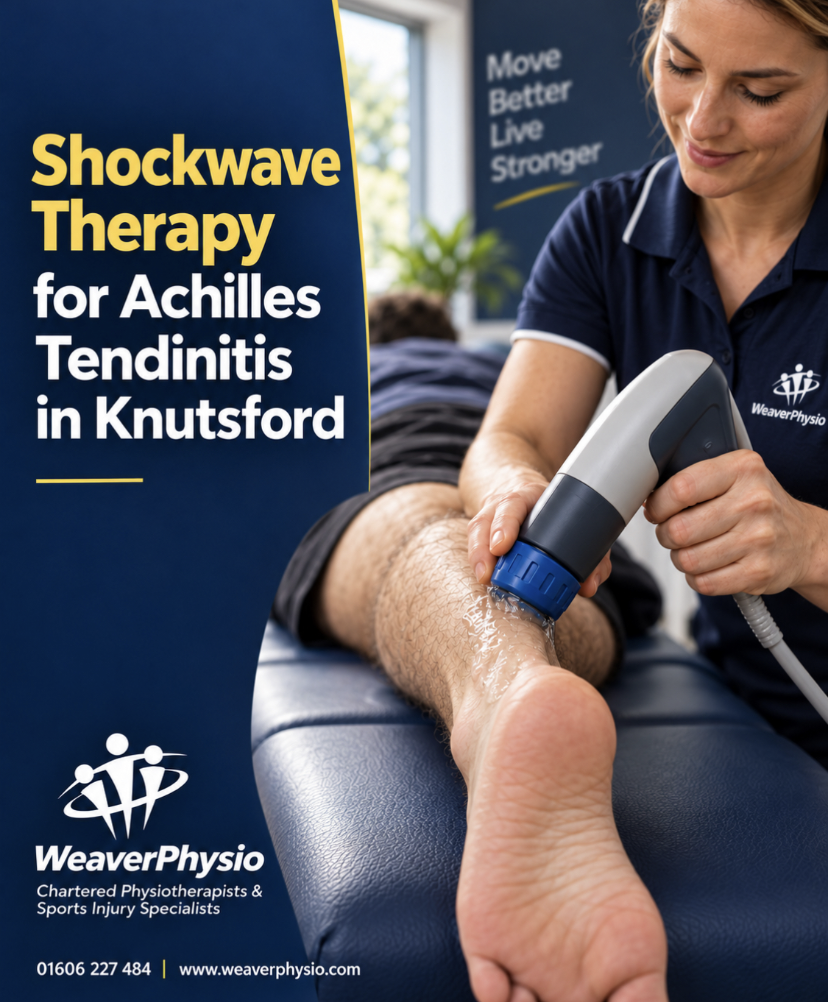
Shockwave Therapy
Running gait assessment
Plyometric progression
Plantar Fasciopathy
Although technically different from a tendon, plantar fasciopathy behaves similarly.
Recovery:
3–9 months
Patients often experience:
Heel pain getting out of bed
Pain after sitting
Pain after long walks
Successful treatment focuses on:
Calf strengthening
Foot strengthening
Load management
Footwear advice
Shockwave Therapy where appropriate
Tennis Elbow
Recovery:
2–6 months
Common symptoms include:
Pain gripping objects
Pain lifting kettles
Weak grip
Pain using tools
Pain during racquet sports
Patellar Tendinopathy
Recovery:
3–9 months
Frequently affects:
Runners
Footballers
Basketball players
Volleyball players
Gym athletes
Treatment centres around progressive strengthening and carefully graded return to sport.
Gluteal Tendinopathy
Recovery:
3–9 months
Typical symptoms include:
Pain lying on one side
Pain walking uphill
Pain climbing stairs
Pain after prolonged standing
Targeted hip strengthening and movement retraining are key components of recovery.
What Affects Recovery?
No two patients recover at exactly the same rate.
Several factors influence healing.
1. How Long You’ve Had Symptoms
Generally, the earlier treatment starts, the quicker recovery tends to be.
2. Age
Tendons naturally become less adaptable with age, although excellent outcomes are still achievable.
3. General Health
Conditions such as diabetes, obesity and smoking may slow healing.
4. Sleep
Most tissue repair occurs during sleep.
Poor sleep can reduce recovery.
5. Nutrition
Protein, vitamins and minerals all contribute to collagen production and tissue repair.
6. Exercise Compliance
Patients who consistently complete their rehabilitation exercises often recover more successfully than those relying on passive treatment alone.
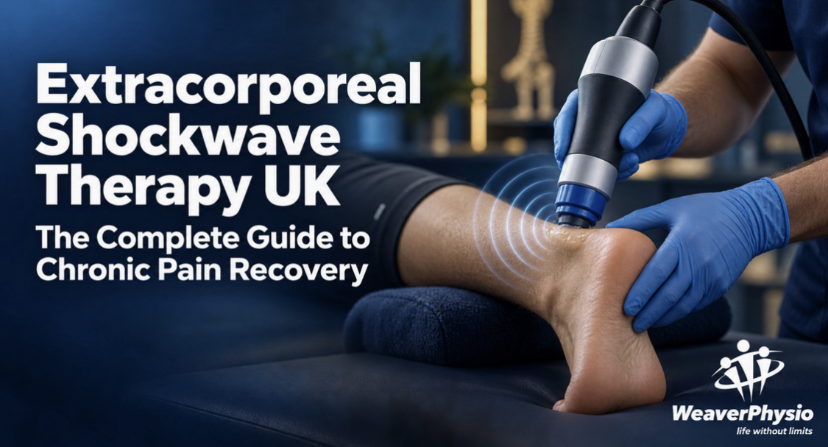
Does Shockwave Therapy Help?
Shockwave Therapy has become an important treatment option for persistent tendon pain.
At Weaver Physio we commonly use Shockwave Therapy for:
Achilles Tendinopathy
Plantar Fasciitis
Tennis Elbow
Patellar Tendinopathy
Gluteal Tendinopathy
Calcific Shoulder Tendinopathy
Shockwave Therapy stimulates the body’s natural healing response and can reduce pain while encouraging tissue remodelling.
However, the best evidence shows that Shockwave Therapy works most effectively when combined with a structured rehabilitation programme rather than being used in isolation.
What Does Tendon Rehabilitation Involve?
Every patient receives an individual programme, but rehabilitation often includes:
Progressive Strength Training
Building tendon capacity gradually.
Load Management
Helping you continue moving without overloading the tendon.
Manual Therapy
Improving movement where appropriate.
Mobility Exercises
Addressing restrictions affecting movement quality.
Balance and Stability Training
Improving control and reducing unnecessary tendon stress.
Plyometric Training
Preparing athletes for jumping, sprinting and explosive movements.
Running Gait Analysis
For runners, identifying biomechanical factors that may contribute to overload.
Five Signs Your Tendon Is Improving
Recovery isn’t always measured by pain alone.
Positive signs include:
Less morning stiffness
Better walking tolerance
Increased strength
Greater confidence moving
Ability to exercise with less discomfort
These improvements often occur before pain completely disappears.
Common Recovery Mistakes
Ignoring Pain
Pushing through severe pain often delays recovery.
Stopping All Exercise
Complete inactivity usually reduces tendon capacity.
Doing Too Much Too Soon
Rapid increases in running, gym work or sport frequently trigger setbacks.
Inconsistent Rehabilitation
Completing exercises only occasionally limits progress.
Expecting Instant Results
Tendon rehabilitation rewards consistency rather than quick fixes.
Can Tendons Become Stronger?
Yes.
One of the most positive aspects of tendon rehabilitation is that tendons can become more resilient than they were before injury.
Many patients return to:
Running
Cycling
Football
Golf
Tennis
Gym training
with greater confidence and improved strength.
When Should You Seek Professional Help?
Arrange an assessment if:
Pain has lasted more than two to four weeks.
Symptoms keep returning.
Morning stiffness is worsening.
Your activity levels are becoming limited.
Rest hasn’t solved the problem.
You’re unsure what is causing your pain.
Early assessment often prevents small problems becoming long-term injuries
Why Choose Weaver Physiotherapy & Sports Injury Clinic?
At Weaver Physio, we understand that treating tendon injuries isn’t simply about reducing pain—it’s about restoring confidence, rebuilding strength and helping you return to the activities that matter most.
Our evidence-based approach includes:
Comprehensive physiotherapy assessment
Accurate diagnosis
Progressive tendon loading programmes
Hands-on physiotherapy
Shockwave Therapy (where appropriate)
Strength and conditioning
Running gait analysis
Sports rehabilitation
Personalised recovery plans
Injury prevention advice
With over 70 years of combined clinical experience, our Chartered Physiotherapists have helped thousands of patients across Northwich, Winsford, Middlewich, Knutsford, Hartford, Weaverham, Tarporley, Frodsham and Cheshire recover from persistent tendon pain.
We don’t believe in quick fixes or one-size-fits-all treatment. Instead, we take the time to understand the underlying cause of your symptoms and create a rehabilitation programme tailored to your goals.
Frequently Asked Questions
Should I completely rest a tendon injury?
Usually not. Most tendon injuries recover best with carefully graded loading rather than complete rest.
Is it normal for tendon pain to fluctuate?
Yes. Good days and bad days are a normal part of tendon rehabilitation.
How long before I can return to running?
This depends on the severity of your injury, but many runners begin a gradual return once pain has settled and strength has improved. Your physiotherapist will guide you through a safe progression.
Can Shockwave Therapy speed up recovery?
For suitable chronic tendon conditions, Shockwave Therapy may improve pain and support healing when combined with a structured rehabilitation programme.
Start Your Tendon Recovery Today
If you’ve been living with tendon pain for weeks, months or even years, don’t assume it’s something you simply have to live with.
Whether you’re struggling with Achilles tendinopathy, plantar heel pain, tennis elbow, patellar tendinopathy, gluteal tendinopathy or another persistent tendon injury, expert assessment and the right rehabilitation can make a significant difference.
At Weaver Physiotherapy & Sports Injury Clinic, we’ll identify the root cause of your symptoms, explain exactly what’s happening and create a personalised recovery plan to help you return to work, sport and everyday life with confidence.
Recover stronger. Move better. Live without limits. Book your assessment today and let Weaver Physio help you build healthier, stronger tendons for the future