
Clinical Running Gait Analysis in Cheshire
The Expert Runner’s MOT
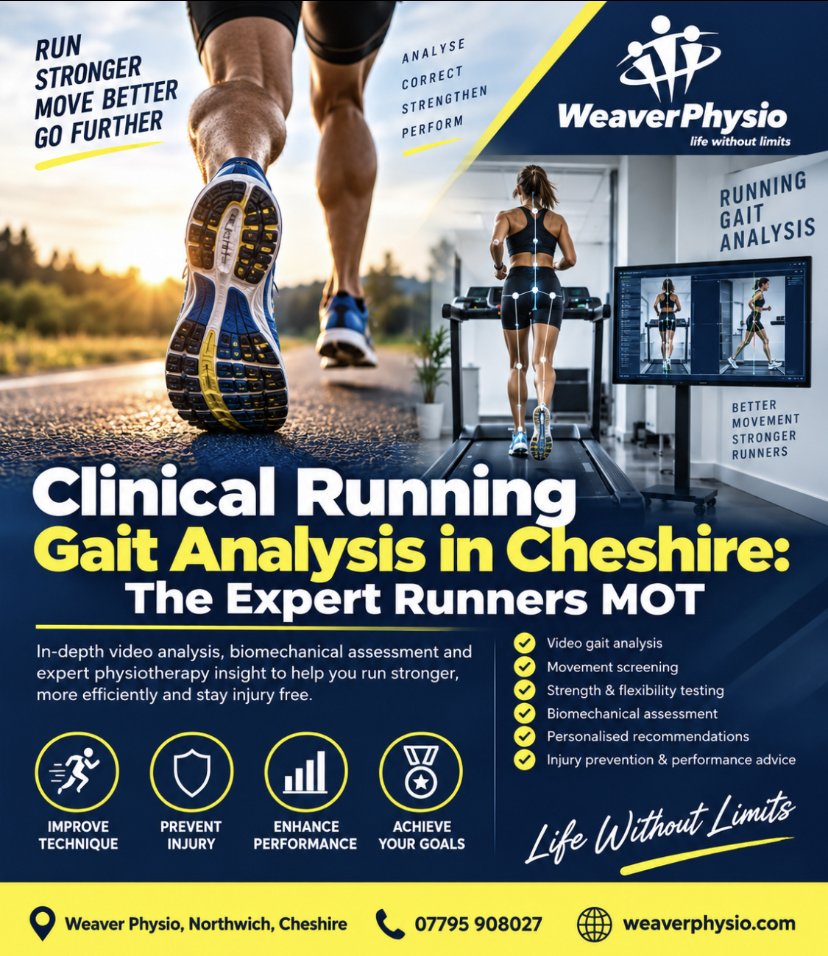
Running should feel like freedom. But when the same knee pain, Achilles problem, calf tightness or recurring niggle keeps returning, simply resting and starting again may not provide the answers you need.
At Weaver Physio in Northwich, Cheshire, our clinical running gait analysis takes a much deeper look at the way you run.
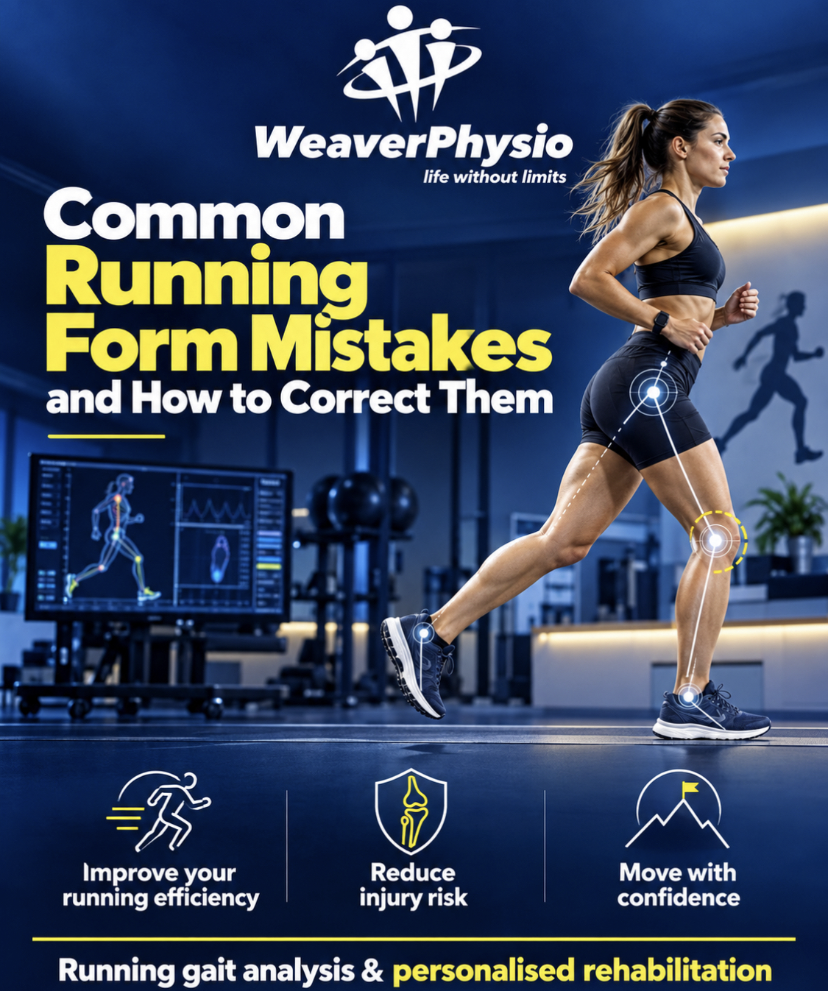
Rather than focusing solely on your feet or running shoes, our Runner’s MOT combines slow-motion video analysis with physiotherapy assessment, strength testing, mobility screening and functional movement analysis.
The aim is simple: understand how you move, identify factors that may be influencing your symptoms or performance, and turn those findings into a practical plan.
Whether you’re preparing for your first 5K, chasing a marathon PB or trying to overcome a persistent running injury, our approach is designed to help you run stronger, move more efficiently and train with greater confidence.
What Is Clinical Running Gait Analysis?
Running gait analysis is the systematic assessment of the way your body moves throughout the running cycle.
Every runner has an individual running style. Differences in cadence, stride length, foot placement, trunk position, pelvic control, hip movement and lower-limb mechanics are normal.
The important question isn’t simply whether your running technique looks “perfect.”
It is whether particular aspects of your movement, combined with factors such as training load, strength, mobility, previous injury and recovery, could be contributing to your current problem.
That’s where a physiotherapy-led assessment becomes particularly valuable.
At Weaver Physio, we don’t analyse running mechanics in isolation. We combine what we see on video with your clinical history and physical assessment to build a much more complete picture.
Running Shop Gait Analysis vs Clinical Gait Analysis
A running shop assessment and a clinical running assessment have different purposes.
Running retailers can provide useful advice about footwear and may use treadmill video to observe aspects of your running style.
A clinical running gait analysis, however, is designed to investigate the relationship between your running mechanics, physical capacity, training and symptoms.
Our assessment may consider:
Pelvic and hip control
Trunk position
Knee alignment
Ankle and foot mechanics
Cadence
Stride characteristics
Overstriding
Lower-limb control
Hip, knee and ankle mobility
Strength and muscular capacity
Previous injuries
Current training volume and intensity
Instead of asking only “Which shoe suits you?”, we’re interested in the bigger question:
“What is happening throughout your body when you run, and is there anything worth changing?”
The Weaver Physio Runner’s MOT
Our Runner’s MOT in Northwich provides runners with a detailed assessment of movement, strength and running mechanics.
1. Running & Injury Consultation
We begin by understanding you as a runner.
We’ll discuss your current mileage, running frequency, pace, surfaces, footwear, recent changes in training, previous injuries and future goals.
This is particularly important because running problems rarely have a single cause.
A sudden increase in mileage, inadequate recovery, reduced strength or a previous injury can sometimes be just as relevant as running technique.
2. Strength, Mobility & Movement Screening
Before analysing your running, we assess the physical qualities that support it.
Depending on your individual needs, this may include examination of:
Hip strength • calf capacity • single-leg control • balance • mobility • flexibility • functional strength • pelvic stability • lower-limb control
This allows us to compare what happens during clinical testing with what we subsequently observe while you’re running.
3. Slow-Motion Video Running Analysis
You’ll then run while we capture your movement on video.
Slow-motion playback allows us to examine aspects of your running mechanics that can be difficult to appreciate at normal speed.
We may assess factors including:
cadence, stride, foot placement, knee position, pelvic movement, trunk control and overall running pattern.
Importantly, we don’t automatically attempt to “correct” every variation we see.
There is no single perfect running technique for everybody.
Instead, we concentrate on findings that are clinically relevant to your symptoms, goals and physical capacity.
From Video Analysis to a Meaningful Plan
The real value of gait analysis isn’t the video itself.
It’s what you do with the information.
Once your assessment is complete, we’ll explain the findings in straightforward language and identify the areas that are most worthwhile addressing.
Depending on your assessment, recommendations might include:
Strength & conditioning – developing the capacity of the calves, quadriceps, hamstrings, gluteals or other relevant muscle groups.
Running technique modifications – carefully selected adjustments where appropriate rather than unnecessarily rebuilding your entire running style.
Training-load management – helping you balance mileage, intensity, recovery and progression.
Mobility work – when a genuine restriction is affecting function.
Rehabilitation – for runners already experiencing pain or returning from injury.
The objective is to give you a clear, personalised strategy rather than a generic sheet of exercises.
Running Gait Analysis for Running Injuries
Clinical gait assessment can form part of a broader physiotherapy assessment for many common running complaints, including:
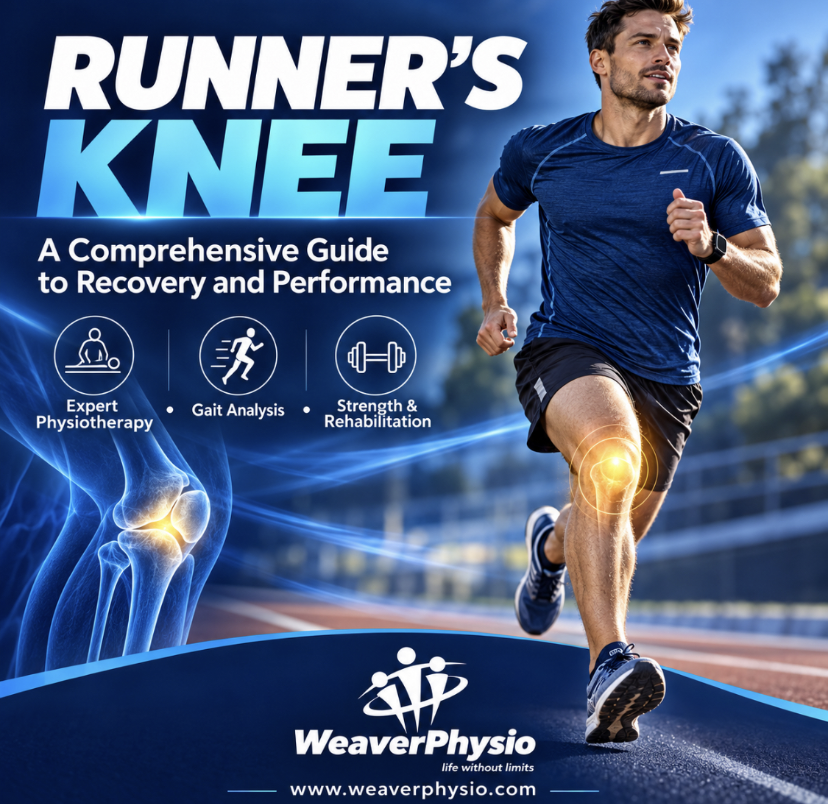
Runner’s knee / patellofemoral pain
Achilles tendinopathy
Plantar heel pain
Shin pain
Calf problems
Hamstring injuries
ITB-related lateral knee pain
Hip and gluteal pain
Recurrent muscle injuries
Foot and ankle problems
Persistent problems when returning to running
Running mechanics are only one part of the picture, however.
Modern sports rehabilitation also considers training load, tissue capacity, strength, sleep, recovery, previous injury and individual anatomy.
This is why Weaver Physio combines gait analysis with clinical assessment rather than treating video analysis as a stand-alone solution.
For further evidence-based information on sports and musculoskeletal healthcare, see the Chartered Society of Physiotherapy and research published by the British Journal of Sports Medicine.
More Than Injury Rehabilitation
You don’t need to be injured to benefit from a Runner’s MOT.
Some runners simply want to understand their movement better.
If you’re increasing your distance, preparing for a marathon or trying to improve your running efficiency, the assessment can highlight areas of physical capacity that may deserve more attention.
For example, we might identify opportunities to improve:
calf strength • single-leg stability • hip control • running-specific strength • plyometric capacity • coordination • movement efficiency
These findings can then be incorporated into your wider strength and conditioning programme.
Running Gait Analysis for Marathon Training
The demands placed on your body during marathon preparation are very different from those of an occasional 5K.
As weekly mileage increases, relatively small issues with training progression or physical capacity can become more noticeable.
A Runner’s MOT can therefore be particularly useful before or during a marathon training block, giving you an opportunity to understand your current strengths and identify areas worth developing.
Whether you’re targeting Manchester, London, Chester or another marathon, we can tailor your assessment around your training demands and goals.
The Weaver Physio Approach: Assess. Understand. Improve.
We believe running analysis should result in practical changes—not simply impressive slow-motion footage.
Our approach brings together:
Clinical assessment + Running biomechanics + Strength & conditioning + Rehabilitation + Training advice
Where treatment is appropriate, your wider rehabilitation programme may also incorporate physiotherapy, manual therapy, exercise rehabilitation or other clinically indicated treatments.
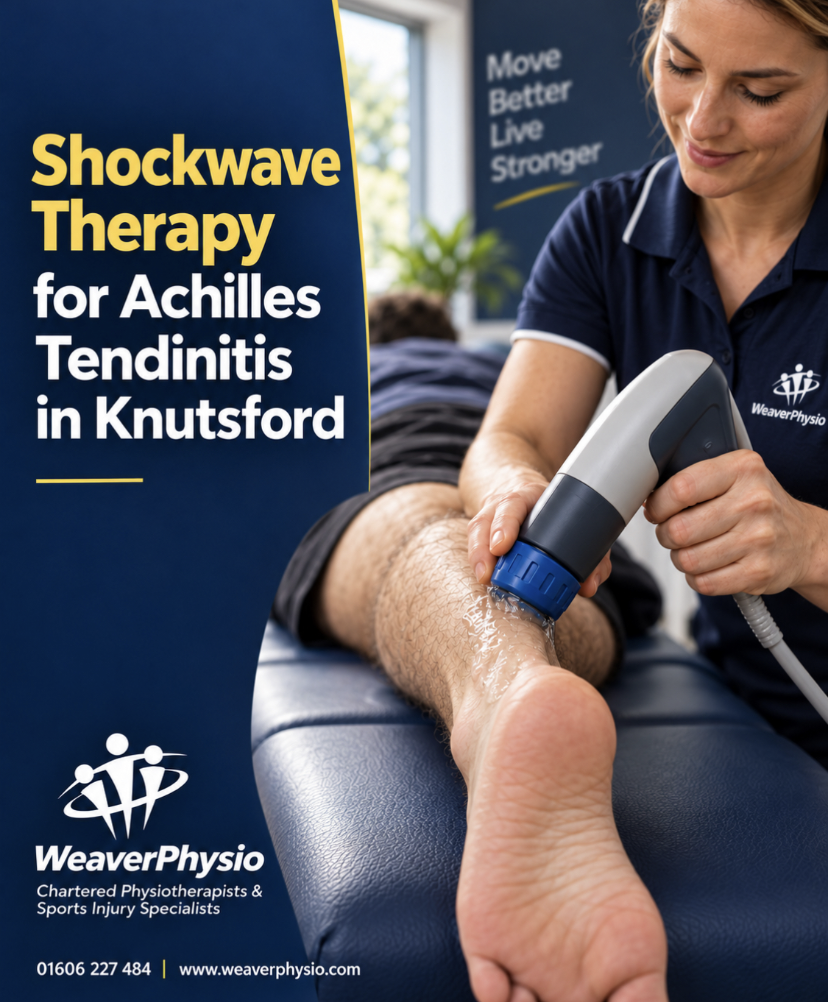
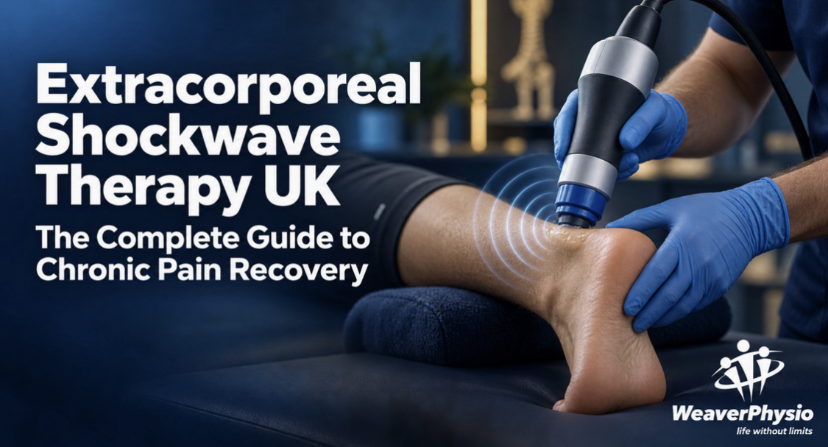
For persistent tendon conditions, treatments such as Extracorporeal Shockwave Therapy (ESWT) may sometimes form part of a wider rehabilitation programme. NICE provides independent UK guidance on healthcare treatments and procedures through NICE.
Who Is the Runner’s MOT For?
You don’t need to be an elite athlete.
Our clinical running assessment is suitable for:
Beginners who want to start running with a better understanding of their body.
Recreational runners experiencing recurring aches or niggles.
Club runners looking to improve physical capacity and performance.
Marathon and endurance runners increasing training volume.
Injured runners working towards a structured return to running.
Competitive athletes looking for a more detailed assessment of their running mechanics.
Whatever your starting point, the assessment is built around your body, your running and your goals.
Why Choose Weaver Physio for Running Gait Analysis in Cheshire?
At Weaver Physio, running analysis sits within a wider clinical and rehabilitation service rather than being treated as a stand-alone treadmill test.
Our focus is on combining clinical reasoning, movement assessment, video analysis and progressive rehabilitation to give runners information they can actually use.
We welcome runners from Northwich, Hartford, Weaverham, Winsford, Middlewich, Knutsford and across Cheshire.
When checking the credentials of a physiotherapist, patients can also use the official HCPC register.
Book Your Clinical Running Gait Analysis in Northwich
Recurring running pain doesn’t necessarily mean you need to stop doing the sport you love.
Sometimes you simply need a clearer understanding of what your body is doing, what demands you’re placing upon it and where your physical capacity can be improved.
The Weaver Physio Runner’s MOT brings those pieces together.
Discover how you move.
Understand what matters.
Build strength.
Run with confidence.
📍 Weaver Physio – Northwich, Cheshire
📞 01606 227484
🌐 weaverphysio.com
Life Without Limits.
Frequently Asked Questions
What is the difference between a running shop gait analysis and a physiotherapy gait analysis?
A running shop assessment is commonly focused on running shoes and observable foot mechanics. A physiotherapy-led assessment can take a broader clinical view, combining running video with injury history, strength, mobility, functional movement and symptoms.
Do I need to have a running injury?
No. The Runner’s MOT can also be used by healthy runners who want to understand their movement and identify areas of strength, mobility or conditioning that could be developed.
What should I wear?
Wear your normal running clothing and bring the trainers you currently run in. If you rotate between different running shoes, bringing more than one pair can be useful.
Can gait analysis help with knee, Achilles or shin pain?
It can be a useful part of a wider assessment. Rather than assuming running technique is responsible, we assess your symptoms alongside training load, strength, mobility, physical capacity and running mechanics.
Will you change my running technique?
Only when there is a good reason to do so. Individual variation in running style is normal. Any gait modification should have a clear objective and be introduced progressively.
Will I receive exercises?
Where appropriate, we’ll recommend exercises based on the findings of your assessment. These may focus on strength, stability, mobility, coordination, plyometrics or running-specific conditioning.