
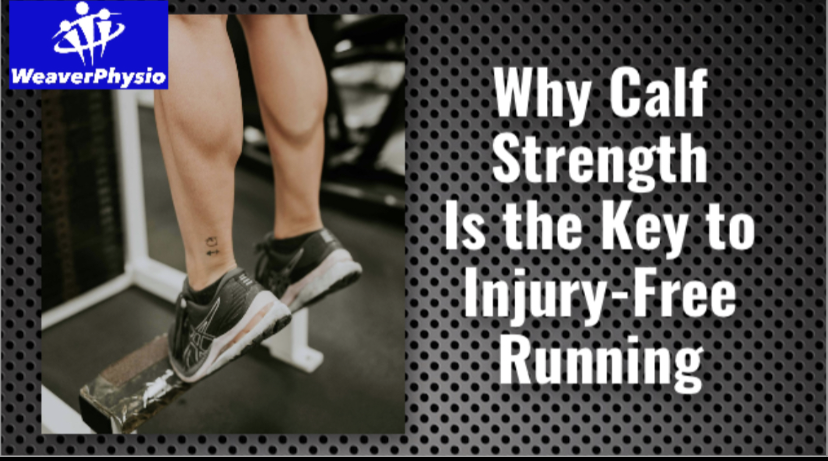
🏃♂️ Why Calf Strength Is the Key to Injury-Free Running
Weaver Physiotherapy & Sports Injury Clinic | Physio Northwich
If you’re a runner dealing with recurring injuries — whether it’s Achilles pain, plantar fasciitis, shin splints, or calf strains — there’s one area that is almost always involved:
👉 Your calves
At Weaver Physiotherapy & Sports Injury Clinic in Northwich, calf strength is one of the most important factors we assess when working with runners. Yet it’s one of the most overlooked elements of training.
In this guide, we explain:
• Why calf strength is critical for runners
• How weak calves lead to injury
• The link between calves and common running injuries
• How to build strong, resilient calves
• How to return to pain-free running
💡 Why the Calf Muscles Matter So Much
Your calf complex — primarily the gastrocnemius and soleus muscles — plays a vital role in running.
Every time your foot hits the ground:
• Your calf absorbs load
• Stores and releases energy like a spring
• Propels you forward
👉 In fact, your calves handle forces of up to 6–8 times your body weight during running.
⚙️ The Calf as a “Spring System”
The Achilles tendon and calf muscles work together like an elastic spring:
• Store energy during landing
• Release energy during push-off
When this system works well:
✔ Running feels efficient
✔ Less stress is placed on joints
✔ Performance improves
When it doesn’t:
❌ Load shifts elsewhere (knees, plantar fascia, shins)
❌ Injury risk increases
⚠️ What Happens When Calf Strength Is Poor?
Weak or under-conditioned calves reduce your body’s ability to handle load.
This leads to:
❌ Increased tendon strain
The Achilles tendon is forced to absorb more load than it can tolerate.
❌ Reduced shock absorption
More impact is transferred to:
• Knees
• Shins
• Feet
❌ Compensation patterns
Your body finds alternative strategies — often inefficient ones.
❌ Decreased running efficiency
You use more energy to run at the same pace.
👉 This is why calf weakness is a major driver of running injuries
🏃 Common Running Injuries Linked to Weak Calves
At Weaver Physio Northwich, we regularly see the same pattern:
🦶 Achilles Tendinopathy
One of the most common running injuries.
👉 Often caused by:
• Poor calf strength
• Sudden increases in training load
🦶 Plantar Fasciitis
Weak calves increase strain through the foot.
🦵 Shin Splints (Medial Tibial Stress Syndrome)
Reduced calf capacity leads to overload in the lower leg.
🦿 Calf Strains
Often occur when the muscle is overloaded beyond its capacity.
🦵 Runner’s Knee
Weak calves can shift load up the chain to the knee.
👉 Different injuries — same underlying problem: poor load tolerance
🔬 The Real Issue: Load vs Capacity
Most running injuries come down to one concept:
👉 Load > Capacity = Injury
• Load = running volume, intensity, frequency
• Capacity = strength and resilience of your tissues
If your calves are not strong enough to handle your training:
👉 Something will break down
📉 Why Stretching Alone Doesn’t Fix It
Many runners focus on:
• Stretching
• Foam rolling
• Massage
While these may help temporarily…
👉 They do NOT increase load capacity
✔ Stretching = flexibility
✔ Foam rolling = short-term relief
✔ Massage = symptom reduction
❌ None of these significantly improve strength
💪 How Strong Should Your Calves Be?
This is where most runners are surprised.
A general benchmark we use at Weaver Physio:
👉 Single-leg calf raises:
• 20–25 reps (minimum baseline)
• Controlled, full range
• Good balance and control
But for runners:
👉 That’s just the starting point
We also assess:
• Endurance
• Power
• Tendon capacity
• Single-leg control
🏋️♂️ The Best Calf Strengthening Exercises for Runners
Here’s what actually works 👇
1️⃣ Single-Leg Calf Raises (Foundation)
• Slow and controlled
• Full range (heel drop → push up)
• Build up to 20–25 reps
2️⃣ Bent-Knee Calf Raises (Soleus Focus)
Targets deeper calf muscle (crucial for running)
3️⃣ Heavy Slow Resistance Training
• Add weight (dumbbells/barbell)
• Lower reps (6–12)
• Builds tendon strength
4️⃣ Isometric Holds
• Hold at top of calf raise
• Helps reduce pain (especially tendon issues)
5️⃣ Plyometrics (Advanced)
• Hopping
• Bounding
• Skipping
👉 Essential for return to running performance
📈 How to Progress Calf Strength Safely
Progression is key.
Step 1: Bodyweight strength
Step 2: Add load
Step 3: Increase speed/power
Step 4: Return to running
👉 Skipping steps = higher injury risk
🏃♂️ The Role of Calf Strength in Performance
Strong calves don’t just prevent injury — they improve performance.
✔ Better running economy
✔ Improved push-off power
✔ Reduced fatigue
✔ Faster race times
👉 Stronger calves = more efficient running
🔁 Why Injuries Keep Coming Back
If you’ve had:
• Achilles pain
• Plantar fasciitis
• Shin splints
And it keeps returning…
👉 The root issue is often never fully addressed
At Weaver Physio Northwich, we commonly see runners who:
• Rest until pain settles
• Return to running
• Get injured again
👉 Why?
Because:
❌ Strength was never rebuilt
❌ Load capacity didn’t improve
🔍 How We Assess Calf Strength at Weaver Physio
At Weaver Physiotherapy & Sports Injury Clinic in Northwich, we go beyond basic testing.
Your assessment may include:
✔ Single-leg strength testing
✔ Endurance capacity
✔ Tendon loading tolerance
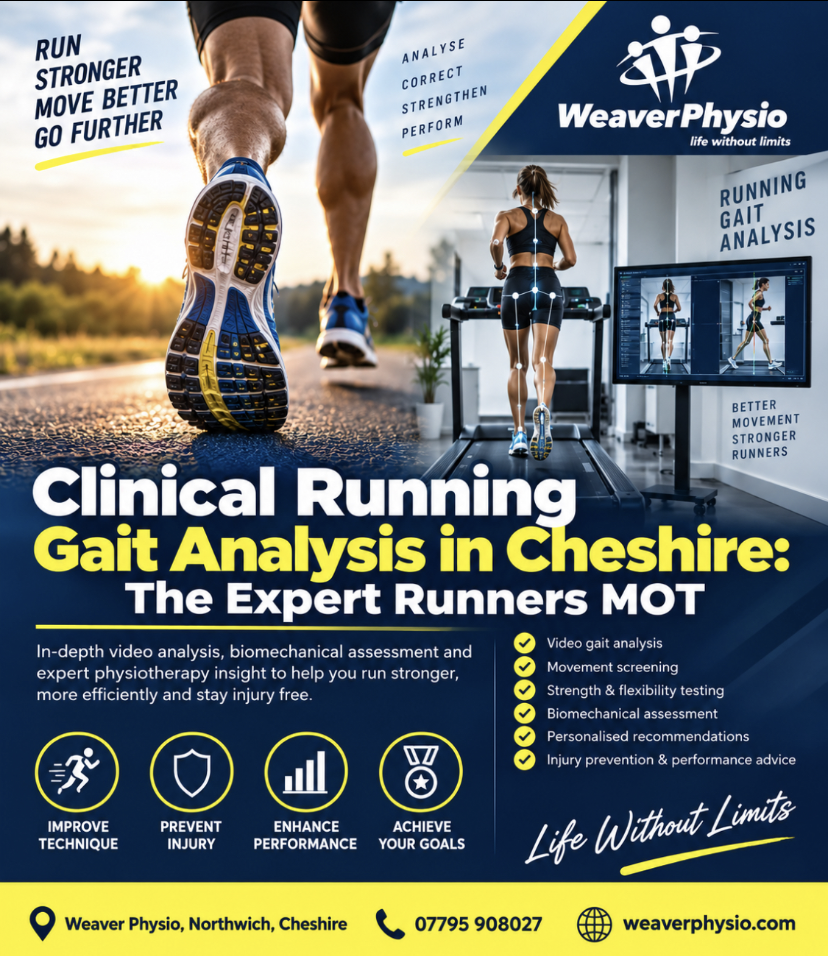
✔ Running gait analysis
✔ Mobility and biomechanics screening
👉 This allows us to identify exactly where the problem lies
🛠️ Our Approach to Treatment
We don’t just treat symptoms — we build resilience.
Your plan may include:
💪 Progressive strength training
🏃 Running load management
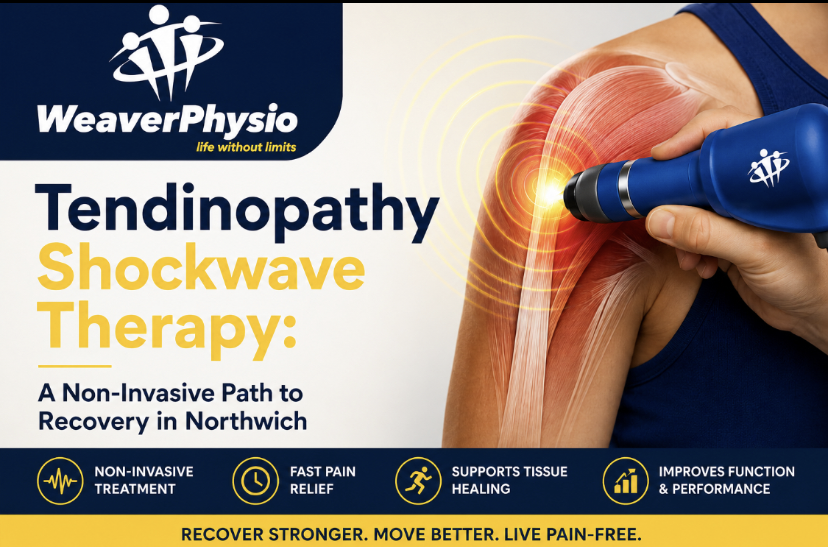
⚡ Shockwave therapy (for persistent tendon pain)
🧠 Education and long-term planning
🔁 Structured return-to-running programme
👉 Everything is tailored to you
🧠 Calf Strength vs Running Volume: Which Matters More?
Here’s the truth:
👉 Increasing mileage without increasing strength = high injury risk
👉 Increasing strength supports higher training loads safely
📊 The Bottom Line
If you want to run pain-free:
✔ Build strong calves
✔ Progress gradually
✔ Manage your training load
✔ Address problems early
❌ Don’t rely on:
• Rest alone
• Stretching alone
• Foam rolling alone
👉 Strength is the foundation of injury-free running
🏃♂️ Struggling with Calf Pain or Running Injuries?
At Weaver Physiotherapy & Sports Injury Clinic in Northwich, we specialise in:
✔ Running injury rehabilitation
✔ Tendon pain treatment
✔ Strength & conditioning for runners
✔ Biomechanical running analysis
🔎 Book Your Runner’s MOT – Only £65
Includes:
✔ Video gait analysis
✔ Strength and movement assessment
✔ Injury risk screening
✔ Personalised rehab plan
👉 Fix the cause. Run stronger. Stay injury-free.