The Importance of Single-Leg Strength
Why Single-Leg Training Is Essential for Injury Prevention and Performance
Single-leg strength is one of the most important yet overlooked factors in injury prevention, rehabilitation and athletic performance. At Weaver Physiotherapy & Sports Injury Clinic in Northwich, we regularly assess single-leg strength when treating runners, athletes and individuals recovering from injury.
Whether you run, play sport, go to the gym or simply want to stay active, the ability to control your body on one leg is fundamental to how your body moves. Weakness or poor control in single-leg positions can place excessive stress on the knees, hips, ankles and lower back, often contributing to injuries such as runner’s knee, Achilles tendinopathy, shin splints and hip pain.
Understanding the importance of single-leg strength — and how to develop it — can help improve performance while significantly reducing injury risk.
Why Single-Leg Strength Matters
Most athletic movements happen one leg at a time. Running, walking, climbing stairs, jumping and cutting movements in sport all involve transferring force through a single limb.
During running, for example, the body moves through a repeated cycle of single-leg support. Each time your foot contacts the ground, that leg must absorb impact forces that can be two to three times body weight.
If the muscles around the hip, knee and ankle are not strong enough to control this load, the body often compensates with inefficient movement patterns. Over time, these compensations may contribute to pain or injury.
Single-leg strength allows the body to:
• Maintain balance and stability
• Control joint alignment
• Absorb impact forces efficiently
• Generate power for movement
• Reduce stress on joints and tendons
At Weaver Physio in Northwich, single-leg strength testing is a key part of many physiotherapy assessments, particularly for runners and athletes.
The Link Between Single-Leg Weakness and Injury
A lack of single-leg strength or stability can affect how forces travel through the lower limb. This may increase strain on specific tissues and contribute to several common injuries.
Runner’s Knee (Patellofemoral Pain)
Weakness in the gluteal muscles, particularly the gluteus medius, can lead to poor hip control during single-leg stance. This may cause the knee to move inward excessively, increasing pressure on the kneecap.
Strengthening the hip muscles and improving single-leg control is often a key component of runner’s knee rehabilitation.
Achilles Tendinopathy
The calf muscles play a crucial role in absorbing load during running and walking. Weak single-leg calf strength can place excessive strain on the Achilles tendon.
Progressive single-leg calf strengthening is one of the most effective rehabilitation strategies for Achilles tendon injuries.
Shin Splints (Medial Tibial Stress Syndrome)
Shin splints often occur when the lower leg muscles are unable to tolerate repetitive loading during running. Weakness in the calf complex and reduced lower limb stability can increase stress on the tibia.
Strengthening the entire lower limb — including single-leg control — can reduce the risk of this condition developing.
Hip Pain and Gluteal Tendinopathy
Weak hip stabilisers may lead to increased pelvic drop during single-leg stance. Over time, this can overload the tendons around the hip.
Improving single-leg strength and pelvic stability can reduce this strain and support recovery.
Single-Leg Strength and Running Performance
For runners, single-leg strength is particularly important because running is essentially a series of controlled single-leg hops.
When the foot contacts the ground, the muscles of the:
• Glutes
• Quadriceps
• Hamstrings
• Calves
• Foot stabilisers
must work together to absorb impact and propel the body forward.
Strong single-leg mechanics can improve:
• Running efficiency
• Stride control
• Power generation
• Injury resilience
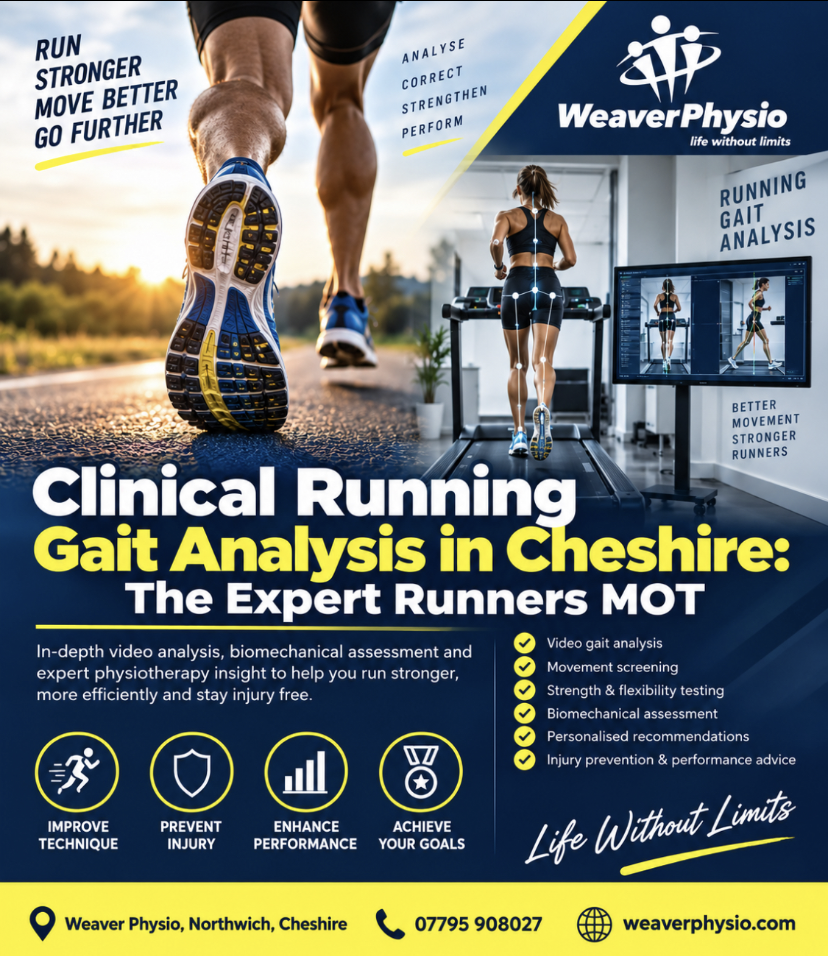
At Weaver Physio, we often combine running gait analysis with strength assessments to identify deficits that may be affecting performance or contributing to injury.
Why Traditional Strength Training Is Not Always Enough
Many people train primarily with bilateral exercises such as squats, deadlifts and leg press. While these movements are valuable, they do not fully replicate the demands of single-leg activities such as running.
Bilateral exercises allow the stronger leg to compensate for the weaker side, potentially masking imbalances.
Single-leg training exposes these asymmetries and allows them to be addressed directly.
For example:
• A double-leg squat may look strong and controlled
• But a single-leg squat may reveal hip instability or knee collapse
Identifying and correcting these imbalances is an important step in injury prevention.
Key Muscles Involved in Single-Leg Stability
Effective single-leg strength relies on coordination between several muscle groups.
Gluteal Muscles
The gluteus medius and gluteus maximus play a major role in stabilising the pelvis and controlling hip movement.
Weak glutes can lead to poor knee alignment and increased injury risk.
Quadriceps
The quadriceps help control knee flexion and absorb impact during landing and running.
Strong quadriceps improve shock absorption and knee stability.
Hamstrings
The hamstrings assist with hip extension and control forward motion during running.
They also support knee stability.
Calf Muscles
The gastrocnemius and soleus generate propulsion and absorb load during running and jumping.
Single-leg calf strength is particularly important for runners.
Foot and Ankle Stabilising Muscles
The muscles in the foot and ankle provide a stable base for the rest of the leg.
Poor control in this region can lead to instability further up the chain.
Signs You May Have Poor Single-Leg Strength
Many people are unaware of single-leg strength deficits until an injury occurs. Some common signs include:
• Difficulty balancing on one leg
• Knee collapsing inward during squats
• Hip dropping during running
• Reduced calf endurance
• Repeated lower limb injuries
• Poor control when stepping down from a height
A physiotherapy assessment can help identify these issues early.
Single-Leg Exercises That Improve Strength and Stability
Several exercises are commonly used to develop single-leg strength.
Single-Leg Squat
This exercise challenges hip and knee control while improving quadriceps and glute strength.
Key focus points include:
• Keeping the knee aligned with the foot
• Maintaining pelvic stability
• Controlling the lowering phase
Step-Downs
Step-down exercises help train controlled knee flexion and eccentric muscle strength.
They are particularly useful in rehabilitation programmes for knee pain.
Single-Leg Deadlifts
This exercise targets the posterior chain, including the glutes and hamstrings, while improving balance and coordination.
Single-Leg Calf Raises
Calf raises are essential for improving Achilles tendon strength and running resilience.
Progression may include:
• Slow controlled repetitions
• Increased load
• Plyometric exercises
Lunges and Split Squats
These exercises strengthen the quadriceps, glutes and hamstrings while reinforcing good lower limb alignment.
The Role of Physiotherapy in Developing Single-Leg Strength
At Weaver Physiotherapy & Sports Injury Clinic in Northwich, strength and movement assessments are a key part of our injury diagnosis and rehabilitation approach.
Your physiotherapy assessment may include:
✔ Single-leg squat testing
✔ Balance and stability assessment
✔ Strength testing of the hips and calves
✔ Movement analysis
✔ Running gait analysis (for runners)
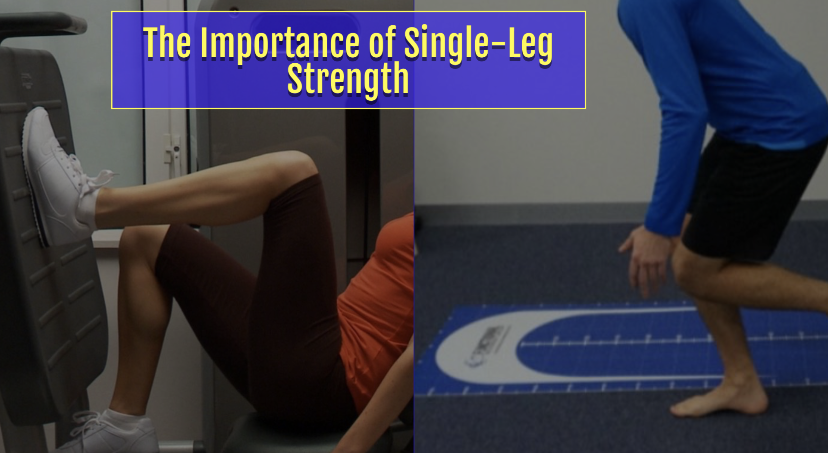
At Weaver Physio we advocate patients to assess their single leg strength by using a leg press machine at a gym and assess their 1 repetition maximum single leg press and compare the left against the right. The weight should be within 5kg of each other and being able to single leg press 125% of your body weight is considered good leg strength.
Another test Weaver Physio use in clinic is the single leg hop test. Again compare left with right and the results should be within 5cm of each other. This is a great functional test to see if your strength & lower limb conditioning programme is working by converting strength to power output.
Based on these findings, we design a structured rehabilitation programme tailored to your specific needs.
Treatment may include:
• Progressive strengthening exercises
• Movement retraining
• Sports massage or manual therapy
• Shockwave therapy for tendon injuries
• Running technique advice
• Strength and conditioning guidance
Our goal is not just to reduce pain, but to restore strength and resilience so injuries are less likely to return.
Single-Leg Strength and Long-Term Injury Prevention
One of the biggest benefits of improving single-leg strength is the reduction in injury risk over time.
Research consistently shows that well-designed strength programmes can significantly lower the likelihood of running and sports injuries.
When the muscles of the lower limb are strong and coordinated, they are better able to absorb load and protect joints and tendons.
For runners and athletes, this can mean:
• Fewer injuries
• Improved performance
• Greater training consistency
When to See a Physiotherapist
If you experience persistent pain when running, exercising or walking, it may indicate an underlying strength or movement issue.
Seeing a physiotherapist can help identify the root cause and ensure you receive the most effective treatment.
At Weaver Physio in Northwich, we regularly help patients recover from injuries including:
• Runner’s knee
• Achilles tendinopathy
• Shin splints
• Plantar fasciitis
• Hip and knee pain
• Sports injuries
By combining physiotherapy with progressive strength training, we aim to help you return to activity stronger and more resilient.
Physiotherapy in Northwich | Weaver Physio
If you are struggling with pain during running, sport or exercise, our experienced physiotherapy team at Weaver Physiotherapy & Sports Injury Clinic in Northwich can help.
We provide evidence-based assessment and rehabilitation designed to restore strength, improve movement and support long-term recovery.
Our clinic offers:
✔ Physiotherapy for sports injuries
✔ Running injury assessment and treatment
✔ Running gait analysis (Runner’s MOT)
✔ Shockwave therapy
✔ Sports and deep tissue massage
✔ Strength and conditioning rehabilitation
Our goal is simple: help you move better, recover faster and stay injury-free.
Book an Appointment
If you would like help improving your strength, recovering from injury or returning to sport, contact Weaver Physio in Northwich today.
Weaver Physiotherapy & Sports Injury Clinic
Northwich, Cheshire
Expert physiotherapy for runners, athletes and active individuals across Northwich, Knutsford, Winsford, Middlewich, Tarporley and Frodsham.