
Preparing for the Manchester Marathon: Injury Prevention Tips for Runners
Expert Advice from Weaver Physiotherapy & Sports Injury Clinic, Northwich
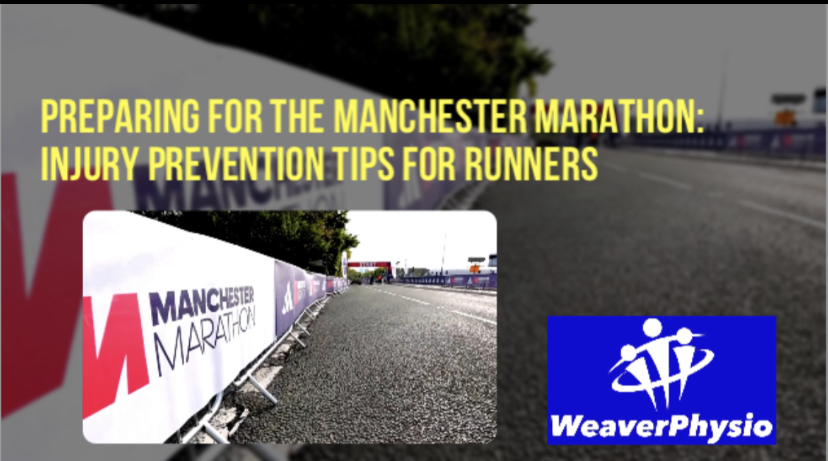
Every year thousands of runners prepare for one of the UK’s most popular marathon events — the Manchester Marathon Known for its fast, flat course and incredible crowd support, the race attracts runners aiming for personal bests as well as those completing their first marathon.
However, marathon training places significant physical demands on the body. Without the right preparation, many runners develop injuries during the build-up phase. At Weaver Physiotherapy & Sports Injury Clinic in Northwich, we regularly treat runners training for spring marathons who develop issues such as Achilles tendon pain, shin splints, runner’s knee, plantar fasciitis and hip injuries.
The good news is that many marathon injuries are preventable with the right training structure, strength work and recovery strategies. This guide explains how to prepare safely for the Manchester Marathon while minimising injury risk.
Why Marathon Training Increases Injury Risk
Training for a marathon typically involves gradually increasing weekly mileage, longer long runs, and higher cumulative load on the body. Over a typical 12–16 week marathon training block, runners may increase their mileage significantly.
Each step while running can generate forces of 2–3 times body weight through the legs. Over thousands of steps, this creates considerable stress on muscles, tendons, joints and bones.
Common reasons runners develop injuries during marathon preparation include:
• Increasing mileage too quickly
• Insufficient strength training
• Poor running mechanics
• Lack of recovery
• Inadequate footwear
• Previous injuries not fully rehabilitated
At Weaver Physio, we often see runners who are highly motivated to complete the marathon but underestimate the importance of strength, mobility and load management during training.
The Most Common Marathon Training Injuries
Understanding the injuries that commonly affect marathon runners can help you recognise early warning signs.
Runner’s Knee (Patellofemoral Pain)
Runner’s knee is one of the most common issues seen during marathon training. It usually causes pain around the front of the knee that worsens with running, stairs or prolonged sitting.
Contributing factors often include:
• Weak hip muscles
• Poor running mechanics
• Rapid increases in training load
Addressing hip strength and movement control is often essential for recovery.
Achilles Tendinopathy
The Achilles tendon absorbs significant load during running. Marathon training can increase stress on the tendon, particularly if weekly mileage rises too quickly.
Symptoms may include:
• Stiffness in the morning
• Pain at the back of the heel
• Tenderness during running
Progressive calf strengthening and load management are key components of treatment.
Shin Splints (Medial Tibial Stress Syndrome)
Shin splints are another common running injury and often develop during periods of increased training volume.
Typical symptoms include:
• Pain along the inside of the shin
• Discomfort during running
• Tenderness in the lower leg
Strengthening the lower limb and gradually progressing training load can help reduce risk.
Plantar Fasciitis (Plantar Heel Pain)
Plantar fasciitis causes pain under the heel or arch of the foot. Marathon runners may develop this condition due to increased mileage, calf tightness or reduced foot strength.
Symptoms often include sharp pain with the first steps in the morning.
Hip and Gluteal Tendon Pain
Weak hip stabilising muscles may lead to increased pelvic drop during running, placing strain on the hip tendons.
Strength training for the glutes and hips can help reduce the risk of these injuries.
Injury Prevention Tip 1: Increase Mileage Gradually
One of the biggest causes of running injuries is increasing training load too quickly.
When preparing for the Manchester Marathon, it is important to increase mileage gradually so the body can adapt to higher loads.
Many coaches recommend increasing weekly mileage by no more than 10% per week.
In addition, incorporating recovery weeks every three to four weeks can help reduce cumulative fatigue and allow tissues to recover.
Injury Prevention Tip 2: Strength Training for Runners
Strength training is one of the most effective ways to prevent injuries during marathon preparation.
Strong muscles help absorb impact forces and reduce strain on joints and tendons.
Important muscle groups for runners include:
• Glutes
• Quadriceps
• Hamstrings
• Calves
• Core stabilisers
Strength exercises such as squats, lunges, step-ups and calf raises can improve resilience and running efficiency.
At Weaver Physio, we often design individualised strength programmes for runners to address specific weaknesses identified during assessment.
Injury Prevention Tip 3: Improve Single-Leg Strength
Running is essentially a series of single-leg landings. Each time the foot hits the ground, that leg must absorb and control body weight.
Weakness during single-leg support can increase the risk of knee, hip and Achilles injuries.
Exercises that improve single-leg strength include:
• Single-leg squats
• Step-down exercises
• Single-leg deadlifts
• Single-leg calf raises
Improving stability and control in these movements can significantly reduce injury risk.
Injury Prevention Tip 4: Pay Attention to Running Mechanics
Running technique plays a major role in injury risk.
Common biomechanical issues seen in runners include:
• Overstriding
• Low cadence
• Excessive hip drop
• Poor ankle control
These movement patterns can increase stress on tissues and contribute to injuries.
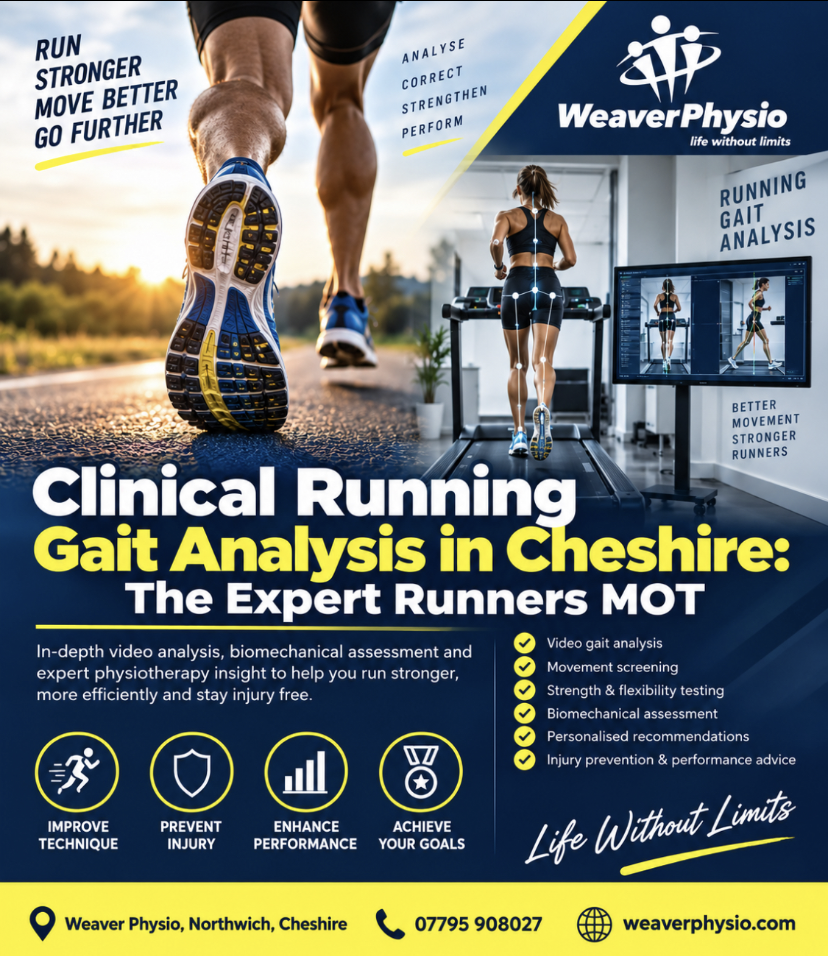
At Weaver Physiotherapy & Sports Injury Clinic, we offer Running Gait Analysis (Runner’s MOT) to assess running mechanics and identify movement patterns that may increase injury risk.
Small adjustments to running form can sometimes reduce load on injured tissues and improve efficiency.
Injury Prevention Tip 5: Prioritise Recovery
Recovery is just as important as training when preparing for a marathon.
Without adequate recovery, fatigue accumulates and injury risk increases.
Key recovery strategies include:
• Getting adequate sleep
• Scheduling rest days
• Hydration and nutrition
• Active recovery such as walking or mobility work
• Sports massage or physiotherapy treatment
Many runners underestimate the importance of recovery during marathon preparation.
Injury Prevention Tip 6: Choose the Right Running Shoes
Running shoes play an important role in managing impact forces during training.
Shoes that are worn out or poorly suited to your running style can increase injury risk.
General guidelines include:
• Replacing running shoes every 300–500 miles
• Using shoes appropriate for your foot type and training style
• Rotating between two pairs if possible
A gait assessment can sometimes help determine whether footwear may be contributing to injury risk.
Injury Prevention Tip 7: Listen to Early Warning Signs
One of the most important aspects of injury prevention is recognising early symptoms.
Pain during running is often an early sign that tissues are being overloaded.
Common warning signs include:
• Persistent soreness after runs
• Pain that worsens with training
• Morning stiffness in tendons
• Swelling or tenderness
Ignoring these symptoms can lead to more serious injuries that require longer recovery periods.
Early physiotherapy intervention can often prevent minor issues becoming major problems.
How Physiotherapy Can Help Marathon Runners
Physiotherapy can play an important role during marathon training, both for injury treatment and prevention.
At Weaver Physio in Northwich, we regularly work with runners preparing for major races including the Manchester Marathon.
Your physiotherapy assessment may include:
✔ Running gait analysis
✔ Strength and movement testing
✔ Training load review
✔ Mobility assessment
✔ Injury diagnosis and rehabilitation planning
Treatment may involve:
• Hands-on physiotherapy
• Progressive strengthening exercises
• Tendon rehabilitation programmes
• Shockwave therapy for persistent tendon injuries
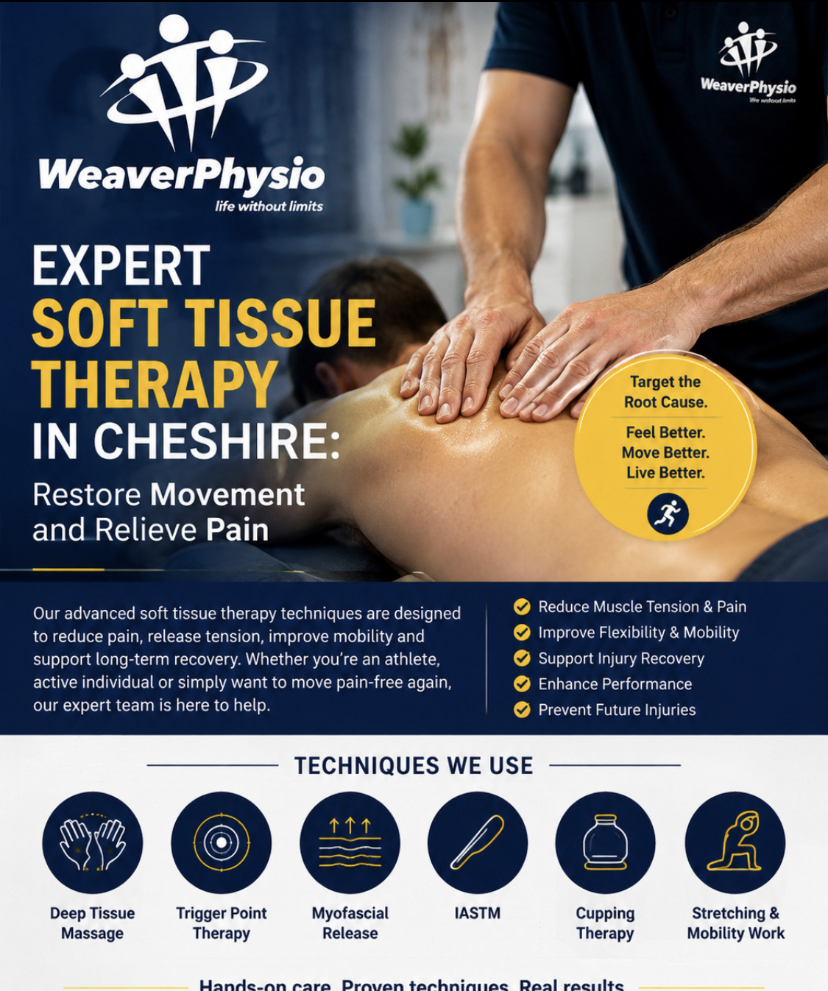
• Sports massage
• Running technique advice
Our goal is to help runners return to training safely while improving strength and resilience.
The Importance of Consistency in Marathon Training
Preparing for a marathon is not just about completing long runs. Consistency in training, recovery and strength work is what ultimately allows runners to reach the start line healthy.
Many injuries occur when runners try to “push through” fatigue or pain.
Taking a proactive approach to injury prevention — including strength training, physiotherapy and structured recovery — can make a significant difference.
By focusing on gradual progression, strength and good running mechanics, runners can significantly reduce the likelihood of injury during marathon preparation.
Running Injury Treatment in Northwich | Weaver Physio
If you are preparing for the Manchester Marathon and experiencing pain during training, the team at Weaver Physiotherapy & Sports Injury Clinic in Northwich can help.
We specialise in the diagnosis and treatment of running injuries including:
• Achilles tendinopathy
• Runner’s knee
• Shin splints
• Plantar fasciitis
• Hip and tendon injuries
Our clinic provides:
✔ Physiotherapy for runners
✔ Running gait analysis (Runner’s MOT)
✔ Shockwave therapy
✔ Sports and deep tissue massage
✔ Strength and conditioning rehabilitation
We help runners across Northwich, Knutsford, Winsford, Middlewich, Tarporley and Frodsham recover from injuries and return to training safely.
Book an Appointment
If you would like expert support during your marathon training, contact Weaver Physiotherapy & Sports Injury Clinic today.
Our experienced team provides evidence-based physiotherapy to help runners stay healthy and perform at their best.
Weaver Physiotherapy & Sports Injury Clinic – Northwich
Helping runners train smarter, recover faster and reach the start line injury-free.