Tendinopathy Shockwave Therapy Northwich
A Non-Invasive Path to Recovery
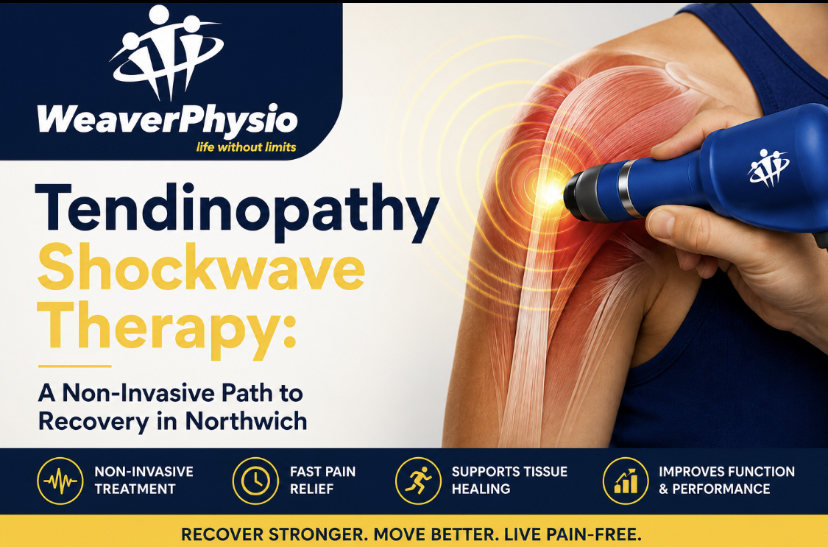
Persistent tendon pain can make running, walking, training and even everyday activities increasingly difficult. If you have already tried rest, stretching or rehabilitation but your symptoms keep returning, shockwave therapy in Northwich may be an option worth discussing with an experienced physiotherapist.
At Weaver Physio, we provide Extracorporeal Shockwave Therapy (ESWT) as part of a comprehensive approach to persistent tendon and soft-tissue problems. Treatment is combined, where appropriate, with progressive rehabilitation designed to restore strength, improve load tolerance and help you return confidently to the activities that matter to you.
Whether you are struggling with Achilles tendinopathy, plantar heel pain, patellar tendinopathy, tennis elbow or another persistent tendon problem, our aim is not simply to treat the painful area. We assess the wider factors that may be contributing to your symptoms and build a personalised recovery programme around you.
What Is Tendinopathy?
Tendinopathy is an umbrella term describing painful conditions affecting a tendon. Symptoms can include pain, stiffness and weakness and are commonly associated with repetitive loading or overuse. Tendon pathology can involve a mixture of inflammatory, non-inflammatory and degenerative changes.
Unlike an acute muscle injury, persistent tendon problems can take time to settle. Symptoms may improve during periods of reduced activity only to return when running, sport or heavier exercise is resumed.
This frustrating pattern can lead people into a repeated cycle:
Pain → Rest → Temporary Improvement → Return to Activity → Pain Again
Effective tendon rehabilitation therefore usually involves more than simply waiting for symptoms to disappear.
Why Rest Alone May Not Solve Persistent Tendon Pain
Reducing aggravating activity can be useful during a painful flare-up, but complete or prolonged rest does not necessarily restore a tendon’s ability to tolerate load.
Tendons adapt to the demands placed upon them. Rehabilitation therefore commonly involves carefully controlled and progressively increased exercise rather than indefinite avoidance of activity.
The goal is to establish the level of loading you can currently tolerate and progressively rebuild from there.
At Weaver Physio, this may include:
Progressive strengthening and tendon-loading exercises
Mobility and flexibility work where clinically appropriate
Strength and conditioning
Movement and biomechanical assessment
Running rehabilitation
Video gait analysis
Return-to-running or return-to-sport programming
Shockwave therapy where clinically indicated
This combination allows us to address both your current symptoms and the physical demands you ultimately need your tendon to tolerate.
What Is Shockwave Therapy?
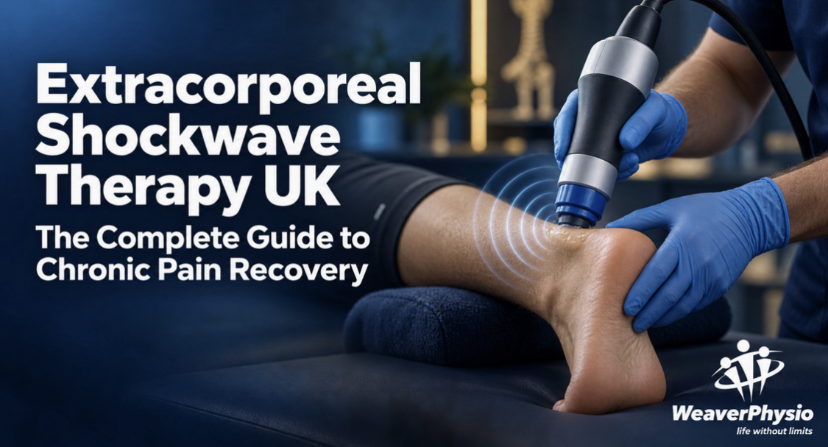
Extracorporeal Shockwave Therapy (ESWT) is a non-invasive treatment that delivers acoustic pressure waves through the skin into the targeted tissue. NICE describes both focused and radial forms of shockwave therapy, with treatment protocols varying according to factors such as energy level and frequency.
Importantly, shockwave therapy does not deliver an electrical shock.
The treatment uses acoustic waves generated by specialist equipment.
Although several biological mechanisms have been proposed, the precise way ESWT affects tendinopathy is not fully understood. NICE specifically notes this uncertainty, which is why patients should receive appropriate information about the potential benefits, limitations and risks before treatment.
Read NICE guidance on shockwave therapy for Achilles tendinopathy
What Conditions Can Shockwave Therapy Be Used For?
Following a physiotherapy assessment, shockwave therapy may be considered for certain persistent musculoskeletal problems.
Common applications include conditions affecting the Achilles tendon, plantar fascia, patellar tendon, elbow tendons and some shoulder or hip tendon disorders.
For example, NICE has published specific HealthTech guidance relating to ESWT for Achilles tendinopathy and refractory plantar fasciitis.
NICE guidance on shockwave therapy for plantar fasciitis
Not every painful tendon requires shockwave therapy, however. Establishing an appropriate diagnosis and understanding your individual presentation should come first.
What Happens During Shockwave Therapy at Weaver Physio?
Your treatment starts with a detailed clinical assessment rather than immediately applying the shockwave machine.
We want to establish what is painful, how long the problem has been present, what activities aggravate it and what may be preventing successful recovery.
1. Assessment and Diagnosis
Your physiotherapist will discuss your symptoms and examine the affected area.
Depending upon your problem, assessment may include strength, range of movement, functional testing and movement analysis.
2. Locating the Treatment Area
The symptomatic region is identified clinically so treatment can be directed appropriately.
3. Gel Application
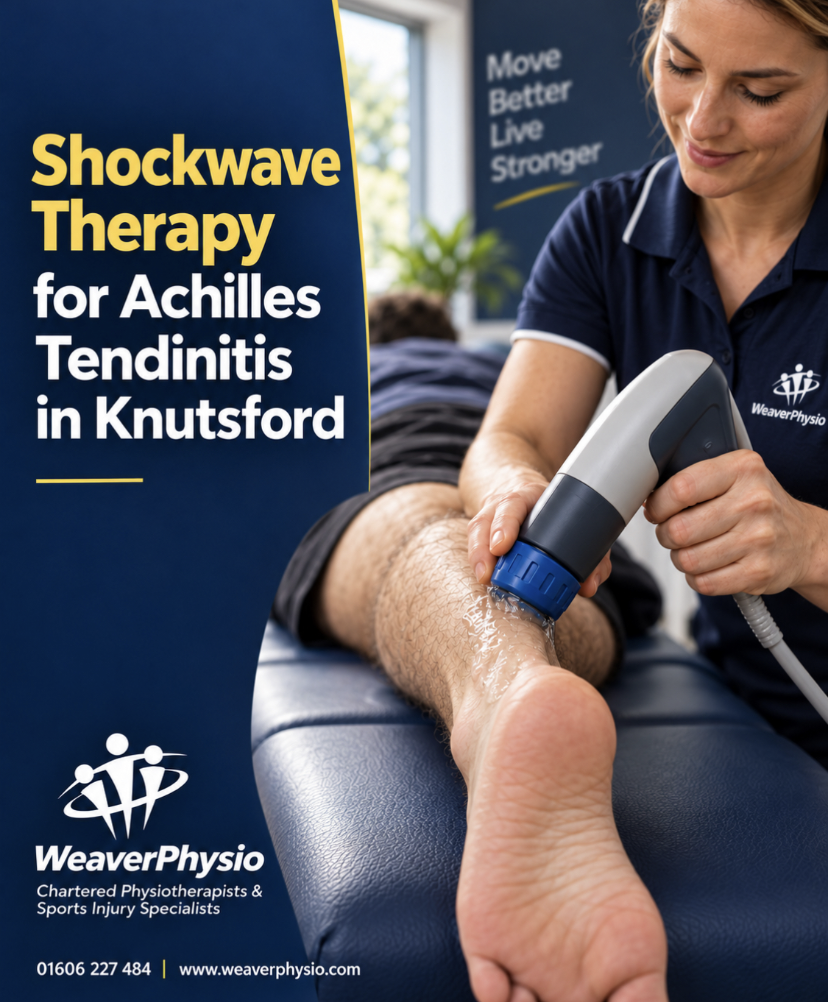
A coupling gel is applied between the applicator and your skin to facilitate transmission of the acoustic waves.
4. Shockwave Treatment
The applicator is positioned against the treatment area and acoustic pulses are delivered.
You will normally hear a repetitive tapping sound and feel the pulses against the tissue.
5. Rehabilitation
This is an important part of our approach.
Where appropriate, shockwave treatment is integrated with progressive exercise rehabilitation rather than being treated as a standalone solution.
Does Shockwave Therapy Hurt?
People experience shockwave treatment differently.
You may notice a tapping, aching or uncomfortable sensation over the treatment area. Treatment intensity can be adjusted according to the clinical protocol and your response.
NICE reports temporary adverse effects including pain, skin redness, bruising, swelling, calf ache and numbness in studies of ESWT.
Your physiotherapist should explain the expected benefits, uncertainties and potential risks before treatment begins.
How Many Shockwave Sessions Will I Need?
There is no universal protocol suitable for every tendon condition.
Shockwave treatment may be delivered as a single treatment or a series of sessions, and protocols vary according to the condition, equipment and energy used.
At Weaver Physio, your treatment programme is therefore based on your assessment rather than simply prescribing the same number of sessions to everyone.
Your progress can then be reviewed alongside your rehabilitation programme.
Shockwave Therapy and Exercise Rehabilitation
One of the most important principles of successful tendon management is recognising that shockwave therapy and rehabilitation serve different purposes.
Shockwave does not replace the need to restore physical capacity.
If you want to return to running, football, cycling, gym training or another demanding activity, the tendon eventually needs sufficient strength and load tolerance for that activity.
Your rehabilitation may therefore progress through:
Pain management → Controlled loading → Strength → Functional loading → Energy-storage exercise → Sport-specific rehabilitation → Return to performance
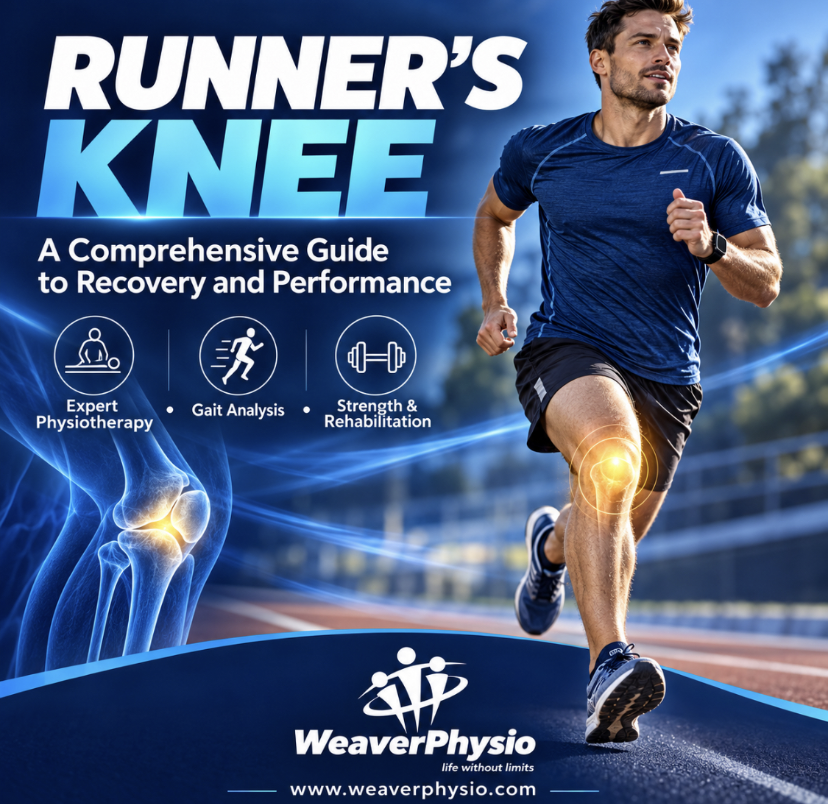
For runners, we can also assess whether strength, movement control or running mechanics may be influencing symptoms.
This is where our Runner’s MOT and video gait analysis in Northwich can complement tendon rehabilitation.
Shockwave Therapy for Achilles Tendinopathy in Northwich
Achilles pain is particularly common among runners and active adults.
Symptoms can occur in the mid-portion of the tendon or closer to its insertion at the heel and may include morning stiffness, tenderness and pain when running, walking uphill or performing repeated calf raises.
NICE states that ESWT for Achilles tendinopathy raises no major safety concerns, but also emphasises that evidence regarding efficacy remains limited and inconsistent. Patients should therefore be informed about this uncertainty when considering treatment.
At Weaver Physio, Achilles rehabilitation can combine appropriate physiotherapy management with progressive calf and tendon loading, strength work and running rehabilitation where required.
Shockwave Therapy for Plantar Heel Pain
Persistent plantar heel pain can make the first few steps in the morning particularly uncomfortable and may significantly restrict walking or running.
NICE describes ESWT as a non-invasive procedure in which acoustic shockwaves pass through the skin into the affected area. Its guidance for refractory plantar fasciitis reports no major safety concerns but notes that evidence regarding effectiveness is inconsistent.
For this reason, careful assessment and informed clinical decision-making are important.
Why Choose Weaver Physio for Shockwave Therapy in Northwich?
At Weaver Physiotherapy & Sports Injury Clinic, shockwave therapy forms part of a broader physiotherapy and rehabilitation service.
Our focus is on understanding why your tendon is struggling to tolerate your current activity and helping you progressively rebuild that capacity.
Treatment may therefore combine ESWT with physiotherapy, progressive exercise rehabilitation, strength and conditioning, manual therapy where appropriate and movement or running assessment.
This approach is particularly valuable for active adults and runners who don’t simply want temporary symptom reduction—they want to return to training confidently.
We welcome patients from Northwich, Hartford, Weaverham, Middlewich, Winsford, Knutsford and surrounding Cheshire areas.
Tendon Rehabilitation for Northwich Runners
Running-related tendon problems require more than simply deciding whether something hurts.
The important question is whether the tendon has sufficient capacity for the amount and intensity of running you are asking it to perform.
For runners experiencing recurring Achilles, patellar or other lower-limb problems, our assessment may examine:
Strength • Mobility • Stability • Coordination • Running mechanics • Training load • Return-to-running progression
Where appropriate, this can be combined with our video running gait analysis and Runner’s MOT to create a more complete rehabilitation programme.
Take the Next Step Towards Recovery
Persistent tendon pain doesn’t automatically mean giving up running, sport or exercise.
The first step is establishing an appropriate diagnosis and understanding why your symptoms continue to recur.
At Weaver Physiotherapy & Sports Injury Clinic in Northwich, we provide physiotherapy assessment, tendon rehabilitation and shockwave therapy under one roof.
If ESWT is appropriate for your condition, we’ll explain what treatment involves, discuss its potential benefits and limitations, and integrate it into a personalised rehabilitation programme designed around your goals.
Recover Stronger. Move Better. Return With Confidence.
Frequently Asked Questions
Is shockwave therapy non-invasive?
Yes. ESWT delivers acoustic waves through the skin without surgical incisions. NICE describes extracorporeal shockwave therapy as a non-invasive treatment.
Is shockwave therapy the same as an electrical shock?
No. Shockwave therapy uses acoustic pressure waves rather than passing an electrical current through the tendon.
Can shockwave therapy help Achilles tendinopathy?
ESWT is used for Achilles tendinopathy, but patients should understand that evidence of effectiveness is currently inconsistent and limited. NICE reports no major safety concerns while recommending appropriate governance, consent and outcome monitoring.
Can shockwave therapy help plantar fasciitis?
ESWT is also used for refractory plantar fasciitis. NICE reports no major safety concerns but states that evidence regarding effectiveness remains inconsistent.
Are there side effects?
Temporary discomfort can occur. Reported effects include redness, bruising, pain and local swelling.
Should shockwave therapy be combined with rehabilitation?
For tendon problems, rehabilitation is important for restoring the physical capacity required for everyday activity, running and sport. At Weaver Physio, ESWT can be incorporated into an individual rehabilitation programme rather than being viewed as an isolated treatment.
Do I need an assessment before shockwave therapy?
Yes. A physiotherapy assessment helps determine the likely diagnosis, whether ESWT is appropriate and what other rehabilitation strategies should form part of your treatment programme.
Where can I get shockwave therapy in Northwich?
Weaver Physio provides shockwave therapy alongside physiotherapy and rehabilitation in Northwich, with convenient access for people travelling from Hartford, Weaverham, Middlewich, Winsford, Knutsford and surrounding areas.