
Sports Massage in Northwich: Everything You Need to Know
Recover Better, Move Freely and Perform at Your Best with Weaver Physiotherapy & Sports Injury Clinic
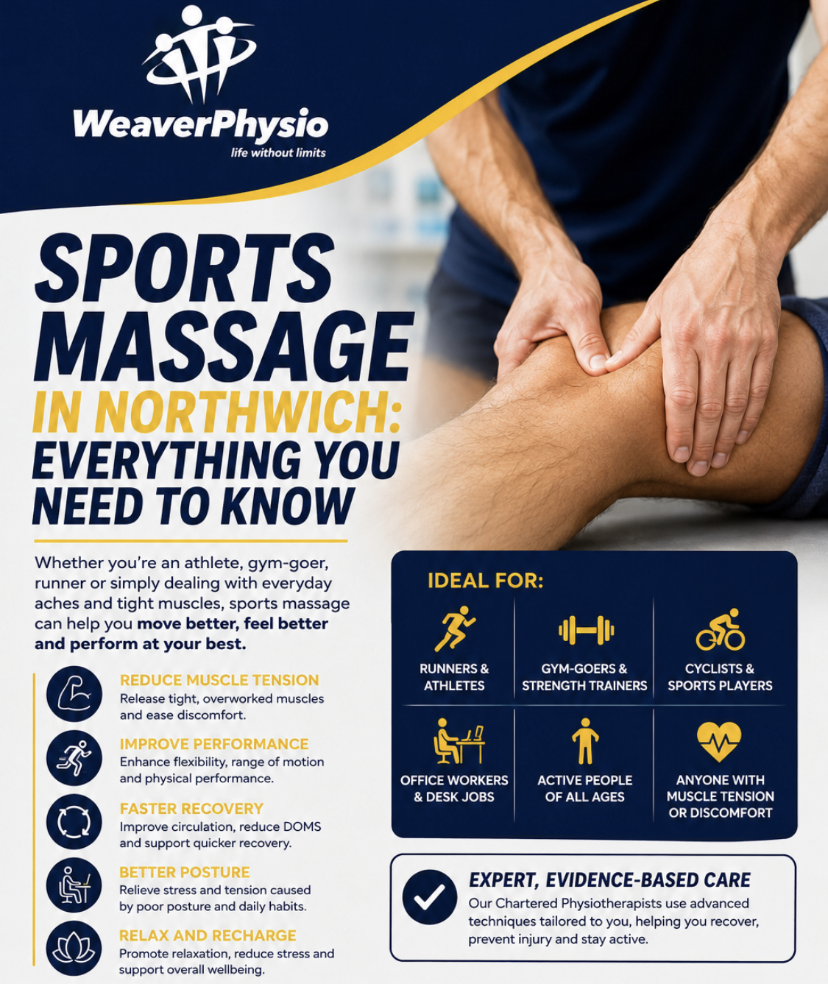
Whether you’re training for your first 5K, recovering after a marathon, spending long days on your feet at work or simply dealing with persistent muscle tightness, sports massage has become one of the most popular treatments for improving movement, reducing pain and enhancing recovery. Despite its growing popularity, many people still assume sports massage is only suitable for elite athletes. In reality, this couldn’t be further from the truth. Sports massage is a highly effective treatment for people from all walks of life, including runners, cyclists, footballers, golfers, gym enthusiasts, office workers, manual labourers and anyone experiencing muscular aches, stiffness or reduced mobility.
At Weaver Physiotherapy & Sports Injury Clinic in Northwich, we regularly treat patients who initially book a sports massage expecting little more than temporary relaxation, only to discover that targeted soft tissue therapy can play an important role in helping them move more comfortably, recover more efficiently and continue doing the activities they enjoy. However, sports massage is far more than simply applying firm pressure to tight muscles. When delivered by experienced clinicians with an understanding of anatomy, biomechanics and injury rehabilitation, it becomes a valuable tool that complements physiotherapy and exercise rehabilitation to improve both performance and long-term musculoskeletal health.
If you’ve been searching for Sports Massage in Northwich, this guide explains everything you need to know, including how sports massage works, who it can help, what the research says and why combining massage with evidence-based rehabilitation often delivers the best long-term outcomes.
What Is Sports Massage?
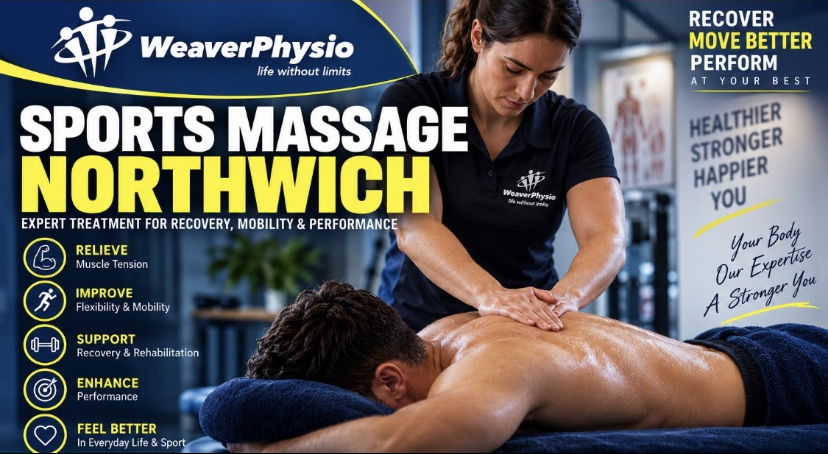
Sports massage is a specialised form of soft tissue therapy designed to assess and treat muscles, tendons, ligaments and fascia that may be contributing to pain, reduced movement or impaired performance. Although the name suggests it is only intended for athletes, sports massage has evolved into a treatment suitable for anyone experiencing muscular dysfunction or soft tissue discomfort.
Unlike a traditional relaxation massage, sports massage is goal orientated. Every treatment begins by understanding why the problem has developed rather than simply treating the painful area. A skilled therapist considers posture, movement patterns, occupation, hobbies, sporting activities, previous injuries and lifestyle before deciding which techniques are likely to provide the greatest benefit.
The aim is not simply to reduce soreness for an hour or two after treatment. Instead, sports massage seeks to improve tissue quality, reduce excessive muscle tension, restore normal movement, encourage healthy muscle function and create an environment where rehabilitation exercises become more effective. This is one of the reasons sports massage is frequently used alongside physiotherapy rather than replacing it.
Many patients are surprised to discover that their painful shoulder may actually be influenced by stiffness through the thoracic spine, or that persistent heel pain can be linked to tight calf muscles and altered ankle mobility. Sports massage allows therapists to address these interconnected problems rather than focusing solely on the area where symptoms are felt.
Why Has Sports Massage Become So Popular?
Over the last decade there has been a significant increase in participation in running events, strength training, cycling, Hyrox competitions and recreational sports throughout Cheshire. Alongside this rise in activity has come a greater appreciation of recovery. People now understand that training alone does not produce improvement.
The body adapts during recovery, and looking after muscles between sessions can be just as important as the training itself.
At the same time, modern lifestyles place increasing physical demands on our bodies. Hours spent sitting at desks, commuting, using computers and mobile devices or carrying out repetitive manual work often lead to muscular imbalances, stiffness and discomfort that affect everyday movement. Sports massage has therefore become valuable not only for improving athletic performance but also for helping people manage the physical stresses of modern life.
Many patients visit our Northwich clinic because they feel permanently tight despite stretching regularly. Others notice recurring injuries that seem to return every few months. Some simply want to move more comfortably while enjoying walking, gardening or playing with their children.
Sports massage can play an important role in all of these situations by improving movement quality and supporting healthier muscle function.
How Does Sports Massage Actually Work?
For many years it was believed that sports massage worked primarily by physically breaking down scar tissue or removing toxins from muscles. Modern research paints a far more interesting picture. While massage certainly influences muscle flexibility and local circulation, much of its benefit appears to come from its effects on the nervous system.
When pressure is applied to muscles and surrounding tissues, specialised receptors send information to the brain and spinal cord. This input can alter muscle tone, reduce pain sensitivity and encourage muscles that have become excessively guarded to relax. Rather than forcing muscles to loosen mechanically, sports massage often helps the nervous system allow movement to occur more naturally.
Massage also stimulates blood flow to muscles and surrounding tissues. Improved circulation supports the delivery of oxygen and nutrients while helping remove waste products generated during exercise. Although this doesn’t magically repair damaged tissue, it creates favourable conditions for recovery following strenuous activity or injury.
Another important benefit is improved body awareness. Many people are unaware of how much tension they carry until it begins to affect movement. Sports massage often increases awareness of posture, muscle activation and movement patterns, making it easier for patients to perform rehabilitation exercises correctly and maintain healthier movement throughout the day.
Perhaps most importantly, sports massage frequently provides enough pain relief
to allow patients to progress with strengthening exercises that ultimately address the underlying cause of their problem. This is why massage and rehabilitation work so effectively together.
The Difference Between Sports Massage and Relaxation Massage
Although both involve hands-on treatment, sports massage and relaxation massage have very different objectives. Relaxation massage focuses primarily on reducing stress, promoting calmness and encouraging general wellbeing through gentle, flowing techniques. The pressure is usually lighter and the treatment is designed to create an enjoyable, soothing experience.
Sports massage, however, has a clear clinical purpose. The therapist assesses areas of muscular dysfunction and selects techniques based on the individual’s symptoms, goals and movement restrictions. Treatment may involve deeper pressure where appropriate, trigger point therapy, stretching, soft tissue mobilisation and movement-based techniques designed to restore normal muscle function.
That does not mean sports massage has to be painful. One of the biggest misconceptions is that effective treatment requires extreme discomfort. In reality, treatment should always remain within a tolerable level. Excessively painful massage can actually increase muscle guarding and reduce the effectiveness of treatment. Experienced therapists adjust their approach according to the individual rather than applying the same pressure to everyone.
Who Can Benefit from Sports Massage?
One of the greatest strengths of sports massage is its versatility. At Weaver Physiotherapy & Sports Injury Clinic we regularly treat people of all ages and activity levels,
from competitive athletes preparing for major events to individuals simply wanting to walk without discomfort.
Runners
often benefit from sports massage because repetitive mileage places considerable demands on the calves, hamstrings, quadriceps, gluteal muscles and feet. Addressing muscle tightness and improving movement quality may help support training while reducing the likelihood of overload injuries.
Cyclists
frequently develop stiffness through the hips, lower back and neck due to prolonged riding positions. Targeted massage can improve mobility while complementing flexibility and strengthening programmes.
Gym enthusiasts often experience delayed onset muscle soreness following intense training sessions. Although sports massage does not eliminate soreness entirely, many people find it helps them feel more comfortable, maintain mobility and recover more effectively between sessions.
Office workers are another group who frequently benefit. Hours spent sitting can contribute to tight hip flexors, rounded shoulders, neck stiffness and reduced spinal mobility. Sports massage helps address these muscular adaptations while encouraging healthier posture and movement.
Even individuals who do not participate in regular sport often find sports massage beneficial for managing occupational strain, improving flexibility and maintaining general musculoskeletal health.
Common Conditions Treated with Sports Massage
Although sports massage is not intended to replace medical assessment or physiotherapy where these are required, it can be extremely valuable in managing a wide range of musculoskeletal conditions. Many patients attend our clinic with calf tightness, hamstring strains, neck and shoulder tension, lower back pain, plantar fasciitis, Achilles tendinopathy, iliotibial band syndrome, tennis elbow, muscle tears, postural discomfort and persistent stiffness following previous injuries.
In many cases the massage itself is only one component of treatment. We combine hands-on therapy with education, exercise rehabilitation and movement retraining to address both symptoms and the underlying factors contributing to them.
This integrated approach helps patients achieve more meaningful and longer-lasting improvements than relying on passive treatment alone.
What Happens During a Sports Massage Appointment?
One of the biggest reasons people delay booking a sports massage is simply because they are unsure what to expect. Some imagine an extremely painful treatment that leaves them bruised for days, while others assume it is little more than a relaxing spa experience. In reality, a professional sports massage sits somewhere between these two extremes. Every appointment should begin with understanding you as an individual rather than simply asking where it hurts.
At Weaver Physiotherapy & Sports Injury Clinic, your appointment starts with a discussion about your symptoms, lifestyle, occupation, sporting activities and medical history. If you’re experiencing pain rather than simply wanting a maintenance massage, we’ll also ask how your symptoms began, what aggravates them, whether they affect your sleep or daily activities and what you would like to achieve from treatment. This information helps us determine whether sports massage is appropriate or whether further physiotherapy assessment is needed before treatment begins.
Once we’ve identified the likely source of your symptoms, we’ll assess your movement, posture and flexibility before beginning hands-on treatment. Rather than working randomly across the body, every technique is chosen for a specific clinical reason. We continually monitor your comfort throughout the session, adjusting pressure and techniques according to how your tissues respond. Treatment should feel productive but never unnecessarily aggressive, and communication is encouraged throughout so that we can tailor the session to your individual needs.
Following treatment, you’ll receive personalised advice designed to maximise the benefits of your massage. This may include stretching exercises, strengthening work, recovery strategies, advice about returning to training or simple modifications to your daily activities. The goal is not simply to help you feel better when you leave the clinic but to support lasting improvements over the days and weeks that follow.
The Techniques Used During Sports Massage
Sports massage is often described as a single treatment, but it actually incorporates a variety of different techniques that can be adapted to suit each individual. Experienced therapists rarely rely on just one method because muscles, tendons and connective tissues respond differently depending on the nature of the problem, the person’s activity levels and their overall goals.
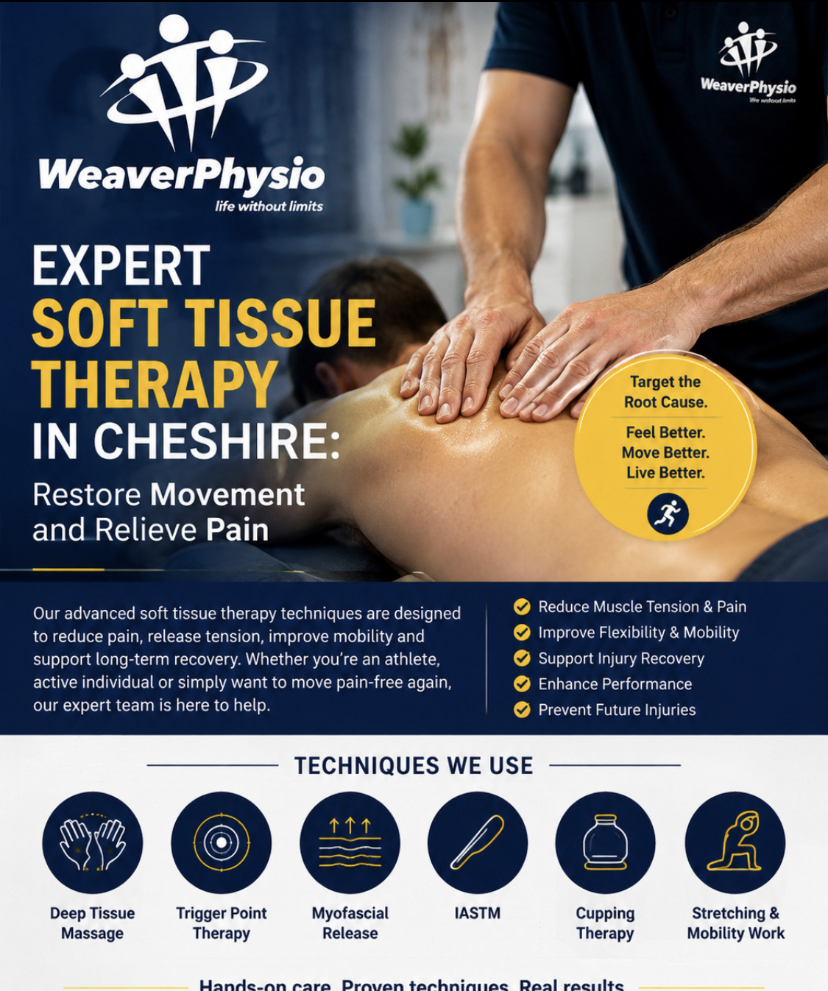
Deep tissue massage is perhaps the best-known component of sports massage and is used to address areas of increased muscle tension or stiffness. Contrary to popular belief, deep tissue massage is not about applying the greatest possible pressure. Instead, it involves carefully controlled techniques that encourage muscles to relax while improving tissue mobility. Excessive force often creates muscle guarding, making treatment less effective rather than more.
Trigger point therapy is another commonly used technique. Trigger points are highly sensitive areas within muscle that may reproduce familiar pain or refer discomfort to other parts of the body. For example, trigger points within the calf muscles may contribute to heel pain, while those in the shoulder can produce discomfort extending into the arm. Applying sustained pressure to these areas can help reduce sensitivity and improve muscle function.
Myofascial release focuses on the connective tissue surrounding muscles, helping restore normal movement between adjacent structures. Soft tissue mobilisation combines slow, controlled movements with manual pressure to improve flexibility and tissue quality, while assisted stretching may be incorporated to increase joint mobility and encourage normal movement patterns.
The exact combination of techniques varies from person to person. A runner preparing for a marathon will require a very different treatment approach from someone recovering after shoulder surgery or an office worker struggling with chronic neck stiffness. This individualised approach is one of the reasons why sports massage delivered within a physiotherapy setting is often so effective.
Does Sports Massage Actually Work?
This is one of the questions we hear most frequently, and understandably so. People want to know whether sports massage is supported by evidence or whether its popularity is based largely on anecdotal experience. The encouraging news is that research continues to demonstrate meaningful benefits, although perhaps not always for the reasons people once believed.
Current evidence suggests that sports massage can provide short-term improvements in pain, flexibility, muscle soreness and perceived recovery. Many people report feeling looser, moving more freely and experiencing reduced discomfort after treatment. Studies have also shown that massage may reduce delayed onset muscle soreness following exercise, allowing individuals to return to training feeling more comfortable.
However, it is equally important to understand what sports massage cannot do. There is little evidence that massage physically flushes toxins from muscles or permanently breaks down scar tissue, despite these claims remaining common on social media. Instead, researchers now believe many of the positive effects arise through changes within the nervous system, improvements in circulation, reductions in muscle guarding and increased confidence in movement.
From a clinical perspective, perhaps the greatest value of sports massage lies in its ability to make rehabilitation easier. Patients who experience less pain and improved mobility are often able to perform strengthening exercises more effectively, and it is these exercises that usually provide the long-term improvements required for lasting recovery.
Sports Massage and Injury Rehabilitation
When someone suffers an injury, the body’s natural response is often to protect the affected area by increasing muscle tension. While this protective mechanism is useful in the early stages of healing, it can sometimes persist long after tissues have recovered, leading to stiffness, altered movement patterns and ongoing discomfort.
Sports massage can play an important role during rehabilitation by helping reduce excessive muscle guarding and restoring more natural movement. This is particularly valuable following muscle strains, tendon injuries and prolonged periods of reduced activity. By improving tissue flexibility and reducing discomfort, massage often creates an ideal opportunity to begin progressive strengthening exercises that rebuild resilience and restore function.
It is important to remember, however, that rehabilitation should never rely solely on passive treatments. The strongest evidence consistently supports combining hands-on therapy with carefully prescribed exercise. Muscles, tendons and ligaments become stronger by gradually exposing them to appropriate levels of loading. Massage may prepare the tissues for this process, but exercise remains the cornerstone of successful rehabilitation.
This philosophy underpins everything we do at Weaver Physiotherapy & Sports Injury Clinic. We use sports massage strategically, integrating it with exercise therapy, manual therapy, education and movement retraining to help patients achieve lasting improvements rather than temporary symptom relief.
Sports Massage Versus Deep Tissue Massage
Many people use the terms sports massage and deep tissue massage interchangeably, but they are not exactly the same. Deep tissue massage refers primarily to the pressure and techniques used during treatment, whereas sports massage describes a broader clinical approach centred on improving movement, performance and recovery.
A deep tissue massage may simply involve firm pressure applied across several muscle groups with the aim of relieving tension.
Sports massage, by comparison, begins with an assessment, identifies contributing factors and uses a range of techniques based on your individual presentation. Deep tissue work may form part of the treatment, but it is combined with movement assessment, stretching, trigger point therapy, rehabilitation advice and ongoing clinical reasoning.
For this reason, many people experiencing pain or recurring injuries benefit more from sports massage delivered by clinicians who understand musculoskeletal pathology rather than receiving a standard deep tissue massage without any assessment or follow-up advice.
Common Myths About Sports Massage
There are still many misconceptions surrounding sports massage that can discourage people from seeking treatment or create unrealistic expectations. One of the most persistent myths is that effective massage must be extremely painful. While some areas of tension may feel tender during treatment, severe pain is neither necessary nor desirable. Excessively aggressive techniques can increase muscle guarding and actually reduce the effectiveness of treatment.
Another common belief is that massage physically removes lactic acid from muscles. In reality, lactic acid is naturally cleared by the body within a relatively short period after exercise. The benefits of sports massage are far more likely to result from neurological changes, improved circulation and reduced muscle tension rather than flushing out waste products.
Perhaps the biggest misconception is that sports massage alone can permanently fix musculoskeletal problems. While it can provide significant relief and improve movement, long-term recovery almost always requires addressing the underlying causes through strength training, load management, mobility work and lifestyle modifications. Understanding this allows patients to develop realistic expectations and achieve much better outcomes over time.
The most successful treatment plans are those that combine high-quality hands-on therapy with active rehabilitation, empowering patients to take control of their own recovery rather than relying indefinitely on passive treatments.
Sports Massage for Runners
Running is one of the most popular forms of exercise throughout Cheshire, but it is also one of the activities that places the greatest repetitive demands on the body. Every stride requires your feet, calves, Achilles tendons, knees, hips and core muscles to absorb and generate significant forces. Over the course of a 10-kilometre run, this can amount to thousands of repeated loading cycles through the same muscles and tendons. It is therefore no surprise that many runners experience recurring muscle tightness, stiffness or overuse injuries at some point during their training.
Sports massage has become an important part of many runners’ recovery programmes because it helps manage the physical demands of regular mileage. By improving tissue mobility, reducing excessive muscle tension and encouraging healthy movement patterns, massage can help runners feel less restricted between training sessions. It may also improve comfort during periods of increased training, such as preparing for a marathon or half marathon.
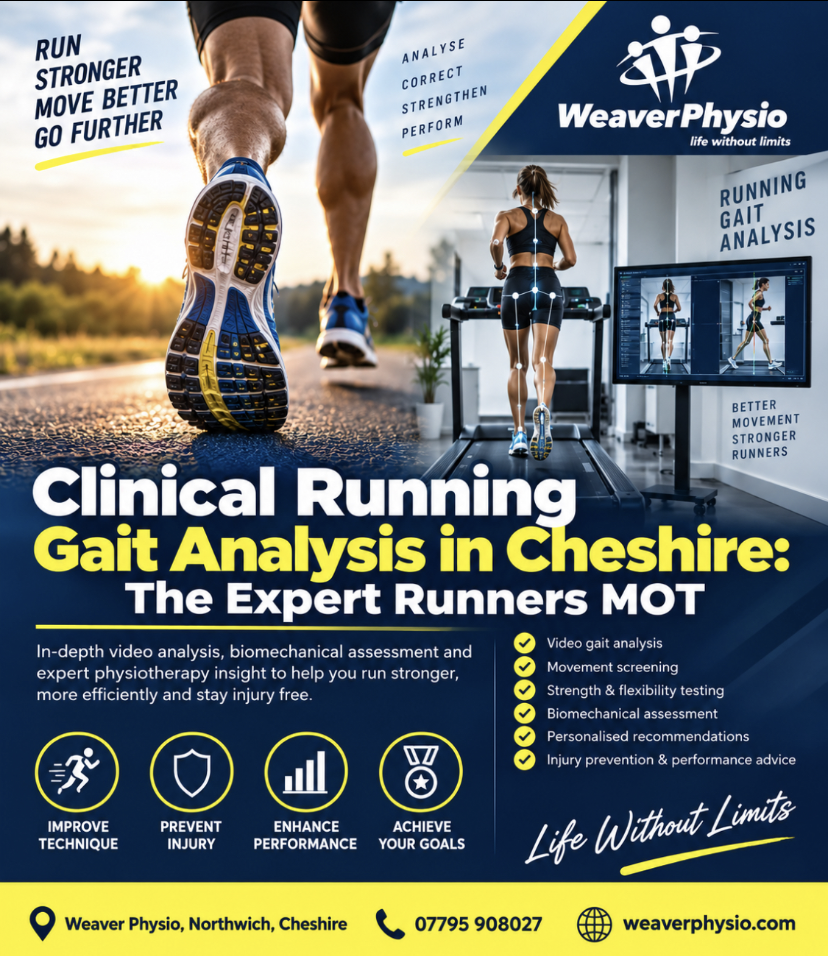
However, successful running rehabilitation requires much more than simply treating tight muscles. Many running injuries develop because tissues are being asked to tolerate more load than they are physically prepared for. Weak calf muscles, reduced hip strength, poor single-leg stability, restricted ankle mobility, rapid increases in weekly mileage or inappropriate recovery strategies can all contribute to injury development. For this reason, sports massage works best when combined with strength training, running gait analysis, progressive loading and sensible training advice.
At Weaver Physiotherapy & Sports Injury Clinic, we regularly combine sports massage with our comprehensive running assessments to identify the underlying reasons why injuries have developed. This integrated approach helps runners not only recover from injury but also reduce the likelihood of the same problem returning in the future.
Sports Massage for Gym-Goers and Strength Athletes
Strength training has never been more popular, with increasing numbers of people incorporating resistance exercise into their weekly routine for health, fitness and performance. While strength training provides enormous physical benefits, it also creates muscular fatigue, delayed onset muscle soreness and temporary reductions in flexibility that may affect subsequent training sessions.
Sports massage can support recovery by helping reduce muscle stiffness and improve comfort following demanding workouts. Although it does not eliminate muscle soreness entirely, many people report feeling looser, moving more freely and recovering more comfortably after treatment. This may allow them to maintain consistent training while reducing the perception of fatigue.
For strength athletes, bodybuilders, CrossFit competitors and Hyrox participants, sports massage is often used strategically during periods of high training volume or before major competitions. Maintaining healthy tissue quality becomes increasingly important as training intensity increases, particularly when multiple sessions are performed each week.
Equally important is recognising when soreness represents normal adaptation and when it may indicate the early stages of injury. Persistent pain, swelling or significant reductions in strength should always be assessed properly rather than simply treated with massage. Early diagnosis allows rehabilitation to begin before minor problems become more significant injuries.
Sports Massage for Office Workers
One of the biggest myths surrounding sports massage is that you need to play sport to benefit from treatment. In reality, many of the people attending our clinic have never competed in organised sport. Modern working life places unique demands on the musculoskeletal system that can lead to persistent muscular discomfort despite relatively low levels of physical activity.
Prolonged sitting often contributes to stiffness through the hips, reduced spinal mobility and increased tension within the neck and shoulders. Spending hours looking at computer screens or mobile devices encourages forward head posture, rounded shoulders and reduced movement through the upper back. Over time these adaptations may contribute to headaches, shoulder discomfort, neck pain and lower back stiffness.
Sports massage can help reduce muscular tension associated with prolonged sitting while improving mobility and encouraging healthier posture. Combined with simple workplace modifications, strengthening exercises and regular movement breaks, it provides an effective strategy for managing many of the aches and pains associated with desk-based occupations.
Many patients also report improvements in general wellbeing following treatment. While sports massage is not a treatment for stress itself, reducing muscular tension often leaves people feeling physically and mentally more comfortable, helping them cope better with the demands of everyday life.
How Often Should You Have a Sports Massage?
One of the most common questions we are asked is how frequently sports massage should be performed. The answer depends entirely on the individual, their activity levels and their goals. There is no universal schedule that suits everyone.
Someone training for an endurance event may benefit from more regular maintenance treatments during periods of high mileage, whereas another individual may only require occasional sessions to address muscular tightness associated with work or recreational exercise. During injury rehabilitation, appointments may initially be scheduled closer together before becoming less frequent as strength and function improve.
Rather than viewing sports massage as something that should be booked routinely every few weeks regardless of symptoms, we encourage patients to consider it as one component of an overall musculoskeletal health strategy. The greatest benefits are achieved when treatment is tailored to the individual’s current needs and integrated with exercise, recovery and sensible training progression.
When Sports Massage May Not Be Appropriate
Although sports massage is safe and beneficial for most people, there are situations where treatment may need to be delayed or modified. Acute infections, certain skin conditions, deep vein thrombosis, uncontrolled medical conditions or recent traumatic injuries may require medical assessment before massage is performed. Likewise, severe unexplained pain, significant swelling or symptoms suggesting a fracture should always be investigated before hands-on treatment begins.
This is one of the advantages of receiving sports massage within a physiotherapy clinic. Because our clinicians are trained to assess musculoskeletal conditions thoroughly, we can identify when sports massage is appropriate and when further investigation or alternative treatment may be required. Your safety always comes first, and every treatment is based on clinical reasoning rather than routine practice.
Why Choose Weaver Physiotherapy & Sports Injury Clinic?
Choosing where to have your sports massage matters. While many providers offer massage, not all treatments are delivered with the same level of clinical knowledge or understanding of injury rehabilitation. At Weaver Physiotherapy & Sports Injury Clinic, sports massage forms part of a comprehensive evidence-based approach to musculoskeletal care rather than being delivered in isolation.
Our experienced Chartered Physiotherapists and Sports Rehabilitators understand the complex relationship between movement, muscle function, biomechanics and pain. Rather than simply treating the area that feels tight, we identify why that tension has developed and address the factors contributing to it. This allows us to create treatment plans that are tailored to your goals, whether you’re preparing for your first marathon, recovering after injury or simply wanting to move more comfortably.
Your treatment may include sports massage alongside manual therapy, personalised exercise rehabilitation, strength and conditioning, acupuncture, dry needling, Shockwave Therapy and detailed movement assessment. Every recommendation is based on current clinical evidence and adapted to your individual needs, ensuring you receive the most appropriate care for your specific problem.
With more than 70 years of combined clinical experience, Weaver Physiotherapy & Sports Injury Clinic has earned the trust of thousands of patients across Northwich, Winsford, Middlewich, Knutsford, Hartford, Weaverham, Tarporley, Frodsham, Sandbach and the surrounding areas of Cheshire. Our reputation has been built on delivering professional, honest and evidence-based treatment focused on achieving meaningful long-term results.
Frequently Asked Questions
Many people booking their first sports massage have understandable questions. The most common concern is whether treatment will be painful. While some techniques may feel intense when working on particularly tight muscles, sports massage should never feel unbearable. Effective treatment is based on communication, and pressure is always adjusted to suit your comfort and goals.
Another frequent question is whether it is safe to exercise after treatment. Light activity is usually encouraged, although intense training immediately afterwards may not always be appropriate depending on the techniques used and the reason for treatment. We provide individual advice at the end of every appointment so you know exactly how to optimise your recovery.
People also ask whether sports massage can prevent injuries. While no treatment can completely eliminate injury risk, maintaining healthy muscle function, addressing movement restrictions and combining massage with strength training and sensible load management can certainly support injury prevention. The most effective approach is always proactive rather than waiting until pain becomes severe.
Final Thoughts
Sports massage is far more than simply relieving tight muscles after exercise. When delivered by experienced clinicians, it is a valuable treatment that can improve movement, reduce muscular tension, support recovery and complement evidence-based rehabilitation. Whether you are a competitive athlete, recreational runner, busy office worker or someone simply wanting to move without discomfort, sports massage can play an important role in maintaining your musculoskeletal health.
It is equally important to recognise that massage works best as part of a comprehensive treatment programme rather than as a standalone solution. Lasting improvements come from combining hands-on therapy with progressive strengthening, mobility exercises, education and appropriate load management. Addressing the underlying causes of pain and stiffness provides far better long-term results than repeatedly chasing short-term symptom relief.
If you are looking for expert Sports Massage in Northwich, the team at Weaver Physiotherapy & Sports Injury Clinic is here to help. We provide thorough assessments, personalised treatment plans and evidence-based rehabilitation designed to help you recover from injury, improve your performance and continue doing the activities you enjoy with confidence.
Whether your goal is to run your next marathon, return to the gym, ease work-related muscle tension or simply move more freely every day, we’re committed to helping you achieve lasting results through expert care and personalised rehabilitation.
Book your sports massage assessment today and discover how evidence-based treatment can help you recover better, move better and perform at your best.