
Marathon Training: Injury Prevention & Performance Science
A Specialist Guide from Weaver Physiotherapy & Sports Injury Clinic, Northwich, Cheshire

Introduction: Why Marathon Training Breaks Runners (And How to Prevent It)
Training for a marathon is one of the most physically demanding challenges recreational and competitive runners take on. Whether you’re preparing for London, Manchester, Chester or your first local event in Cheshire, marathon training pushes your body into sustained high-load territory for 16–20 weeks.
At Weaver Physiotherapy & Sports Injury Clinic in Northwich, we regularly see runners from Northwich, Knutsford, Winsford, Middlewich, Tarporley and Frodsham who are:
• Increasing mileage too aggressively
• Carrying unresolved niggles into peak training
• Under-prepared from a strength perspective
• Unsure how to manage tendon or joint pain
The truth is simple:
Marathon injury prevention and marathon performance are built on the same scientific foundations.
If you build capacity correctly, you run faster and reduce injury risk.
This comprehensive guide breaks down the science of marathon training so you can train intelligently, protect your body and optimise performance.
1️⃣ The Physiology of Marathon Running
Marathon running stresses multiple systems simultaneously:
1. Cardiovascular System
Your heart and lungs must deliver oxygen efficiently for prolonged periods.
2. Muscular Endurance
Your glutes, quads, calves and hamstrings must repeatedly contract thousands of times.
3. Tendon Elastic Energy
The Achilles and patellar tendons store and release energy every stride.
4. Neuromuscular Coordination
Efficient motor control reduces wasted energy and joint stress.
5. Connective Tissue Tolerance
Fascia, ligaments and joint cartilage must withstand repetitive load.
The mistake many runners make is focusing only on aerobic conditioning — while ignoring tissue capacity.
That’s where injuries begin.
2️⃣ The Biggest Predictor of Marathon Injury: Load Spikes
Research consistently shows that rapid increases in training load are the strongest predictor of running injury.
What Is a Load Spike?
A load spike occurs when:
• Weekly mileage increases too quickly
• Long runs increase by large jumps
• Speed sessions are added abruptly
• Hills are introduced without adaptation
• A runner returns after time off and resumes previous volume
Tendons adapt more slowly than muscles.
Bone adapts slower still.
If training load increases faster than tissue adaptation, you create overload.
At Weaver Physio, our Runner’s MOT assesses:
• Current weekly mileage
• Long run progression
• Previous injury history
• Strength capacity
• Movement mechanics
This allows us to build realistic load progression plans for runners across Cheshire.
3️⃣ Tendon Science: Your Performance Springs
Tendons behave like high-performance elastic springs.
During marathon running:
• The Achilles stores elastic energy on landing
• It releases energy during toe-off
• This improves running economy
However, marathon training dramatically increases cumulative tendon load.
Why Tendons Get Irritated
• Sudden mileage increases
• Inadequate calf strength
• Reduced ankle mobility
• Poor recovery
• Excessive downhill running
Achilles Tendinopathy
Patellar Tendinopathy
Plantar Fasciitis
These are not “inflammation problems.”
They are load tolerance problems.
The Science-Based Fix:
• Heavy slow resistance training
• Progressive loading
• Isometric pain modulation
• Structured return-to-run protocols
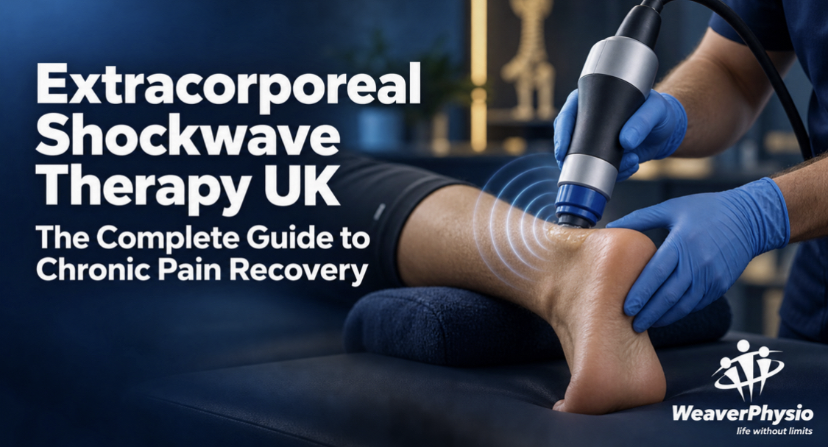
• Shockwave therapy (for chronic cases)
Weaver Physio integrates shockwave therapy with strength-based rehab for stubborn tendon cases in Northwich and surrounding areas.
4️⃣ Strength Training: The Missing Marathon Ingredient
Many marathon runners believe running alone prepares them.
It doesn’t.
Strength Training Improves:
• Running economy
• Ground contact time
• Force production
• Tendon stiffness
• Injury resilience
Key exercises include:
• Heavy calf raises
• Split squats
• Romanian deadlifts
• Hip thrusts
• Single-leg control drills
Research shows 2 sessions per week significantly reduces overuse injury risk.
At Weaver Physio, strength work bridges rehabilitation and performance — ensuring runners return stronger, not just symptom-free.
5️⃣ Cadence & Biomechanics
There is no single “perfect running form.”
But there are mechanical inefficiencies that increase joint load.
Overstriding
Landing too far ahead increases braking forces and knee stress.
Low Cadence
Increasing cadence by 5–7% can reduce joint loading in some runners.
Poor Hip Control
Weak lateral hip control increases pelvic drop and knee load.
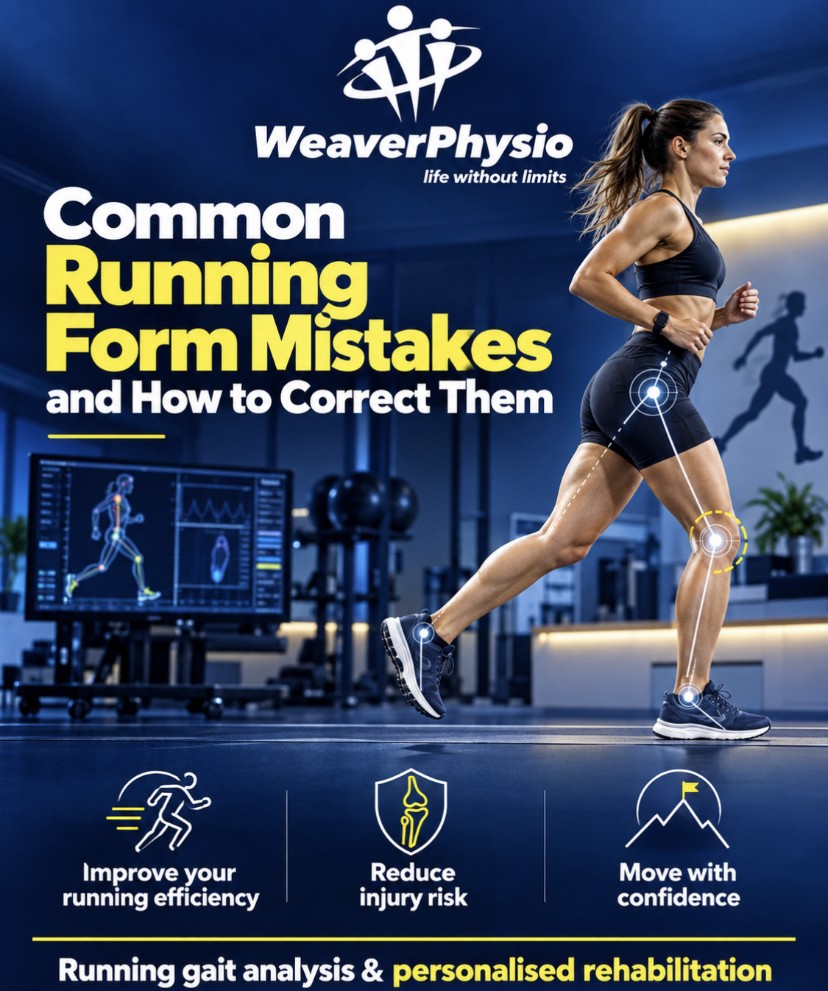
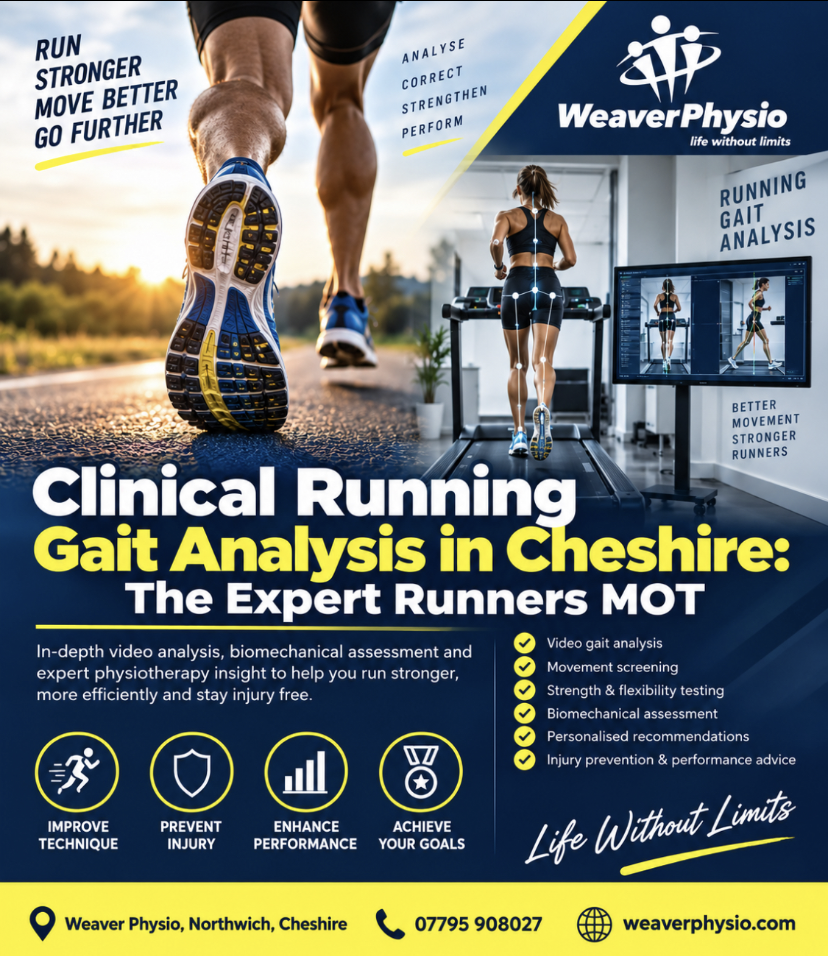
At Weaver Physio in Northwich, we use video gait analysis to assess:
• Stride length
• Cadence
• Foot strike pattern
• Hip stability
• Trunk mechanics
We focus on optimising efficiency, not forcing artificial form changes.
6️⃣ Long Run Physiology & Injury Risk
Long runs create:
• Glycogen depletion
• Neuromuscular fatigue
• Reduced stride stiffness
• Increased ground contact time
As fatigue sets in:
• Form changes
• Tendon strain increases
• Knee load rises
Common mistakes:
• Increasing long run by more than 2–3km at a time
• Running long runs too fast
• Ignoring post-run recovery
7️⃣ Recovery Science: Where Adaptation Happens
Training is stress.
Recovery drives adaptation.
Key Recovery Factors:
✔ Sleep (7–9 hours)
✔ Protein intake
✔ Carbohydrate replenishment
✔ Hydration
✔ Active recovery
✔ Soft tissue work
Sports massage can:
• Reduce neuromuscular tension
• Improve circulation
• Restore range
But massage does not replace intelligent programming.
At Weaver Physio, recovery advice is integrated into every marathon rehab and performance plan.
8️⃣ The Most Common Marathon Injuries
Achilles Tendinopathy
Patellar Tendinopathy
IT Band Syndrome
Shin Splints
Plantar Fasciitis
Proximal Hamstring Tendinopathy
Most share one theme:
Capacity deficit under increasing load.
We don’t just treat pain — we increase load tolerance.
9️⃣ Tapering Without Losing Fitness
The taper reduces volume while maintaining intensity.
Goals:
• Restore glycogen
• Reduce cumulative fatigue
• Maintain neuromuscular sharpness
Common mistakes:
• Cutting volume too aggressively
• Eliminating all intensity
• Trying new exercises in taper week
Proper tapering reduces race-day injury risk and improves performance output.
🔟 Marathon Performance & Injury Prevention Are the Same Process
When you:
• Progress load gradually
• Build strength
• Maintain mobility
• Optimise cadence
• Prioritise recovery
• Address niggles early
You:
✔ Run more efficiently
✔ Reduce injury risk
✔ Improve race-day durability
✔ Finish stronger
The Weaver Physio Approach to Marathon Training in Cheshire
At Weaver Physiotherapy & Sports Injury Clinic in Northwich, we provide:
✔ Specialist Running Injury Assessments
✔ Runner’s MOT (Biomechanics + Strength Profiling)
✔ Shockwave Therapy for chronic tendon pain
✔ Structured Rehab Plans
✔ Performance Strength Blocks
✔ Sports Massage & Recovery Therapy
We support marathon runners from:
Northwich
Knutsford
Winsford
Middlewich
Tarporley
Frodsham
Across Cheshire
Whether you are:
• Training for your first marathon
• Targeting sub-3:30
• Returning after Achilles pain
• Struggling with recurring knee issues
We help you train smarter — not just harder.
Key Takeaways
• Load management is the biggest injury predictor
• Tendons require progressive strength loading
• Strength training improves performance and resilience
• Cadence manipulation can reduce joint stress
• Recovery drives adaptation
• Early intervention prevents chronic issues
Ready to Train for Your Marathon the Right Way?
If you want to:
• Reduce injury risk
• Improve running economy
• Build tendon resilience
• Fix recurring niggles
• Run your strongest marathon yet
Book a Specialist Running Assessment or Runner’s MOT at Weaver Physio in Northwich.
📞 01606 227484
🌐 www.weaverphysio.com
Recover Stronger. Perform Better. Live Pain-Free.