
The Role of Tendons in Running Performance
By Weaver Physiotherapy & Sports Injury Clinic – Physio Northwich
Running may look simple from the outside, but it is a highly complex movement that relies on the coordinated function of muscles, joints, bones and tendons. While muscles often receive most of the attention when discussing strength and performance, tendons play a crucial role in how efficiently and powerfully we run.
At Weaver Physiotherapy & Sports Injury Clinic in Northwich, we regularly assess and treat runners with tendon-related problems such as Achilles tendinopathy, patellar tendon pain, plantar fasciitis and proximal hamstring tendinopathy. Understanding how tendons contribute to running performance helps runners not only prevent injury but also improve efficiency, speed and resilience.
In this guide, we explore the science behind tendons, their role in running mechanics, why tendon injuries occur, and how physiotherapy can optimise tendon health and performance.
What Are Tendons?
Tendons are strong connective tissues that attach muscles to bones. Their primary role is to transmit force generated by muscles to the skeleton, allowing movement to occur.
However, tendons are not just passive connectors. They are highly specialised structures capable of storing and releasing energy, which is especially important during running.
Key characteristics of tendons include:
• High tensile strength
• Elastic energy storage
• Load transmission from muscle to bone
• Contribution to movement efficiency
During running, tendons behave like biological springs, helping the body move efficiently with minimal energy expenditure.
Why Tendons Are So Important for Running
Running involves repeated stretch–shortening cycles, where muscles and tendons lengthen under load and then rapidly shorten to produce propulsion.
Tendons allow runners to:
• Store elastic energy
• Release energy during push-off
• Improve running economy
• Reduce metabolic cost of movement
Without healthy tendons, running becomes less efficient and significantly more physically demanding.
In fact, research shows that a large portion of the energy used during running comes from elastic recoil within tendons rather than purely muscular contraction.
This means that strong, well-conditioned tendons are essential for both performance and injury prevention.
The Spring-Like Function of Tendons
One of the most fascinating aspects of tendon function is their ability to act like springs.
When your foot strikes the ground while running:
1. Tendons stretch and store elastic energy
2. This stored energy is temporarily held within the tendon
3. As the body pushes off, the tendon recoils
4. The stored energy helps propel the runner forward
This spring mechanism improves running efficiency, allowing runners to maintain speed with less muscular effort.
The Achilles tendon, for example, is one of the most powerful elastic structures in the human body and plays a huge role in propulsion during running.
Key Tendons Involved in Running
Several tendons play a major role in running mechanics.
Achilles Tendon
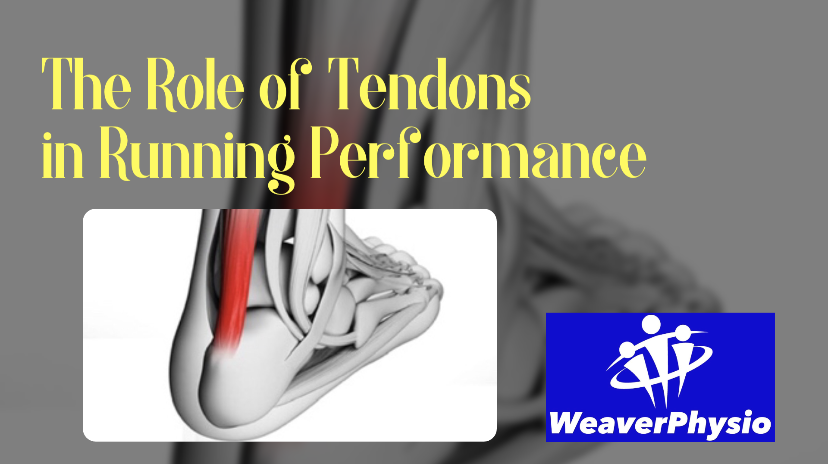
The Achilles tendon connects the calf muscles (gastrocnemius and soleus) to the heel bone.
It is responsible for:
• transmitting force during push-off
• storing elastic energy
• contributing to stride efficiency
The Achilles tendon experiences forces up to 6–8 times body weight during running, making it one of the most heavily loaded tendons in the body.
Patellar Tendon
The patellar tendon connects the quadriceps muscle to the shin bone.
It is important for:
• knee extension
• shock absorption
• propulsion
Runners who perform a lot of hill running, sprinting or plyometric activity place high loads on the patellar tendon.
Plantar Fascia
Although technically a thick band of connective tissue rather than a tendon, the plantar fascia also plays a spring-like role.
It helps:
• stabilise the arch of the foot
• store energy during foot contact
• assist propulsion during toe-off
Plantar fascia injuries are common in runners and can significantly affect running mechanics.
Hamstring Tendons
The hamstrings help control hip extension and knee flexion during running.
The proximal hamstring tendon, where the hamstrings attach to the pelvis, can become irritated with high running loads or poor strength.
Tendon Stiffness and Running Performance
An important concept in tendon function is tendon stiffness.
Stiffness refers to the ability of a tendon to resist deformation under load and quickly recoil.
Higher tendon stiffness can improve:
• force transfer
• running efficiency
• sprint performance
• energy return
However, tendons must also maintain some elastic flexibility to prevent injury.
Training programmes that include strength training, plyometrics and progressive loading help optimise tendon stiffness and performance.
Why Runners Develop Tendon Injuries
Tendon injuries are extremely common among runners. The majority of these injuries are classified as tendinopathy, which refers to a painful overload condition affecting tendon structure and function.
At Weaver Physio in Northwich, we frequently treat runners with:
• Achilles tendinopathy
• Patellar tendinopathy
• Gluteal tendinopathy
• Proximal hamstring tendinopathy
• Plantar fasciitis
These conditions typically occur due to excessive or poorly managed loading.
Common Causes of Tendon Problems in Runners
Sudden Increases in Training Load
One of the biggest causes of tendon injury is rapid increases in running volume or intensity.
Examples include:
• increasing weekly mileage too quickly
• introducing hill running suddenly
• starting speed sessions without preparation
Tendons adapt slowly and require gradual progressive loading.
Poor Strength and Conditioning
Weak muscles around the hips, calves and core can increase strain on tendons.
For example:
Weak calf muscles → increased Achilles tendon strain
Weak glutes → increased knee and hip tendon stress
Strength training plays a critical role in protecting tendons from overload.
Biomechanical Factors
Running mechanics can influence tendon loading.
Examples include:
• excessive overstriding
• poor hip control
• reduced ankle mobility
• altered foot mechanics
At Weaver Physio, our running gait analysis (Runner’s MOT) helps identify biomechanical factors contributing to injury.
How Physiotherapy Supports Tendon Health
Effective treatment for tendon injuries focuses on restoring tendon capacity and resilience.
At Weaver Physiotherapy & Sports Injury Clinic in Northwich, treatment often includes:
Progressive Strength Loading
Tendons respond positively to controlled mechanical loading.
Rehabilitation programmes often include:
• heavy slow resistance training
• eccentric exercises
• calf strengthening
• hip and glute strengthening
These exercises help the tendon adapt and regain strength.
Load Management
Managing running volume is essential.
Runners are often guided through:
• structured return-to-running programmes
• gradual mileage progression
• training load monitoring
This prevents further tendon overload.
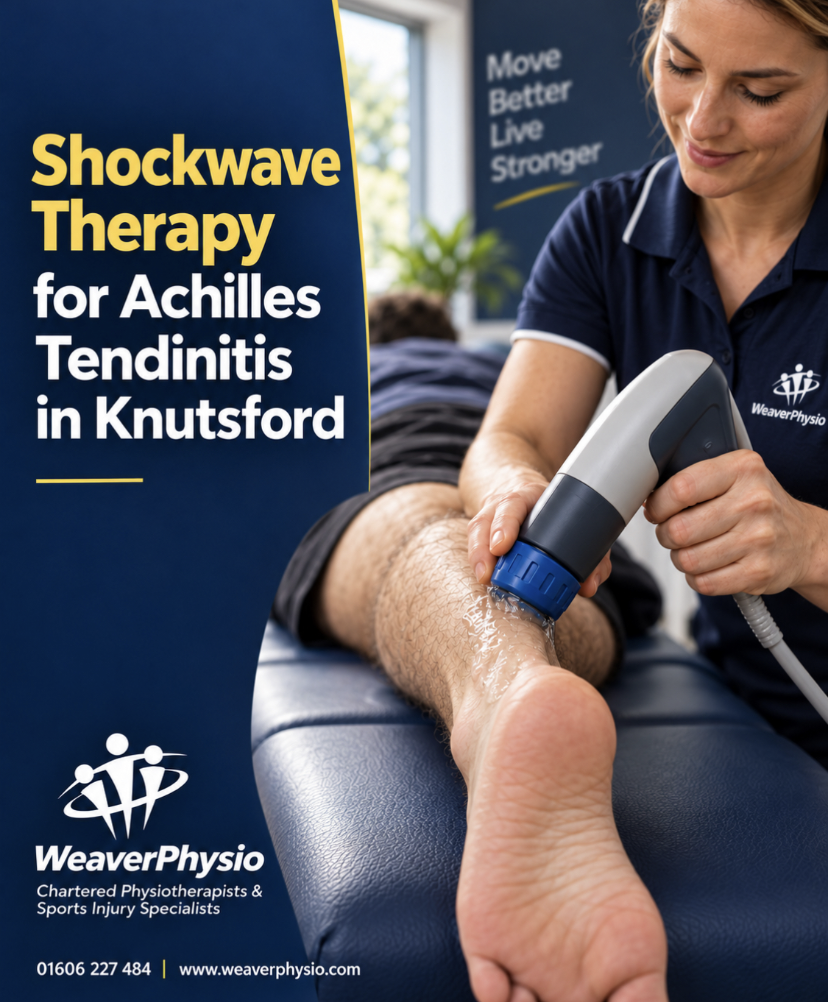
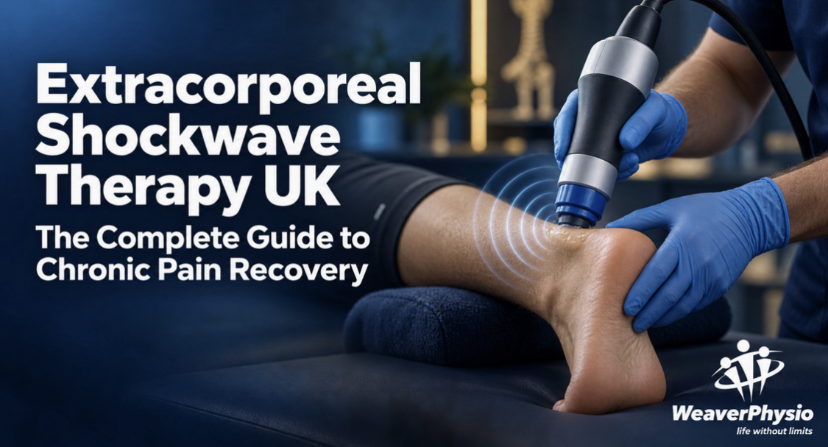
Shockwave Therapy
Shockwave therapy can be helpful for chronic tendon conditions that have not responded to other treatments.
This treatment stimulates:
• tissue healing
• blood flow
• collagen production
Shockwave therapy is frequently used at Weaver Physio for Achilles tendinopathy, plantar fasciitis and patellar tendon pain.
Running Gait Analysis
Our Runner’s MOT and gait analysis assessment allows us to evaluate running mechanics in detail.
This helps identify:
• stride mechanics
• loading patterns
• biomechanical inefficiencies
Small changes in technique can significantly reduce tendon stress.
Strength Training for Tendon Performance
Strength training is one of the most effective ways to improve tendon resilience and running performance.
Exercises commonly recommended for runners include:
• calf raises
• single-leg strength exercises
• hip strengthening
• plyometric drills
• resistance training
These exercises improve:
• force production
• tendon stiffness
• injury resistance
Strong runners are generally more resilient runners.
The Importance of Progressive Loading
Tendons require gradual exposure to load to adapt and become stronger.
This principle is known as progressive loading.
For runners, this means:
• gradually increasing mileage
• slowly introducing hills or speed work
• allowing adequate recovery
Sudden spikes in training load are one of the biggest contributors to tendon injury.
Signs Your Tendons May Be Overloaded
Early symptoms of tendon overload include:
• morning stiffness
• localised pain during running
• discomfort during push-off
• pain when pressing on the tendon
Ignoring these early symptoms can allow a minor irritation to develop into chronic tendinopathy.
Early physiotherapy assessment can help prevent long-term issues.
When to See a Physiotherapist
Runners should consider seeing a physiotherapist if they experience:
• persistent tendon pain
• pain lasting more than 1–2 weeks
• reduced running performance
• recurring injuries
At Weaver Physio in Northwich, our physiotherapists perform comprehensive assessments to identify the root cause of the problem.
Treatment plans are tailored to the runner’s:
• injury history
• training load
• biomechanics
• performance goals
Physio Northwich – Supporting Runners
At Weaver Physiotherapy & Sports Injury Clinic, we specialise in running injuries and tendon rehabilitation.
Our approach combines:
• detailed assessment
• evidence-based rehabilitation
• strength and conditioning
• running gait analysis
• progressive return-to-running programmes
We treat runners from across:
• Northwich
• Knutsford
• Winsford
• Middlewich
• Tarporley
• Frodsham
Our goal is not only to reduce pain but to build stronger, more resilient runners.
Final Thoughts
Tendons play a fundamental role in running performance, efficiency and injury prevention. Acting like powerful biological springs, they allow runners to move efficiently while storing and releasing energy with each stride.
However, tendons must be progressively loaded and properly conditioned to remain healthy. Sudden increases in training load, poor strength, or biomechanical issues can all lead to tendon overload and injury.
By combining strength training, load management, biomechanical assessment and physiotherapy treatment, runners can protect their tendons and improve their performance.
If you are experiencing tendon pain or a running-related injury, early assessment can make a significant difference.
Book an appointment with Weaver Physiotherapy & Sports Injury Clinic in Northwich today and take the first step towards stronger, more resilient running.
📍 Weaver Physiotherapy & Sports Injury Clinic
110 Middlewich Road, Northwich
📞 Call to book an appointment
🌐 www.weaverphysio.co.uk
#PhysioNorthwich
#WeaverPhysio
#RunningInjuryClinic
#TendonRehabilitation
#AchillesTendon
#RunningPerformance
#SportsPhysio
#NorthwichPhysio
#RunnerInjury
#CheshirePhysio