
Staying Injury-Free in Running and Sport: Master the Simple Things Done Well
By Weaver Physiotherapy & Sports Injury Clinic – Northwich
Physio Northwich
Running, sport, and physical training can be incredibly rewarding. Whether you’re training for a 5K, half marathon, marathon, triathlon, or simply running for health, consistency is the key to progress.
However, one of the biggest frustrations athletes face is injury interruption.
At Weaver Physiotherapy & Sports Injury Clinic in Northwich, we regularly treat runners and active individuals with injuries such as:
• Achilles tendinopathy
• Plantar fasciitis
• Shin splints
• Runner’s knee
• IT band syndrome
• Hamstring injuries
• Hip and gluteal tendinopathy
While each injury is different, one common theme always emerges:
Most injuries occur when simple fundamentals are overlooked.
Staying injury-free does not require complicated programmes or extreme interventions. Instead, long-term resilience is built by consistently doing the simple things well.
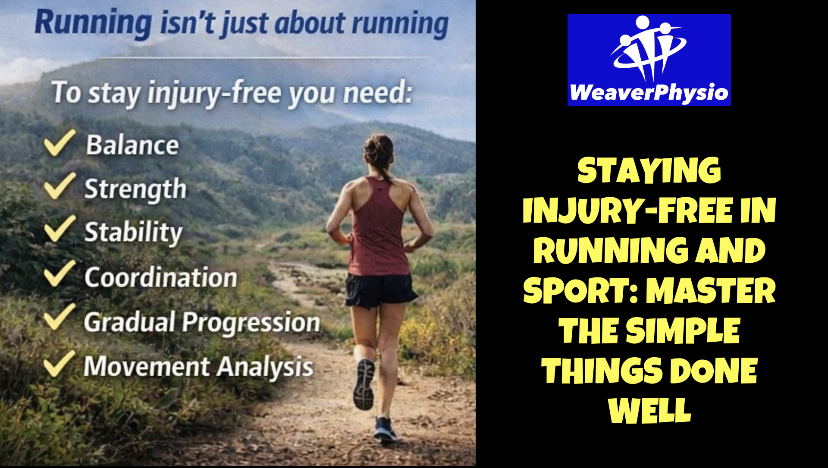
At Weaver Physio, we focus on a framework built around six key pillars:
• Balance
• Strength
• Stability
• Coordination
• Gradual Progression
• Movement Analysis
Alongside these, optimal performance and injury prevention also require:
• Rest and recovery
• High-quality sleep
• Nutrition
• Strength and conditioning
• Relaxation strategies such as massage, sauna, and breathing exercises
In this article, we explore how these factors work together to help runners and athletes stay strong, resilient, and injury-free.
Why Injury Prevention Matters
Running injuries rarely occur because of a single event.
Most running injuries develop due to a combination of factors such as:
• Sudden increases in training load
• Poor biomechanics
• Muscle weakness
• Poor recovery
• Inadequate strength training
• Limited mobility or stability
Research consistently shows that over 70% of runners experience an injury each year.
However, many of these injuries are preventable with the right approach.
At Weaver Physio Northwich, we believe injury prevention should be proactive rather than reactive.
Instead of simply treating injuries once they occur, we aim to help runners build durable bodies capable of handling training demands.
1. Balance: The Foundation of Efficient Movement
Balance is often overlooked in running performance and injury prevention.
However, running is essentially a series of controlled single-leg jumps. Each stride requires the body to stabilise on one leg while managing impact forces that can reach 2–3 times body weight.
Poor balance can contribute to:
• Ankle instability
• Knee valgus (knee collapsing inward)
• Poor hip control
• Increased stress on tendons and joints
Improving balance helps develop:
• Neuromuscular control
• Joint stability
• Efficient force absorption
• Injury resilience
Simple balance exercises include:
• Single-leg standing
• Single-leg Romanian deadlifts
• Balance board training
• Dynamic lunges
• Single-leg hops
These exercises train the body to maintain control during movement and improve stability during running.
At Weaver Physio, balance training is often incorporated into rehabilitation and strength programmes for runners.
2. Strength: The Engine Behind Injury-Free Running
Strength is one of the most important factors for injury prevention.
Stronger muscles allow the body to:
• Absorb impact forces more efficiently
• Protect joints and tendons
• Maintain good running mechanics
• Delay fatigue
Weakness in key muscle groups is commonly linked to running injuries.
Key muscles runners must strengthen:
Glutes
The glutes control hip stability and power generation.
Weak glutes often contribute to:
• IT band syndrome
• Runner’s knee
• Hip pain
Calves
The calf muscles absorb and release energy during running.
Weak calves can lead to:
• Achilles tendinopathy
• Calf strains
• Plantar fasciitis
Hamstrings
Hamstrings assist with propulsion and knee control.
Weakness increases injury risk during speed work.
Core muscles
Core strength improves posture and reduces excessive trunk movement during running.
At Weaver Physio, our strength programmes focus on progressive loading, including exercises such as:
• Squats
• Deadlifts
• Step-ups
• Split squats
• Calf raises
• Hip thrusts
Strength training helps runners become more resilient, powerful, and efficient.
3. Stability: Controlling Movement Under Load
While strength is important, stability determines how effectively that strength is controlled during movement.
Stability refers to the ability of muscles and joints to maintain proper alignment during activity.
Poor stability can lead to:
• Knee collapse
• Excessive hip rotation
• Poor ankle control
• Increased stress on tendons
Stability training focuses on controlling movement, particularly during single-leg activities.
Examples of stability exercises:
• Single-leg squats
• Bulgarian split squats
• Step-downs
• Lateral band walks
• Hip control drills
These exercises strengthen the stabilising muscles responsible for maintaining joint alignment during running.
At Weaver Physio Northwich, stability training is a key part of rehabilitation for many lower limb injuries.
4. Coordination: Efficient Movement Patterns
Coordination refers to how effectively muscles work together to produce smooth and efficient movement.
Running requires precise coordination between:
• The hips
• The knees
• The ankles
• The arms
• The core
Poor coordination can result in inefficient movement patterns that increase energy expenditure and injury risk.
Coordination training may include:
• Running drills
• Ladder drills
• Plyometrics
• Agility exercises
• Stride mechanics training
These exercises improve timing, rhythm, and movement efficiency.
Improving coordination can also enhance performance by improving running economy.
5. Gradual Progression: The Key to Avoiding Overuse Injuries
One of the most common causes of injury is increasing training too quickly.
Tendons, bones, and muscles adapt to load gradually.
When training load increases faster than the body can adapt, injury risk increases.
Common progression errors include:
• Increasing mileage too quickly
• Adding speed sessions too early
• Returning to running too soon after injury
• Ignoring fatigue signals
A common guideline is the 10% rule, which suggests increasing weekly mileage gradually.
However, progression should also consider:
• Intensity
• Terrain
• Frequency
• Strength training load
At Weaver Physio, we help runners design structured return-to-running and training progression plans to reduce injury risk.
6. Movement Analysis: Identifying the Root Cause
Many running injuries occur due to biomechanical inefficiencies.
These may include:
• Overstriding
• Poor hip control
• Excessive pronation
• Limited ankle mobility
• Poor cadence
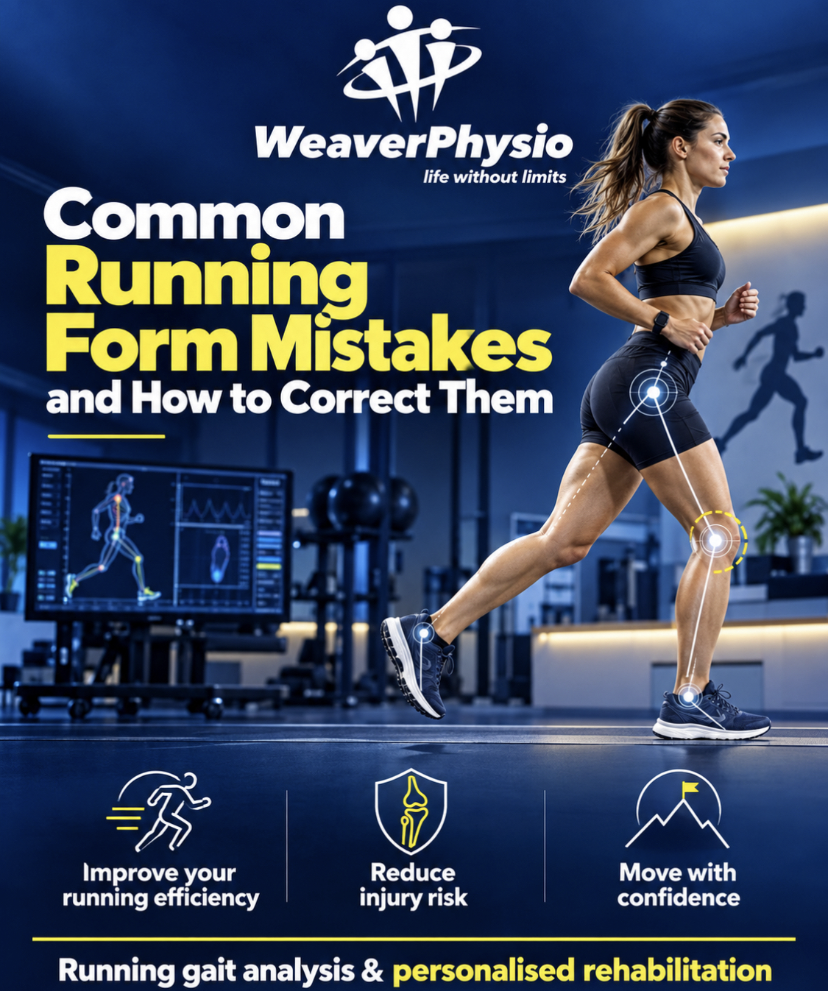
At Weaver Physio Northwich, we use running gait analysis and biomechanical assessment to identify movement patterns that may contribute to injury.
A movement analysis may include:
• Video gait analysis
• Strength testing
• Mobility screening
• Functional movement assessment
This allows us to design individualised rehabilitation programmes that address the underlying cause of injury rather than simply treating symptoms.
The Role of Rest and Recovery
Training is only one side of the performance equation.
Adaptation occurs during recovery.
Without sufficient recovery, the body cannot repair tissues or adapt to training stress.
Recovery strategies may include:
• Adequate sleep
• Sports massage
• Sauna therapy
• Cold exposure
• Relaxation techniques
These methods support circulation, reduce muscle tension, and improve recovery between sessions.
Sleep: The Ultimate Recovery Tool
Sleep is the most powerful recovery tool available to athletes.
During sleep, the body releases growth hormone and repairs damaged tissues.
Poor sleep has been linked to:
• Increased injury risk
• Reduced recovery
• Decreased performance
• Higher inflammation levels
Athletes should aim for 7–9 hours of quality sleep per night.
Good sleep hygiene includes:
• Consistent sleep schedules
• Limiting screen exposure before bed
• Maintaining a cool, dark sleeping environment
Massage and Soft Tissue Therapy
Sports massage can help reduce muscle tension and improve circulation.
Benefits of sports massage include:
• Reduced muscle stiffness
• Improved mobility
• Enhanced recovery
• Reduced soreness
At Weaver Physio, sports massage is often used alongside rehabilitation and strength training.
Sauna and Cold Exposure
Sauna and cold exposure have become increasingly popular among athletes.
Sauna benefits:
• Improved circulation
• Muscle relaxation
• Reduced stress
• Cardiovascular benefits
Cold exposure benefits:
• Reduced inflammation
• Improved recovery
• Nervous system stimulation
Alternating between heat and cold can also support recovery.
Deep Breathing and Relaxation
Stress can negatively affect recovery and injury risk.
Breathing exercises help activate the parasympathetic nervous system, promoting relaxation and recovery.
Techniques include:
• Slow diaphragmatic breathing
• Box breathing
• Mindfulness exercises
These practices can improve recovery, sleep quality, and mental focus.
Nutrition for Injury Prevention and Recovery
Nutrition plays a vital role in injury prevention.
The body requires sufficient nutrients to repair tissues and support training.
Important nutrients include:
Protein
Supports muscle repair and recovery.
Carbohydrates
Provide energy for training and replenish glycogen stores.
Healthy fats
Support hormone production and inflammation control.
Vitamins and minerals
Essential for bone and tendon health.
Hydration is also crucial for maintaining performance and preventing fatigue.
Strength & Conditioning for Long-Term Resilience
Strength and conditioning should be a core component of every runner’s training programme.
Benefits include:
• Increased muscle strength
• Improved power and efficiency
• Reduced injury risk
• Enhanced performance
At Weaver Physio, we combine physiotherapy, rehabilitation, and strength training to help athletes build durable bodies capable of handling high training loads.
Expert Running Injury Treatment in Northwich
At Weaver Physiotherapy & Sports Injury Clinic, we specialise in treating running injuries and helping athletes return to sport stronger.
Our approach combines:
• Detailed physiotherapy assessment
• Strength and conditioning
• Running gait analysis
• Progressive rehabilitation
• Injury prevention strategies
We treat runners from across:
• Northwich
• Knutsford
• Winsford
• Middlewich
• Tarporley
• Frodsham
• Cheshire
Final Thoughts: Master the Fundamentals
Staying injury-free in running and sport does not require complicated solutions.
Instead, long-term resilience comes from consistently mastering the fundamentals:
✔ Balance
✔ Strength
✔ Stability
✔ Coordination
✔ Gradual Progression
✔ Movement Analysis
Combined with:
✔ Good recovery
✔ Quality sleep
✔ Proper nutrition
✔ Strength and conditioning
✔ Relaxation strategies
By doing the simple things well, regularly, runners can build bodies that are stronger, more resilient, and capable of performing at their best.
Book an Assessment at Weaver Physio
If you’re struggling with a running injury or want to optimise your performance, the team at Weaver Physiotherapy & Sports Injury Clinic in Northwich can help.
📍 110 Middlewich Road, Northwich
📞 01606 227484
🌐 www.weaverphysio.co.uk
Recover stronger. Move better. Perform at your best.